Ripple’s Infrastructure Sprint Can’t Lift XRP From Its Technical Rut
Published on 07/26/2026 at 08:21 | Redaktion boerse-global.de
XRP is stuck in a holding pattern that defies the activity happening beneath the surface. The token trades at $1.10, barely budging from its 50-day moving average, while the network it runs on is quietly absorbing billions in tokenized assets. That disconnect — between a stagnant price and a rapidly expanding ecosystem — is the defining story of XRP right now.
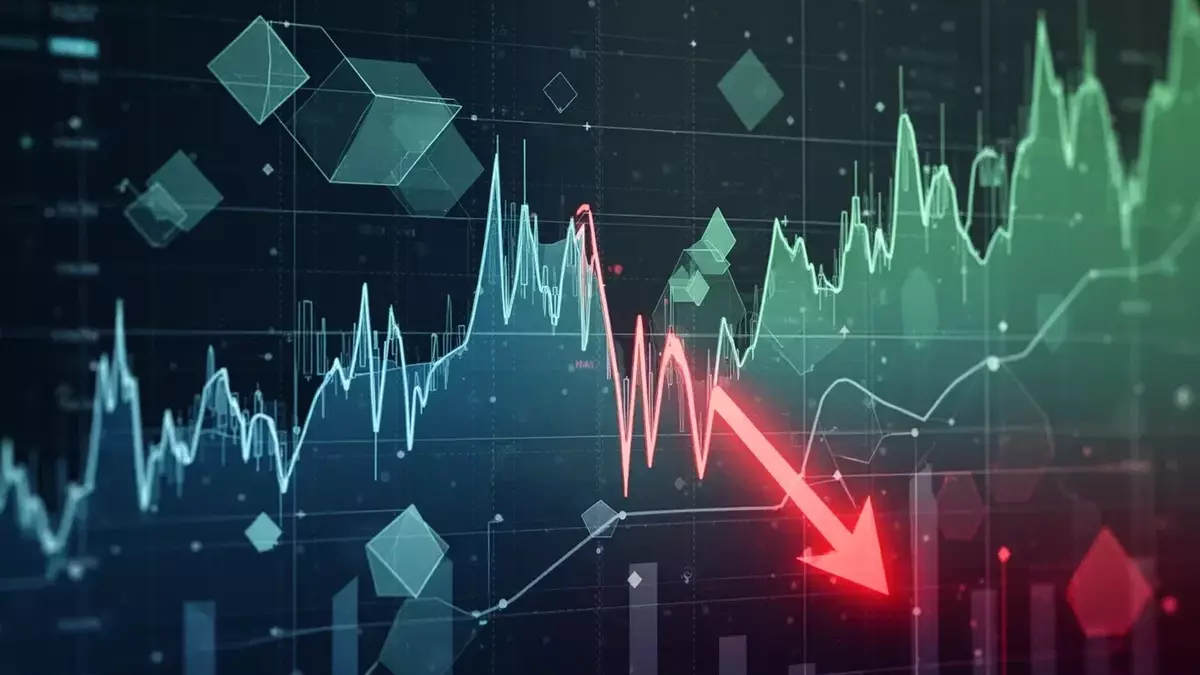
The price action itself offers little encouragement. XRP sits roughly 69 percent below its 52-week high of $3.55, a peak reached last July. The token has tested the 50-day moving average at $1.16 three times in the past two months and failed to break through each time. It now hovers just 1.25 percent below that level, essentially glued to the line. A rising support trendline near current prices is the only thing preventing a slide toward $1.06 or even $1.00, according to multiple technical analyses.
The broader chart pattern is equally sobering. XRP has been printing lower highs and lower lows for months, a textbook downtrend. At $1.10, it sits more than 21 percent below its 200-day moving average of $1.40. The relative strength index reads 47 — neutral territory that signals indecision rather than a clear directional bias.
Tokenization Boom, Price Bust
While the token languishes, the XRP Ledger is experiencing a surge in real-world asset tokenization that puts it among the fastest-growing networks in the space. Data from RWA.xyz shows that $2.6 billion in new tokenized assets flowed onto the ledger in the past six months, excluding stablecoins. That brings the total to $4.38 billion, up from just $897 million at the start of January.
Should investors sell immediately? Or is it worth buying XRP?
Only BNB Chain attracted more — $3 billion over the same period — making the XRP Ledger one of just three blockchains worldwide to record more than $2 billion in RWA inflows in half a year. The growth is concentrated in three assets: Justoken’s energy product JMWH, which alone accounts for $2.229 billion and 50.8 percent of all RWA value on the ledger; a credit product from CRX Digital Assets; and Ripple’s own stablecoin RLUSD.
That stablecoin now circulates with a market cap of roughly $1.51 billion, backed by reserves of about $1.62 billion in cash, cash equivalents, and short-term U.S. Treasury bonds. Ripple recently launched Mint, a platform that lets institutional clients mint, redeem, and manage RLUSD through a web console and API. Partners include Mastercard, JPMorgan, OKX, and Ondo Finance.
Institutional Demand Fades
The tokenization boom has not translated into institutional appetite for XRP itself. ETF inflows have cratered: monthly net flows into spot XRP products fell from $131.94 million in May to just $12.43 million in July, the weakest showing since April. Cumulative net inflows still stand at roughly $1.49 billion, and assets under management hover near $1 billion, but several trading days in recent weeks recorded zero inflows at all.
There are exceptions. Citadel Advisors expanded its XRP ETF positions to more than $1.7 million, spread across products from Franklin, Bitwise, Canary, Grayscale, and Armada. But such individual bets do little to reverse the broader trend of fading momentum. Retail interest has also cooled, with search volumes dropping noticeably.
Regulatory Clock Ticks in Washington
Adding another layer of uncertainty, the U.S. regulatory landscape remains unresolved. Five major asset managers — BlackRock, Charles Schwab, Fidelity, Goldman Sachs, and Grayscale — have thrown their weight behind the CLARITY Act, legislation that would split oversight of digital assets between the SEC and the CFTC. The House passed the bill with a comfortable majority, but the Senate’s 60-vote threshold remains a steep hurdle.
Galaxy Research recently lowered the probability of passage by 2026 from 50 to 30 percent. Polymarket bettors are more optimistic, pricing the odds at roughly 42 percent. For XRP holders, the outcome could shape the token’s trajectory far more than any technical indicator.
Ripple Builds Abroad
While Washington deliberates, Ripple is expanding its regulatory footprint elsewhere. The company secured a full crypto service provider license in Europe, allowing it to offer regulated services across the entire European Economic Area. It has also integrated the Mastercard Verifiable Intent standard into the XRP Ledger, a protocol designed to enable payments from AI agents without traditional accounts or API keys. Ripple says more than one million agentic transactions have already been processed through the system.
XRP at a turning point? This analysis reveals what investors need to know now.
Ripple’s CTO Emeritus David Schwartz, meanwhile, pushed back against speculation that the company might burn part of the roughly 32 billion XRP held in escrow. Such a move would require consensus from 80 percent of validators, he said, and is not under consideration.
A Market Searching for Direction
The gap between network fundamentals and token price is not new for XRP. Growing RLUSD circulation and billions in tokenized assets have yet to generate sustained buying pressure. The token’s near-term fate likely depends more on the broader crypto sentiment and macroeconomic signals than on the health of the underlying ledger.
Some analysts see a brighter long-term picture. A strategist known as Jordan views the medium-term uptrend as intact, with targets of $1.9766 and $3.6403. Standard Chartered’s forecasts go further: $7 by 2027, $12.60 by 2028, and $28 by 2030 — numbers that underscore the gap between current reality and aspirational scenarios. For now, XRP remains caught between a thriving network and a market that refuses to follow.
Ad
XRP Stock: New Analysis - 26 July
Fresh XRP information released. What's the impact for investors? Our latest independent report examines recent figures and market trends.
Disclaimer regarding our articles: No investment advice, no buy or sell recommendation. Information on prices, companies, and markets is provided without guarantee; changes are possible at any time. Stock market transactions can lead to substantial losses. Our articles are created and reviewed in whole or in part automatically with the support of AI.