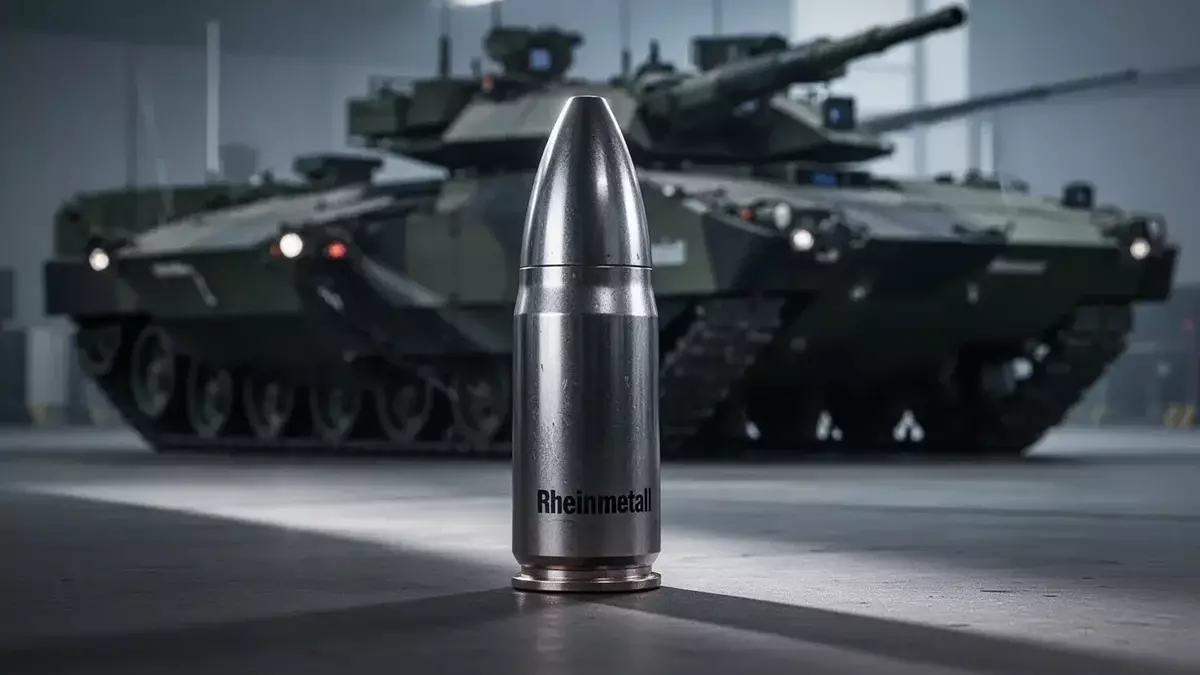
Rheinmetall Stock Sheds 4% as MGCS Doubts and Defense Rotation Overshadow Missile Joint Venture
15.06.2026 - 20:44:40 | boerse-global.de
Rheinmetall arrived at the Eurosatory show in Paris with a new air-defence tie-up, yet investors sent its shares sliding almost 4% on Monday. The disconnect underscores the weight of three distinct pressures: a faltering Franco-German tank project, a sudden easing of geopolitical risk that has rotated money out of defence, and a stock already nursing steep year-to-date losses.
The Düsseldorf-based group announced a joint venture with South Korea’s LIG Nex1, in which it will hold a majority stake. The goal is to produce ground-based air-defence systems for European and NATO customers, with a sharp focus on cost. Ukraine’s war has exposed the staggering price of modern interceptors, often exceeding €1 million each. Rheinmetall and LIG Nex1 aim to bring that cost down to the high five-figure range—a fraction of current levels—by combining Korean missile technology with Rheinmetall’s short-range know-how.
Yet the Paris unveiling was overshadowed by deepening anxiety over the Main Ground Combat System (MGCS), the joint German-French project to replace the Leopard 2 and France’s Leclerc by 2040. Rheinmetall chief executive Armin Papperger openly voiced concerns on Monday, pointing to reports that Paris is planning severe budget cuts that could more than halve the programme’s volume. Over the past decade, industry sources say, just €25 million has been spent on development. If France were to walk away, it would mark the second major blow to a flagship European armaments venture after the collapse of the FCAS air-combat system. A fallback plan is already circulating: a "Leopard 3" that could enter service in the early 2030s.
Should investors sell immediately? Or is it worth buying Rheinmetall?
The defence sector as a whole lost momentum after reports that the US and Iran were closing in on a framework agreement. That news sent oil prices lower and dampened enthusiasm for military exposure, triggering a broad sell-off. Morgan Stanley responded by downgrading the sector to “Neutral,” adding to the selling pressure. Rivals such as Renk and Hensoldt each shed more than 2% at one point.
Rheinmetall also revealed a separate partnership with ERC System to build a heavy-lift drone capable of carrying 250 kilograms over long distances. But the flurry of new alliances did little to revive the stock.
By Monday’s close, Rheinmetall shares were trading at €1,148.40, roughly 4% below Friday’s settlement. That leaves the equity down nearly 28% since the start of the year and more than 42% below its 52-week high of €1,995, achieved last September. Technically, the price continues to slide beneath its 50-day moving average. If the sell-off deepens, the next meaningful support sits around €1,100—the May trough.
Amid the turbulence, management has held firm on its financial outlook. The full-year revenue target still calls for growth of around 40%, a figure the company believes is achievable regardless of MGCS’s fate. The immediate catalyst for Rheinmetall now lies in Berlin and Paris: official budget signals from the two defence ministries will determine whether the tank project can be salvaged or whether the Leopard 3 must become the company’s new reality.
Ad
Rheinmetall Stock: New Analysis - 15 June
Fresh Rheinmetall information released. What's the impact for investors? Our latest independent report examines recent figures and market trends.