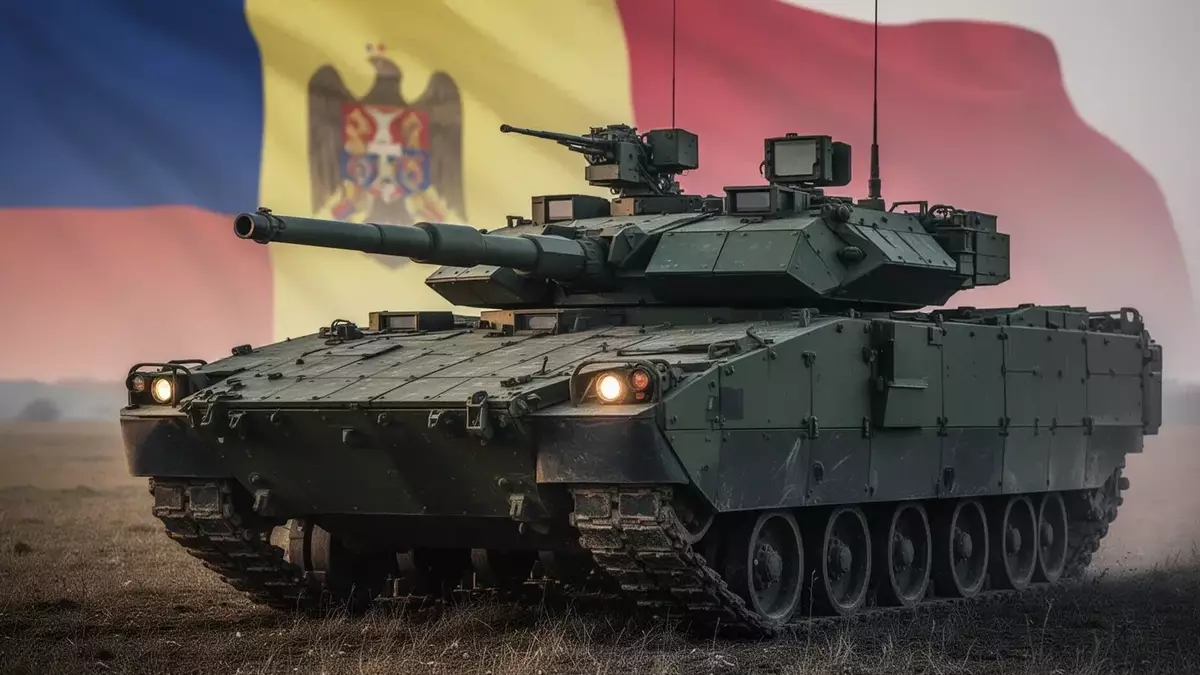
Rheinmetall’s Indra Radar Pact Boosts Integrated Defence Vision as Shares Struggle With Execution Toll
19.06.2026 - 19:05:25 | boerse-global.de
Rheinmetall has deepened its sensor-to-shooter capabilities by integrating Spain’s Indra NEMUS radar into its StrikeShield active protection system, a deal announced this week that underscores the group’s push toward networked battlefield solutions. The technology tie-up comes as the Düsseldorf-based defence giant’s stock labours under the weight of an industrial reality check, with the shares having shed nearly a third of their value over the past twelve months.
The NEMUS radar is a dual-purpose sensor. It can detect ultra-slow drones moving at just ten metres per second while simultaneously tracking high-velocity projectiles travelling in excess of 2,000 metres per second. StrikeShield then calculates the incoming threat’s trajectory and selects the appropriate countermeasure, neutralising the projectile moments before impact. Indra’s system is already embedded in large European programmes such as FAMOUS, giving Rheinmetall a ready-made technological lever. Financial terms of the radar integration were not disclosed.
The collaboration fits squarely into Rheinmetall’s ambition to sell complete, networked “system houses” rather than individual platforms. At the ongoing Eurosatory defence exhibition in Paris, the company has been showcasing a portfolio that spans land, air, sea, space and cyber domains. Sensors, effectors, platforms and command systems are presented as an integrated whole. The strategy is intended to lock Rheinmetall into long-term procurement programmes that are harder to unwind than discrete product orders, though integration also demands heavier upfront investment and operational complexity.
Should investors sell immediately? Or is it worth buying Rheinmetall?
Financially, the group has plenty of ballast. First-quarter revenue rose to nearly €2 billion, with the Weapon and Ammunition segment—which houses StrikeShield and other protection systems—delivering an operating profit of €117 million and an operating margin hovering around 20 percent. The defence division’s order backlog stood at more than €25 billion at the end of March, filling capacity for years. Management has reaffirmed its 2026 revenue target of up to €14.5 billion.
Yet the share price tells a harsher story. A 2.68 percent gain on Friday lifted Rheinmetall to €1,204.40, but the move offered little comfort. Over the past 30 days the stock is down nearly three percent; since the start of the year the decline stands at 24.8 percent; and over twelve months the loss is 29.51 percent. The 52-week high of €1,995 is almost 40 percent above the current level, while the distance to the 52-week low of €1,099.80 has shrunk to just 9.51 percent. Technically, the shares are trading 6.14 percent below their 50-day moving average and 24 percent below their 200-day average of €1,584.95. The relative strength index at 47.5 shows neither euphoria nor panic, but annualised volatility of roughly 41 percent confirms that Rheinmetall is being treated as a politically charged growth stock, not a defensive industrial name.
That market capitalisation of around €53 billion cuts both ways. It is large enough to command attention as a cornerstone of European rearmament, but big enough to be severely punished by disappointments. The old narrative—war, special funds, rearmament, unlimited upside—has cooled. Investors now demand evidence that political intentions are being translated into firm orders, deliveries and scalable production. The company strengthened its financing structure lately with a successful bond placement, citing strong investor demand and the need for long-term capital flexibility, but the market is watching how that capital is deployed.
Rheinmetall has not become less relevant. The structural push from NATO and the European Union, including the SAFE joint procurement instrument, remains in place. But the bourse is asking harder questions than it did a year ago. How fast does business really exit the factory gates? How resilient is the supply chain? How much of the future was already priced into the €1,995 high? Friday’s gain is welcome, but it is not yet a trend reversal. The story has shifted from a sudden arms boom to the more demanding—and more interesting—task of turning a political turning point into industrial reality. That takes more than a friendly session.
Ad
Rheinmetall Stock: New Analysis - 19 June
Fresh Rheinmetall information released. What's the impact for investors? Our latest independent report examines recent figures and market trends.