Rheinmetall Rolls Out 2,000-Kilometer Cruise Missile and a New Drone Line, Yet the Stock Lags Behind
17.06.2026 - 22:33:33 | boerse-global.de
Rheinmetall is pushing deep into the long-range strike business while simultaneously shedding the last vestiges of its automotive past. On display last week at the Eurosatory 2026 defence fair in Paris, the Düsseldorf-based group unveiled a strategic cruise missile capable of reaching targets beyond 2,000 kilometres — and confirmed that a former car-parts factory in Neuss will begin churning out loitering munitions as soon as the third quarter of 2026.
The centrepiece of the Eurosatory announcements is the Ruta Block?3, a cruise missile designed to carry a warhead of up to 250?kg and strike hardened, high-value deep underground targets. Rheinmetall plans to build a dedicated facility in Germany for final assembly, integration and testing, with initial delivery readiness still scheduled for this year. The missile is being developed under the Rheinmetall Destinus Strike Systems joint venture: Destinus contributes the core technological components while Rheinmetall supplies the warheads and rocket motors. Production has also started for the Kryla and Ruta Block?2 systems under the same venture.
Separately, the group is repurposing a former automotive supplier plant in Neuss to manufacture loitering munitions — often referred to as kamikaze drones — along with their associated launch containers. The first units are due to roll off the line in the third quarter, marking a definitive break with the civilian business. The move also reflects growing concerns about multinational projects: reports from Paris suggest that the Franco-German Main Ground Combat System (MGCS) tank programme is facing significant budget cuts, reinforcing Rheinmetall’s push to build out its own independent system-supplier capabilities.
Should investors sell immediately? Or is it worth buying Rheinmetall?
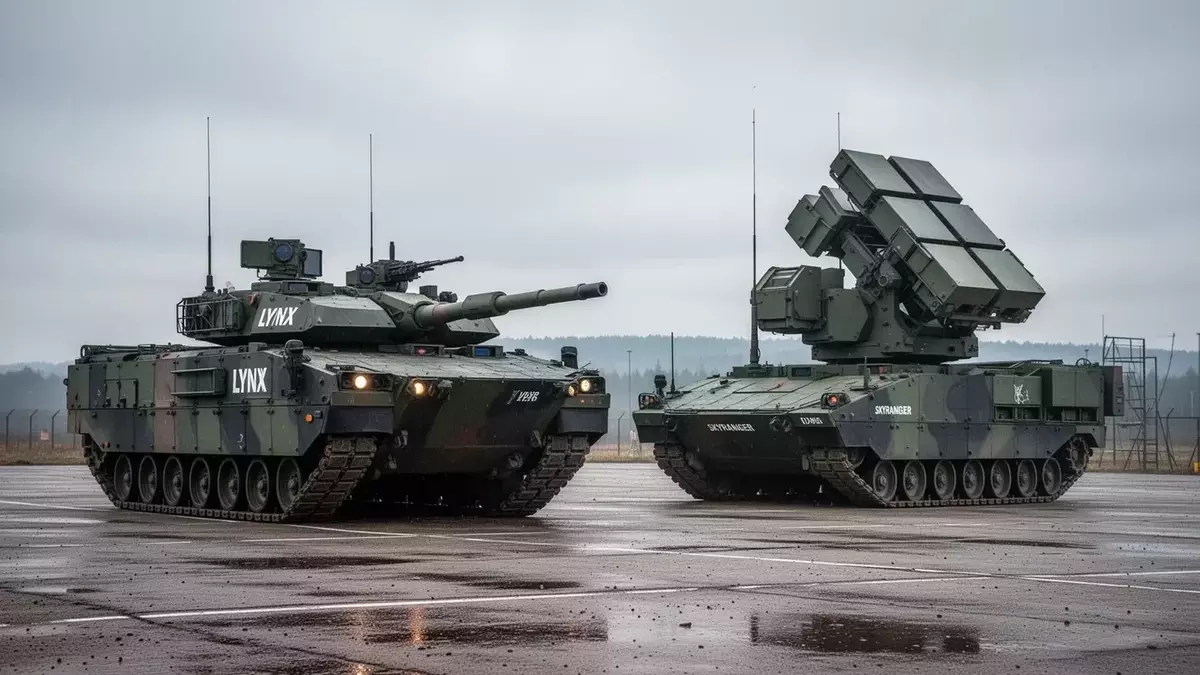
In the artillery domain, Rheinmetall presented a new 155?mm L60 cannon that increases howitzer range by around 30?percent compared with the current L52 barrel. A live-firing demonstration is planned for the second half of 2026. The company also showcased the Skyranger?30 mobile air-defence system mounted on a Lynx KF41 fighting vehicle and said it would ramp up turret production capacity. A separate drone-defence system called Skyspotter, designed to protect airports and critical infrastructure, was another highlight of the show.
Operationally, the numbers are moving in the right direction. Revenue rose 8?percent in the first quarter to €1.9?billion, and the order book hit a record €73?billion at the end of March. Management expects even faster growth in the current second quarter and has left its full-year guidance unchanged. The next hard numbers will come on 6?August, when the board presents second-quarter results.
Yet the stock market remains unimpressed. Rheinmetall shares were changing hands at around €1,164–1,170 on Wednesday, a decline of roughly 27?percent since the start of the year. That leaves the stock some 41?percent below its 52-week high of €1,995 set in September 2025. The price hit a low near €1,100 in mid-May before recovering slightly. The relative strength index hovers between 40.5 and 41.5, suggesting a mild stabilisation but no breakout. With an annualised volatility of more than 50?percent, the shares remain technically under pressure — although the latest product launches could provide the catalyst for a recovery once concrete order announcements follow.
Ad
Rheinmetall Stock: New Analysis - 17 June
Fresh Rheinmetall information released. What's the impact for investors? Our latest independent report examines recent figures and market trends.