
Radiohead’s evolving legacy and the next chapter
Published on 05/17/2026 at 02:08 | Editorial responsibility: Rafael Müller, Editor-in-Chief AD HOC NEWS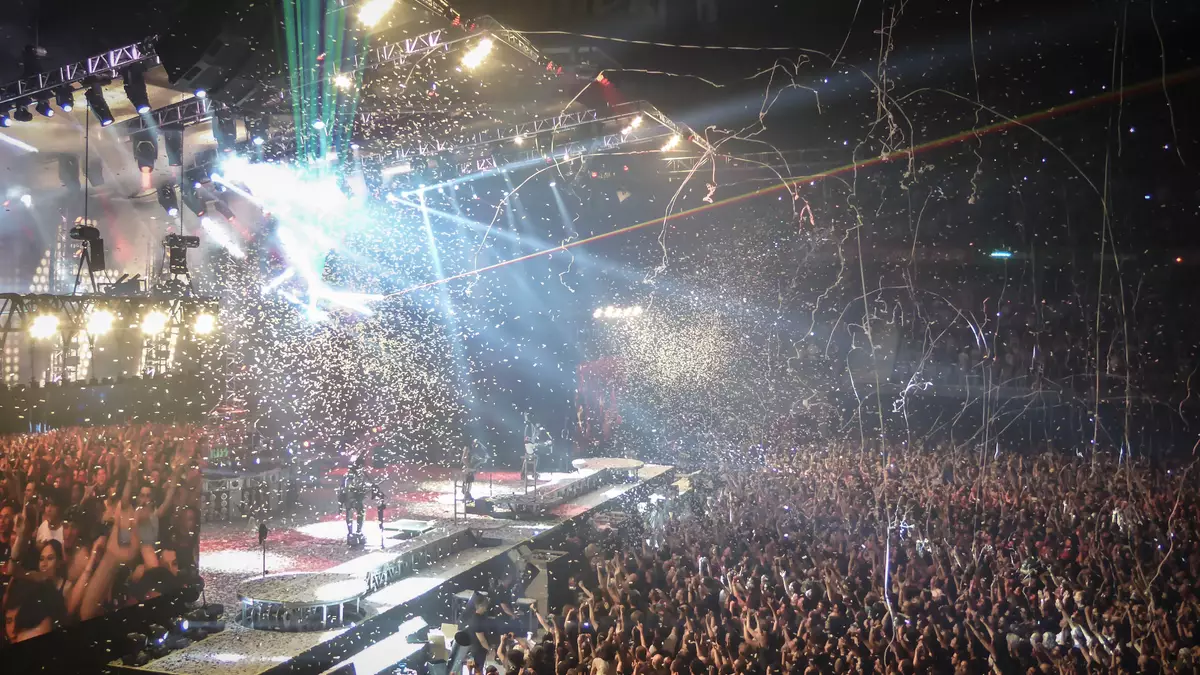
On any given night, a clip of Radiohead playing Paranoid Android at Madison Square Garden or debuting an unreleased song onstage can still send corners of the internet into a quiet frenzy. Three decades after their debut, the band’s catalog keeps resurfacing in films, playlists, and festival sets, fueling constant speculation about what the next era will look like.
Where Radiohead stand now and why fans are watching closely
In recent years, Radiohead have shifted from an intense, album-by-album cycle to a looser constellation of projects, archival releases, and high-profile side work. The band’s most recent studio album, A Moon Shaped Pool, arrived in 2016 on XL Recordings, and its tour wrapped with headlining shows at major US arenas and festivals, including Madison Square Garden in New York and Lollapalooza Chicago.
Since then, activity has moved in waves rather than in a single, linear campaign. In 2021, the group issued KID A MNESIA, a retrospective set that combined remastered versions of Kid A and Amnesiac with a third disc of rarities titled Kid Amnesiae. According to Pitchfork and Rolling Stone, the package not only resurfaced deep cuts but also framed that era’s sessions as a single, sprawling body of work, underlining how far the band had pushed rock and electronic music at the turn of the millennium.
At the same time, members have focused on parallel projects. Thom Yorke and Jonny Greenwood formed The Smile with drummer Tom Skinner, releasing the critically acclaimed album A Light for Attracting Attention in 2022 and a follow-up, Wall of Eyes, in early 2024. Billboard and NPR Music both noted that the Smile records retain Radiohead’s sense of unease and harmonic adventure while carving out a leaner, live-driven sound.
Drummer Philip Selway has released solo work and toured his own material, while guitarist Ed O'Brien issued his debut solo album Earth in 2020 under the name EOB. Colin Greenwood has appeared as a touring bassist for artists like Nick Cave. These projects suggest that the musicians are keeping their creative muscles active even as the full band maintains a lower public profile.
As of 17.05.2026, there has been no official announcement of a new Radiohead studio album or full-scale tour, and trusted outlets such as The Guardian and Billboard emphasize that any future activity will likely be on the band’s own carefully controlled timetable. Instead of chasing the usual album cycle, the group appears content to let its catalog grow in influence while individual members explore adjacent sounds.
For US fans, that means the present moment is less about a specific release date and more about a living legacy that keeps expanding through reissues, live recordings, and the subtle ways Radiohead’s songwriting keeps seeping into new generations of rock, pop, and electronic artists.
Who Radiohead are and why the band still matters
Radiohead are an English rock band formed in Abingdon, Oxfordshire, known for turning the expectations of guitar music upside down. In the United States, they first broke through in the mid-1990s with Pablo Honey and its surprise hit single Creep. The song’s distorted, slow-burn dynamics placed the group alongside alternative-rock peers on MTV and US radio, but the band quickly grew restless with that early image.
By the time The Bends arrived in 1995, they had already become something more ambitious. Guitars tangled around Thom Yorke’s falsetto, while lyrics obsessed over alienation, technology, and modern anxiety. Tracks like Fake Plastic Trees and Street Spirit (Fade Out) made inroads on American rock radio and turned the group into critical darlings. According to Rolling Stone, this was the moment Radiohead went from promising act to one of the most inventive bands of their era.
Today, the group’s appeal crosses generations. Vinyl reissues of albums like OK Computer and In Rainbows routinely appear on best-of lists and chart on the Billboard 200 when anniversary editions drop. Streaming-era listeners encounter the band through curated playlists, film soundtracks, and algorithmic recommendations, discovering that Radiohead’s catalog connects classic guitar rock to more experimental, electronic sound design.
Crucially, the band occupy a rare position: experimental enough to be studied in music schools, yet accessible enough to fill arenas and top festival bills. This dual identity helps explain why new bands from indie rock to art-pop still cite Radiohead as a key influence and why their music continues to feel current in the US cultural conversation.
From Abingdon to global stages: origin and rise
Radiohead formed in the mid-1980s when the five members—Thom Yorke, Jonny Greenwood, Colin Greenwood, Ed O'Brien, and Philip Selway—met at Abingdon School, a private school in Oxfordshire. Originally called On A Friday, they honed their sound during rehearsal sessions that mixed classic-rock influences with a growing fascination for post-punk and early alternative music.
They signed to EMI in the early 1990s and adopted the name Radiohead, borrowed from a Talking Heads song. Their debut album, Pablo Honey, arrived in 1993. At first, it drew modest attention in the UK, but the single Creep became a sleeper hit in the United States after alternative radio stations and MTV began programming it heavily. Billboard reports that the song eventually cracked the Billboard Hot 100, introducing the band to American listeners who were already tuned into grunge and alt-rock.
However, the band quickly sought to escape being defined by a single gloomy anthem. For 1995’s The Bends, they teamed up again with producer John Leckie, expanding their arrangements with more intricate guitar work and atmospheric textures. Critics at outlets like NME and Spin praised the album’s emotional intensity and sonic detail, and US tours saw the band supporting acts like R.E.M. while growing their own headlining footprint.
Everything changed with OK Computer in 1997. Produced by the band with longtime collaborator Nigel Godrich, the album pushed into expansive song structures, unexpected chords, and dense production. According to The New York Times and Pitchfork, it quickly became a touchstone for ambitious rock in the late 1990s, with comparisons made to Pink Floyd’s The Dark Side of the Moon for its thematic reach and studio craft.
In the US, OK Computer debuted in the upper reaches of the Billboard 200 and earned widespread critical acclaim. The band’s accompanying tours included stops at major venues, from theaters to arenas, and their live shows began to incorporate more elaborate staging and lighting. Songs like Karma Police and No Surprises became staples of modern-rock radio and MTV while avoiding the formulaic feel of many late-1990s hits.
Instead of repeating that formula, Radiohead plunged into the radical experiments of Kid A and Amnesiac, recorded during the same sessions and released in 2000 and 2001. These albums downplayed guitars in favor of synthesizers, sample-based textures, and abstract songs. In a move that surprised the industry, Kid A debuted at No. 1 on the Billboard 200, a fact reported widely at the time by Billboard and the Associated Press as evidence that adventurous music could still command mass attention.
Throughout the 2000s, the group continued to evolve. Hail to the Thief (2003) combined the electronic experiments of Kid A with more direct rock songs, while the band navigated a changing music business and growing political concerns. By the time they self-released In Rainbows in 2007 via a pay-what-you-want download, Radiohead had become emblematic of both musical daring and a new approach to the album as a digital-era event.
Radiohead’s sound, key albums, and live reputation
It is difficult to pin Radiohead down to a single genre. Thom Yorke has bristled at the idea of the band as straightforward rock, preferring to operate in a space where guitar, electronics, and orchestral elements coexist. What holds the catalog together is a shared focus on mood, texture, and emotional ambiguity rather than any particular set of instruments.
The Bends is often cited as their first masterpiece, pairing soaring guitar anthems with quieter, introspective tracks. Yet for many listeners and critics, OK Computer remains the band’s defining statement, with songs that weave together themes of isolation, consumer culture, and technological unease. The production—filled with reversed guitar lines, unusual time signatures, and layered vocals—set a new benchmark for what a major-label rock record could sound like in the late 1990s.
With Kid A, the band leaned heavily into influences from Warp Records-style electronic acts, free jazz, and modern classical music. There are relatively few traditional choruses, and several tracks are built from digitally manipulated performances. Yet the album’s chilly beauty and meticulous sequencing helped it become a critical and commercial triumph. Rolling Stone later named it one of the most important albums of the 2000s, while NPR Music has highlighted its influence on both indie and mainstream pop production.
Later works continued to refine and redirect these ideas. In Rainbows is frequently singled out as the group’s most emotionally warm and immediately accessible album, thanks to songs like Weird Fishes/Arpeggi and Reckoner, which blend intricate rhythms with open-hearted melodies. The King of Limbs explored looping rhythms and a more rhythm-section-driven sound, while A Moon Shaped Pool revisited older songwriting ideas with lush string arrangements and a reflective tone.
Live, Radiohead have long had a reputation as one of the most compelling bands on the road. Their US tours have included multiple-night stands at Madison Square Garden, The Forum in Los Angeles (now the Kia Forum), and festivals such as Coachella in Indio, California, and Bonnaroo in Tennessee. Sets often blend fan favorites with deep cuts and experimental arrangements, with songs evolving significantly over different tours.
Jonny Greenwood’s guitar and multi-instrumental work is a key part of the live sound. He moves easily from jagged, effects-heavy lines to subtle keyboard or ondes Martenot parts, giving the music a constantly shifting focal point. Colin Greenwood’s bass and Philip Selway’s drumming anchor the performances even when rhythms become complex, while Ed O'Brien’s guitars and backing vocals create a wide stereo image that helps fill large arenas.
The band’s long partnership with producer Nigel Godrich, sometimes called the sixth member of Radiohead, has also been crucial. Godrich’s work on albums from OK Computer onward emphasizes clarity and space, allowing experimental elements to sit alongside traditional rock instrumentation without collapsing into sonic clutter. According to interviews in The New York Times and Mojo, Godrich often encourages the group to strip arrangements back to their emotional core.
In addition to studio and live releases, the group has engaged with fans through special editions, B-sides, and archival projects. The In Rainbows discbox and the KID A MNESIA release both offered alternate versions and unreleased material, showing how Radiohead’s process can generate multiple perspectives on the same core ideas.
Cultural impact, US chart milestones, and legacy
Radiohead’s influence on rock and pop culture is out of proportion even to their considerable commercial success. The band have won multiple Grammy Awards; according to Grammy.com, they earned the Best Alternative Music Album trophy for OK Computer and Kid A, and have been nominated repeatedly across categories including Album of the Year and Best Rock Performance. These accolades sit alongside a near-unbroken streak of critical acclaim in outlets from Rolling Stone to The Guardian.
The Recording Industry Association of America (RIAA) lists several Radiohead albums as Gold- or Platinum-certified in the United States, including OK Computer, Kid A, and In Rainbows. While the band’s biggest US hit singles came during the 1990s alt-rock era, their album-centered approach has led to strong showings on the Billboard 200 across decades. Releases like Kid A, Hail to the Thief, and A Moon Shaped Pool all reached the top tier of the chart.
Beyond sales, the band’s cultural impact shows up in how other artists talk about them. US acts ranging from Coldplay and Muse to more recent indie figures like Phoebe Bridgers and The National’s members have cited Radiohead as an influence in interviews. Producers and songwriters in pop and hip-hop have also pointed to the group’s willingness to warp structures and textures as a model for their own experiments.
Academia has taken notice as well. Musicology courses at universities across the United States use albums like OK Computer and Kid A to teach concepts like metric modulation, studio layering, and the use of technology as an instrument. Books and long-form essays dissect the lyrics’ treatment of globalization, surveillance, and environmental anxiety, placing the band in a lineage that includes Bob Dylan and Pink Floyd as chroniclers of their era’s fears.
In the live sphere, Radiohead’s headlining performances at festivals such as Coachella, Bonnaroo, and Austin City Limits have helped define what a modern rock headliner can be. Instead of leaning solely on familiar hits, the group constructs set lists that balance deep cuts with reinterpretations of better-known songs, often featuring visual design that reinforces the music’s themes. Their 2012 and 2017 US tours, for example, used LED screens and responsive lighting to create a sense of immersion that many younger acts have since adopted.
Radiohead have also left a lasting mark on music distribution models. The pay-what-you-want release of In Rainbows in 2007 is frequently cited by analysts and journalists as a watershed moment in the digital music era. According to reports in Time and The Wall Street Journal, the experiment encouraged debates about the value of recorded music and foreshadowed the streaming-dominated landscape that would emerge over the next decade.
Although the band are not known for overt activism in a traditional sense, their work often engages with political and environmental concerns. Thom Yorke has supported organizations focused on climate change and has spoken publicly about issues like global warming and corporate power. Songs such as Idioteque and 2 + 2 = 5 have been interpreted as reflections of these anxieties, even as the band typically avoids prescribing direct answers.
All of this has helped secure Radiohead’s reputation not just as a successful rock group, but as one of the defining artists of the past three decades. Their catalog functions as a kind of bridge between the album-oriented rock of the twentieth century and the more fragmented, playlist-driven music culture of the twenty-first, proving that ambitious, cohesive statements still have a place in a streaming world.
Frequently asked questions about Radiohead
Are Radiohead currently working as a band or on hiatus?
Members of Radiohead have been careful not to describe their status as a permanent hiatus. Instead, interviews in outlets like NME and Rolling Stone suggest that the band are taking an open-ended break from the usual album-tour cycle while focusing on side projects such as The Smile, solo records, and film scores. There is no confirmed timeline for a new Radiohead album, but the members continue to collaborate in various configurations.
What are Radiohead’s most essential albums for new listeners?
While every fan has a different entry point, several albums are commonly recommended for newcomers. The Bends offers an emotionally direct, guitar-driven sound; OK Computer presents the band at a pivotal moment of experimentation within rock; Kid A introduces their more electronic and abstract side; and In Rainbows blends these elements into a warm, cohesive whole. Exploring these four records gives a strong sense of the group’s range.
How successful have Radiohead been on US charts like the Billboard 200?
Radiohead have a consistently strong presence on the Billboard 200, especially considering their experimental leanings. Albums such as OK Computer, Kid A, Hail to the Thief, In Rainbows, and A Moon Shaped Pool have all reached the top tier of the chart, with Kid A notably debuting at No. 1 in 2000. As of 17.05.2026, their catalog continues to re-enter the charts whenever new editions or vinyl reissues are released.
Have Radiohead won major awards like Grammys?
Yes. Radiohead have received multiple Grammy Awards and many nominations. According to Grammy.com, they have won Best Alternative Music Album for OK Computer and Kid A, and they have been nominated in top categories such as Album of the Year and Best Rock Performance. These honors reflect both peer recognition and the band’s impact on the broader music industry.
Where can US fans expect to see Radiohead-related projects live?
While full-band Radiohead tours have paused since the A Moon Shaped Pool cycle, Radiohead-related projects remain active on stage. The Smile have performed at major venues in cities like New York, Los Angeles, and Chicago, as well as at festivals including Primavera Sound and European events, with US dates frequently reported by outlets like Consequence and Stereogum. Thom Yorke, Jonny Greenwood, and other members also occasionally tour their solo work, so fans often encounter new Radiohead-adjacent music in theaters, clubs, and festival settings.
Radiohead on social media and streaming
Even during quieter phases in the band’s schedule, Radiohead’s music lives a second life on video platforms, streaming services, and social networks. Fans dissect set lists, share rare recordings, and introduce the group’s deep cuts to younger listeners who may have first encountered them through playlist algorithms or movie soundtracks.
Radiohead – moods, reactions, and trends across social media:
More coverage from AD HOC NEWS
More coverage of Radiohead at AD HOC NEWS:
Read more on Radiohead at AD HOC NEWS ->Browse all Radiohead coverage at AD HOC NEWS ->


