R.E.M. Are Back in Your Feeds – But Are They Back for Real?
Published on 02/25/2026 at 19:08 | Editorial responsibility: Rafael Müller, Editor-in-Chief AD HOC NEWS
If you feel like you can’t scroll more than two swipes without seeing R.E.M. on your timeline again, you’re not imagining it. Between reunion chatter, anniversary nostalgia, and fans manifesting a full-blown tour, the Athens legends are having a serious pop-culture moment for a band that technically called it a day years ago.
Hit the official R.E.M. hub for the latest drops, statements, and archives
You’ve got TikToks soundtracking breakdowns with "Nightswimming", Reddit threads dissecting every offhand quote from Michael Stipe, and X (Twitter) arguing about whether this is the calm before a reunion storm or just the internet deciding, collectively, that it misses one of the most important alt-rock bands of all time.
So what is actually happening with R.E.M. right now, and what’s pure fan fever dream? Let’s walk through the facts, the setlist wishlists, and the wildest theories.
The Backstory: Breaking News in Detail
First, the boring but honest part: as of late February 2026, there is no officially announced, fully confirmed R.E.M. reunion tour or brand-new studio album. The band ended in 2011 and has been consistent for years about feeling good with that decision. Whenever they pop up in interviews, they tend to repeat variations of the same idea: R.E.M. went out on their own terms.
So why does it suddenly feel like they’re everywhere again?
A few overlapping storylines are driving the current buzz:
- Anniversary energy. R.E.M.'s catalog keeps hitting big milestones. Whether it’s fans marking decades since Murmur, Automatic for the People, or Monster, every anniversary cycle sparks think pieces, playlist revivals, and artists citing them as the blueprint.
- Reissues and archival drops. The band and their label have leaned into lovingly curated reissues, demo collections, and live recordings. Each new package sends people back to the originals and introduces younger listeners who only knew "Losing My Religion" from their parents’ CDs or an old MTV clip.
- Solo and side-project noise. Michael Stipe, Peter Buck, Mike Mills, and Bill Berry have all stayed creatively active in different ways—production work, low-key bands, guest spots, artsy collaborations. Any time someone drops a new track or does a candid interview, the press immediately frames it around the question: “Would you ever do R.E.M. again?”
- One-off reunions and surprise moments. Over the last few years, there’ve been scattered onstage intersections—members joining other artists for encores, tribute events, or special hometown appearances. These aren’t full R.E.M. shows, but social media treats them like proof of life.
Put all that together, and you get an internet that feels permanently one step away from screaming “R.E.M. CONFIRMED!” over anything as small as a cryptic Instagram post or a band member spotted near a venue.
There’s also a generational thing happening. Gen Z and younger millennials, who grew up on streaming instead of CDs, are discovering R.E.M. through algorithms and TV syncs. Moody shows grab "Everybody Hurts" for big emotional episodes; coming-of-age movies lean on "Nightswimming" or "Find the River". Once that happens, kids go digging, hit "What’s the Frequency, Kenneth?" or "Orange Crush", and realize this band covered a ridiculous amount of emotional territory.
On the industry side, promoters and festivals know a reunion would instantly become one of the biggest live stories on the planet. So the speculation isn’t just fans daydreaming; it’s also the live business quietly hoping. Veteran acts have pulled the "never again" ? "okay, maybe a little" maneuver more than once, and everyone knows R.E.M. could headline basically anything if they said yes.
For now, though, the official story is that R.E.M. remains retired as a band, while their music and influence feel more present than ever. The question is whether this constant, low-key heat eventually tips into a real event—an anniversary show, a charity gig, a hometown night in Athens, or something bigger.
The Setlist & Show: What to Expect
Even without fresh tour dates, fans are obsessively gaming out what a modern R.E.M. set would look like—and honestly, that conversation is half the fun. Because how do you even condense a catalog that runs from jangle-pop college radio weirdness to glossy stadium anthems to post-millennial, experimental rock?
If you scroll through old setlists and fan fantasy threads, a pattern appears. Any "dream" R.E.M. show in 2026 would almost certainly lean on a core group of tracks that feel non-negotiable:
- "Losing My Religion" – the mandolin that changed mainstream radio forever.
- "Everybody Hurts" – the ultimate cry-in-the-dark anthem that shows up on every “songs that saved my life” thread.
- "Man on the Moon" – part eulogy, part riddle, part mass sing-along.
- "The One I Love" – the song boomers danced to at weddings without clocking how messed up the lyrics are.
- "It’s the End of the World as We Know It (And I Feel Fine)" – the rapid-fire, half-chaos song that TikTok latches onto every time the news cycle gets too weird.
From there, it becomes a battle between eras. Old-school fans beg for IRS-era deep cuts like "Radio Free Europe", "So. Central Rain", or "Fall on Me". People raised on 90s MTV want the emotional gut-punch of Automatic for the People ("Drive", "Try Not to Breathe", "Nightswimming", "Find the River"). Others swear that the Monster and New Adventures in Hi-Fi material—"What’s the Frequency, Kenneth?", "Crush with Eyeliner", "Electrolite"—would absolutely tear up a modern festival stage.
Then there’s the late-period run that gets underrated until you put it in a live context: "Imitation of Life", "Bad Day", "Supernatural Superserious", "Living Well Is the Best Revenge". A lot of those songs were written to land hard in big spaces. On old live recordings, you can hear the shift from mysterious, mumbling college-band energy to a group that knows exactly how to lift a field of 50,000 people at once.
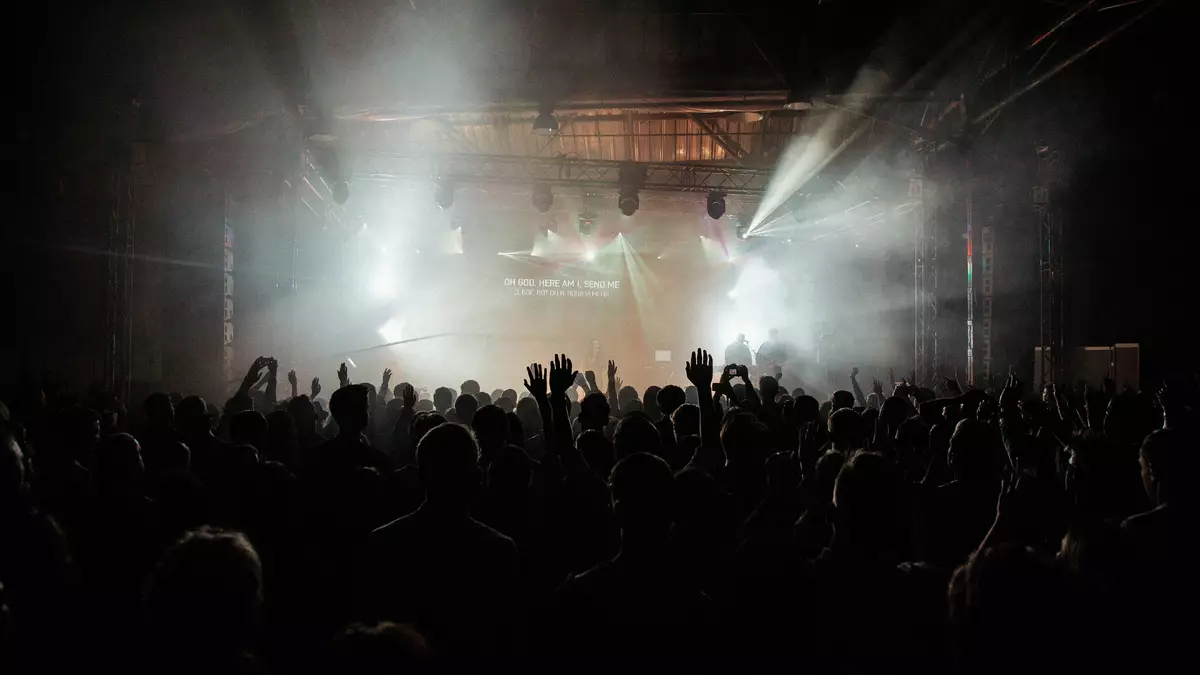
Atmosphere-wise, a hypothetical R.E.M. show in 2026 would hit different than it did in their 90s peak. Back then, they were defining what “alternative” meant. Now, they’re the band behind the band behind your favorite band. You’d be standing in a crowd where half the people discovered them via streaming, next to older fans who remember seeing them in tiny clubs and sweaty college gyms.
Picture it: an outdoor twilight slot, the band walking out with zero backing tracks and minimal production. Maybe some simple visuals—grainy film, abstract art, old tour footage—but mostly just guitars, bass, drums, and Stipe’s presence doing the heavy lifting. "Drive" as a slow-burn opener. "Orange Crush" punching straight after. A mid-set quiet stretch with "Nightswimming" and "Country Feedback" so intense you can hear people sniffling. Then a final run of "Man on the Moon", "The One I Love", and "It’s the End of the World as We Know It" that turns the whole place into one giant, slightly off-key choir.
Even pulling from verified past setlists, you can see how they liked to balance the night: a few deep cuts for the hardcore fans, the expected big singles, and a couple of left turns—maybe a Velvet Underground cover, maybe something like "Cuyahoga" or "Begin the Begin" thrown in just to remind you how deep the bench goes.
That’s why the reunion fantasy hits so hard online. It’s not just nostalgia. It’s the sense that this catalog hasn’t really had a proper, multi-generational live victory lap.
What the web is saying:
Rumor Mill: What Fans Are Speculating
You don’t have to dig far into Reddit or TikTok to see how unhinged—in a lovable way—the R.E.M. rumor machine has become.
On Reddit, fans analyze every quote like they’re decoding state secrets. A casual "never say never" in an interview? That becomes a hundred-comment thread arguing over whether Michael Stipe is softening his stance. Someone spots Peter Buck at a festival in Europe? That becomes a theory that he’s "scouting" how the current scene feels.
Here’s a sampling of what people are currently convinced might happen, even without official receipts:
- The "one night in Athens" theory. A recurring fan idea is that if R.E.M. ever play again, it’ll be a single, insanely emotional show in Athens, Georgia—maybe for charity, maybe for a hometown cause, maybe just as a thank you. Every time a local venue posts something cryptic, the comments fill with "IS THIS THE R.E.M. THING?"
- Anniversary shows around a classic album. With each big album anniversary, there’s speculation about a limited run of theater shows built around playing one record front-to-back—Automatic for the People, Murmur, or New Adventures in Hi-Fi are the main candidates fans toss around.
- Festival surprise headliner. Festival wishlists on r/music and r/festivals often look like: "Rage, Daft Punk, R.E.M." People will mock up fake posters with R.E.M. as the "mystery" headliner, then argue about whether the band would ever agree to something that chaotic.
- New music in sneaky form. Another theory: no big reunion, but occasional tracks quietly dropped under a side-project name, or R.E.M. members collaborating in ways that are R.E.M.-ish without being branded as a full return.
TikTok’s take is more emotional and less forensic. Clips of "Everybody Hurts" soundtrack breakup confessionals. "Nightswimming" becomes the audio for “the one that got away” edits. More upbeat tracks like "Shiny Happy People" and "Stand" get used ironically, paired with chaotic or darkly funny visual stories.
There’s also a mini-wave of young musicians openly citing R.E.M. as a core influence. Bedroom-pop artists talk about Stipe’s refusal to explain every lyric. Indie bands point to how the group evolved without chasing trends. That, in turn, fuels the idea that if the band ever did come back, it wouldn’t feel like a legacy act cash grab; it would feel like them sitting comfortably inside a scene that finally caught up with them.
Of course, with hype comes skepticism. Some fans are protective, saying things like, "I actually love that they ended it cleanly—don’t break the spell." Others point out how reunion culture can flatten history, reducing a band’s entire journey to a greatest-hits lap. A common sentiment: If R.E.M. ever do play again, it needs to be on their terms, not just because the internet asked nicely.
For now, the rumor mill is basically a group therapy session. People don’t just want a show; they want the feeling those records gave them during breakups, road trips, late-night walks, or moments when the world felt too loud. Speculating about a reunion is another way of admitting how much those songs still hold.
Key Dates & Facts at a Glance
- Band origin: R.E.M. formed in Athens, Georgia, USA, in 1980.
- Classic line-up: Michael Stipe (vocals), Peter Buck (guitar), Mike Mills (bass, keys, vocals), Bill Berry (drums).
- Breakthrough era: Early to mid-80s via indie/college-radio releases like Murmur (1983) and Reckoning (1984).
- Major-label jump: Signed to Warner Bros. in the late 80s, leading to albums like Green (1988), Out of Time (1991), and Automatic for the People (1992).
- Signature tracks most discussed online: "Losing My Religion", "Everybody Hurts", "Man on the Moon", "The One I Love", "It’s the End of the World as We Know It (And I Feel Fine)", "Nightswimming", "Orange Crush".
- Live reputation: Known for emotionally intense shows that balanced deep cuts and hits, with very little reliance on flashy production.
- Retirement: The band announced the end of R.E.M. in 2011, framing it as a mutual, positive decision.
- Post-break activity: Members have stayed active via solo projects, collaborations, and appearances, keeping the catalog in the public eye.
- Streaming impact: Key songs spike periodically due to TV/film placements, TikTok trends, and anniversary press cycles.
- Official info source: The most reliable hub for news, statements, and archival drops remains the band’s official site at remhq.com.
FAQ: Everything You Need to Know About R.E.M.
Who are R.E.M., in simple terms?
R.E.M. are one of the defining alternative rock bands of the last 40+ years. They started as an indie, college-radio favorite out of Athens, Georgia, with murky vocals, chiming guitars, and lyrics that felt like half-remembered dreams. Over time, they evolved into a global act that could write massive, emotionally direct songs without losing their weirdness. If you love artists who balance vulnerability with mystery—think Radiohead, Phoebe Bridgers, The National—there’s a straight line back to R.E.M.
Are R.E.M. officially back together?
No. As of early 2026, R.E.M. have not announced a formal reunion, tour, or new album. The band ended in 2011 and has consistently said they’re content with that call. What has happened is a steady stream of reissues, interviews, and occasional appearances or collaborations involving band members, which the internet naturally reads as "signs." Those moments keep the reunion hopes alive, but they’re not the same thing as a confirmed comeback.
Why do people keep talking about a reunion if nothing’s confirmed?
Two reasons: emotional attachment and precedent. Emotionally, R.E.M. soundtracked huge life moments for multiple generations. When people say "I need to see them once before I die," they mean it. On the precedent side, we’ve watched a lot of bands do the "we’re done forever… okay, we’ll do a few shows" pivot. Fans have internalized that arc. So any hint—an interview quote, an anniversary, a band member spotted near a studio—gets plugged into that pattern, even if R.E.M. themselves aren’t signaling a change.
What would a realistic R.E.M. tour look like in 2026?
If it ever happened, it would probably be limited and very intentional. Think: a short run of major cities, carefully chosen festival slots, or even a handful of theater-level shows instead of a grind of 60+ dates. The band has always cared about pacing and context, and they’ve already lived the heavy touring life. A modern run would likely emphasize comfort, sound quality, and emotional impact over sheer scale.
Setlist-wise, you’d expect a heavy mix of 80s and 90s material, with a few late-period tracks and deep cuts rotated in. They’ve always been good at avoiding "nostalgia jukebox" energy, so even the hits would be delivered like they still mean something, not just as obligations.
How does R.E.M. actually influence current artists?
Beyond specific songs, R.E.M.’s influence is more about how to be a band. They proved you can be massive without explaining everything. Michael Stipe rarely gave neat answers about song meanings, which gave fans space to project their own stories. That approach is all over modern indie, where lyrics are raw but not always linear.
Musically, their blend of bright guitars and melancholy mood shows up everywhere: from 2000s indie like Death Cab for Cutie and The Shins, to more recent acts who mix jangly guitars with sad-girl/boy storytelling. Their willingness to evolve—jangle-pop to politically sharp rock to atmospheric ballads—also gave later bands permission to change sound without "betraying" their roots.
Where should a new fan start with R.E.M.?
If you’re coming in fresh, a good starter route is:
- For instant emotional hit: Automatic for the People – it’s cinematic, sad, gorgeous, and weirdly comforting.
- For "classic alt-rock" energy: Out of Time and Green – more hooks, more radio moments, still vibey.
- For early, left-of-center cool points: Murmur and Reckoning – hazier, more cryptic, very "found this on a vinyl wall at an artsy friend’s house."
- For underrated later gems: New Adventures in Hi-Fi and selected tracks from the 2000s ("Imitation of Life", "Bad Day", "Supernatural Superserious").
From there, dive into live clips on YouTube to see how the songs breathe in a room. The studio versions are great, but something about Stipe pacing a stage, eyes locked on the crowd, unlocks a different side of them.
Why are R.E.M. suddenly popular with Gen Z and younger millennials?
Streaming culture and mood-driven listening helped a lot. R.E.M. songs slot perfectly into playlists with tags like "late-night drive," "anxious but hopeful," or "90s alt classics." When people go looking for songs that feel like they’re quietly holding your hand through a rough patch, "Everybody Hurts" and "Nightswimming" show up fast.
There’s also a current craving for authenticity that R.E.M. naturally fits. Stipe’s voice cracks, mumbles, and lifts in ways that don’t sound airbrushed. The band’s political and social stances were loud but never clout-chasing. That combination—emotional honesty without over-explaining—is weirdly aligned with the way a lot of younger artists and listeners think now.
How can you keep up with real R.E.M. news and not just rumors?
First stop: the official site at remhq.com. That’s where official statements, releases, and archival projects tend to surface. After that, follow verified band and member channels on social platforms, and treat everything else—anonymous "insider" posts, speculative festival posters, vague "a friend in the industry told me" comments—as entertainment, not proof.
If you treat the rumors as part of the fandom fun, not guaranteed outcomes, you end up in the best spot: fully enjoying the music that already exists, while leaving the door open for whatever the band decides in their own time.
Disclaimer regarding our articles: No investment advice, no buy or sell recommendation. Information on prices, companies, and markets is provided without guarantee; changes are possible at any time. Stock market transactions can lead to substantial losses. Our articles are created and reviewed in whole or in part automatically with the support of AI.