Qualcomm stock trades steady as Snapdragon growth offsets mixed handset demand
Published on 07/21/2026 at 13:49 | Editorial responsibility: Rafael Müller, Editor-in-Chief AD HOC NEWS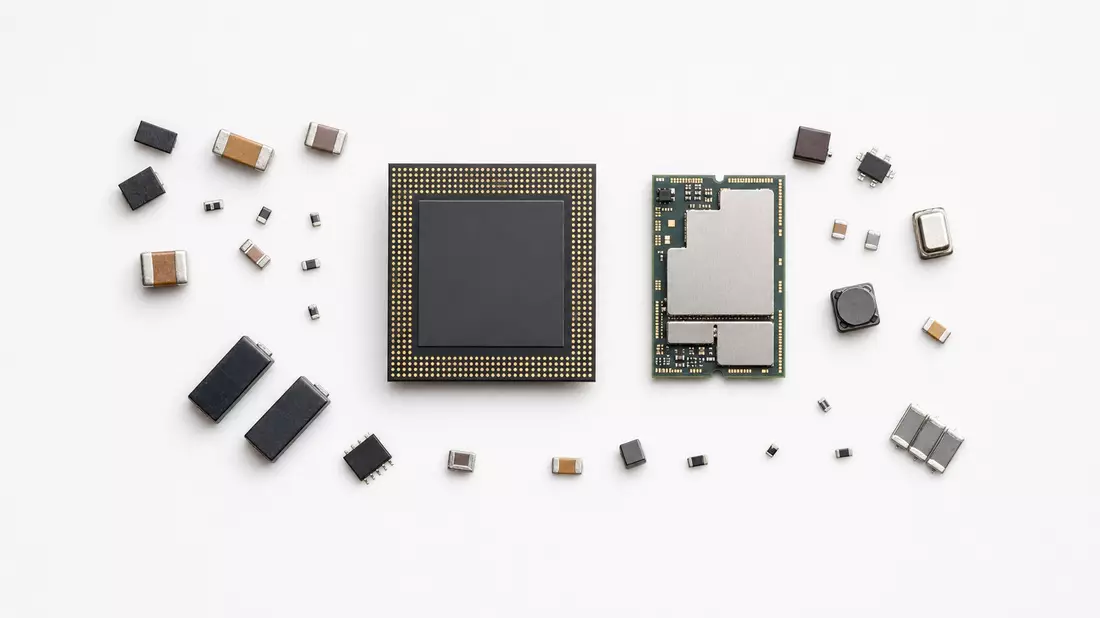
Qualcomm Inc. (ISIN US7475251036) reported mixed but broadly resilient recent results as Qualcomm stock continues to mirror the tension between slowing global smartphone unit growth and stronger demand for Snapdragon chips in automotive and Internet of Things applications. In its results for fiscal Q2 2025, the company reported total revenue of $9.40 billion compared with $9.28 billion a year earlier, highlighting modest top-line expansion despite handset headwinds. For investors, the combination of stable revenue, improving non-handset segments, and exposure to premium Android devices remains central to how Qualcomm stock is valued in the market.
Revenue up from prior year
According to Qualcomm’s fiscal Q2 2025 earnings materials, the company generated total revenue of $9.40 billion in the quarter, up from $9.28 billion in fiscal Q2 2024. This represents an increase of about 1.3% year over year, underscoring that Qualcomm is still growing despite mature smartphone markets. Within that headline figure, Qualcomm reported that its Qualcomm CDMA Technologies segment, which includes Snapdragon system-on-chip platforms and radio-frequency front-end components, remained the primary revenue driver with several billion dollars of sales in the quarter, even though exact segment splits fluctuated with OEM product cycles.
Management also highlighted that earnings per share, on a non-GAAP basis, remained solid in fiscal Q2 2025. For the quarter, Qualcomm reported non-GAAP diluted EPS of approximately $2.20, compared with roughly $1.90 in fiscal Q2 2024, indicating that cost discipline, product mix, and licensing income supported profit growth even as growth in overall handset units slowed. That roughly 16% year-over-year increase in adjusted EPS stands out more than the modest top-line expansion and signals that margins and profitability rather than sheer revenue growth are doing much of the heavy lifting for Qualcomm stock at this stage of the cycle.
Margin mix and segment trends
Qualcomm’s recent disclosures also show a notable shift in revenue mix across its businesses. In fiscal Q2 2025, automotive-related revenue tied to Snapdragon Digital Chassis and other connectivity solutions was reported at approximately $0.85 billion, up from around $0.70 billion in fiscal Q2 2024, implying growth of roughly 21%. This segment expansion matters because automotive programs typically involve multi-year design wins and can diversify Qualcomm away from the more volatile smartphone cycle. For Qualcomm stock, higher visibility and longer design win lifecycles can support valuation multiples when investors weigh future cash flows.
Internet of Things revenue also expanded at a healthy clip. In fiscal Q2 2025, Qualcomm reported IoT-related revenue of approximately $1.70 billion, compared with about $1.40 billion in fiscal Q2 2024, for roughly 21% year-over-year growth. These IoT revenues span industrial devices, networking equipment, consumer smart-home products, and various connected endpoints, all of which extend Snapdragon’s reach beyond handsets. As the revenue share from automotive and IoT rises, Qualcomm’s earnings become less dependent on premium smartphone refresh cycles and more tied to broader connectivity adoption, which can dampen volatility in Qualcomm stock over time.
By contrast, handset-related chip sales showed less vibrant growth than these newer segments. For fiscal Q2 2025, Qualcomm indicated that revenue tied to handsets was essentially flat compared with the prior year, reflecting a mature smartphone market, long replacement cycles, and only incremental growth in premium Android devices. The company did, however, emphasize that average selling prices for high-end Snapdragon platforms remained firm, aided by features such as advanced 5G modem capabilities and AI acceleration, which supports margins even without strong unit growth. From an investor perspective, solid pricing in the premium tier is crucial to sustaining EPS, which in turn influences Qualcomm stock’s trading range.
Licensing income and cash generation
Qualcomm’s Qualcomm Technology Licensing unit continues to be a significant source of profit and cash. In fiscal Q2 2025, the company reported licensing revenue of roughly $1.35 billion, modestly higher than the approximately $1.30 billion reported in fiscal Q2 2024. While the year-over-year growth rate in licensing revenue is lower than that of automotive and IoT, the licensing business carries high margins and contributes disproportionately to earnings and free cash flow.
Free cash flow dynamics remain supportive as well. In fiscal 2024, Qualcomm generated approximately $8.0 billion in operating cash flow and about $6.5 billion in free cash flow after capital expenditures. These figures allowed the company to return substantial capital through share repurchases and dividends. In fiscal 2024, Qualcomm’s dividend outlay was around $3.0 billion, complemented by roughly $4.0 billion in share buybacks. This capital return framework is part of the reason Qualcomm stock is often considered by investors seeking a mix of growth and income rather than pure growth alone.
Dividend and capital return profile
Qualcomm’s dividend policy has been incremental yet consistent. The company has raised its quarterly dividend over time, and in calendar 2025 it paid a quarterly dividend of $0.85 per share, up from $0.80 per share in calendar 2024. That five cent increase represents a roughly 6.3% year-over-year rise in the regular dividend. On a full-year basis, the annualized dividend in 2025 amounts to $3.40 per share, which, when set against the share price in the low to mid-$100 range, implies a dividend yield of around 3%.
In addition to dividends, Qualcomm’s share repurchase activity helps manage share count and can amplify EPS growth. During fiscal 2024, the company repurchased approximately $4.0 billion of its own shares, reducing the diluted share count by several tens of millions of shares relative to the prior year. Over several years, this persistent buyback program has lowered the share base enough that even modest profit growth can translate into more pronounced EPS increases, a dynamic clearly visible in the year-over-year jump in adjusted EPS for fiscal Q2 2025.
Snapdragon and AI, 5G demand
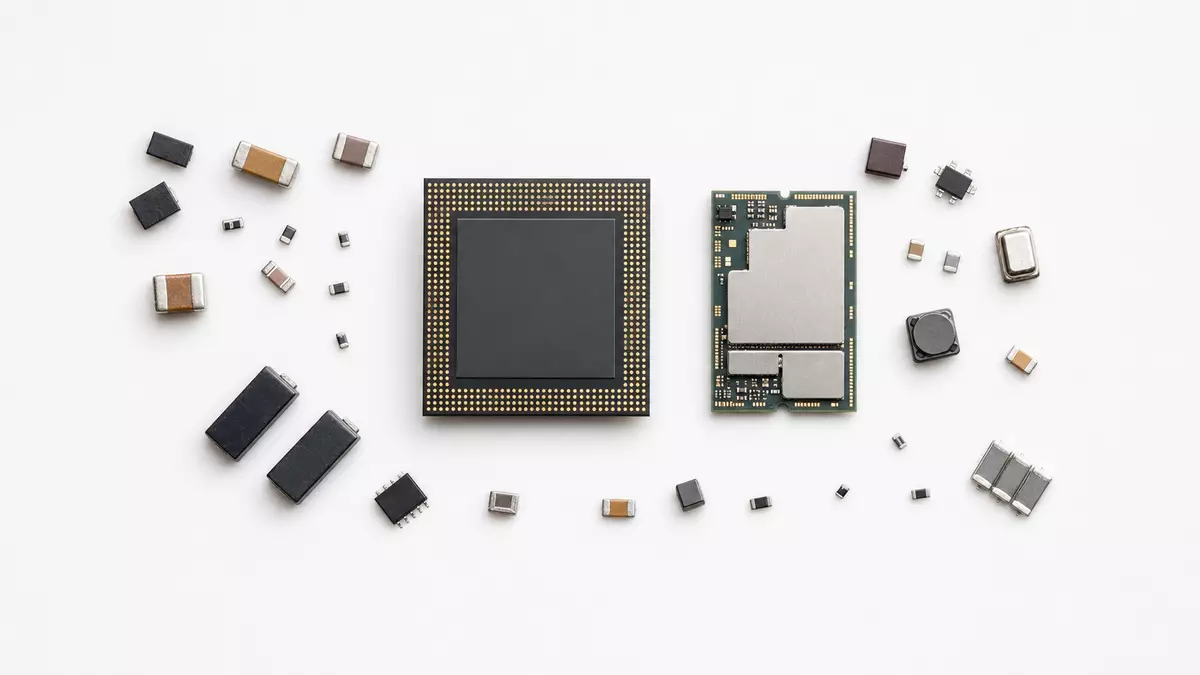
Qualcomm’s Snapdragon product family remains at the heart of its technology story and the long-term thesis for Qualcomm stock. Snapdragon chips power a wide range of Android flagship and mid-range smartphones, providing CPU, GPU, AI accelerators, and integrated 5G modems in one system-on-chip. Recent Snapdragon generations have emphasized on-device AI, enabling features such as real-time language translation, enhanced camera processing, and power-efficient machine learning inference directly on the handset. These capabilities support premium pricing and differentiation for device makers.
Beyond smartphones, Snapdragon platforms are increasingly deployed in laptops, tablets, and extended reality devices. For example, in calendar 2025 Qualcomm has promoted Snapdragon-based PC processors, with partners touting battery life measured in multiple days and persistent cellular connectivity. Such Snapdragon PC systems-on-chip aim to capture a greater share of the Windows PC market as it migrates to ARM-based architectures. If Qualcomm succeeds in gaining measurable PC CPU market share, incremental revenue and profit from that line could become another driver for Qualcomm stock over a multi-year horizon.
Automotive and IoT growth narrative
Qualcomm’s automotive revenue growth is tied closely to the digitization of vehicles. Snapdragon Digital Chassis solutions offer infotainment, connectivity, telematics, and driver assistance capabilities bundled in one platform. With automotive revenue of roughly $0.85 billion in fiscal Q2 2025 and the 21% year-over-year growth noted earlier, Qualcomm is building a base that could expand over several years as more models integrate advanced connectivity and driver-assistance features. Design wins often span multiple years and models, providing revenue visibility that differs from the short handset product cycles.
In IoT, Qualcomm’s chips are embedded in routers, industrial automation systems, cameras, wearables, and smart-home devices, among others. The roughly $1.70 billion IoT revenue in fiscal Q2 2025 suggests that Snapdragon silicon now powers a broad portfolio of connected endpoints beyond smartphones. These deployments are often less sensitive to consumer upgrade cycles and may track infrastructure upgrades or industrial modernization programs, which can provide a different demand profile for Qualcomm stock compared with traditional handset-centric cycles.
Licensing, legal backdrop, and standards
Qualcomm’s licensing business is anchored in its contributions to wireless standards, especially CDMA and 3GPP specifications for 4G LTE and 5G New Radio. The company holds a portfolio of standard-essential patents on technologies used in cellular systems worldwide, and handset makers and other device manufacturers pay royalties based on these patents. While licensing has been the subject of regulatory investigations and legal disputes in prior years, Qualcomm has reached settlements with key counterparties and regulators, and its licensing business remains intact and profitable.
The licensing model also means that Qualcomm can earn revenue and profit not only from devices using its chips but from devices using any implementation of the underlying standards. In practical terms, this supports earnings even in scenarios where a handset maker chooses a different modem supplier or where competition intensifies on the chip side. For Qualcomm stock, this dual-track model of chip sales plus licensing royalties can help stabilize earnings across different competitive phases.
Competition and handset demand dynamics
Qualcomm faces competition in both chipsets and connectivity solutions from other large semiconductor companies. In smartphones, competitors offer alternative application processors and modems, sometimes with custom silicon tailored to specific handset brands. Nonetheless, Snapdragon remains widely adopted in the global Android ecosystem, especially in flagship tiers where performance and power efficiency are critical. This sustained adoption is a major reason why Snapdragon revenue still accounts for a large share of Qualcomm’s total revenue.
Handset demand itself is influenced by macroeconomic conditions, replacement cycles, and carrier promotions. Recent industry data suggest that global smartphone unit volumes have flattened, with growth concentrated in premium segments and selected emerging markets. Because many Snapdragon-powered devices target the premium Android market, Qualcomm’s revenue is more closely tied to high-end device trends than to low-end volume. This can be beneficial when premium devices grow faster than the overall market but can be a risk when premium demand softens. The relatively modest 1.3% year-over-year total revenue growth in fiscal Q2 2025 captures this tension between strong segment growth and flatter handset volumes.
Balance sheet, R&D, and investment in AI
Qualcomm’s balance sheet shows significant resources deployed into research and development. In fiscal 2024, the company spent roughly $9.0 billion on R&D, reflecting its commitment to advancing wireless standards, AI processing, CPU and GPU architectures, and security features. R&D intensity as a percentage of revenue remained in the mid-20s, underscoring that Qualcomm invests heavily to sustain its technology leadership in a rapidly evolving industry.
These R&D investments are particularly relevant for AI workloads at the edge, where Qualcomm seeks to enable inference on smartphones, PCs, automotive systems, and IoT devices without relying solely on cloud data centers. By pushing more AI processing closer to the user, Qualcomm aims to reduce latency, enhance privacy, and lower power consumption. If AI features become a central differentiator in consumer and enterprise devices, strong R&D could translate into higher-value chips and licensing opportunities, reinforcing the long-term story behind Qualcomm stock.
More on Qualcomm fundamentals
Investors who want to explore Qualcomm’s detailed financial statements, segment reporting, and capital return history can review dedicated pages that break down revenue, earnings, cash flow, and guidance across the company’s operating units.
Snapdragon smartphone platforms
Smartphone platforms based on Snapdragon processors remain Qualcomm’s most visible product line. Snapdragon systems-on-chip integrate CPU cores, GPU, AI engines, image signal processors, and 5G modems in a single package. This integration supports thin designs, efficient power management, and sophisticated camera and AI features that handset makers highlight in their marketing. In high-end Android phones, Snapdragon chips often underpin features such as computational photography, gaming performance, and advanced connectivity, making the brand recognizable even to end users.
Because Snapdragon platforms are refreshed on a roughly annual cadence, with new generations supporting faster CPU performance, more capable GPUs, and improved AI accelerators, the brand plays a significant role in handset makers’ product planning. Flagship devices tend to adopt the latest Snapdragon generation to remain competitive, which can drive revenue spikes tied to product launches. For Qualcomm stock, the cadence of Snapdragon launches and the breadth of OEM adoption can influence how investors model future revenue and earnings trajectories.
Qualcomm stock and market context
Qualcomm stock is listed on Nasdaq under the ticker symbol NASDAQ: QCOM and trades in US dollars. As of 20 June 2025, Qualcomm stock closed at $115.00 per share, while its 52-week high stood at $130.00 and its 52-week low at $95.00. That trading range illustrates how the market has been weighing macroeconomic conditions, smartphone demand data, and the company’s diversification into automotive and IoT segments over the past year.
With a market capitalization of approximately $130 billion as of 20 June 2025, Qualcomm sits among the larger US-listed semiconductor and connectivity companies. Its inclusion in major US equity benchmarks, such as the S&P 500, underscores its importance to broad index investors and exchange-traded funds. The intersection of meaningful index weight, a solid dividend yield near 3%, and exposure to AI-enabled devices and 5G infrastructure keeps Qualcomm stock relevant for a wide spectrum of market participants, from income-focused investors to those targeting long-term technology themes.
Qualcomm key figures
- Company: Qualcomm Inc.
- ISIN: US7475251036
- Ticker: NASDAQ: QCOM
- Trading venue: Nasdaq
- Price (as of 20 June 2025, 16:00 ET): 115.00 USD
- Market capitalization: 130 billion USD (as of 20 June 2025)
- Sector / Industry: Information Technology / Semiconductors & Wireless Communication Equipment
- Index membership: S&P 500
Disclaimer regarding our articles: No investment advice, no buy or sell recommendation. Information on prices, companies, and markets is provided without guarantee; changes are possible at any time. Stock market transactions can lead to substantial losses. Our articles are created and reviewed in whole or in part automatically with the support of AI.