

Psychedelic Rock vs. Post Punk: Mystery Art Orchestra’s Modern Hybrid
Published on 04/28/2026 at 17:53 | Editorial responsibility: Rafael Müller, Editor-in-Chief AD HOC NEWS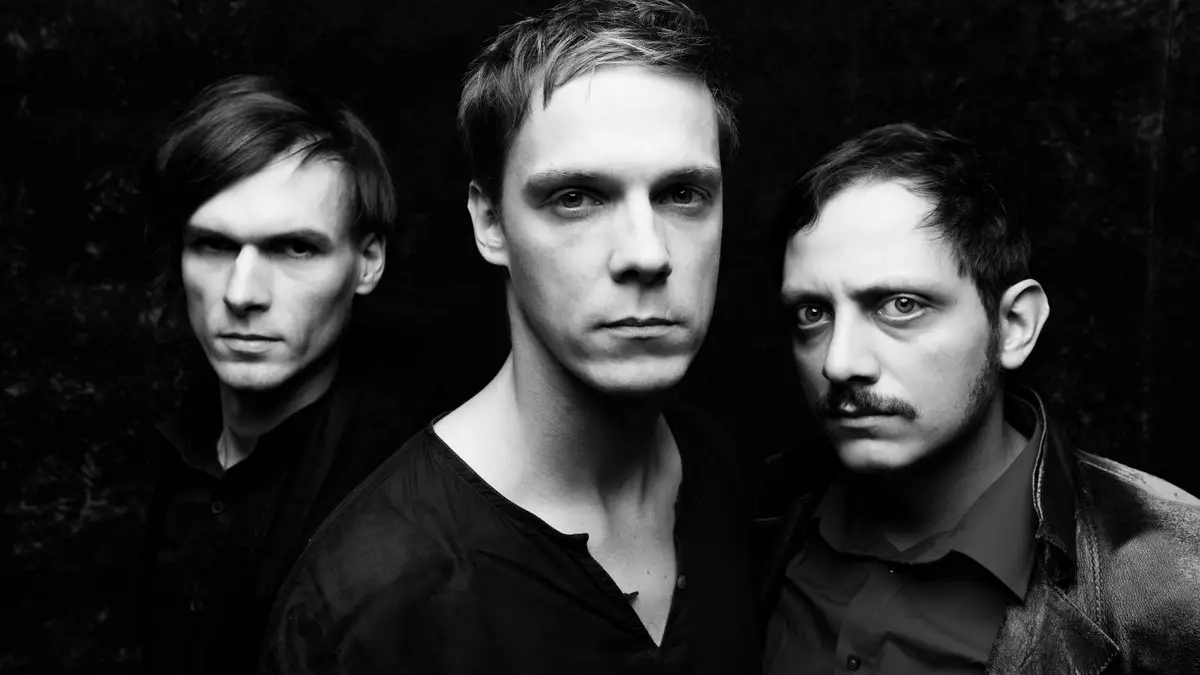
Music history rarely moves in a straight line. Styles that once felt tied to a specific decade keep returning in new forms, filtered through fresh technology, social conditions, and listening habits. Psychedelic rock, born in the late 1960s, and post punk, shaped in the late 1970s and early 1980s, both emerged from moments of cultural friction and experimentation. Today, younger bands are revisiting those eras not as a nostalgia exercise but as a toolkit. They borrow textures, rhythmic ideas, and production philosophies to address present-day anxieties.
Mystery Art Orchestra are one of the more intriguing examples of this approach. At their core, they operate as a post punk band: bass-forward, rhythmically driven, and lyrically focused on unease, urban life, and emotional dislocation. But they also fold in atmospheric, sometimes dreamlike elements associated with psychedelic rock. Instead of chasing retro cosplay or trying to sound like a lost 1982 bootleg, they use these reference points as a framework to build their own identity.
To understand how Mystery Art Orchestra land in this space, it helps to look closely at the roots of both psychedelic rock and post punk: how each genre formed, what it values musically, and why their combination feels so natural to contemporary ears who jump daily from carefully curated playlists to algorithmic discovery feeds.
Tracing the Roots: Psychedelic Rock and Post Punk Explained
Psychedelic rock developed in the mid-to-late 1960s, largely in the US and UK, as musicians tried to capture altered states of consciousness, expanded perception, and a sense of stepping outside everyday reality. While drug culture is part of the story, the music itself is just as much about studio innovation, extended song structures, and a move away from verse-chorus simplicity.
Key characteristics of psychedelic rock include extended instrumental sections, a strong focus on atmosphere, and a push towards unconventional sounds. Guitars often use effects like reverb, delay, fuzz, and phasing to create swirling textures. Organs, early synthesizers, tape manipulation, and backwards recording were used to disorient the listener. Harmonic language could stretch beyond the standard major/minor pop forms, leaning on drones, modal progressions, or Eastern-influenced scales. The studio shifted from being a place to document a live performance to becoming a creative instrument in its own right.
Lyrically, classic psychedelic rock frequently addresses mind expansion, spirituality, social change, and surreal imagery. Songs could be long, drifting, and exploratory, emphasizing mood over immediate hooks. This was music designed to pull the listener out of ordinary time, whether in a hazy bedroom listening session or a late-night concert where improvisation mattered as much as the original composition.
Post punk, in contrast, arrived a decade later as a reaction to both mainstream rock excess and some of punk’s own limitations. While punk stripped rock down to three chords and a sneer, post punk took that rebellious energy and pointed it in more experimental directions. From the late 1970s onward, bands influenced by punk’s DIY ethos began incorporating dub, funk, electronic influence, and art school sensibilities into their sound.
Where psychedelic rock often aims for expansiveness and dissolution of boundaries, post punk tends to emphasize tension, angularity, and starkness. Rhythms are critical: basslines are frequently melodic and prominent in the mix, sometimes borrowing from reggae’s weight or funk’s movement, while drums lock into patterns that can be danceable yet anxious. Guitars might be sharp, brittle, and heavily rhythmic rather than thick and saturated. Instead of sprawling solos, you hear short, clipped figures, chiming harmonics, or sheets of noise used sparingly for impact.
Vocals in post punk often lean toward spoken delivery, chants, or detached singing. Themes include alienation, consumer culture, politics, urban life, and psychological unrest. The production can feel cold, minimal, or industrial, with emphasis on space and separation between instruments rather than a warm, unified blend. Reverb is used, but often to amplify isolation instead of dreaminess.
Both psychedelic rock and post punk grew out of counter-cultural impulses. Psychedelic rock pushed against conservative social norms and the commercial pop industry by encouraging experimentation and alternative lifestyles. Post punk, in turn, confronted both political disillusionment and a sense that rock music had fallen into formula. Bands worked with independent labels, embraced low-budget recording, and treated music as a platform for critique as much as entertainment.
Despite their differences, there are points of contact. Both genres value atmosphere, even if they use it differently. Both have a strong relationship with visual aesthetics and scene culture, influencing poster art, fashion, and photography. And both have left a deep imprint on modern indie, alternative, and experimental scenes. When a contemporary act like Mystery Art Orchestra pulls from these traditions, they tap into a long-running conversation about how guitar-based music can remain expressive and relevant without feeling nostalgic or trapped in one era.
Listeners today are used to rapid shifts between styles. A playlist might jump from drone-heavy psych to sharp-edged post punk within a few tracks. This creates a listening environment where genre boundaries feel more porous, and bands can assemble their sound from multiple historical threads. Psychedelic rock’s love of space and post punk’s disciplined rhythmic frameworks can complement each other: the former adds depth and mystery, the latter gives structure and urgency. Mystery Art Orchestra position themselves exactly in this overlap.
A Modern Synthesis: The Sound of Mystery Art Orchestra
Mystery Art Orchestra approach their music from a primarily post punk angle, but their arrangements reveal a deep awareness of psychedelic rock’s potential for atmosphere. The core of their tracks typically rests on insistent basslines and driving drum patterns. Instead of burying the rhythm section behind dense guitars, they allow bass and drums to guide the emotional direction of each song. The result is music that feels propulsive and grounded, even when other elements become hazier or more impressionistic.
The guitar work in Mystery Art Orchestra’s recordings often acts as a bridge between post punk and psych. On one hand, chord voicings and tight, repetitive figures reflect classic post punk influences: short attacks, ringing harmonics, and riffs that emphasize rhythm as much as melody. On the other hand, the band uses pedals and effects to stretch these parts into more atmospheric territories. Modulation, spacious reverb, subtle delay, and occasional fuzz thicken the edges of the sound, generating a sense of depth around the rhythmic spine.
Vocals follow a similar dual principle. Rather than leaning fully into either theatrical psych-rock crooning or detached post punk talk-singing, the band often adopts an emotionally restrained but present delivery. Lines are articulated clearly, with enough emphasis to cut through the mix, yet they rarely tip into melodrama. Lyrically, Mystery Art Orchestra explore anxiety, disconnection, late-night urban wandering, and the friction between personal identity and systemic pressures. These topics align closely with the darker social concerns explored by post punk, but the language occasionally leans toward the symbolic or dreamlike, echoing psychedelic rock’s preference for imagery over direct description.
Production choices further clarify their hybrid approach. Mystery Art Orchestra seem attentive to stereo imaging and the way sounds occupy space. Guitars and synths might drift outwards in the mix, creating a halo around the central pulse of the bass and drums. This spatial planning evokes the studio-conscious mindset of classic psych, yet the overall sound remains relatively dry and immediate compared to heavily saturated psychedelic productions. The mix keeps clarity, refusing to smear everything into a single wash.
The band’s visual and thematic aesthetic supports this tension between clarity and haze. Imagery associated with them often suggests late-night city lights, overcast skylines, and ambiguous interior spaces rather than bright, kaleidoscopic colors. Where 1960s psychedelia leaned into vibrant, swirling graphics and countercultural optimism, Mystery Art Orchestra feel more aligned with the world of neon reflections on wet pavement, strobing club lights, and digital static. Their name itself hints at a collective approach: “Orchestra” implies layered parts and careful arrangement rather than a standard rock quartet mentality.
In interviews and communications, they tend to present their work as a considered response to contemporary life, not as an attempt to reenact a lost era. Their songwriting favors song lengths that fit modern listening habits—typically under the six- or seven-minute psychedelic jam zone—while still allowing enough room for gradual build-ups or textural shifts. Bridges and outros sometimes carry the heaviest psychedelic influence, with parts opening up into repeating motifs, echo trails, or slow-burning crescendos. Yet these sections always snap back to rhythmically tight foundations.
When you hear Mystery Art Orchestra for the first time, the impression is not that of a band trying on retro costumes. Instead, you get the sense of musicians who study historical genres and extract specific techniques: the sense of spaciousness and altered perception from psychedelic rock, and the sharp focus, rhythmic discipline, and social unease from post punk. Their distinctiveness lies in how they combine these modes without overemphasizing either one, creating a sound that feels coherent and emotionally direct while still carrying an undercurrent of disorientation.
Current Releases and Live Performances
For many listeners, the most immediate way into Mystery Art Orchestra’s world is through their recent single releases and live shows. The band maintains an updated schedule of performances on their official website, where upcoming club dates, festival slots, and one-off appearances are listed with practical clarity. Anyone considering catching them in person can follow their touring activity via the Mystery Art Orchestra Homepage, which has become the central hub for news, ticket information, and official statements.
On stage, Mystery Art Orchestra translate their studio balance of post punk drive and psychedelic nuance into a more physically present form. The rhythm section usually operates as the anchor: the bass maintains repeating, hypnotic figures that lock into the kick and snare, creating a low-frequency pressure you feel as much as you hear. Guitars and any auxiliary synths then move around this framework, sometimes pushing sharp chords on the beat, other times spilling into feedback, delay tails, or sliding melodic fragments that hover above the rhythm.
The band seem attentive to dynamics in their live sets. Rather than delivering a flat wall of sound from start to finish, they structure shows as a sequence of arcs: periods of tight, almost claustrophobic intensity followed by more open sections where textures expand and the tempo occasionally relaxes. Lighting design, when available, tends to mirror this approach, shifting from stark, monochrome washes during their more post punk-leaning tracks to subtle color changes and slower-moving projections as songs tilt into more psychedelic terrain.
Mystery Art Orchestra also participate in the ongoing revival of physical media as an expression of listener support and as an artistic object. On their Bandcamp profile, they offer vinyl editions and CDs, often with thoughtful design, lyric inserts, and additional credits that deepen the sense of engagement beyond streaming. As more fans look for ways to support artists directly, platforms like Bandcamp serve as an important bridge between digital discovery and durable ownership. Those interested in exploring or purchasing their releases on LP or CD can do so via Mystery Art Orchestra on Bandcamp, where track-by-track credits and artwork give extra context to their recorded work.
The single "Going Under" stands out as a recent focal point in their catalog. The track’s arrangement demonstrates how the band manage to be both immediate and slowly unfolding. It typically begins with a bass pattern that feels simple on the surface but reveals small variations as the song progresses. The drums sit in a mid-tempo groove, neither rushing nor dragging, leaving space for tension to grow. Guitars enter with a brittle, chiming tone that feels aligned with post punk tradition, but as the song develops, layers of modulation and delay start to cloud the edges of each note.
Vocally, "Going Under" leans into a restrained but insistent delivery. The lyrics suggest being pulled into an emotional or psychological undertow: not a dramatic collapse, but a gradual, almost quiet surrender to pressures that accumulate over time. Rather than describing this state directly, the song uses repeated phrases and fragmented images, encouraging multiple interpretations. There is a sense of someone watching themselves sink, half-resisting and half-accepting the descent.
The accompanying video, available to stream at Watch "Going Under" on YouTube, reinforces the band’s subtle hybrid of influences. Visuals lean toward dimly lit interiors, flickering lights, and close-ups that cut away before offering complete clarity. Instead of explicit narrative, the video works with mood and texture, echoing the way their music uses repetition, small shifts in framing, and contrasts between tight spaces and blurred backgrounds. The editing respects the rhythm of the song, allowing certain shots to linger just long enough to feel slightly uncomfortable before moving on.
In terms of production, "Going Under" demonstrates a careful balance between rawness and detail. The mix preserves the edges of the guitar and vocal performances—tiny imperfections that remind you this is a human band, not a fully polished digital construct—while still delivering a low-end presence that translates well to headphones and club sound systems. Reverb is used selectively, giving the track a sense of physical space without dissolving it into echo. This approach aligns with their broader aesthetic: post punk’s dryness tempered with just enough psychedelic haze to suggest an inner life beneath the exterior.
As Mystery Art Orchestra continue to release new material and refine their live set, "Going Under" functions as a strong indicator of where they are headed: songs that can grip a room in real time while also revealing new layers on repeated listens, especially for audiences who have grown up comfortable jumping between archival post punk playlists and new psych-influenced indie acts.
Community Discussion & Reviews:
Audience Reception and the Independent Music Scene
Because Mystery Art Orchestra operate in the independent sphere, much of the early narrative around them has formed in online communities, small venues, and word-of-mouth exchanges rather than through major-label campaigns. This mode of growth often leads to slower but more durable engagement: listeners who discover the band tend to stick around, share tracks with friends, and hunt down live dates, rather than treating the music as disposable background noise.
Among fans of contemporary post punk and adjacent genres, the band’s appeal lies partly in their balance of familiarity and nuance. Listeners who gravitate towards bass-driven, rhythm-forward bands hear recognizable elements: the tension-building grooves, the stark vocal lines, the sense of underlying agitation. At the same time, the atmospheric touches and measured use of reverb, drones, and ambient guitar swells prevent the songs from feeling purely utilitarian or rigid. This combination speaks to an audience that wants intensity but is also drawn to introspective or cinematic soundscapes.
Independent radio shows, online zines, and niche playlists have started to pick up Mystery Art Orchestra tracks when curators look for artists who sit comfortably between multiple established categories. Their music can be programmed alongside classic post punk, modern darkwave, shoegaze-leaning acts, and even certain forms of experimental psych without sounding out of place. This cross-compatibility matters in a streaming-driven environment, where algorithmic suggestions and playlist inclusion can drastically shape a band’s reach.
Culturally, their blend of genres also resonates with younger audiences who live with constant information flux and overlapping identities. Psychedelic rock’s impulse toward escape and altered states maps onto current interests in mental health, introspection, and the search for meaning beyond productivity. Post punk’s focus on structural critique and personal unease aligns with contemporary conversations about precarity, inequality, and the difficulty of forming stable narratives in a fragmented media climate. When Mystery Art Orchestra incorporate both impulses, they mirror the internal contradictions many listeners feel: the desire to withdraw into private experience and the need to confront external realities.
Live, this tension becomes communal. In smaller venues, their shows can shift from head-nodding concentration during slower, atmospheric passages to collective movement when the drums and bass lock into a heavier groove. The crowd’s response is usually less about overt singalongs and more about shared absorption—people leaning forward, watching subtle changes in lighting or posture, while the music gradually builds pressure. After shows, conversations often center on particular songs that felt especially resonant for personal reasons, underlining the band’s ability to connect through mood and tone as much as through hooks.
Within the broader independent scene, Mystery Art Orchestra’s approach underscores an ongoing shift away from strict genre allegiance. Venues and festivals increasingly program lineups where post punk bands share stages with psych-influenced acts, noise artists, or electronic performers. This reflects not only curatorial tastes but also audience expectations: listeners are open to sequences where a sharp, rhythm-heavy set is followed by a more diffuse, reverb-heavy performance. Mystery Art Orchestra fit naturally into such lineups, able to connect with multiple sub-scenes without diluting their identity.
Critical reception so far tends to highlight their sense of restraint. Reviewers often comment on the band’s refusal to lean into exaggerated gothic tropes or psychedelic clichés. Instead of heavy-handed references or retro costume aesthetics, they keep their presentation grounded, allowing musical details to speak. This has led some commentators to describe them as a band suited to headphones as much as to club systems: tracks that work at moderate volume in everyday life but also scale up effectively in a full-room context.
As their audience grows, Mystery Art Orchestra illustrate how independent bands can build trust and credibility by maintaining consistent quality across recordings, live shows, and communication. They use their official channels to announce releases and tours with clear information rather than hype-driven slogans, and they keep a coherent visual identity that reflects their sound. For fans navigating a saturated field of new music, this combination of clarity and depth helps them stand out without needing to chase viral gimmicks.
Frequently Asked Questions
Who are Mystery Art Orchestra, and where do they come from?
Mystery Art Orchestra are an emerging independent band rooted in the post punk tradition, with a strong emphasis on rhythm, bass, and emotionally charged minimalism. While details about their exact origin story remain intentionally understated, they operate within a network of small venues, DIY promoters, and online communities that have supported a new wave of post punk and dark-leaning alternative acts. Their background reflects a common pattern in the current independent scene: members often come from previous projects, art school circles, or local scenes where experimental rock, electronic music, and visual culture intersect. Rather than foreground individual biographies, the band emphasize the collective identity suggested by their name, presenting themselves as a unified creative entity focused on sound and atmosphere.
How would you describe their sound in relation to psychedelic rock and post punk?
At its core, Mystery Art Orchestra’s sound is anchored in post punk: tied to repetitive, driving basslines, crisp drum patterns, and a vocal style that leans more toward controlled intensity than overt melodrama. However, they incorporate aspects of psychedelic rock through their use of space, texture, and effects. Guitars and synths may swell into swirling clouds at key moments, and some songs gradually build from tightly coiled tension to more expansive, dreamlike endings. Rather than filling tracks with lengthy solos or overtly 1960s-style motifs, they introduce psychedelia at the level of mood and sonic detail, using reverb, delay, drones, and layered overdubs to create a subtle sense of dislocation. You can think of their sound as a corridor between a stark, post-industrial club and a hazy, introspective inner room: concrete floors, but shadows moving at the edges.
What themes do Mystery Art Orchestra explore in their lyrics?
Lyrically, Mystery Art Orchestra tend to focus on psychological tension, urban existence, and the uneasy space between isolation and connection. Many songs describe states of being overwhelmed, watched, or slowly pulled downward by forces that are not always named directly. Instead of straightforward narrative storytelling, they favor fragments, images, and repeated phrases that accumulate emotional weight across a track. This approach invites listeners to project their own experiences onto the songs, whether related to insomnia, burnout, strained relationships, or the sense of drifting through technology-saturated environments. At times, there are hints of broader social critique—moments where individual distress seems tied to wider systems—but the band usually keeps this connection implicit rather than turning songs into explicit manifestos.
Where can new listeners start with their discography?
For those encountering Mystery Art Orchestra for the first time, the single "Going Under" is a strong entry point because it condenses many aspects of their style into one track: a steady, gripping rhythm section, guitars that begin with sharp clarity before softening into more atmospheric textures, and lyrics that capture a slow slide into emotional difficulty without resorting to melodramatic flourishes. Watching the video at Watch "Going Under" on YouTube can help newcomers connect the sonic and visual dimensions of the band’s work. From there, exploring their EPs or full-length releases via Mystery Art Orchestra on Bandcamp offers a broader view of their range, from more driving, club-ready tracks to slower, more immersive songs where the psychedelic influence grows stronger. Fans interested in the live dimension should check the Mystery Art Orchestra Homepage for performance dates and possible live recordings or session videos.
How do their live shows differ from the studio recordings?
In concert, Mystery Art Orchestra often emphasize physical impact and immediacy. While the studio recordings highlight careful layering and balanced mixes, the live environment brings out the raw edges of the performances: louder drums, more prominent bass vibrations, and guitars that might stretch slightly beyond their recorded counterparts in terms of feedback, sustain, or improvised accents. Songs sometimes run a bit longer, with intros and outros extended to build and release tension in response to the room’s energy. That said, the band generally avoids excessive jamming; they remain committed to structure and pacing. The audience experience can feel more visceral than on record, with lighting, volume, and crowd presence turning the internal psychological landscapes described in the lyrics into shared, physical moments.
How can fans support the band beyond streaming?
While streaming is often the first point of contact, deeper support for independent bands like Mystery Art Orchestra comes from several other channels. Buying vinyl or CDs through their Bandcamp page not only provides higher-quality audio and artwork but also directs revenue to the band more efficiently than most streaming platforms. Attending shows, purchasing merch at the venue, and sharing live footage and impressions on social media all contribute to their visibility in organic ways. Following their updates on the Mystery Art Orchestra Homepage ensures that fans hear about new releases and tours directly, rather than relying solely on algorithms. Thoughtful engagement—writing brief reviews, adding tracks to personally curated playlists, and recommending the band to friends with compatible tastes—remains one of the most effective ways to help sustain their work.
What makes Mystery Art Orchestra stand out in a crowded post punk revival?
The current wave of post punk-inspired bands is broad, with some leaning heavily on stylistic mimicry of classic acts and others trying to push the genre into more hybrid territory. Mystery Art Orchestra distinguish themselves by their measured integration of psychedelic elements and their commitment to subtlety. They resist the urge to caricature either genre: there are no exaggerated gothic theatrics designed for quick social media clips, and no retro psych pastiches focused on surface-level references. Instead, they prioritize songwriting that balances tension and release, production that leaves room for detail, and a visual identity that feels contemporary without being trend-chasing. For listeners who appreciate both the directness of post punk and the atmospheric pull of psych, but who also seek music that respects their attention and emotional intelligence, Mystery Art Orchestra offer a compelling, thoughtful option.


