
Psychedelic Echoes, Post Punk Nerves & Mystery Art Orchestra
Published on 03/31/2026 at 11:45 | Editorial responsibility: Rafael Müller, Editor-in-Chief AD HOC NEWS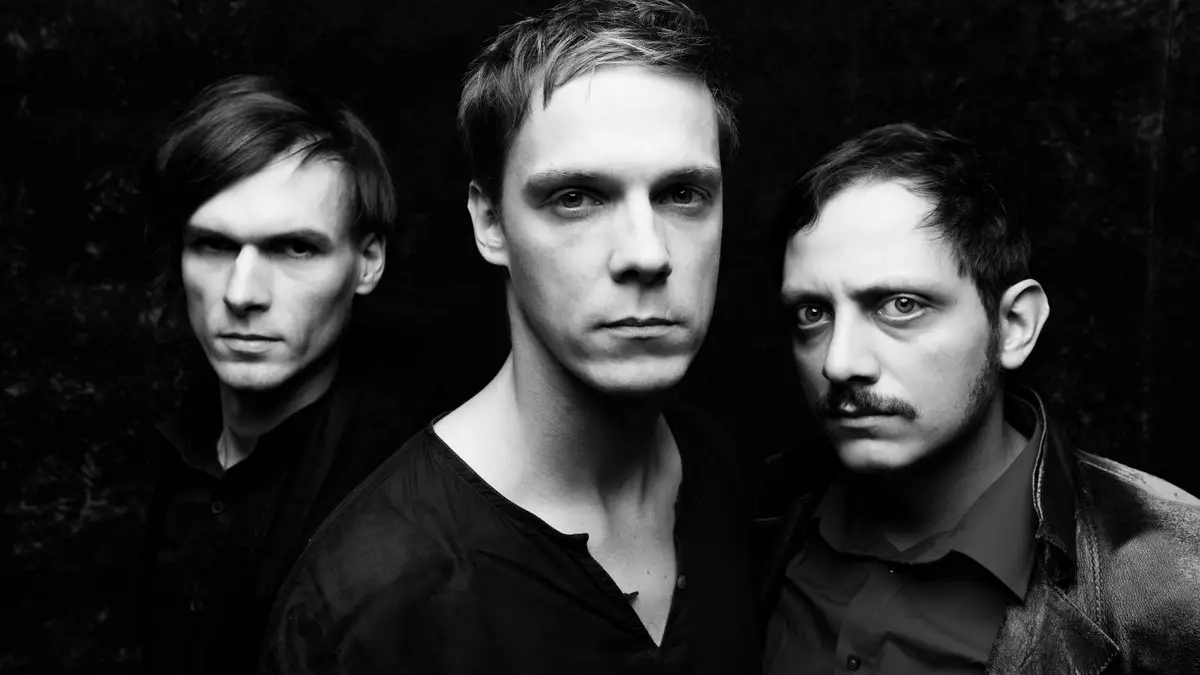
Rock history rarely moves in straight lines. Genres fade from the charts, only to resurface in new forms years later. Psychedelic Rock once promised expanded consciousness through reverb-soaked guitars and studio experiments. Post Punk arrived later as a colder, sharper response, stripping rock back to wiry basslines, anxious rhythms, and emotional honesty. Today, younger bands grow up with both legacies at their fingertips, streaming entire eras in an afternoon and bending them into something that feels current.
Mystery Art Orchestra sit right inside this feedback loop between past and present. On the surface, they are a Post Punk band: terse rhythms, prominent bass, and vocals that often sound more like a tense confession than a sing-along chorus. Underneath that, though, you hear hazy guitar textures, echoing synths, and patient, slowly shifting atmospheres that point directly back to Psychedelic Rock. Rather than chasing retro cosplay, they treat history as raw material, building a sound that speaks to crowded cities, online overload, and the numbed-out anxiety of now.
Understanding what makes Mystery Art Orchestra interesting means first understanding the two poles they work between: Psychedelic Rock and Post Punk. Both began as reactions against the mainstream; both reshaped how bands thought about sound, attitude, and meaning. But they did it in almost opposite ways. One stretched songs wide open, the other tightened them like a clenched jaw. That tension is where this band finds its voice.
Tracing the Roots: Psychedelic Rock and Post Punk Explained
Psychedelic Rock grew out of the mid-1960s, when rock musicians started to treat the studio as a creative instrument rather than just a room with microphones. Influenced by jazz improvisation, Indian classical music, and the counterculture’s curiosity about altered states, bands pushed beyond standard verse-chorus forms. Songs expanded in length, harmonies grew more adventurous, and timbres became just as important as melody.
Sonically, classic Psychedelic Rock is defined by a few recurring traits. Guitars often use fuzz, wah-wah, vibrato, and plenty of delay or reverb to smear the edges of each note. Organs and early synthesizers add swirling color. Drums sometimes lean into tom-heavy tribal patterns rather than strict backbeats, while bass lines move melodically around the chords instead of simply reinforcing them. Studio tricks—backward tape, panning effects, tape echo, phasing—create a sense that the soundstage itself is shifting under your feet.
Equally important is the mood. Psychedelic Rock tends to feel expansive and exploratory, even when it gets noisy or aggressive. The music invites you to sink into a texture, to notice the way a guitar feedback tone slowly bends, or how a drone in the background changes your perception of the whole track. Lyrically, the themes often circle around perception, dreams, altered realities, and critiques of social norms. The goal is not just to entertain but to stretch how the listener experiences sound and time.
Post Punk, which emerged about a decade later, reacted against a different kind of fatigue. By the late 1970s, many musicians were bored with arena rock excess and even with punk’s own quickly hardened formulas. Punk had reintroduced raw energy and simplicity, but some artists wanted to keep that intensity while opening up new sonic possibilities and deeper subject matter. Post Punk was their response: a deliberately experimental offshoot that kept punk’s DIY ethos but questioned what rock instrumentation could do.
Where Psychedelic Rock often dissolves the beat, Post Punk usually tightens it. The bass and drums become the main engine, frequently locked into repetitive, hypnotic grooves influenced by funk, dub, and early electronic music. Guitars turn more percussive and angular, favoring sharp stabs, chiming harmonics, and minimalist riffs over extended solos. Instead of floating in reverb-heavy clouds, many Post Punk tracks feel like they’re boxed into a small room, all nerves and edges.
The emotional tone also shifts. Post Punk lyrics lean into anxiety, alienation, and political or social criticism. Vocals might be half-spoken, shouted, or delivered in an icy, detached manner. There is often a refusal of rock heroics; the singers sound fragile, conflicted, or suspicious of easy answers. Even when Post Punk borrows from dub or disco, the groove can feel uneasy, as though the rhythm could fall apart at any second.
Despite their differences, Psychedelic Rock and Post Punk share several core traits. Both arose as counter-cultural movements, challenging what mainstream rock sounded like and what it could talk about. Both expanded the palette of guitar-based music, whether through new effects and studio approaches (in the case of psych) or through hybridizing punk with global rhythms and art-school experimentation (in the case of Post Punk). And both created strong visual cultures—psychedelia with its saturated colors and surreal artwork, Post Punk with its stark graphics, photocopied zines, and utilitarian fashion.
Modern bands, especially those raised in an era of streaming abundance, do not need to pledge allegiance to just one tradition. They can sample the rhythmic discipline and emotional clarity of Post Punk while still embracing the immersive textures and sonic curiosity of Psychedelic Rock. Mystery Art Orchestra operate in exactly this space, using history not as a museum but as a toolbox for their own questions about isolation, connection, and memory in the 2020s.
A Modern Synthesis: The Sound of Mystery Art Orchestra
Mystery Art Orchestra’s foundation is unmistakably Post Punk. Their songs typically revolve around insistent bass figures—lines that feel more like central hooks than background support. Drums favor tight, driving patterns, with hi-hats that flicker like static and snare hits that cut through the mix. The structures tend to be concise; even when they repeat a section, it feels deliberate and purposeful, as if they are circling a thought rather than drifting into a jam.
What sets them apart is how they layer Psychedelic Rock influences on top of that skeletal framework. Guitars frequently carry a clean, chorus-tinged tone reminiscent of late-70s and early-80s Post Punk, but they are processed with delays and reverbs more common to modern psych and shoegaze. You can hear this approach in the way lead lines trail off into shimmering echoes or in background swells that gradually rise like distant sirens. These elements do not distract from the rhythm section; they expand the sense of space around it.
Synthesizers and sound design further reinforce that hybrid identity. Rather than dominating the arrangements, synths appear as subtle pads, ghostly arpeggios, or filtered noise beds that creep in and out of the stereo field. These touches borrow the atmospheric mindset of Psychedelic Rock, where texture is as important as harmony, but they are executed with Post Punk restraint. Instead of endless solos or sprawling jams, Mystery Art Orchestra use these sounds to underline a lyric, bridge a verse to a chorus, or tilt the emotional color of a song at a key moment.
Thematically, their writing reflects a contemporary type of disorientation—not cosmic mysticism, but the mundane strangeness of digital life, late-night scrolling, and the blurred boundary between inner and outer worlds. Their lyrics land closer to Post Punk’s observational style than psychedelic idealism. Lines describe drifting through city streets, overhearing fragments of conversations, or feeling both highly connected and intensely alone. Yet the way those words sit inside the music—suspended above echoing guitars or submerged under a thick reverb tail—slips in that psychedelic sense of altered perception.
Vocally, there is a controlled tension. The singer rarely belts; instead, they ride the groove with a talk-sing delivery that lets small inflections carry emotional weight. At times, a double-tracked vocal or a delay on certain phrases creates a subtle sense of dissociation, as if two versions of the same narrator exist side by side. This is where Mystery Art Orchestra’s hybrid approach becomes more than a stylistic exercise: the production choices echo the themes. You are hearing a Post Punk narrator moving through a subtly psychedelic environment.
Visuals and aesthetics also reinforce this synthesis. The band’s artwork and online presence often use muted color palettes and stark typography aligned with Post Punk’s minimalist tradition. But within those layouts, you might notice blurred photographs, grainy gradients, or faint collaged details that evoke psychedelia’s dream logic. It is a careful balancing act: never full retro pastiche, never pure nostalgia, always leaning toward an atmosphere that feels slightly out of phase with ordinary life.
In a scene where genre boundaries are increasingly porous, Mystery Art Orchestra’s approach feels intentional rather than opportunistic. They are not throwing psych and Post Punk into a blender; they are choosing specific attributes from each—bass-forward grooves, anxious vocals, expansive guitar and synth textures—and organizing them around a coherent emotional core. The result is music that feels grounded in a recognizable tradition while still open to surprise, a quality that becomes especially clear in their live shows and latest releases.
Current Releases and Live Performances
The most direct way to understand how Mystery Art Orchestra operate in real time is to see them onstage. Their live performances lean heavily into the Post Punk element of their sound: the rhythm section plays with an almost machine-like steadiness, and the band favors tight song sequences over extended improvisation. Yet within that structure, there is constant motion in the details. Guitar delays are ridden live, feedback is coaxed at the end of phrases, and synth swells are carefully automated to rise and fall with the energy of the room.
Fans looking to catch this experience can find upcoming concert dates and tour announcements on the band’s official site, the Mystery Art Orchestra Homepage. The layout typically reflects their design sensibility: clean, functional, and free of unnecessary clutter, but with hints of the same atmospheric qualities that color their music. Beyond basic logistics, the site often collects visual documentation—photos, short clips, flyers—that give a sense of how the band curates their performance spaces, from small clubs to festival side stages.
Onstage, lighting often plays a quietly important role. Rather than constant strobes or chaotic color shifts, Mystery Art Orchestra tend to work with slow fades and gradients, echoing psych-rock’s patience but in a leaner, more controlled form. Murky blues and deep reds fill the stage while the band maintain a focused physical presence. They rarely posture; instead, they occupy their instruments, eyes often fixed on each other or on the floor, letting the sound carry the drama. It fits the music’s inner tension, where outward movement is measured but the sonic environment roils around it.
In the studio and on record, that environment becomes even more detailed. For listeners who value supporting independent artists beyond streaming, the band has embraced physical media. Their releases are available in formats like vinyl and CD through platforms that cater to collectors. On their Bandcamp page, Mystery Art Orchestra on Bandcamp, you can hear the albums in full while also accessing liner-note style descriptions, track credits, and often additional artwork.
Bandcamp, in particular, has become a key ecosystem for artists like Mystery Art Orchestra. It allows them to maintain control over pricing, offer limited-edition pressings, and build a direct line to listeners who prefer tangible objects—LPs with full-sized artwork, lyric inserts, or even experimental packaging. For a group whose sound thrives on atmosphere and detail, these physical editions are more than merch; they are extensions of the music’s world-building, giving fans another way to engage with the aesthetic choices that frame the songs.
Their latest single, "Going Under", captures their hybrid identity with unusual clarity. The track opens with a dry, almost mechanical drum pattern and a bass line that pulses in a steady, anxious rhythm. The first impression is pure Post Punk: lean, tense, and urban. As the song progresses, however, the guitars begin to stretch out. Clean, chorus-laced chords flicker at the edges of the mix, then lengthen into sustained notes that are fed through reverb and delay, creating a halo around the central groove.
The vocal performance on "Going Under" is restrained but quietly intense. The lyrics sketch out scenes of late-night isolation—screens glowing in dark rooms, train windows reflecting a face that looks more like a stranger than a self. Rather than leaning on obvious hooks, the chorus works through repetition and subtle harmonic shifts, mirroring the repetitive thought loops that can accompany anxiety or burnout. Small production details stand out on repeated listens: a fleeting reverse-reverb swell before a line, a filtered noise sweep leading into a bridge, a brief dropout of the rhythm section that sharpens your sense of space when it returns.
The accompanying video, available as Watch "Going Under" on YouTube, complements these themes visually. Rather than relying on heavy narrative, it favors mood and texture: dimly lit interiors, flickering reflections, and slow camera movements that linger on everyday objects until they feel unfamiliar. The editing rhythm tracks the song’s dynamics closely. During verses, the cuts are measured, almost static; as the chorus builds, the pacing tightens, layering shots that imply parallel realities or competing inner monologues. Occasional color treatments and blurs nod toward psychedelic video traditions, but the overall tone remains grounded, more about psychological drift than cosmic escape.
Taken together—the live show, the presence on Mystery Art Orchestra Homepage, the physical catalog at Mystery Art Orchestra on Bandcamp, and singles like "Going Under" with its focused video—the band present a coherent artistic identity. They operate at a junction where technology, independent infrastructure, and a deep awareness of rock’s past allow them to build a sustainable career that stays close to their creative values.
Community Discussion & Reviews:
Audience Reception and the Independent Music Scene
Mystery Art Orchestra operate in a part of the independent music world where growth is rarely sudden but often durable. Their audience has been building through small-club circuits, word-of-mouth recommendations, and algorithmic chance—playlists that connect Post Punk revival tracks with more experimental guitar music. Listeners who discover them often talk less about a single breakout hook and more about the sustained mood across a set or an album, which suggests that the band’s appeal lies in immersion rather than instant gratification.
On social platforms and comment sections around live clips, you see recurring themes in how fans describe the experience. Some focus on the physical sensation of the bass and drums, noting how the rhythm section can turn even modest sound systems into something enveloping. Others emphasize the contrast between the band’s restrained stage demeanor and the emotional weight of the music, describing shows where the crowd moves as much on the inside as on the outside. Many comments compare them to a web of influences—names from the first wave of Post Punk, along with modern psych and shoegaze acts—but stress that Mystery Art Orchestra do not feel like a tribute band.
In independent music circles, this subtlety tends to carry weight. Writers and smaller outlets that have covered the band often highlight the coherence of their vision: the way song structures, production, visuals, and release strategies reinforce each other. Instead of chasing a trend or a viral moment, they appear to work on long-term craft, refining a sonic identity over multiple releases. That approach aligns with a growing listener base, especially among Gen Z and younger millennials, who value continuity and depth from the artists they support.
Genre blending also plays a crucial role in how they connect with different pockets of the scene. Fans of Post Punk appreciate the rhythmic clarity, the sense of urgency, and the emotionally direct lyrics. Listeners drawn to Psychedelic Rock or shoegaze respond to the atmospheric guitar work and the layered production. Electronic music fans, particularly those into ambient or downtempo, sometimes pick up on the band’s patience in creating space and their sensitivity to texture. Mystery Art Orchestra thus benefit from overlapping communities, each bringing in new ears through recommendations and curated playlists.
The broader context is important here: independent artists now rely heavily on community infrastructure—DIY venues, micro-festivals, online radio shows, and curated nights at small clubs. Mystery Art Orchestra fit into this ecosystem neatly. They can sit on a bill with more straightforward Post Punk bands and still stand out for their atmospheric touches, or share a stage with psych-leaning acts and provide a more rhythmically grounded counterpart. This flexibility makes them appealing to promoters who need cohesive but varied lineups.
At the same time, the band’s commitment to physical releases and platforms like Mystery Art Orchestra on Bandcamp resonates with a cultural shift toward intentional listening. Many younger listeners, after years of background streaming, now seek formats that encourage full-album engagement and closer attention. Purchasing an LP or a limited CD, reading the credits, and following an artist’s direct communications fosters a sense of participation rather than passive consumption. Mystery Art Orchestra treat these interactions not as extras, but as integrated parts of their practice.
Crucially, the band’s genre synthesis mirrors the lived experience of many in their audience. Younger listeners do not typically inherit music in strict chronological order; instead, they jump from playlists of 80s Post Punk to modern psych, lo-fi beats, and underground rap in a single day. Mystery Art Orchestra’s combination of tight, bass-driven frameworks with expansive, reverb-laden textures reflects this reality. The music feels like an honest outcome of a nonlinear listening life, both familiar and slightly unsettled, which likely explains why it finds resonance across national borders and local scenes.
Frequently Asked Questions
Who are Mystery Art Orchestra, and where do they come from?
Mystery Art Orchestra are an emerging independent band rooted in the Post Punk tradition, with a distinct emphasis on atmospheric and psychedelic elements. While they are not built around a heavily mythologized origin story, what stands out is the shared background of the members as listeners first and musicians second. They grew up consuming a wide spectrum of guitar music—classic 60s and 70s psych, first- and second-wave Post Punk, shoegaze, and modern alternative—primarily through online discovery. Their geographic base is a mid-sized European city with a fertile DIY scene, where access to rehearsal spaces, small venues, and fellow musicians has encouraged a culture of cross-genre collaboration. This environment has allowed Mystery Art Orchestra to refine their sound in front of live audiences rather than in isolation.
How would you accurately describe their genre blend?
The most precise way to frame Mystery Art Orchestra is as a Post Punk band that strategically employs Psychedelic Rock techniques. The rhythmic language—prominent bass lines, metronomic drum patterns, and concise song structures—comes directly from Post Punk. The mood often leans toward introspection, unease, or critical observation, typical of the genre’s lyrical focus. However, they extend that foundation with psych-informed production choices: elongated guitar tones, extensive use of delay and reverb, subtle modulation effects, and synth layers that introduce a sense of depth and ambiguity. Rather than alternating between "Post Punk songs" and "psychedelic songs", they embed these worlds into the same track. The result might be described as atmospheric Post Punk or psychedelic-influenced dark indie, but the band themselves generally default to the simpler description of Post Punk to avoid boxing in their future evolution.
What themes do Mystery Art Orchestra explore in their lyrics?
Their lyrics engage with forms of contemporary disconnection: feeling anonymous in crowded spaces, navigating constant online presence, and the way personal histories blur under the weight of daily routine. Instead of grand narratives or overt political manifestos, they tend to focus on small, sharply observed scenes—someone staring at their phone in an empty train car, late-night walks past shuttered storefronts, or half-remembered conversations that replay in the mind long after they end. These vignettes hint at broader concerns: economic precarity, surveillance, emotional burnout. The band avoids heavy-handed messaging, relying on imagery and mood to suggest rather than declare. In this sense, their writing continues the Post Punk tradition of combining personal and social commentary, while the dreamlike framing of some lines nods to psychedelic literature and film.
Where should a new listener start with their discography?
For someone new to Mystery Art Orchestra, a practical entry point is their recent single "Going Under", along with its visual counterpart, Watch "Going Under" on YouTube. The track condenses their main strengths: a disciplined groove, economical arrangements, and atmospheric production. After that, exploring their releases on Mystery Art Orchestra on Bandcamp offers a fuller picture. Their earlier material leans slightly more raw and rhythm-forward, while more recent recordings show a growing confidence in layering and dynamic control. Listening chronologically reveals how the band has sharpened their identity without discarding experimentation. For vinyl or CD collectors, Bandcamp is also the primary hub for limited pressings, which often include extra artwork and sometimes alternative mixes or bonus tracks, giving additional context to the main releases.
How do their live performances differ from the studio recordings?
On record, Mystery Art Orchestra pay careful attention to subtle details—background drones, careful reverb tails, and small stereo movements that reward headphone listening. Live, they translate these choices into performance strategies rather than trying to reproduce every nuance exactly. Guitars might run through more compact pedal chains, focusing on a few key sounds instead of the full studio palette. Synth parts are often reinterpreted as simpler, more robust lines that can cut through venue acoustics. This adaptation preserves the songs’ shapes and emotional content while emphasizing impact and immediacy. The band also tends to tighten tempos slightly onstage, lending extra tension to tracks like "Going Under" without rushing them. Audience feedback—both literal applause and the subtle shifts in crowd movement—shapes how they stretch or compress sections, making the shows feel like living versions of the songs rather than static reproductions.
How can listeners best support Mystery Art Orchestra?
Supporting a band at Mystery Art Orchestra’s stage involves a mix of familiar and newer practices. Attending shows—found via the Mystery Art Orchestra Homepage—remains fundamental, as live performance revenue and direct merch sales often form the financial backbone of independent artists. Purchasing music and physical formats through Mystery Art Orchestra on Bandcamp ensures a more substantial share of income goes to the band compared with most streaming platforms. Beyond financial contributions, sharing tracks with friends, adding songs to playlists, and engaging thoughtfully on social media or in comment sections help keep momentum going in algorithm-driven environments. Writing short reviews on Bandcamp or posting live impressions can also assist promoters and curators in gauging interest, which in turn can lead to better gig opportunities and broader exposure for the band.
Are they part of a larger scene or movement?
Mystery Art Orchestra do not exist in isolation. They are part of a broader wave of bands that reconsider guitar music through the lens of both historical awareness and current realities. In many cities, there is a rising cluster of acts that draw equally from Post Punk, dream pop, shoegaze, and psych, using traditional rock instrumentation to explore themes often associated with electronic or experimental genres. Within this context, Mystery Art Orchestra’s commitment to song craft—recognizable structures, memorable motifs, and focused arrangements—makes them a reliable reference point. They can share bills with heavier, noise-leaning bands and still hold their own, or appear alongside melodic indie acts while offering a darker, more textural alternative. This adaptability has positioned them as quiet but steady contributors to a fluid, genre-agnostic underground that values sincerity, sonic curiosity, and long-term development over quick, viral peaks.


