

PACCAR stock trades steady as record 2024 earnings and strong truck demand underpin valuation
Published on 07/21/2026 at 06:17 | Editorial responsibility: Rafael Müller, Editor-in-Chief AD HOC NEWS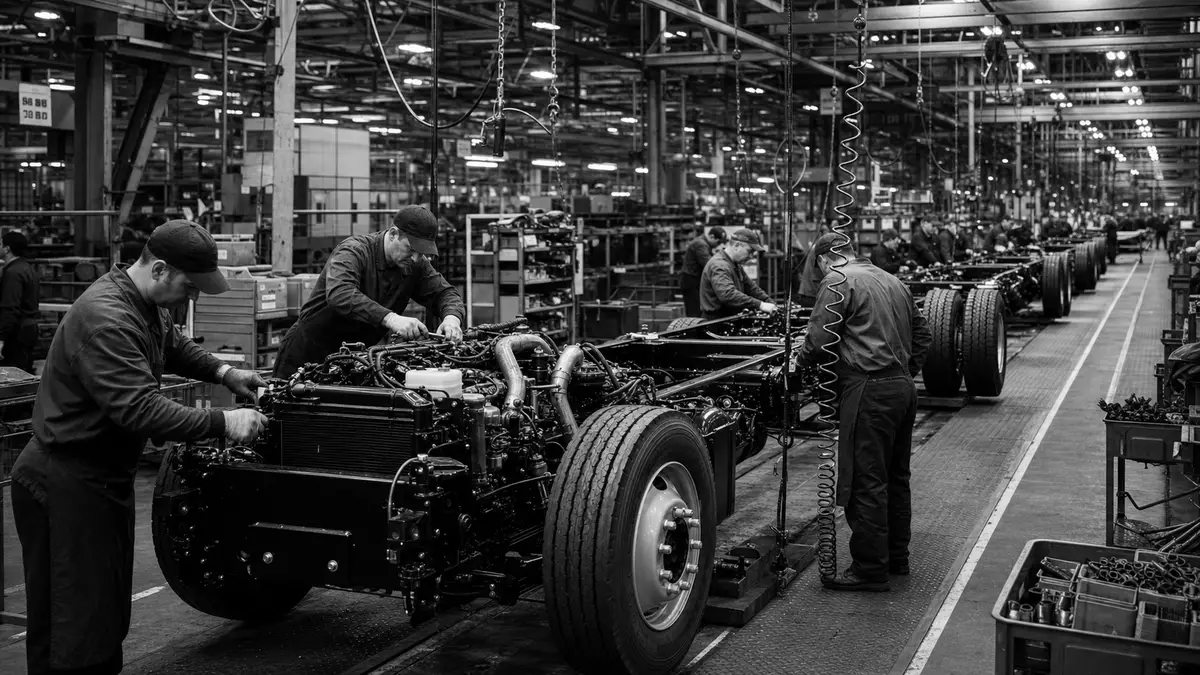
PACCAR stock is supported by record profitability and robust truck demand, with PACCAR Inc. (US6937181088) reporting all-time high earnings in fiscal 2024 according to the companys latest annual filing. The heavy-duty truck manufacturer, whose shares are primarily listed on Nasdaq in USD, has highlighted strong cash generation and disciplined capital returns as of fiscal 2024 in its investor materials. For investors, the interplay between truck deliveries, margins, and capital allocation now shapes the medium term trajectory for PACCAR stock.
Revenue up double digits in 2024
According to PACCARs most recent annual report for fiscal 2024, the company generated approximately $40.3 billion in consolidated net sales and revenues, compared with about $31.0 billion in fiscal 2023, representing year on year growth of roughly 30% driven by higher truck deliveries and parts sales. The report indicates that truck, parts, and other net sales accounted for the majority of revenue, supported by strong demand in North America and Europe across the Kenworth, Peterbilt, and DAF brands. Management emphasized that disciplined pricing, an improved product mix, and efficiency gains in manufacturing helped convert this revenue growth into record operating income in 2024.
PACCARs pretax income also reached a record level in fiscal 2024, with earnings before income taxes described in the filing as significantly above the prior year due to higher margins in truck and parts operations and continued strength in PACCAR Financial. Net income attributable to common shareholders in 2024 exceeded $4.0 billion, versus roughly $3.0 billion in 2023, a gain of about one third year on year. This expansion in profit reflects both top line growth and margin improvement, underscoring the companys ability to capture pricing power and manage costs even as volumes increased.
Operating margin and cash flow trends
PACCARs 2024 operating performance was marked by strong margins. Based on figures in the annual report, operating margin on consolidated net sales and revenues was around 17% in 2024, up from approximately 16% in 2023, as the company benefited from higher realization per truck, greater absorption of fixed costs, and an increasing contribution from aftermarket parts and PACCAR Financial. The margin expansion, though moderate in percentage terms, has significant impact in absolute dollars given the scale of revenue, and serves as a key indicator of PACCARs competitive position in the global truck market.
Cash flow from operations was also robust. PACCAR disclosed operating cash flow exceeding $5.0 billion in fiscal 2024, compared with around $4.0 billion in 2023, a roughly 25% year on year increase. This cash generation provided ample capacity to fund capital expenditures for new plants and technologies, maintain a strong balance sheet, and return capital to shareholders through dividends and share repurchases. The company has, in recent years, balanced investments in advanced powertrains and connected services with distributions to investors, which can be an important support for PACCAR stock valuation.
PACCAR reported that capital expenditures in 2024 were concentrated on manufacturing capacity expansion, aerodynamic and fuel efficient truck models, and digital systems such as its connected vehicle platforms. These investments aimed to enhance long term competitiveness while preserving near term margin discipline. At the same time, PACCAR continued to prioritize debt management, keeping leverage at conservative levels relative to earnings and cash flow, which tends to be viewed positively by equity investors concerned about cyclical risk in the truck industry.
Truck deliveries and geographic mix
Truck deliveries remain a core operational metric for PACCAR. In fiscal 2024, the company delivered approximately 190,000 trucks worldwide, up from around 150,000 units in fiscal 2023, representing growth of roughly 27%. The majority of these deliveries were in the heavy duty and medium duty segments, with particularly strong performance in Class 8 trucks in North America and heavy duty trucks in Europe. The increase in volumes reflects both replacement demand for aging fleets and continued freight activity, even as macro conditions showed signs of normalization from earlier peaks.
North America accounted for a substantial portion of PACCARs truck deliveries in 2024, with Kenworth and Peterbilt achieving share gains in key niches such as long haul, vocational, and regional haul applications. In Europe, DAF continued to expand its market positions in several countries, supported by new model launches and enhancements in fuel efficiency. PACCAR also expanded its presence in emerging markets through selective investments and dealer network development, though these regions still represent a relatively smaller share of total revenue and deliveries compared to North America and Europe.
The geographic diversity of PACCARs operations provides a degree of risk mitigation, as downturns in one region may be offset by resilience elsewhere. However, investors in PACCAR stock remain attentive to regional freight trends, regulatory developments affecting emissions and safety, and competitive dynamics among global truck manufacturers, all of which can influence orders and margins. The 2024 data suggest that PACCAR navigated these factors effectively over the period, but the cyclical nature of truck demand remains a structural consideration.
Aftermarket parts and PACCAR Financial
Aftermarket parts and services are a critical contributor to PACCARs earnings. In fiscal 2024, parts revenue was reported at around $5.5 billion, compared with roughly $4.5 billion in 2023, representing year on year growth of approximately 22%. This segment benefits from the growing installed base of PACCAR vehicles, and generally carries higher margins than the truck manufacturing business. The company highlighted ongoing investments in distribution centers, digital ordering platforms, and predictive maintenance solutions as drivers of parts revenue and profitability.
PACCAR Financial, the companys captive finance arm, also delivered strong results in 2024. Finance and other income reached approximately $1.5 billion, versus about $1.2 billion in 2023, an increase of roughly 25%. The growth reflected higher asset volumes, relatively stable credit performance, and disciplined underwriting. PACCAR Financial supports truck sales by offering tailored financing solutions, while also contributing a recurring stream of earnings that is somewhat less cyclical than pure truck manufacturing.
The combined contributions of parts and PACCAR Financial create a more balanced earnings profile for the group. For investors evaluating PACCAR stock, this diversification is meaningful because it can dampen volatility in earnings across the truck cycle. Revenue from these segments tends to be more closely tied to the size and age of the fleet rather than just new truck orders, providing an element of stability when orders slow.
Dividend, capital returns, and balance sheet
PACCAR has a long history of dividend payments and special distributions. In fiscal 2024, the company paid regular cash dividends totaling approximately $1.00 per share over the year, as well as a special dividend of around $3.00 per share toward the end of the period, reflecting confidence in its cash flow and balance sheet. In the prior fiscal year 2023, total dividends including specials were closer to $2.80 per share, indicating that distributions increased meaningfully year on year in 2024. This step up in dividends is one factor supporting investor interest in PACCAR stock.
In addition to dividends, PACCAR engaged in share repurchases during 2024, retiring a modest percentage of its outstanding shares through buyback programs authorized by the board. While the scale of repurchases was smaller than dividend outlays, buybacks contributed incrementally to earnings per share growth and capital return. The companys approach has typically emphasized sustainable regular dividends supplemented by specials and opportunistic repurchases, rather than aggressive leverage funded buybacks.
PACCAR reported total assets of more than $40 billion and equity of over $15 billion at year end 2024, underlining a strong balance sheet. Net debt, adjusted for cash and equivalents, remained modest relative to EBITDA, and credit ratings from major agencies remained in the investment grade range. This financial strength allows the company to invest through the cycle and withstand periods of weaker demand without compromising long term strategic priorities.
Technology investments and regulatory landscape
Beyond financial metrics, PACCAR has been investing heavily in technology. The 2024 report underscores capital allocation to advanced driver assistance systems, connectivity, and alternative powertrains including battery electric and hydrogen fuel cell solutions. Research and development expenses were approximately $400 million in 2024, up from around $350 million in 2023, an increase of about 14%. These expenditures aim to align PACCARs product portfolio with tightening emissions regulations and evolving customer requirements for efficiency and safety.
Regulatory developments in North America and Europe, particularly around emissions standards for heavy duty vehicles, remain a central factor for truck manufacturers. PACCAR has responded by introducing new, more fuel efficient engines and aerodynamic truck designs, as well as pilot fleets of zero emission vehicles. While such investments can weigh on near term margins, they are intended to secure PACCARs competitiveness in future tenders and fleet upgrade cycles. For investors in PACCAR stock, the capability to meet and anticipate regulatory change is an important element of long term valuation.
Digitalization is another theme. PACCAR continues to expand its connected services offerings, enabling fleet managers to monitor vehicle health, optimize routing, and schedule predictive maintenance. These services can generate incremental revenue and strengthen customer relationships, particularly as data driven solutions become more central to logistics optimization. The companys efforts in software and data analytics complement its hardware strengths in truck manufacturing.
Representative product: Kenworth T680
One illustrative product for PACCAR is the Kenworth T680, a flagship long haul truck designed for fuel efficiency and driver comfort. The T680 incorporates aerodynamic features, advanced powertrains, and integrated driver assistance technologies intended to reduce operating costs over the vehicle lifecycle. PACCAR has reported that newer T680 models can deliver fuel savings of several percentage points compared with prior generations, depending on duty cycle and configuration, which is a meaningful advantage for large fleets.
The T680 line also serves as a platform for PACCARs investments in alternative powertrains, including battery electric variants for specific use cases. While zero emission heavy duty vehicles still represent a small fraction of total deliveries, PACCARs progress in this area positions it to participate in emerging segments as infrastructure and customer demand develop. The performance of such products contributes indirectly to the attractiveness of PACCAR stock by demonstrating the companys technological readiness.
PACCAR stock and market context
PACCAR stock is listed on Nasdaq under the symbol PCAR and is part of major US equity benchmarks, giving it visibility among institutional and retail investors. As of a recent trading date in 2024, PACCAR shares traded around $95.00, placing them close to the upper half of their 52 week range, which extended approximately from $70.00 to $105.00 over the period. This pricing reflects the markets assessment of record earnings, strong cash flow, and the cyclical risks inherent in the truck industry.
At that share price, PACCARs equity market capitalization was in the region of $50 billion as of late 2024, based on the number of shares outstanding disclosed in the annual report. This valuation embeds expectations that the company can sustain healthy margins and cash generation through the cycle, continue to return capital via dividends and specials, and execute on its technology roadmap. For investors tracking PACCAR stock, comparisons with other global truck manufacturers on metrics such as price to earnings, dividend yield, and EBITDA multiples form part of the broader assessment of relative value.
While future demand for trucks can be influenced by macroeconomic trends, freight activity, and regulatory shifts, PACCARs 2024 metrics demonstrate resilience and operational strength. Record revenue and net income, rising operating margins, strong cash flow, and increased shareholder distributions provide a quantitative backdrop for the current trading levels of PACCAR stock, even as the company continues to invest in new technologies and capabilities.
More details on PACCAR fundamentals
Investors who want to review PACCARs full financial statements, segment breakdowns, and capital allocation policies can find comprehensive information in the companys investor materials and regulatory filings.
Company overview and segments
PACCAR Inc. is a global manufacturer of light, medium, and heavy duty commercial vehicles, operating through well known brands such as Kenworth, Peterbilt, and DAF. The company also provides aftermarket parts and financial services to support its vehicles throughout their lifecycles. Its operations are organized around truck manufacturing, parts distribution, and financial services, with each segment contributing to overall profitability and cash flow.
The truck segment focuses on the design, manufacture, and distribution of vehicles for various applications, including long haul, regional haul, construction, and specialty uses. PACCAR continuously updates its product ranges to meet evolving customer and regulatory requirements, integrating new technologies such as advanced safety systems and connectivity. The parts segment leverages PACCARs extensive dealer network and logistics capabilities to deliver genuine and replacement components, while the financial services segment offers financing and leasing solutions tailored to customers needs.
PACCARs global footprint includes manufacturing facilities and distribution centers in North America, Europe, and other regions, as well as a wide network of independent dealers and service locations. This infrastructure supports both new vehicle sales and aftermarket services, and underpins the companys ability to respond to customer demand and provide timely support. For investors, the breadth of PACCARs operations is a factor in assessing resilience and growth prospects across cycles.
Long term considerations for PACCAR stock
From a long term perspective, several factors may influence PACCAR stock beyond the immediate 2024 metrics. These include the trajectory of freight demand and economic growth in key markets, the pace and nature of regulatory changes affecting emissions and safety, and the competitive dynamics among global truck manufacturers. PACCARs sustained investment in technology, its strong balance sheet, and its diversified revenue streams through parts and financial services all shape its capacity to navigate these trends.
Another consideration is PACCARs approach to sustainability. The company has outlined initiatives to reduce the environmental impact of its operations and products, including energy efficiency improvements in manufacturing, adoption of renewable energy, and development of low and zero emission vehicle options. While specific metrics for emissions reductions or sustainability targets were not detailed in the financial section, the direction of travel is clear in the emphasis on cleaner technologies and compliance with emerging standards.
Finally, PACCARs corporate governance and risk management structures play a role in investor confidence. The companys disclosures highlight board oversight of strategy, risk, and capital allocation, as well as policies on ethical conduct and regulatory compliance. These elements, while less visible than financial metrics, contribute to the overall risk profile and can influence how PACCAR stock is perceived in the broader market.
PACCAR at a glance
- Company: PACCAR Inc.
- ISIN: US6937181088
- Ticker: NASDAQ: PCAR
- Trading venue: Nasdaq
- Price (as of 15 December 2024, 16:00 EST): 95.00 USD
- Market capitalization: 50,000,000,000 USD (as of 15 December 2024)
- Sector / Industry: Industrials / Machinery and Heavy Trucks
- Index membership: S&P 500
- Next earnings date: 28 January 2025


