One in Three German Buildings Fails Safety Checks, Sparking Tighter Rules and Emergency Tenders
05.06.2026 - 02:34:14 | boerse-global.de
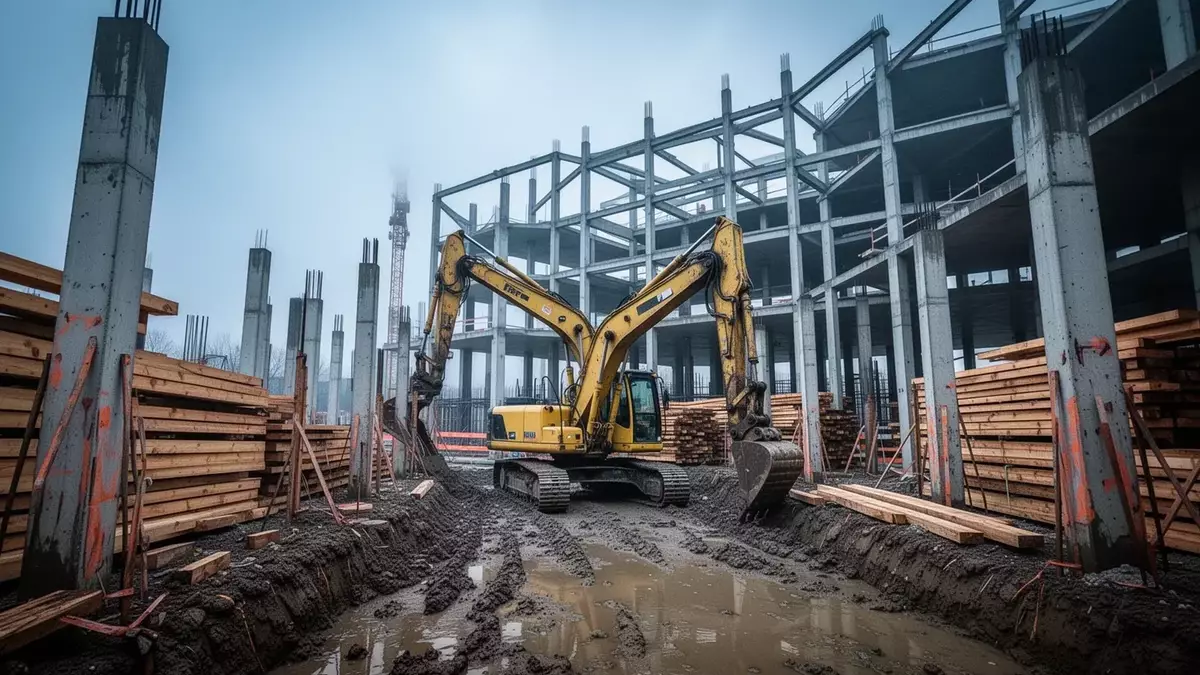
A new TÜV building-safety report reveals that 35.9 percent of all inspected safety-relevant building systems in Germany have major defects — a jump of nine percentage points compared to 2024. Only 26.9 percent of installations passed without any complaints. The findings come as the district of Northeim launches an EU-wide tender for external fire-safety experts and new federal rules on workplace safety commissioners take effect.
The TÜV-Report 2026 highlights critical weak points. Ventilation systems top the list with a 44.2 percent defect rate, followed by fire-extinguishing systems at 40.6 percent, emergency power supplies at 35.2 percent, and safety lighting at 35.0 percent. Even initial inspections are showing a worsening trend: the defect rate for first-time checks rose from 19.7 percent in 2024 to 26.3 percent in 2025. The TÜV-Verband attributes the deterioration to growing technical complexity, mounting cost pressure, and a persistent shortage of skilled workers. Their demand: stricter inspection and maintenance standards.
In direct response to the alarming data and tightening legal requirements, the district of Northeim (Lower Saxony) published an EU-wide tender on June 3, 2026, seeking comprehensive security and fire-safety services. The contract runs from June 30, 2027, to June 29, 2029, and includes basic services under DGUV regulation V2. The winning bidder must provide a fire-safety officer (Brandschutzbeauftragter) and use the specialized software platform envioteq. The tender covers both the general district administration and the waste-management operating company. Bids must be submitted by July 9, 2026, at 9:00 a.m.
With nearly half of fire-extinguishing systems failing inspection, the case for a thorough fire-safety plan has never been stronger. Yet many organisations lack the documentation — risk assessments, evacuation procedures, and staff training records — that regulators increasingly expect. A free Fire Safety Toolkit provides ready-to-use templates for risk assessments, evacuation planning, and fire-extinguisher training, helping you build a compliant, defensible safety framework. Download the free Fire Safety Toolkit
The regulatory backdrop has just shifted. On March 26, 2026, the Bundestag approved an amendment to Section 22 of the Social Code VII (SGB VII), which came into force on May 29, 2026. The rules for appointing safety commissioners were adjusted. Companies with 20 to 49 employees now only need to name a commissioner if special hazards exist. Firms with 50 to 249 staff must appoint at least one person. Those with 250 or more employees must meet the criteria of DGUV Regulation 1, Paragraph 20.
While local districts handle local enforcement, the state of Lower Saxony is upgrading its emergency infrastructure. On June 3, 2026, the state government presented a new civil-protection strategy at the Interschutz trade fair. The focus is on climate risks such as heavy rain and drought, as well as hybrid threats and supply bottlenecks. Since 2022, Lower Saxony has invested roughly 185 million euros in this area.
On the federal level, the Federal Office for Civil Protection and Disaster Assistance (BBK) has commissioned the construction of 61 all-terrain rescue vehicles. Each prototype costs around 500,000 euros, is built on Unimog chassis, and can ford water up to 1.20 meters deep. Delivery is scheduled to begin in 2027.
Separately, the KNX Summit 2026 in Hanover on June 11–12, organized by the ZVEH and the Lower Saxony/Bremen trade associations, will tackle holistic building safety and cyber-resilience for system integrators and electrical planners.