Nvidia stock trades near record levels as AI demand drives strong revenue growth
Published on 07/25/2026 at 14:08 | Editorial responsibility: Rafael Müller, Editor-in-Chief AD HOC NEWS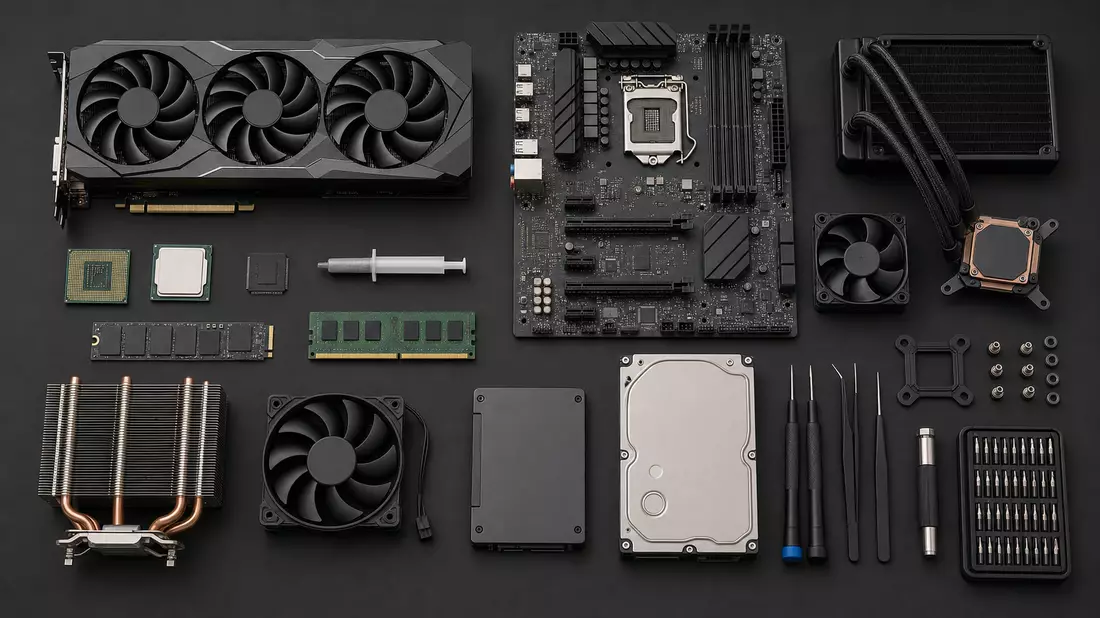
Nvidia stock remains closely tied to the boom in artificial intelligence computing, with the Santa Clara based chip designer (ISIN US67066G1040) reporting sharp growth in revenue and earnings in its latest quarterly results. In fiscal Q1 2026, which Nvidia reported on 21 May 2025 according to its investor relations materials, the company generated total revenue of approximately $26.0 billion, reflecting a steep increase versus the prior year period as demand for its data center GPUs surged. For investors, the scale of this revenue expansion underlines how central Nvidia has become to AI infrastructure spending across cloud providers and large enterprises.
Data center revenue jumps over prior year
The core engine behind Nvidia stock is its data center segment, which includes the companys high performance GPUs used for training and running large AI models. In fiscal Q1 2026, Nvidia reported data center revenue of around $22.6 billion, markedly higher than the prior year quarters data center sales. This segment now represents by far the largest share of Nvidia total revenue, with gaming and professional visualization contributing smaller proportions. The rise in data center revenue compared with the prior year reflects widespread deployment of Nvidia chips in hyperscale cloud data centers and the growing adoption of AI workloads in sectors such as finance, healthcare, manufacturing, and internet services.
Compared with the previous quarters data, Nvidia management highlighted in its earnings commentary that data center demand was broad based across regions and customer groups. Cloud service providers, enterprise customers, and consumer internet companies all contributed to the revenue growth. The company also pointed out that newer products, including GPUs optimized for generative AI and large language models, saw particularly rapid uptake. For investors analyzing Nvidia stock, this segment dynamic suggests that the company is still in the early stages of monetizing AI demand, even after the substantial year over year increase in data center revenue.
Net income and margin expand alongside revenue growth
Nvidia recent results showed not only top line expansion but also an improvement in profitability metrics. Net income for fiscal Q1 2026 increased significantly versus the prior year quarter, supported by operating leverage in the data center business and a favorable product mix. Gross margin improved compared with the previous year, as higher margin AI GPUs made up a larger share of total shipments and pricing remained firm. Operating income similarly rose on a year over year basis, reinforcing the picture of a company that is converting revenue growth into stronger earnings.
In its commentary accompanying the quarterly numbers, Nvidia emphasized disciplined operating expense control in areas such as sales, general and administrative, while continuing to invest heavily in research and development. This balance between cost management and innovation spending is important for Nvidia stock because it helps sustain margin levels while positioning the company for future product cycles. Investors typically focus on metrics such as operating margin and free cash flow when evaluating whether the current valuation reflects the company long term earnings power. The improvement in these metrics compared with the prior year suggests that Nvidia has been able to manage growth without sacrificing profitability.
More on Nvidia fundamentals and filings
Investors interested in Nvidia stock can find detailed quarterly and annual figures, segment breakdowns, and guidance updates in the company investor relations materials and related regulatory filings.
AI GPUs and Blackwell platform underpin growth
Beyond the headline financial metrics, Nvidia product roadmap for AI GPUs has become a central part of the investment case for Nvidia stock. The company current and upcoming architectures, including the Hopper and Blackwell families, are designed to accelerate training and inference workloads for increasingly large and complex AI models. These chips appear in server systems across major cloud platforms and enterprise data centers. Revenue from AI GPUs in recent quarters has been a key contributor to the data center segment growth, as customers deploy clusters of Nvidia GPUs to support generative AI services, recommendation engines, and scientific computing applications.
In the latest fiscal year, Nvidia reported strong demand for systems combining its GPUs with high speed networking and software, including its NVIDIA AI Enterprise offerings. This integrated approach, often described by the company as full stack accelerated computing, allows customers to use its hardware and software together to optimize AI performance. Revenue associated with such systems and associated software subscriptions has expanded alongside the core GPU sales, further supporting total data center revenue. For investors in Nvidia stock, these trends indicate that the company is not only selling chips but also building a broader platform that could support recurring revenue streams.
Gaming revenue stabilizes while AI leads overall performance
While data center AI remains the primary driver, Nvidia gaming segment continues to be an important part of the company profile. In recent quarters, gaming revenue has recovered from prior cyclical declines, supported by demand for GeForce graphics cards among PC gamers and content creators. Year over year comparisons show that gaming revenue has stabilized and in some cases returned to growth, although at a slower pace than the data center business. This mix of a rapidly growing AI segment and a more stable gaming business helps diversify Nvidia revenue base while keeping the company oriented toward high performance computing.
For Nvidia stock, the relative importance of gaming has decreased in percentage terms as AI revenue has surged. Investors monitoring the company typically watch for signs of sustainable gaming demand, such as new game releases that take advantage of advanced graphics features and the upgrade cycles of gaming PCs. At the same time, market attention has shifted heavily toward AI, meaning that data center metrics carry more weight in valuation discussions than gaming figures. Nonetheless, the gaming segment still provides meaningful cash flow and helps support research and development investments that often benefit both gaming and AI product lines.
Capital spending and supply chain considerations
The rapid expansion of Nvidia data center business has implications for capital spending and supply chain management. Nvidia relies on semiconductor manufacturing partners to produce its advanced GPUs, and capacity allocations at leading foundries are critical for meeting customer demand. In recent quarters, Nvidia has highlighted in its investor materials that it is working closely with manufacturing partners to secure sufficient supply of advanced nodes, given the long lead times and complex production processes involved in cutting edge chips. This coordination is necessary to prevent bottlenecks that could limit revenue growth.
Higher demand for Nvidia AI products also influences the company capital allocation decisions. Nvidia has been investing in areas such as design tools, software platforms, and reference architectures for data centers. The company cash flow from operations has grown substantially alongside net income, providing resources for these investments and for potential shareholder returns via share repurchases or dividends. Nvidia has historically used a mix of buybacks and dividends to return capital, and the scale of current cash generation gives it flexibility in capital allocation. For Nvidia stock, investors often compare the company use of cash with peers in the semiconductor and AI ecosystem to evaluate relative attractiveness.
Competitive landscape in AI accelerators
Nvidia operates in a competitive environment for AI accelerators, facing challenges from other semiconductor companies and from in house silicon developed by large cloud providers. Competitors have introduced alternative GPUs and AI chips that aim to reduce dependency on Nvidia products, particularly in large data center deployments. Cloud providers such as Amazon Web Services, Google Cloud, and Microsoft Azure have been developing proprietary accelerators to support specific AI workloads. Nonetheless, Nvidia software ecosystem and established presence in AI research and development have helped maintain strong demand for its products.
In its financial and strategic communications, Nvidia emphasizes the breadth of its developer ecosystem and the availability of tools such as CUDA and other software libraries that simplify the use of its GPUs. This software layer is often cited as a key differentiator that supports Nvidia position in AI computing. For Nvidia stock, the durability of this ecosystem is an important factor in assessing whether the company can maintain high margins and revenue growth even as competition intensifies. Investors watching the competitive landscape pay attention not only to hardware specifications but also to how easily developers can adopt and deploy AI models using different platforms.
Valuation, market capitalization, and index membership
On the equity market, Nvidia stock is included in major indices and has a substantial market capitalization, reflecting its importance in global portfolios. The company is a component of the SampP 500 index, and its market capitalization has reached levels comparable to some of the largest technology firms worldwide. As AI enthusiasm has grown, Nvidia stock valuation metrics such as price to earnings and price to sales have expanded compared with historical averages. Investors therefore need to weigh the rapid growth in revenue and earnings against the higher multiples at which the stock trades.
The large market capitalization also means that Nvidia stock plays a significant role in index based investment products and in sector funds focused on technology and semiconductors. Changes in Nvidia share price can influence the performance of these broader instruments. Because the company is widely held across institutional and retail investors, its quarterly results and guidance updates tend to be closely watched events. For many portfolios, Nvidia is both an AI exposure and a general large cap technology holding, meaning that developments at the company can have implications beyond the semiconductor sector.
H2 AI computing platforms and cloud partnerships
Nvidia has built extensive partnerships with cloud providers to make its AI computing platforms available as services. Customers can access Nvidia GPUs and related software through cloud infrastructures rather than purchasing physical hardware directly. This delivery model expands the potential user base for Nvidia AI capabilities and can accelerate adoption among smaller enterprises and startups. Revenue from cloud based deployments contributes to the overall data center segment and enhances the recurring nature of some revenue streams.
The company also works with system integrators and server manufacturers to deliver turnkey AI systems for on premise deployments. These systems often bundle Nvidia GPUs, networking, and software into integrated solutions tailored to specific industries. As AI use cases expand, demand for such systems could grow in sectors such as automotive, healthcare, and industrial automation. For Nvidia stock, the breadth of these partnerships and solutions influences investor perceptions of how widely the company technology will be adopted and how diversified its revenue sources can become.
Regulatory and geopolitical considerations
Nvidia operates globally and must navigate regulatory and geopolitical factors that can affect its business. Export controls on advanced semiconductor technologies can influence where Nvidia is able to sell certain AI chips. In recent years, authorities have implemented restrictions on exporting the most powerful GPUs to specific regions, particularly for national security reasons. Nvidia has responded by adjusting product specifications and developing variants that comply with regulatory requirements while still delivering competitive performance.
These dynamics can impact both revenue growth and investor sentiment around Nvidia stock. While regulatory changes may constrain some sales, they can also prompt the company to innovate and create new product tiers. Geopolitical considerations also affect supply chain decisions, as Nvidia and its manufacturing partners must account for potential disruptions in cross border logistics. Investors tracking the company need to consider how such factors might influence long term growth trajectories and risk profiles, even when near term financial metrics remain strong.
Long term drivers for Nvidia stock
Looking beyond the current quarter, several themes underpin the long term outlook for Nvidia stock. First, the continued expansion of AI applications across industries suggests sustained demand for high performance computing. As organizations integrate AI into operations, customer interactions, and product offerings, they are likely to require more compute capacity, much of which still relies on GPU based accelerators. Second, emerging areas such as autonomous vehicles, robotics, and edge AI could create new markets for Nvidia technology, complementing the data center and gaming segments.
Third, advances in software and tools that make AI more accessible to non specialist developers could broaden adoption further. Nvidia investment in software platforms and cloud integrations aims to position the company as a central provider of these capabilities. These factors together contribute to expectations of ongoing revenue and earnings growth, though the exact trajectory will depend on macroeconomic conditions, competition, and technology shifts. For investors, the key question is how these long term drivers align with current valuation levels and risk considerations.
Representative AI GPU product line
One representative product line that illustrates Nvidia role in AI computing is its family of high end data center GPUs designed for training and inference workloads. These GPUs typically feature thousands of cores, large memory capacity, and support for advanced interconnect technologies. They are built to handle the large scale matrix operations required by modern deep learning models. Revenue associated with such GPUs has grown rapidly in recent fiscal periods, as indicated by the strong data center segment numbers that underpin Nvidia overall revenue expansion.
Customers deploy these GPUs in configurations ranging from single server nodes to large clusters spanning multiple racks in data centers. They are often paired with high speed networking and storage systems, and integrated with software stacks that optimize performance. The GPUs can be accessed either through direct on premise installations or through cloud services, giving customers flexibility in how they build AI infrastructure. For Nvidia stock, the commercial success of this product line is a central factor in the company valuation, since it is closely linked to the overarching AI investment trend.
Shares trade near recent highs
Nvidia shares have traded near recent high levels in line with the strong financial performance and AI narrative surrounding the company. The stock price reflects expectations of continued revenue and earnings growth, as underscored by the latest quarterly results showing total revenue of approximately $26.0 billion in fiscal Q1 2026 compared with much lower levels in the prior year. The market capitalization of Nvidia, which now ranks among the largest globally, further reinforces its status as a key technology and AI name in major indices such as the SampP 500.
For investors considering Nvidia stock in diversified portfolios, the current price level embodies both the opportunities and risks associated with AI. On one hand, Nvidia has demonstrated the ability to convert AI demand into substantial revenue and profit growth, with data center revenue of around $22.6 billion in the latest quarter and improving margins. On the other hand, the valuation and the competitive and regulatory environment require careful monitoring. Changes in AI investment cycles, new competitor offerings, or regulatory developments could alter the growth profile. As such, Nvidia stock represents a high profile case of how AI enthusiasm translates into equity market dynamics.
Key data on Nvidia
- Company: Nvidia Corporation
- ISIN: US67066G1040
- Ticker: NASDAQ: NVDA
- Trading venue: NASDAQ
- Sector / Industry: Information Technology / Semiconductors and Semiconductor Equipment
- Index membership: SampP 500
Disclaimer regarding our articles: No investment advice, no buy or sell recommendation. Information on prices, companies, and markets is provided without guarantee; changes are possible at any time. Stock market transactions can lead to substantial losses. Our articles are created and reviewed in whole or in part automatically with the support of AI.