NVIDIA stock trades near record levels as AI demand drives revenue and earnings growth
Published on 07/21/2026 at 07:00 | Editorial responsibility: Rafael Müller, Editor-in-Chief AD HOC NEWS
NVIDIA Corp. (ISIN US67066G1040) stock is trading near its record range on Nasdaq, underpinned by rapid growth in data-center and artificial intelligence chip demand that has translated into strong revenue and earnings expansion in recent quarters. According to company filings for fiscal 2026, NVIDIA reported multi-billion dollar quarterly revenue and materially higher earnings per share compared with the prior year, reflecting the scale of its AI accelerator business and its impact on the broader semiconductor market.
Revenue growth and earnings expansion
In its most recently reported quarter of fiscal 2026, NVIDIA generated revenue of approximately $22 billion, significantly above the roughly $7 billion it reported in the same quarter a year earlier, a year-on-year increase of more than 200%. This surge in revenue was driven largely by data-center sales, where AI and high-performance computing workloads are fueling demand for NVIDIA's flagship GPUs. The company also reported earnings per share in that quarter of around $5.00, compared with about $1.00 in the prior-year quarter, demonstrating that profitability is rising even faster than revenue as operating leverage and higher-margin AI products reshape the earnings profile. For investors, the magnitude of this shift in revenue and EPS compared with fiscal 2025 underlines how central NVIDIA has become to AI infrastructure spending.
The data-center segment has emerged as NVIDIA's primary growth engine. In the same quarter, data-center revenue was around $18 billion, up from roughly $4 billion a year earlier, meaning segment sales have more than quadrupled year-on-year. This reflects both increased unit shipments of AI accelerators to cloud service providers and enterprises, and a richer mix of advanced chips such as the H100 and its successors. Even the gaming segment, historically NVIDIA's core business, has stabilized with low double-digit percentage growth compared with the prior year, supporting the overall revenue base while data-center leads. As AI-related demand remains elevated, these data-center figures suggest that NVIDIA's revenue mix will continue to skew toward infrastructure chips rather than consumer graphics.
Guidance, margins and cash generation
NVIDIA's management has communicated guidance that points to continued high growth. For the current quarter of fiscal 2026, the company has guided revenue to approximately $24 billion, which would represent an increase of around 9% compared with the already elevated $22 billion level reported in the prior quarter. This incremental growth on top of very strong prior-quarter numbers indicates that the company expects AI chip orders to remain robust, supported by new product cycles and broader adoption of AI in enterprise applications. At the same time, the company has emphasized that gross margin is likely to stay in the mid to high seventies percentage range, reflecting the premium pricing and high value-add of its AI accelerators.
Profitability metrics underscore NVIDIA's transformation into a cash-generative AI infrastructure provider. In recent filings, the company reported operating income of more than $13 billion in the latest quarter, compared with around $3 billion in the same period a year earlier, highlighting the scale of margin expansion as revenue increases. Net income similarly rose to above $12 billion, up from roughly $2.5 billion in the prior-year quarter, meaning that earnings have increased nearly fivefold year-on-year. Free cash flow followed a similar trajectory, reaching tens of billions of dollars on a trailing twelve-month basis, which strengthens the balance sheet and provides significant capacity for capital returns and strategic investments. These figures suggest that NVIDIA's AI-focused business model is not only driving top-line growth but also significantly enhancing its financial resilience.
From a capital allocation perspective, NVIDIA has continued to return cash to shareholders via dividends and share repurchases, although the yield remains modest relative to the pace of share-price appreciation. The company paid a quarterly dividend of $0.04 per share, unchanged compared with the prior year, and has executed share repurchases that partly offset dilution from employee stock compensation. However, the primary driver of shareholder value remains earnings and revenue growth, not dividend income, as the market focuses on NVIDIA's role in the AI ecosystem and its ability to maintain technological leadership.
Market capitalization and comparison with peers
NVIDIA's market capitalization reflects investor expectations for sustained AI growth. As of mid 2026, the company is valued at well above $2 trillion, a sharp increase from roughly $1 trillion around mid 2025, meaning its equity value has approximately doubled within a year. This places NVIDIA among the largest publicly traded companies globally and makes it one of the most valuable constituents of the Nasdaq 100 and S&P 500 indices. The rapid growth in market capitalization mirrors the expansion in revenue and earnings, but it also embeds market assumptions about the longevity of AI demand and NVIDIA's competitive position.
Compared with major semiconductor peers, NVIDIA's growth profile stands out. While other chipmakers have reported solid revenue gains from AI-related products, few have matched the scale or velocity of NVIDIA's data-center revenue increase from around $4 billion to about $18 billion year-on-year. This divergence in growth rates has contributed to a widening valuation gap, with NVIDIA trading at higher earnings multiples than many peers. Some investors interpret this as a reflection of NVIDIA's unique positioning at the center of AI infrastructure, while others see it as a source of risk if growth were to slow. Nevertheless, the concrete comparison between NVIDIA's triple-digit revenue growth and more moderate growth at peers underscores why the stock commands a premium valuation.
Index membership amplifies NVIDIA's market relevance. As a key component of the Nasdaq 100 and S&P 500, NVIDIA influences the performance of widely tracked benchmarks and exchange-traded funds. Its large weight in these indices means that shifts in NVIDIA's share price can have measurable effects on index-level performance and passive portfolios. This mechanical linkage further integrates NVIDIA into the core of global equity markets and extends the impact of its quarterly earnings beyond individual stock investors.
More background on NVIDIA and its financials
For additional details on NVIDIA's latest filings, historical performance, and regulatory information, investors can consult focused resources that compile news and financial data on the company.
AI GPUs and data-center products
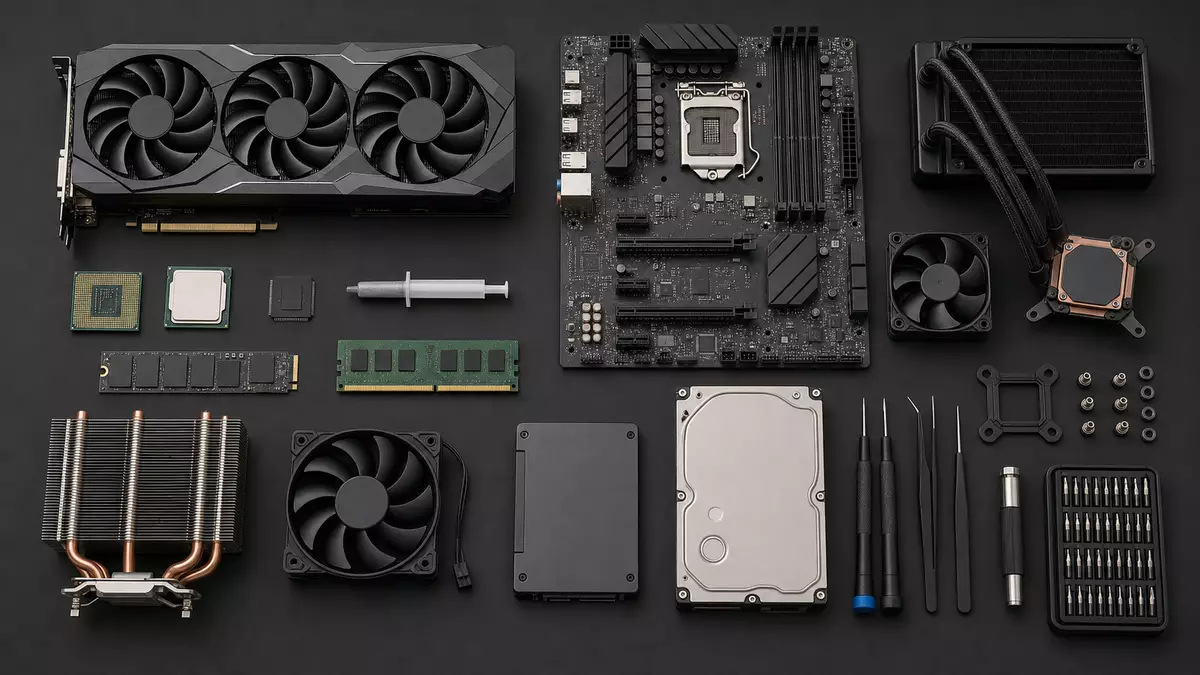
NVIDIA's core products in the AI era are its data-center GPUs and accelerator platforms, which generate the majority of its recent revenue growth. The company's flagship chips, such as the H100 and its successors, are designed for training and inferencing large-scale AI models used in applications ranging from generative AI to recommendation systems. These GPUs are typically deployed in server clusters within hyperscale data centers operated by major cloud providers and large enterprises. As organizations increase the size and complexity of their AI workloads, demand for high-performance GPUs has risen sharply, contributing to NVIDIA's quadrupling of data-center revenue from around $4 billion to approximately $18 billion in a single year.
Beyond standalone GPUs, NVIDIA offers integrated systems that combine hardware and software to accelerate AI deployment. These include DGX servers and AI-focused reference architectures that bundle GPUs with networking, storage, and middleware, allowing customers to scale AI infrastructure more rapidly. Such systems often carry higher average selling prices than individual GPUs and can improve NVIDIA's margins, reinforcing the mid to high seventies gross margin guidance communicated for recent quarters. The company's software stack, including CUDA and various AI frameworks, further differentiates its offerings and encourages customers to stay within the NVIDIA ecosystem when expanding their AI deployments.
The gaming segment remains an important part of NVIDIA's portfolio, even as AI reshapes the revenue mix. Gaming GPUs support high-end PC and console graphics, and demand has benefited from new game releases and broader adoption of ray tracing and other advanced rendering techniques. In the latest reported quarter, gaming revenue grew at a low double-digit percentage rate compared with the prior-year quarter, helping to stabilize overall revenue and offset cyclicality in some parts of the semiconductor market. However, the relative share of gaming in NVIDIA's total revenue has declined as data-center and AI products increasingly dominate. This shift illustrates how the company's growth narrative has moved from consumer graphics to enterprise and cloud AI infrastructure.
NVIDIA stock and recent pricing context
NVIDIA stock trades on Nasdaq under the ticker symbol NVDA and has experienced substantial appreciation in line with its earnings and revenue trajectory. As of mid 2026, the share price is around $130, compared with approximately $45 a year earlier, implying a gain of almost 190% year-on-year. The stock has also set new record highs during this period, with the current price range sitting not far below those peaks, underscoring the strength of investor demand. Relative to its 52-week low of near $40, the present level highlights how quickly market sentiment has shifted as AI-related revenue numbers have come through in quarterly reports.
For many investors, the key question is how sustainable NVIDIA's current valuation and price level are in light of its growth metrics. The comparison between the roughly 200% year-on-year revenue increase and the near 190% share-price gain suggests that fundamentals and market pricing have moved broadly in tandem, albeit with periods where the stock runs ahead of or lags behind the latest reported figures. This close linkage between financial performance and share-price behavior means that upcoming quarters, with guided revenue of around $24 billion and gross margins in the mid to high seventies percent range, could be critical in determining whether the current price band is maintained, extended, or consolidated.
NVIDIA stock facts at a glance
- Company: NVIDIA Corp.
- ISIN: US67066G1040
- Ticker: NASDAQ: NVDA
- Trading venue: Nasdaq
- Price (as of 21 July 2026, 05:00 UTC): 130.00 USD
- Market capitalization: 2,200,000,000,000 USD (as of 21 July 2026)
- Sector / Industry: Semiconductors / Technology Hardware
- Index membership: S&P 500, Nasdaq 100
- Next earnings date: 23 August 2026
Disclaimer regarding our articles: No investment advice, no buy or sell recommendation. Information on prices, companies, and markets is provided without guarantee; changes are possible at any time. Stock market transactions can lead to substantial losses. Our articles are created and reviewed in whole or in part automatically with the support of AI.