Nvidia’s Two-Pronged Push: Securing Chip Supply Chains While Architecting Enterprise AI
10.06.2026 - 10:13:51 | boerse-global.de
The narrative around Nvidia has quietly shifted. For years the company was cast as the indispensable GPU supplier for AI training, a role that sent its market value into the stratosphere. But as the technology matures, the question is no longer whether companies will adopt AI, but how they will embed it at scale. Nvidia is answering that question on two fronts simultaneously — locking down the hardware supply chain through deep partnerships in Asia while simultaneously building the software and consulting layer that makes its infrastructure stick in corporate workflows.
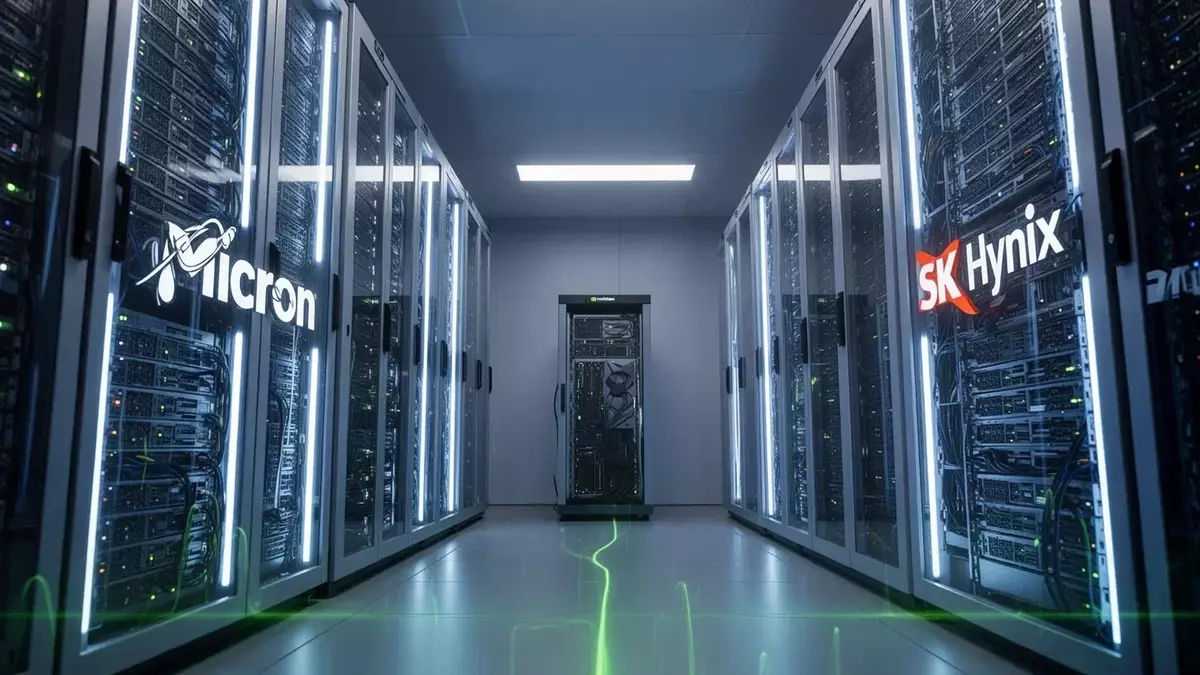
That dual strategy was on full display last week. In Seoul, Jensen Huang closed a string of agreements with SK Hynix, Naver, SK Telecom, Doosan Group, LG Group and Hyundai Motor Group, collectively aimed at building AI data centres and advancing next-generation memory technology. The most consequential deal is SK Hynix’s exclusive multi-year contract to supply high-bandwidth memory for Nvidia’s upcoming Vera chip — a relationship that cements the Korean memory maker’s dominant 50%+ share of the HBM market and, for Nvidia, guarantees supply of the most constrained component in its AI stack. Alongside those hardware pacts, the company used Computex 2026 to unveil the RTX Spark, an Arm-based superchip that combines a Grace CPU with a Blackwell GPU to deliver up to one petaflop of AI performance, marking Nvidia’s most serious push yet into the Windows PC processor market.
But hardware alone no longer defines Nvidia’s ambition. On the enterprise side, the company announced the “Adopt 100” programme alongside Deloitte at the London Tech Week on 8 June. The initiative funnels AI solutions from startups directly into Deloitte’s consulting offerings, pre-validated and scaled for large corporate clients. It is a deliberate mechanism to embed Nvidia’s technology deep inside business processes — from agentic AI to reinforcement learning — using the Vera CPU, the Nemotron 3 Ultra large language model (500 billion parameters, open weights) and the NemoClaw orchestration framework. The message is clear: Nvidia no longer just sells chips; it sells the blueprint for how enterprises run AI.
Should investors sell immediately? Or is it worth buying Nvidia?
This architectural shift is underpinned by a transformation in the physical infrastructure of AI itself. Data centres are moving to so-called megawatt racks with far higher power density, making liquid cooling the norm. Nvidia’s coming Rubin system — already in full production and slated for deployment in the second half of 2026 — combines the Rubin GPU with the Vera CPU and is designed specifically for these ultra-dense environments. The company is betting that one platform can span the entire range of AI workloads, from language models to autonomous reasoning. So far, the market has bought the thesis.
The stock, however, has not been immune to macro headwinds. Strong US jobs data reignited fears of further Federal Reserve rate hikes, and Nvidia shares fell more than 6% on the day of the Seoul announcement. At €177.98 the stock now trades roughly 12% below its 52-week high from May, even as Bank of America raised its price target to $320 and maintained a “Strong Buy” consensus across 38 analysts. The Wall Street Journal ranked Nvidia first in its 2026 list of the most future-ready companies, and the stock carries a quarterly dividend of $0.25 (ex-dividend date 4 June). The analyst consensus target stands at €257.88.
Nvidia’s push comes against a backdrop of realignment across the semiconductor industry. Google’s order for more than three million TPUs to be manufactured by Intel’s foundry from 2028 is a direct sign that even the largest AI chip customers are seeking alternatives to TSMC’s capacity-constrained 3nm lines. For Nvidia that is both a warning and an opportunity: it relies on TSMC for its own chips, but its growing relationship with SK Hynix and its expanding ecosystem make it less exposed to any single bottleneck. TSMC itself expects Q2 revenue of $39-40.2 billion, up over 30% year-on-year, while ASML became Europe’s first $700 billion company after raising its 2026 revenue guidance to €36-40 billion.
For Nvidia, the challenge in the coming months is execution — delivering Vera and Rubin on time, converting Adopt 100 pilots into recurring revenue, and proving its software stack can tie corporate customers to its hardware for the next decade. The structural logic of that position is compelling, but the share price’s 12% retreat from its high shows that even the most dominant AI player must contend with the realities of rising rates and a market that demands more than headlines.
Ad
Nvidia Stock: New Analysis - 10 June
Fresh Nvidia information released. What's the impact for investors? Our latest independent report examines recent figures and market trends.