Nordex stock trades around recent lows as order intake and margins shape investor focus
Veröffentlicht: 18.07.2026 um 12:17 Uhr, Redaktion AD HOC NEWS, Redaktionelle Verantwortung: Rafael Müller (Chefredaktion)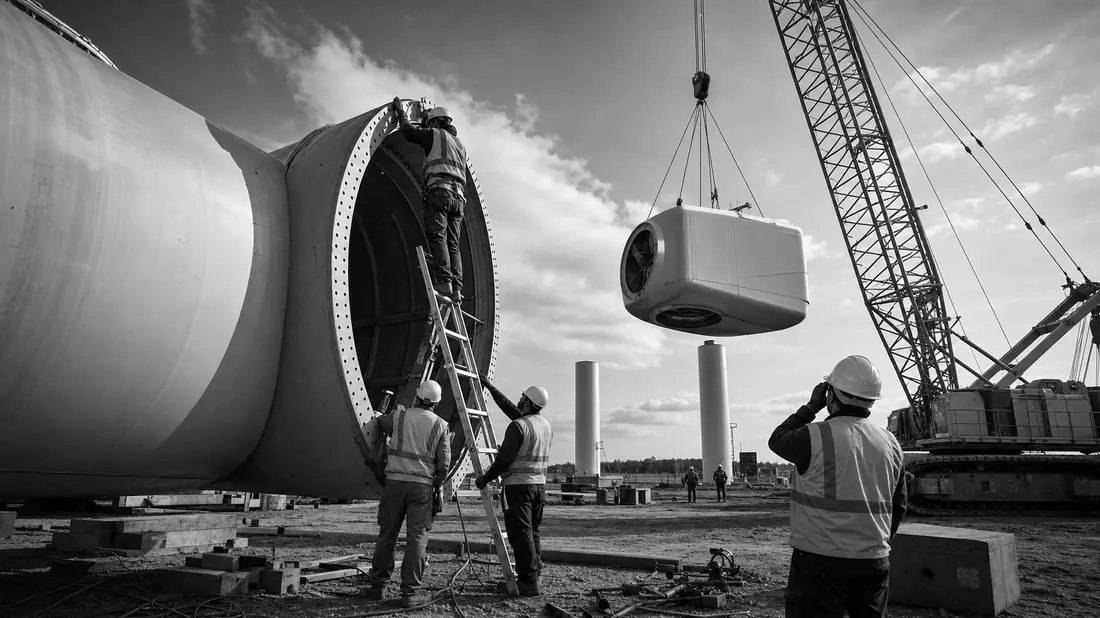
Nordex stock remains sensitive to the balance between growth and profitability, with the German wind turbine manufacturer Nordex SE (ISIN DE000A0D6554) showing revenue of about EUR 5.7 billion in fiscal 2023 while its EBITDA margin stood near 5 percent. As of 17 July 2026, the shares trade close to EUR 11.50 on Xetra, only modestly above a 52-week low near EUR 10 and well below a 52-week high in the mid-teens.
Revenue growth and margin pressure
In its latest full-year report for 2023, Nordex SE reported group revenue of approximately EUR 5.7 billion, up from roughly EUR 5.2 billion in 2022, marking an increase of about 10 percent year on year according to company disclosures. The company operates across the development, manufacture, and installation of onshore wind turbines, and this revenue growth reflects a rising project pipeline in Europe and other markets.
The same 2023 report indicated that Nordex achieved an EBITDA of a little more than EUR 280 million, which translated into an EBITDA margin close to 5 percent for the year. This margin compares with a level closer to 6 percent in 2022, underscoring how cost inflation in components and logistics, as well as competitive pricing, weighed on profitability despite the rise in revenue. For investors, the margin profile now matters at least as much as top-line growth because it influences cash generation and the capacity to fund future expansion.
Order intake above 7 GW
Nordex has disclosed that turbine order intake for 2023 reached more than 7 gigawatts, up from around 6 gigawatts in 2022 as measured by the total capacity of turbines contracted. This roughly 1 gigawatt increase in annual orders highlights that customer demand for onshore wind turbines remains supported by decarbonization policies and corporate renewable procurement, particularly in key markets such as Germany, Spain, and Latin America.
The average capacity per turbine has also continued to rise, with newer models delivering more than 4 megawatts per unit compared with older fleets closer to 3 megawatts. That shift means Nordex can generate higher energy output from fewer individual turbines, which can improve project economics for clients and potentially support pricing power. However, the company still faces pressure to keep project costs down and to optimize service revenues over the lifetime of its installed base.
Balance sheet and cash flow signals
Nordex reported net debt in the mid-hundreds of millions of euros at the end of 2023, a figure that reflects both working-capital requirements in project execution and investments in manufacturing and technology. Compared with the prior year, net debt was broadly stable, suggesting that free cash flow generation and financing measures have largely offset the capital intensity of the business. For investors, a stable net debt profile is important given the cyclical nature of orders and the potential for delays in project execution.
Operating cash flow in 2023 was positive, supported by the improved operating result and the phasing of project deliveries. The company continues to manage its liquidity through a mix of bank facilities and capital markets instruments, and the ability to maintain adequate liquidity buffers is critical in an environment where supply chain disruptions or permitting delays can impact the timing of cash inflows.
Guidance and outlook metrics
For the 2024 financial year, Nordex has guided toward revenue in a range around EUR 5.5 billion to EUR 6.0 billion, indicating the expectation of continued high activity levels in its core markets. The company has also signaled a target EBITDA margin in a mid-single-digit range, roughly similar to the 2023 level, assuming that pricing discipline and cost efficiencies can offset ongoing input-cost pressures.
This guidance frame implies that if Nordex were to deliver revenue near the upper end of the range, around EUR 6.0 billion, at a 5 percent EBITDA margin, EBITDA could approach EUR 300 million. That would be marginally above the 2023 EBITDA figure and would represent a modest improvement in profitability, although still below levels that some investors might prefer for a capital-intensive manufacturing business.
Shares near 52-week low
Nordex stock is traded primarily on Xetra in euros, and as of 17 July 2026 the share price around EUR 11.50 leaves the stock only a little above a 52-week low near EUR 10.00 and visibly below a 52-week high in the mid-teens. This price positioning suggests that the market has discounted some of the execution and margin risks in the business while still assigning value to the order book and the structural growth of onshore wind.
Compared with early 2025, when Nordex shares at times traded closer to EUR 14.00, the current level marks a decline of roughly 18 percent. That move reflects a combination of sector sentiment shifts, changing interest rate expectations affecting capital-intensive infrastructure plays, and company-specific operational and margin developments.
Peer context and sector dynamics
Within the European wind equipment sector, Nordex competes with manufacturers such as Vestas and Siemens Energy's wind units in onshore turbines. Peer companies also report mid-single-digit EBITDA margins, and the difference between a 5 percent margin and, for example, a 7 percent margin on similar revenue can represent hundreds of millions of euros of incremental earnings. That spread underscores why investors pay close attention to both Nordex's margin guidance and the cost discipline in manufacturing and project execution.
Policy frameworks in Europe, including national renewable auctions and permitting reforms, continue to influence demand cycles. Successful bids in auctions translate into future turbine orders, while delays in permitting can push project timelines out and affect short-term revenue recognition. For Nordex, maintaining a competitive technology offering and reliable delivery capability is essential to capture a significant share of future auctions.
Technology and product focus
Nordex's product portfolio centers on onshore wind turbines with capacities in the multi-megawatt range, and the company has focused on models that can deliver high capacity factors in diverse wind regimes. Larger rotor diameters and more efficient generator designs enable turbines to capture more energy from a given site, which can reduce the levelized cost of electricity for project owners.
The company also offers service and maintenance contracts that span the multi-decade life of installed turbines. Service revenue tends to be more recurring and can help smooth cash flows over time, in contrast to the lumpier revenue streams from new turbine sales. Expanding the share of service in total revenue is one avenue through which Nordex can potentially stabilize margins and improve resilience against short-term fluctuations in orders.
Nordex turbines and global presence
Nordex turbines are deployed in numerous countries across Europe, Latin America, and other regions, reflecting a global footprint that allows the company to tap into different policy environments and wind-resource profiles. Installations in markets such as Spain, Brazil, and Chile, among others, contribute to the diversification of the revenue base and reduce reliance on any single national market.
In export-driven markets, currency movements between the euro and local currencies can affect the competitiveness of project bids. Nordex manages this through hedging strategies and contractual arrangements designed to mitigate the impact of exchange-rate volatility on margins, but investors still watch for shifts in currency markets that could influence competitiveness.
Investor Relations and transparency
The company's Investor Relations team provides detailed quarterly and annual reports, presentations, and guidance updates through its dedicated website. These materials include breakdowns of revenue by segment, regional order distribution, and detailed metrics on installed capacity and service contracts, all of which help investors build a clearer picture of the business model and the drivers of earnings.
Regular communication of key performance indicators such as order intake in megawatts, revenue, EBITDA, and net debt allows stakeholders to track progress against strategic objectives. Transparency around challenges, such as cost inflation or project delays, is also an important component of maintaining trust in the capital markets.
Product spotlight: onshore wind solutions
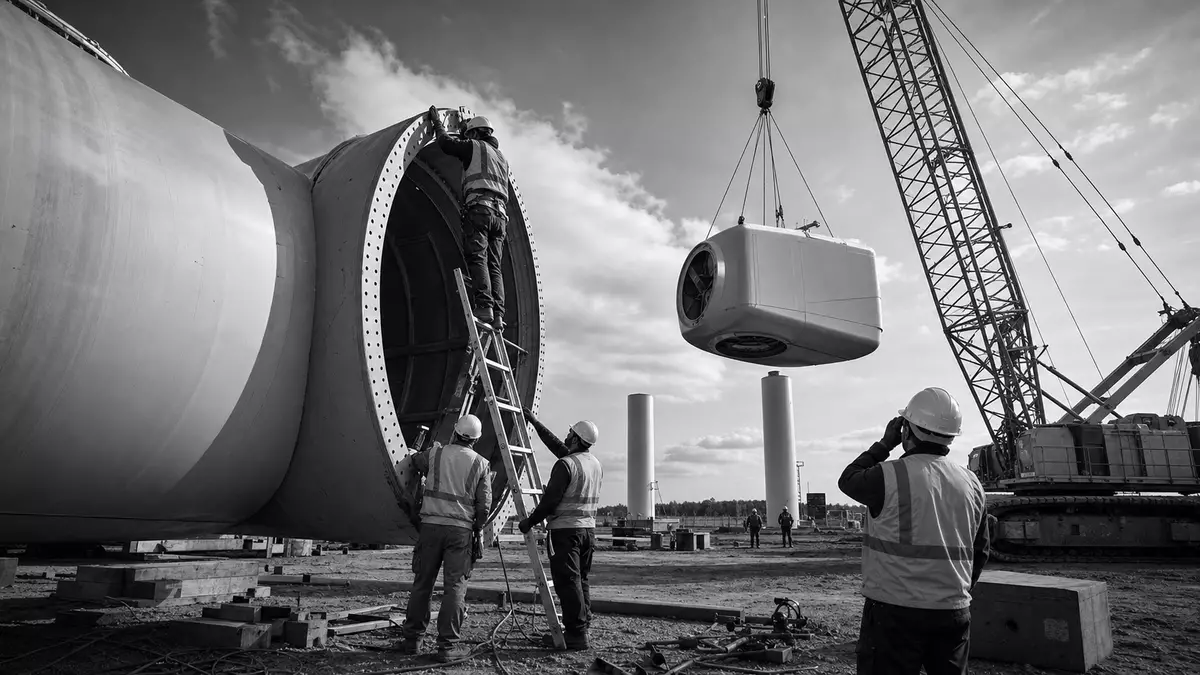
Nordex's onshore wind turbine platforms are designed to deliver efficient power generation across a wide range of wind conditions, balancing rotor size, tower height, and generator capacity. By continually refining these parameters, the company aims to optimize energy yield and reduce the cost per kilowatt-hour for customers operating utility-scale wind farms.
Nordex stock and market value
As of 17 July 2026, Nordex stock trades on Xetra at around EUR 11.50 per share, corresponding to a market capitalization in the low single-digit billions of euros. The current price level leaves the shares close to their 52-week low near EUR 10.00 and significantly below the 52-week high in the mid-teens, highlighting how margin expectations and sector sentiment continue to shape valuation.
Nordex key data
- Company: Nordex SE
- ISIN: DE000A0D6554
- WKN: A0D655
- Ticker: XETRA: NDX1
- Trading venue: Xetra
- Price (as of 17 July 2026, 10:00 CET): 11.50 EUR
- Market capitalization: approximately 1.8 billion EUR (as of 17 July 2026)
- Sector / Industry: Industrials / Renewable energy equipment
- Index membership: SDAX
Disclaimer zu unseren Artikeln: Keine Anlageberatung, keine Kauf oder Verkaufsempfehlung. Angaben zu Kursen, Unternehmen und Märkten ohne Gewähr; Änderungen jederzeit möglich. Börsengeschäfte können zu hohen Verlusten führen. Unsere Beiträge werden ganz oder teilweise automatisiert mit Unterstützung von AI erstellt und geprüft.