New Order Live 2026: Why Everyone Wants Tickets
10.03.2026 - 13:23:54 | ad-hoc-news.de
If you've scrolled TikTok or music Twitter lately, you've probably noticed it: New Order are quietly turning 2026 into a must-see year for live music fans. Clips from recent shows are flying around, older fans are scrambling for tickets, and younger fans are discovering that the band behind Blue Monday and Bizarre Love Triangle still hits harder than half your algorithm-core playlists.
Check the latest New Order live dates and tickets
Whether you're a day-one Joy Division convert or a Gen Z fan who found them through a Stranger Things playlist, this run of shows feels like a rare chance to see a band that literally wired synths, rock, and rave culture together. And from early reports, they're treating every night like a victory lap rather than a museum piece.
The Backstory: Breaking News in Detail
So what exactly is going on with New Order in 2026? Officially, the headline is simple: they're back out playing selective dates across the UK, Europe, and beyond, keeping the momentum from the last few years of packed festival appearances and one-off city shows. Unofficially, there's a bigger story: this is a legacy band that refuses to slide into nostalgia karaoke.
Recent interviews in UK music press have hinted at a few key motivations. First, the band have spoken about how good the last run of shows felt—tight, emotional, and surprisingly fresh even for songs they've played for decades. They've also noted the surge of younger fans turning up in city after city, something you can literally see in fan-shot crowd videos: 40-somethings in original Factory Records tees standing right next to 20-year-olds who discovered Blue Monday from a DJ set or a viral meme.
Behind the scenes, there's also a practical point: New Order's music is built for big rooms and outdoor stages. Songs like Temptation, True Faith, and Regret don't really come alive until you hear a few thousand people singing them back at full volume. That's a big part of why these 2026 live plans matter—this isn't a tiny acoustic theatre tour, it's about putting those synth lines and bass runs back where they belong: rattling PA systems.
Industry watchers have also picked up on how carefully the band choose dates. Instead of grinding through every mid-size arena on the map, New Order usually lock in a mix of statement shows—major cities, iconic venues, and high-visibility festival slots. That strategy builds hype: when you don't play everywhere, every date suddenly feels like an event, not a routine stop.
For fans, the implications are clear. Tickets won't be infinite, and you probably won't get three chances in your region. It also means the production value tends to be higher, with thought-out visuals, better sound crews, and a setlist built to hit both lifers and casual listeners. Mix that with whispers of new material being road-tested and you get the feeling that these aren't just "heritage" shows—they're also a testing ground for what New Order want to be in this decade.
Crucially, the band seem very aware of their own history. Any time New Order go live, you're not just dealing with their own catalog, but also the long shadow of Joy Division. The band have slowly grown more comfortable honoring that part of their story on stage over the last decade, dropping songs like Love Will Tear Us Apart or Atmosphere into the set as emotional peaks. In 2026, fans are watching closely to see how far they lean into that side of things—and how they balance it with the sleek, electronic pulse that made New Order New Order.
The Setlist & Show: What to Expect
Let's be real: the biggest question you care about after "Can I get tickets?" is "What are they going to play?" Looking at recent New Order setlists from the last touring cycles, a pattern emerges—one that's very good news if you want both the hits and the deep cuts.
Most shows have opened with something that sets a dark, slow-burn mood—often a track like Crystal or Regret. Both songs work as mission statements: melodic, emotional, and built on that trademark Peter Hook-style bassline (now handled by Tom Chapman live). From there, the band usually crank the tempo steadily, layering in mid-period favorites like Age of Consent, Dream Attack, or Academic (from 2015's Music Complete).
By the mid-show stretch, you typically hit a run of synth-heavy anthems. Expect Bizarre Love Triangle, The Perfect Kiss, True Faith, and a version of Blue Monday that still sounds insanely modern despite being older than half the crowd. Live, Blue Monday isn't just a nostalgia trigger—it feels like the blueprint for modern club music, rebuilt in real time by a rock band. The kick drum thumps, the famous synth melody arrives, and the whole room moves like you're at a rave in 1983 and 2026 at the same time.
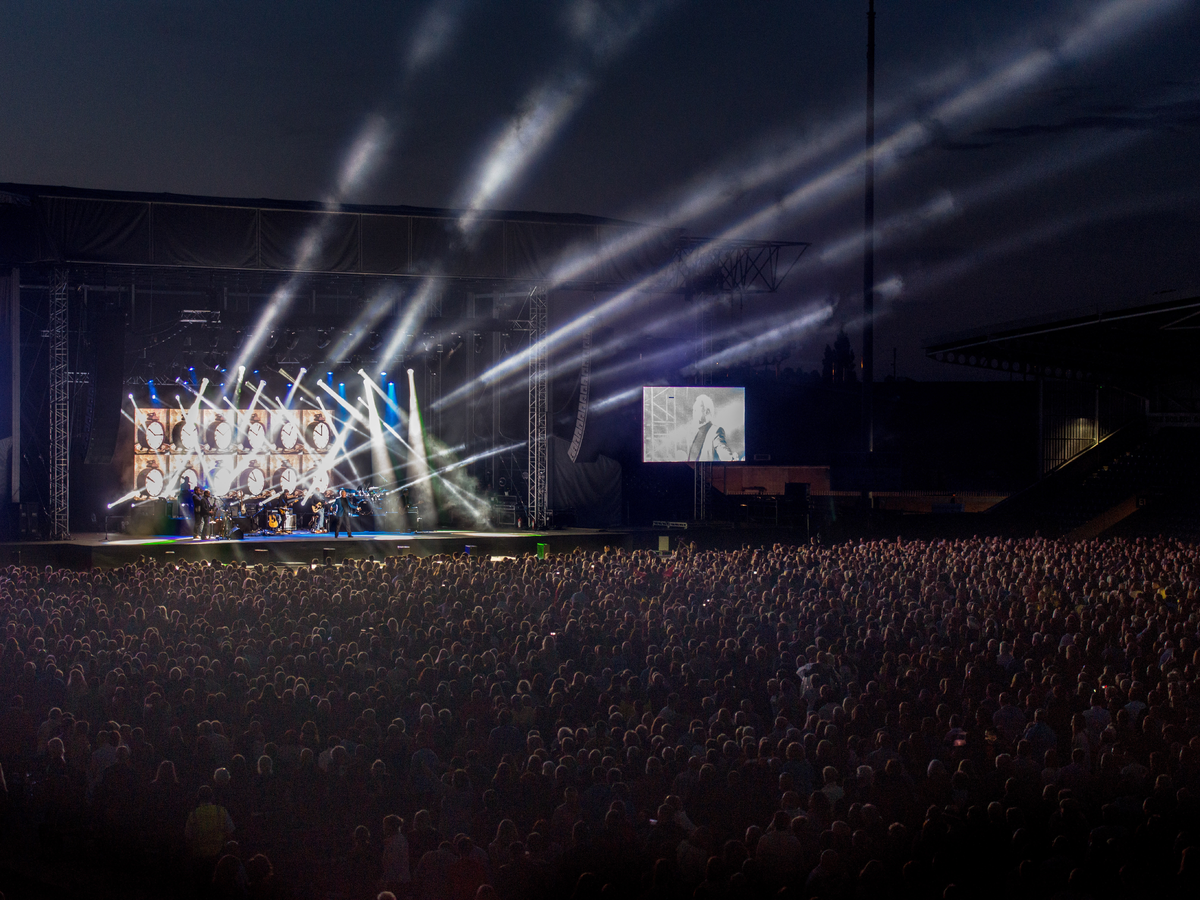
Visually, New Order have leaned into clean, minimalist production over the last years: blocks of intense color, glitchy projections, archival-style footage, and typography nodding back to iconic Factory Records design. If you're into the whole Y2K and 80s graphic revival, their stage show is basically mood-board heaven—sharp, retro-future, and never overcomplicated.
One of the most goosebump-inducing moments, if recent tours are any guide, comes late in the set when they fold in select Joy Division songs. Transmission can turn a festival field into a chant, while Love Will Tear Us Apart closes a night on a note that's strangely uplifting and heartbreaking at once. Bernard Sumner doesn't imitate Ian Curtis; instead, he owns his place in the story, and that raw honesty is exactly why those songs still hit so hard live.
If the band continue the pattern they've followed, you can also expect a couple of newer tracks from Music Complete—songs like Singularity or Tutti Frutti sit surprisingly comfortably beside the classics, adding a shinier, modern electronic sheen without feeling like playlist-chasing. For fans who only know the 80s singles, those moments are often the cue to dig into the newer records the next day.
Atmosphere-wise, New Order shows in the 2020s tend to feel like multi-generational parties rather than solemn alt-rock ceremonies. You'll see couples who probably met in Manchester in the 80s next to teens in oversized band tees who learned every word from YouTube. People dance, not just head-nod. Phones are up for the big choruses, but there's also a lot of eyes-closed, arms-up moments when the synths stretch out and the bass gets properly loud.
The loudness is important, by the way: this isn't a shoegaze wall of noise where everything blurs. New Order live is about clarity—the kick drum is sharp, the hi-hats are crisp, the bassline slices right through your chest. When the band lock in on a groove (think the extended outro of Temptation), the show stops feeling like a rock concert and starts feeling like a club night led by a band who've literally seen decades of dance culture evolve around them.
What the web is saying:
Rumor Mill: What Fans Are Speculating
Head over to Reddit or TikTok and you'll notice that the conversation around New Order in 2026 isn't just about ticket drops—it's a swirl of theories, wishlists, and a few arguments.
One big talking point: new music vs. legacy mode. After 2015's Music Complete, which was widely praised as a proper return to form, fans keep asking if there's another full album coming. Threads on r/music and r/neworder are full of detective-level analysis: people spotting the band entering studios, dissecting offhand mentions of "writing sessions" in interviews, or noticing subtle changes in live arrangements that might hint at demos being tested.
Then there's the setlist debate. Some fans want even deeper cuts—more from Power, Corruption & Lies or Technique, fewer repeats of the obvious singles. Others argue that if you're seeing New Order for the first time, you absolutely deserve the full run of hits. TikTok comments under live clips show this tension in real time: one person begging for Elegia in full, another just praying they get Blue Monday and True Faith.
Ticket prices, unsurprisingly, are another hot topic. Like almost every major touring act post-pandemic, New Order are caught in the middle of rising production costs and fan frustration. On social media, you'll find screenshots of presale queues, people complaining about dynamic pricing, and others defending the band by pointing out how much staging and crew a show of this scale requires. There's also a good amount of practical advice trading hands: fans recommending checking official site links (not just random resellers), signing up for venue newsletters, and moving fast on general sale.
Another recurring rumor: special guests and one-off collabs. Because New Order sit at the crossroads of rock, pop, and dance, fans constantly fantasize about who might join them on stage or on record. Names like Johnny Marr, Pet Shop Boys, and even newer electronic acts pop up in speculation threads. Nothing concrete, but the band's history of collaborations makes the idea feel plausible enough to keep the rumor mill humming.
And then there are the anniversary theories. With so many landmark releases in their catalog, fans are always calculating who's about to turn 30, 40, or 45. Every time an album milestone approaches, you see posts wondering if a special show, reissue, or themed setlist is coming. Some people are already calling specific dates in 2026 and 2027 where they expect surprise full-album performances or at least a deeper nod to certain eras.
What cuts through all of this bickering and speculation is one consistent vibe: urgency. Whether people are complaining about prices, begging for specific songs, or sharing blurry videos, everyone talks like they know these shows aren't promised forever. That shared sense of "go now while you can" is partly why New Order discourse online feels so intense—even from fans who weren't born when these songs first came out.
Key Dates & Facts at a Glance
If you're trying to plan your year around seeing New Order live, or just want the essentials in one place, here's a quick rundown based on recent activity and typical touring patterns. Always double-check the latest updates directly via the band's official live page.
- Official Live Hub: The band direct fans to their live information and ticket links via their website's dedicated page for tour announcements and on-sale details.
- Tour Focus: Recent cycles have prioritized major UK and European cities first, with select festival appearances often announced before standalone headline dates.
- Typical Set Length: Around 90–110 minutes, depending on curfew and festival vs. headline status.
- Core Songs You're Very Likely to Hear: "Blue Monday", "Bizarre Love Triangle", "True Faith", "Temptation", "Regret", and at least one or two Joy Division songs such as "Love Will Tear Us Apart" or "Transmission".
- Recent Album Activity: Last full-length studio album: Music Complete (2015), followed by various singles, remixes, and reissues.
- Line-Up: Bernard Sumner (vocals, guitar), Stephen Morris (drums), Gillian Gilbert (keyboards, guitar), Tom Chapman (bass), and Phil Cunningham (guitar, keyboards); Peter Hook is not part of the current live line-up.
- Show Vibe: Mixed seated/standing venues and open-air festivals; dance-friendly atmosphere with strong visuals and a club-adjacent energy.
- Merch & Vinyl: Limited-run designs and reissues often appear around live dates, so shows can be a good chance to grab physical editions.
- Age Range of Fans: Genuinely cross-generational—expect everything from original 80s club kids to teens and early 20-somethings seeing them for the first time.
FAQ: Everything You Need to Know About New Order
Who are New Order, and why do people care so much in 2026?
New Order formed in Manchester in 1980 out of the remaining members of Joy Division after the death of singer Ian Curtis. Instead of trying to recreate that sound, they fused post-punk guitars with drum machines, synths, and a deep love of club culture. The result was something genuinely new: songs that could sit next to rock bands on the radio but also tear up dance floors. In 2026, their influence is all over modern pop, indie, and electronic music—from The 1975 and LCD Soundsystem to countless bedroom producers who copy their bass tone without even realizing it.
What does a New Order show feel like if you're a first-timer?
If you're walking in mainly knowing the big singles, a New Order show feels like a slow realization that they wrote way more songs you recognize than you thought. Early in the set, you'll probably be taking in the visuals, noticing how tight the band plays, and maybe clocking that the vocals aren't about "perfection" so much as raw, slightly weary emotion. By mid-set, the groove takes over—people start dancing, the bass and synths hit harder, and you stop thinking about anything else. When the really iconic songs arrive, it feels like a collective release: strangers yelling the same lines, decades collapsing into four minutes. It's less about a flawless note-for-note recreation and more about feeling the songs inhabit the room.
Why do they still include Joy Division songs—and does it work?
For years after Joy Division ended, the band barely touched that catalog live. Over time, though, they realized you can't erase such a huge part of musical history—or their own story. Performing tracks like "Atmosphere" or "Love Will Tear Us Apart" now feels less like nostalgia bait and more like a quiet act of respect. They don't try to mimic Ian Curtis; they reinterpret the songs through where they are now as people. In a 2020s setting, those moments hit especially hard, because audiences are much more used to open conversations about grief, mental health, and legacy. When thousands of people sing along, it's heavy, but strangely healing too.
How much does the current line-up differ from the 'classic' New Order?
The main shift is the absence of original bassist Peter Hook, whose high, melodic playing style helped define the band's sound. That said, New Order have had years to evolve with Tom Chapman on bass and Phil Cunningham on guitar/keys. Live, the songs still land with the same emotional and rhythmic punch, even if die-hard fans will always have opinions about which line-up was best. What matters for most people in the crowd is that the parts are played with energy and respect, and on that front, the current line-up delivers. The presence of Stephen Morris and Gillian Gilbert—key architects of their drum programming and synth textures—also keeps a direct line back to the early days.
Is it still worth seeing New Order if you're a younger fan?
If your playlists are full of indie-electronic, post-punk revival, or alt-pop, the answer is yes. Seeing New Order live gives you a direct line to where so much of that sound began. It's like watching the source code run in real time. You also get a different kind of energy than most modern acts: these are people who came up through dank clubs and DIY scenes, not just streaming dashboards, and they play like it. No elaborate choreography, no over-rehearsed banter—just songs that have outlived trends, performed by a group who know exactly what those tracks mean to the crowd.
How should you prep for a New Order concert?
Honestly, half the fun is going in slightly underprepared and letting the show teach you, but if you want to make the most of it, run through a few key records: Power, Corruption & Lies, Low-Life, Technique, and a best-of compilation will give you a strong base. Check recent setlists from fan sites or live-tracking platforms to get a sense of what's likely. Wear something you can dance in—you might think you're just there to nod along, but by the time "Bizarre Love Triangle" drops, that plan usually dies. And if you care about being near the front, arrive early; older fans stake out rail spots with almost festival-level dedication.
Why does New Order's music still resonate in the streaming era?
Because the emotional core is simple and timeless, while the sonics are weirdly futuristic. Lyrically, they deal in heartbreak, confusion, fleeting joy, and bittersweet memory—the same things powering half of TikTok's sad edits. Sonically, though, they use sounds and structures that still feel fresh: mechanical drums with human swing, basslines you can hum, synth hooks that loop in your head for days. Put on "Age of Consent" or "Temptation" next to many modern indie or house tracks and they don't sound old, just slightly out of phase. That tension—between past and present, analog and digital, melancholy and euphoria—is exactly what gives their live shows in 2026 such a strange, addictive charge.
So schätzen die Börsenprofis Aktien ein!

Für. Immer. Kostenlos.