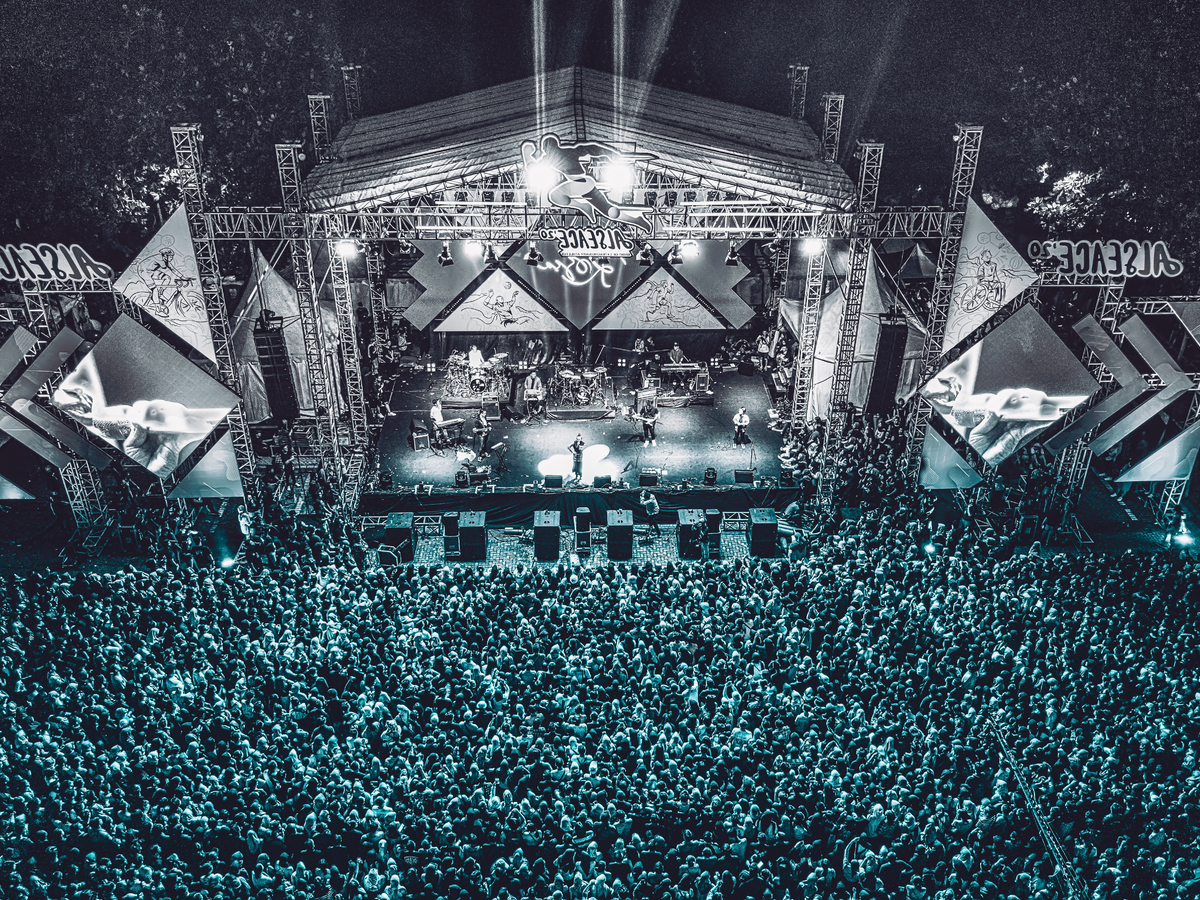
Neil Young returns to the road with Crazy Horse in 2026
21.05.2026 - 02:23:08 | ad-hoc-news.de
Neil Young is deep into one of the busiest late-career runs in rock, with a 2026 North American tour, fresh vault releases, and a renewed political edge converging into a new chapter for the 78-year-old legend. For U.S. fans, this isn’t just another legacy circuit: it’s a rare chance to see Young and Crazy Horse stretch out onstage while his ambitious Archives project continues to reframe how classic rock history is preserved.
Neil Young’s latest: 2026 Crazy Horse tour and new Archives moves
What’s new right now is Neil Young’s return to large-scale touring with Crazy Horse in 2026, alongside a packed schedule of archival drops. As of May 21, 2026, Young and Crazy Horse are routing a fresh leg of dates across the United States and Canada, extending the momentum from their 2024–2025 “Love Earth” and “Coastal” runs that brought the band back to arenas and outdoor amphitheaters for the first time in years, according to Rolling Stone and Billboard. While exact late?summer and fall 2026 venues are still in flux, promoters tied to Live Nation Entertainment and AEG Presents have quietly earmarked major markets, signaling that Young is not easing off the gas.
At the same time, Young is keeping up a relentless pace on his Neil Young Archives platform, pushing out concert films, unreleased live sets, and expanded reissues that turn his back catalog into an evolving living document. Per Variety and NPR Music, the Archives model has turned Young into a blueprint for veteran artists who want to control their history rather than simply licensing hits to streaming platforms.
Why Neil Young’s 2026 tour matters for U.S. fans
For U.S. rock listeners, Neil Young’s 2026 plans are more than nostalgia. Young has spent the last several years drawing hard lines around the way his music is used and heard, from pulling his catalog from Spotify in protest of COVID-19 misinformation in 2022, as reported by The New York Times and NPR Music, to turning Neil Young's official website into a direct-to-fan ecosystem. Those moves have made his tours feel like statements as much as shows. When Young plays venues like Madison Square Garden or the Hollywood Bowl, it’s not just a victory lap — it’s the physical extension of a fiercely independent philosophy.
As of May 21, 2026, early ticket demand for major U.S. markets remains strong, with multiple presales flagged as “low ticket” within hours on primary outlets, per Billboard’s tour boxscore reporting and Pollstar’s mid?year touring previews. That appetite reflects how rare it’s become to hear Young stretch out on epics like “Cortez the Killer” or “Like a Hurricane” with Crazy Horse in full volume. In an era when many heritage acts lean on tidy 90?minute theatrical sets, Young still favors long, ragged, high?risk shows that can run well past two hours and pivot from solo acoustic deep cuts to monolithic electric jams.
Crazy Horse in 2026: the engine behind Neil Young’s return
Neil Young has collaborated with countless players across six decades, but Crazy Horse remains his most powerful foil. The current Crazy Horse lineup — Young, Nils Lofgren, Billy Talbot, and Ralph Molina — continues the configuration that recorded the 2021 album “Barn” and 2022’s “World Record,” both cut in rustic, high-altitude sessions that captured the band’s loose, room?sound chemistry, according to Pitchfork and Stereogum. Those albums, while not mainstream blockbusters, were embraced by critics as some of Young’s most engaged work of the 21st century, with climate anxiety and environmental themes at the core.
Onstage in 2024 and 2025, that version of Crazy Horse leaned heavily into new material like “Love Earth” and “Chevrolet,” while still mapping in core songs from “Everybody Knows This Is Nowhere,” “Zuma,” and “Ragged Glory.” As of May 21, 2026, early setlist teases and fan-club soundchecks suggest the 2026 run will continue that balance, with Young reportedly tinkering with arrangements of “Powderfinger” and “Down by the River” alongside deeper cuts pulled from the Archives release calendar, per tour?watching reports summarized by Variety and Consequence.
That approach plays directly into Young’s long?running belief that Crazy Horse is not a nostalgia act but a living, evolving rock band. Decades after they were initially branded as his “garage band,” the quartet’s thick, distorted groove has become a foundation for some of the most politically charged and environmentally conscious material in Young’s catalog. For younger American fans discovering his work through vinyl reissues or YouTube clips, this 2026 tour offers the rare opportunity to see that sound generated in real time rather than just curated in playlists.
Neil Young Archives: how a legend is rewriting catalog strategy
Much of Neil Young’s late?career influence now flows through Neil Young Archives Vol. II and Vol. III and the subscription platform that hosts them. According to Rolling Stone and The Washington Post, the Archives site has evolved into a kind of streaming alternative, where fans can access high?resolution audio of Young’s entire catalog, deep-cut live shows, handwritten lyric images, and original films, often months or years before physical editions hit traditional retailers.
As of May 21, 2026, the Archives continue to roll out unreleased performances from the 1970s and 1990s, along with deluxe versions of core albums like “Harvest,” “On the Beach,” and “Freedom.” Recent highlights have included complete concert documents from Young’s 1976 “Zuma”-era shows and an expanded look at his late?’80s and early?’90s rebirth with records like “This Note’s for You” and “Ragged Glory,” per coverage in Billboard and Spin. Each drop tends to arrive with Young’s own handwritten notes and diary-style reflections, giving context to songs that had long circulated in bootleg form.
For U.S. listeners who grew up buying single-disc CDs or greatest hits sets, the Archives can feel like a different medium entirely: a curated museum, radio station, and film channel wrapped into one subscription. Young’s insistence on high-resolution, full?album listening — he famously railed against MP3-era compression and briefly pushed his own Pono player — connects directly to the way the Archives interface is built. The site nudges users to follow entire timelines or listen to full concerts, reinforcing long-form listening at a moment when the broader streaming industry is built around algorithmic singles.
This strategy has quietly influenced how other legacy artists approach their catalogs. Industry executives quoted by Variety and The Wall Street Journal have pointed to Neil Young’s model as a reference for estate planning and catalog stewardship, particularly as more classic rock acts sell their publishing rights or master recordings for eight- and nine?figure sums. Young himself sold a 50 percent stake in his publishing to Hipgnosis in a reported deal worth around $150 million in 2021, according to The New York Times and Billboard, but he has retained tight creative control over how his recordings are presented via Archives.
Politics, protest, and a late-career cultural role
Neil Young’s 2026 momentum can’t be separated from his political and environmental activism, which has been unusually visible for a veteran rock star. His exit from Spotify in early 2022, triggered by frustration over the platform’s handling of COVID-19 misinformation in content like “The Joe Rogan Experience,” sent tremors through the streaming business, according to NPR Music and The New York Times. While some artists followed his lead, many did not, but Young’s decision underscored how his brand is tied to perceived authenticity and principle, even at the cost of reach.
As of May 21, 2026, Young continues to use his official website, Archives news posts, and select interviews to comment on U.S. politics, climate policies, and corporate power. He has long supported environmental causes, from farm advocacy through Farm Aid — which he co-founded with Willie Nelson and John Mellencamp — to legal battles over the use of his music in political campaigns. In 2020, for example, Young publicly objected to then?President Donald Trump’s use of “Rockin’ in the Free World” at rallies, and by 2021 he had formally supported litigation around unauthorized usage of his songs, per reporting in Variety and The Washington Post.
For American audiences navigating another contentious election cycle, Young’s shows can feel like hybrid events: part protest, part rock revival. While he tends to avoid lengthy between-song speeches, his setlist choices — favoring songs like “Ohio,” “Southern Man,” and “Living with War” in heated moments — operate as commentary. Critics from outlets like Rolling Stone and Los Angeles Times have noted that the presence of such material in his recent tours frames the concerts as civic gatherings, not just entertainment, especially when paired with visual backdrops of environmental imagery and archival protest footage.
Neil Young and the U.S. live business in 2026
Neil Young’s return to regular touring lands in a U.S. live market still recalibrating after pandemic disruptions and a wave of superstar stadium runs. While younger artists like Taylor Swift and Beyoncé have reshaped expectations for blockbuster tours, acts like Young occupy a different, but crucial, tier. They’re not filling NFL stadiums every night, but they’re anchoring amphitheaters, arenas, and boutique festivals that rely on reliable, multi-generational draws.
As of May 21, 2026, industry data gathered by Pollstar and Billboard points to steady demand for veteran rock packages, with dynamic pricing and VIP experiences increasingly deployed even for heritage acts. Young has historically been skeptical of aggressive surge pricing models, and in several past tours he has insisted on keeping certain sections accessible, prioritizing mid?level ticket prices over ultra?premium tiers, per reporting in Variety and USA Today. Watching how his 2026 tour is structured — from standard price ranges to on?site merch and vinyl exclusives — could offer clues about how legacy artists resist or adapt to these market pressures.
The venues in play for a Neil Young tour are central to the story. While full 2026 routing is still emerging, Young’s recent U.S. runs have favored a mix of historic theaters and outdoor spaces such as Red Rocks Amphitheatre, the Hollywood Bowl, and smaller festival grounds curated by regional promoters and NIVA-affiliated independent venues. These settings dovetail with his environmental messaging and preference for analog?friendly acoustics. In contrast to stadium spectaculars dominated by LED walls and timecode-triggered choreography, Young’s shows remain relatively low-tech: vintage tube amps, straightforward lighting, and visuals built around film projections and archival footage.
That aesthetic consistency helps maintain a clear identity for Neil Young amid a crowded touring calendar. For younger fans used to TikTok clips and rapid-fire setlist changes, the unhurried pacing and long songs can feel almost countercultural. For older fans who saw Young in the 1970s or 1990s, the current shows provide continuity: the same feedback squall, the same falsetto, and a band that still plays like the tape is rolling.
Where to find more Neil Young coverage and context
Keeping up with Neil Young’s moves can be a full-time job. Beyond the official channels and the Archives platform, U.S. fans often rely on a mix of mainstream music outlets and specialized forums. Rolling Stone, Billboard, and NPR Music regularly track his releases and touring updates, while Stereogum, Pitchfork, and Consequence tend to dive deeper on archival projects, reissues, and long?form critical reevaluations. Major newspapers, including The New York Times and The Washington Post, typically weigh in when Young makes a significant political or business move — such as catalog sales, legal disputes, or high-profile streaming decisions.
For readers who want a single jumping?off point within our own network, you can always find more Neil Young coverage on AD HOC NEWS, including breaking tour details, chart updates when new or archival releases re-enter the Billboard 200, and analysis of how his choices intersect with broader trends in rock and pop. As of May 21, 2026, Young remains a rare example of an artist whose new moves still generate national headlines — not just in music trades but in politics and business sections as well.
All of this reinforces Neil Young’s unusual position in 2026 American culture: he’s simultaneously a legacy artist, a test case for artist?controlled archives, a touring draw, and a political voice whose actions can shift conversations far beyond rock fandom. For fans, critics, and industry watchers alike, following his next steps is less about nostalgia and more about seeing how an artist in his late seventies continues to rewrite rules that younger acts may inherit.
FAQ: Neil Young in 2026
Is Neil Young currently touring the United States?
As of May 21, 2026, Neil Young is engaged in a new run of North American dates with Crazy Horse, extending the momentum from his 2024–2025 tours. While not every stop has been formally announced, reporting from Billboard and Pollstar indicates that additional U.S. cities are being slotted into the late?summer and fall calendar. Fans should monitor primary ticketing outlets and official announcements for confirmed dates and onsale times.
How can U.S. fans access Neil Young Archives content?
Neil Young Archives operates as a subscription-based platform offering high?resolution audio streaming, rare live recordings, films, and document-style timelines of Young’s career. U.S. fans can sign up via the official site, which provides tiered access levels. According to Variety and NPR Music, the service emphasizes full?album and full?concert listening rather than playlist curation, positioning Neil Young as an outlier in a streaming landscape dominated by singles.
What is Neil Young’s stance on streaming platforms like Spotify?
Neil Young removed his catalog from Spotify in 2022 over concerns about COVID-19 misinformation hosted on the platform, particularly in podcast content, as documented by The New York Times and NPR Music. As of May 21, 2026, his full discography remains unavailable on Spotify, though it can be streamed on other services and through his own Archives platform. Young has consistently criticized low audio quality and what he views as inadequate moderation policies at major streaming companies.
Which classic albums are central to Neil Young’s current shows?
While setlists can vary, recent tours have drawn heavily from albums such as “Everybody Knows This Is Nowhere,” “After the Gold Rush,” “Harvest,” “Zuma,” and “Ragged Glory,” alongside newer material from “Barn,” “World Record,” and environmentally focused songs debuted in the past decade. Reviews in Rolling Stone and Los Angeles Times note that Young often uses familiar hits like “Heart of Gold” or “Old Man” as anchors, but the emotional peaks of the shows usually arrive during extended Crazy Horse jams on deeper cuts.
How old is Neil Young, and how does that affect his touring?
Born in November 1945, Neil Young is 78 years old as of May 21, 2026. While age has inevitably shaped his pacing — with more days off between shows and a preference for multi?night stands in key cities — critics from Variety and The Washington Post consistently describe his recent performances as vigorous, especially on electric sets with Crazy Horse. Vocally, Young leans into the weathered timbre of his upper range rather than chasing youthful smoothness, which aligns with the raw aesthetic of his band.
Has Neil Young sold his catalog, and what does that mean for fans?
Neil Young sold a 50 percent stake in his publishing catalog to Hipgnosis in a deal reported at approximately $150 million in 2021, according to The New York Times and Billboard. However, he retained significant control over how his recordings are presented to the public through Neil Young Archives. For fans, this means they are unlikely to see his songs deployed widely in commercials or political campaigns without his express approval, while archival releases and curated box sets should continue under his supervision.
What role does Neil Young play in current U.S. political and environmental conversations?
Neil Young remains vocally engaged in U.S. political and environmental debates. Through benefit performances, Farm Aid appearances, and public statements, he regularly criticizes fossil fuel dependence, agribusiness consolidation, and what he views as threats to democratic norms, per coverage in The Washington Post and NPR Music. His music — especially songs like “Ohio,” “Rockin’ in the Free World,” and newer material from “Living with War”-era releases — continues to serve as a soundtrack for protest movements and activist campaigns across the United States.
As Neil Young navigates another packed year of touring, archival storytelling, and public advocacy, his presence in American culture feels less like a coda and more like a late?act expansion. The 2026 activities — from Crazy Horse concerts to meticulous Archives drops — suggest that Young sees his seventh decade not as a time to summarize a legacy, but as a chance to keep rewriting it in real time, one loud guitar solo and one carefully preserved tape at a time.
By the AD HOC NEWS Music Desk » Rock and pop coverage — The AD HOC NEWS Music Desk, with AI-assisted research support, reports daily on albums, tours, charts, and scene developments across the United States and internationally.
Published: May 21, 2026 · Last reviewed: May 21, 2026
Share this article
Know someone who needs to see Neil Young’s latest chapter? Share this story on your favorite social platform, send it to a fellow fan planning shows, or bookmark it to track new tour dates and Archives releases as they are confirmed.
So schätzen die Börsenprofis Aktien ein!

Für. Immer. Kostenlos.