NBA Standings shake-up: LeBron’s Lakers surge, Tatum’s Celtics steady while Curry fights to keep Warriors in race
Published on 03/11/2026 at 22:39 | Editorial responsibility: Rafael Müller, Editor-in-Chief AD HOC NEWS
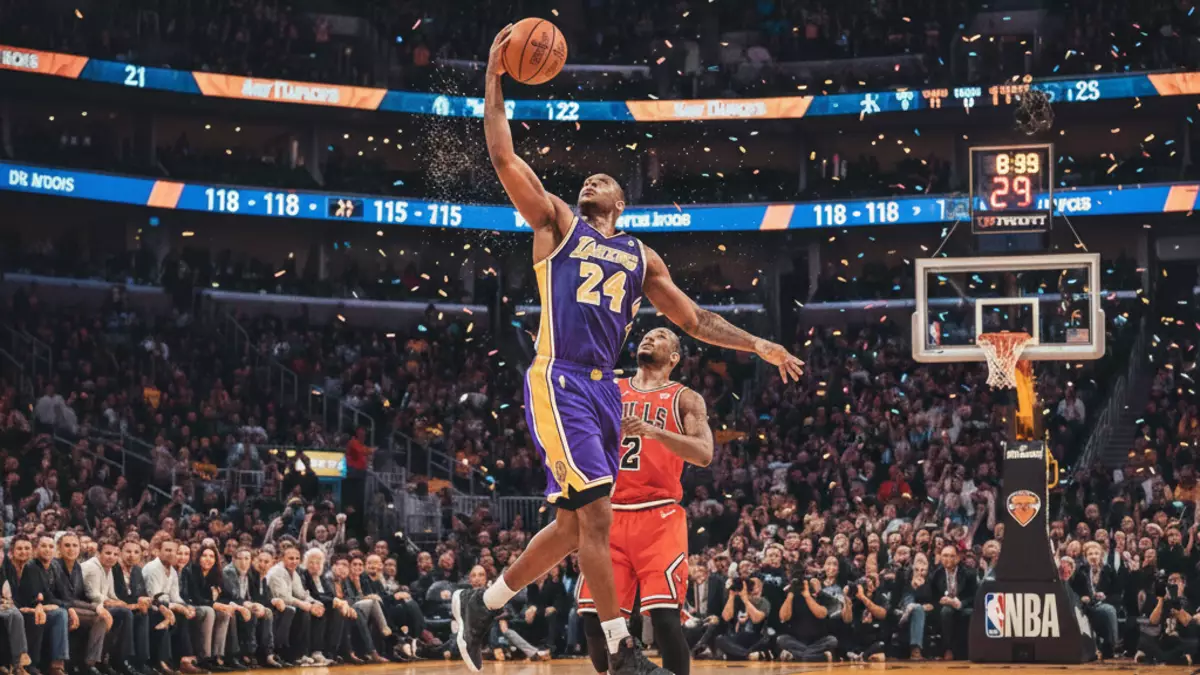
The NBA standings never sit still for long, but the latest twist in this season’s race hit like a playoff preview. With LeBron James pushing the Los Angeles Lakers on another late surge, Jayson Tatum and the Boston Celtics tightening their grip near the top, and Stephen Curry fighting to keep the Golden State Warriors in the mix, the entire playoff picture across the league just shifted again. Every possession is starting to feel like April, even though the calendar has only just tipped into the final stretch.
Across the league, the night served up exactly what fans crave this time of year: clutch threes from downtown, high-wire blocks at the rim, and box scores that will be picked apart all day. The updated NBA standings now reflect who handled the pressure and who blinked when the lights got brightest.
[Check live stats & scores here]
What jumped out from the latest results is not just who won, but how they won. The Celtics leaned on Tatum’s all-around game and a suffocating switch-heavy defense. The Lakers rode LeBron’s late-game orchestration and Anthony Davis dominating the glass. The Warriors, behind Curry, lived and died by the three more than ever, fighting to stay on the right side of the Play-In line. In a single night, seeding leverage swung, tiebreakers tightened, and the margin for error shrank for everyone.
LeBron turns up the volume as Lakers chase seeding
LeBron James has seen enough regular seasons to know when it is time to hit the accelerator. His latest performance was exactly that: a reminder that 20-plus years into his career, he can still control tempo, pace, and mood whenever the game drifts into crunchtime. Against a conference rival with direct implications for Play-In positioning, LeBron orchestrated the offense like a point guard and finished like a power forward.
He attacked mismatches in isolation, picked out shooters on the weak side, and repeatedly dragged big defenders into empty space. Whenever the defense packed the paint, he kicked out to wings spacing from the corners, fueling a barrage of threes that flipped the rhythm of the game. The Lakers offense did not feel complicated; it just felt relentless.
Anthony Davis backed that up with a classic Two-Way AD night: rim runs, face-up jumpers from the mid-post, and swats that erased what looked like easy layups. The box score told the story, but the eye test added the exclamation mark. Opponents stopped attacking the basket in the fourth quarter, settling instead for jump shots they did not really want. That is the kind of defensive gravity that changes not only a game, but also a series if the Lakers lock into a high seed.
One assistant coach from the opposing sideline put it simply afterward, paraphrasing what many coaches feel late in the year: when LeBron is passing like this and Davis is locked into every possession, "it feels like you are playing two different games at once" – one against their offense, and one against the scoreboard.
Celtics stay calm at the top while everyone else scrambles
On the other side of the country and at the other end of the table, the Boston Celtics once again played like a team that knows exactly who it is. Even on nights when the shots do not all fall, their structure travels. Jayson Tatum shouldered the scoring load with a smooth blend of step-back threes and strong drives, but it was his playmaking reads that really underscored why Boston is built for the long haul.
Every time the defense sent an extra body at him, Tatum trusted the next pass. Kickouts led to swing-swing sequences that produced rhythm threes for Derrick White, Jaylen Brown, and the rest of the supporting cast. Combined with their top-tier defense, that patience is why they sit so comfortably near the top of the NBA standings while other contenders ride waves of inconsistency.
In the closing minutes, Boston’s defense once again turned into a vise. They switched across four positions, walled off the paint, and forced contested pull-ups late in the shot clock. It was not highlight-reel material like a huge chase-down block, but it was surgical. The kind of defense that slowly sucks the life out of an opponent’s confidence.
Afterward, Tatum emphasized that the standings narrative does not change how they approach these games. The message was clear: keep stacking wins, keep sharpening habits, and let the playoff chips fall where they may.
Curry keeps Warriors alive with another scoring flurry
Stephen Curry did what Stephen Curry does: pulled up from way beyond the arc, forced defenses into panic rotations, and lit up the box score with a scoring burst that swung momentum in a matter of minutes. For the Warriors, every game at this point feels like a mini elimination test. Each win keeps them tethered to the Play-In picture; each loss risks slipping further into lottery territory.
Curry responded with a classic flurry from downtown. There was a stretch in the third quarter where he barely touched the ball before rising up, draining threes off handoffs, step-backs, and broken plays. The defense had no answer other than to send bodies at him high above the three-point line, which opened up driving lanes for role players cutting backdoor and bigs rolling free to the rim.
Even with that, the Warriors had to sweat out the finish. Defensive lapses and cold spells from the supporting cast kept the game in doubt deep into the fourth. Curry, again, had to be the closer – darting off screens, demanding switches, and hitting one more dagger from just inside logo range. It felt like a playoff atmosphere because for Golden State, it already is.
Head coach Steve Kerr has been blunt: if they are going anywhere this year, it will be on the back of Curry’s gravity and the team finally stringing together stops. Nights like this keep that hope alive, but the standings show precisely how thin that margin is.
How the latest results reshaped the NBA standings
With the dust settled on the latest slate, the NBA standings across both conferences show clearer tiers: true contenders cementing home-court advantage, dangerous middle seeds hovering around the four-to-six range, and desperate squads clawing for Play-In survival.
The top of the East still runs through Boston, with Milwaukee and other challengers tracking in the rearview. In the West, Denver and Oklahoma City continue to dictate the pace near the summit, while the Lakers, Warriors, and a handful of others fight one another almost nightly for seeding leverage.
To frame where things stand right now, here is a compact look at the key positions in each conference’s playoff race. Note: exact records are constantly updating on the official league page, but the hierarchy and tiers reflect the latest action and trends from the last 24 to 48 hours.
| East Rank | Team | Status |
|---|---|---|
| 1 | Boston Celtics | Firm grip on top seed, elite both ways |
| 2 | Milwaukee Bucks | Chasing Boston, offense heavy |
| 3 | New York Knicks | Climbing with gritty defense |
| 4 | Philadelphia 76ers | Injury-dependent volatility |
| 5 | Cleveland Cavaliers | On the rise with balanced roster |
| 6 | Orlando Magic | Young, dangerous, trending up |
| 7 | Miami Heat | Perpetual Playoff menace |
| 8 | Indiana Pacers | Offensive juggernaut, leaky D |
| 9 | Chicago Bulls | Play-In territory |
| 10 | Atlanta Hawks | On the bubble, defensive issues |
Out West, the margin might be even tighter. A two-game winning streak can push a team from the Play-In fringe into the middle of the pack; a two-game skid can drop a team into must-win mode overnight.
| West Rank | Team | Status |
|---|---|---|
| 1 | Denver Nuggets | Jokic-led machine, title or bust |
| 2 | Oklahoma City Thunder | Young, fearless, elite efficiency |
| 3 | Minnesota Timberwolves | Defense-first, interior dominance |
| 4 | Los Angeles Clippers | Star-heavy, health is the swing factor |
| 5 | Dallas Mavericks | Luka and Kyrie drive elite offense |
| 6 | Phoenix Suns | Star power, still chasing chemistry |
| 7 | New Orleans Pelicans | Strong depth, Playoffs in sight |
| 8 | Los Angeles Lakers | LeBron-AD surge, Play-In pressure |
| 9 | Golden State Warriors | Curry-dependent, thin margin |
| 10 | Sacramento Kings | Explosive offense, streaky form |
Those last three or four seeds in each conference may change hands multiple times over the next week alone. What matters now is tiebreakers, remaining schedule, and health. Every head-to-head matchup between bubble teams effectively counts double.
Playoff picture: tiers, trends, and pressure points
The playoff picture is no longer hypothetical. It is here, hanging over every shot and every rotation decision. For the Celtics, the mandate is simple: hold the one seed, manage minutes, and keep their defensive shell sharp. For the Bucks and other Eastern contenders, the question is whether they can tighten up enough defensively to survive seven-game wars against Boston’s balanced attack.
In the West, the defending champion Nuggets and the surging Thunder both look like they could own home court deep into May. Behind them, the Clippers, Mavericks, and Suns are all trying to figure out which version of themselves will show up when possessions slow down and rotations shorten.
The Lakers and Warriors live in a different universe right now. They are not just fighting for favorable seeding – they are fighting to avoid a single bad week undoing their entire season. The Play-In Tournament has raised the stakes for the middle of the pack, and veteran stars like LeBron and Curry know exactly what that means: there is zero room for coasting.
A crunch-time turnover in March can be the difference between a seven seed and a ten seed, home court in a Play-In game or a win-or-go-home on the road. Players talk about taking it one game at a time, but the standings page is impossible to ignore in every locker room.
Man of the Night: star performances that shifted the race
Several star turns from the latest slate will echo in the standings for days. One all-around performance in particular stood out because it touched every category that matters in modern basketball: volume scoring, efficient shooting, high-level playmaking, and committed defense.
From the opening tip, one leading wing star operated with the calm of someone who knows exactly how to manipulate coverages. He got downhill early, drawing help at the nail and spraying passes to corner shooters. When the defense tried to switch smaller bodies onto him, he punished them from the high post, backing down into fadeaways or spinning to the rim. The box score tracked it all: a 30-plus point night, strong rebounding on both ends, and a handful of assists that did not even fully capture how he bent the defense.
His coach highlighted the little things afterward: "He called out sets before the other team even fully got into them," the coach said in paraphrase. "That is the sort of film study and anticipation that separates All-Stars from MVP-level guys."
Elsewhere, a dominant big man delivered a classic double-double, patrolling the paint and snatching every contested board in sight. He altered shots even when he did not block them, forcing floaters and off-balance runners instead of clean layups. Offensively, he created second-chance points on the offensive glass and demanded double teams on the block. The stat line did not scream historic night, but it screamed impact – the kind of game that moves a team up one line in the NBA standings.
On the perimeter, a dynamic point guard put together a 20-and-10 type performance, spraying passes out of pick-and-roll and hitting timely threes to keep the defense honest. He orchestrated pace, deciding when to push, when to walk it up, and when to attack mismatches. Every time the opponent trimmed the lead to two possessions, he either got to the free-throw line or created a wide-open look for a teammate. That is the kind of composure that elevates not just box scores, but playoff odds.
When the stats turn historic
Not every night delivers record books, but this stretch of the season often brings career highs and historic benchmarks. Players are deep into rhythm, coaching staffs lean heavier on their main rotations, and stars sense the urgency of seeding. Triple-doubles pop up more often as primary ball-handlers stay on the floor longer and usage spikes for MVP candidates.
When a big wing or jumbo playmaker flirts with a triple-double, it is rarely about stat chasing. It is about control. Fifteen rebounds mean constant one-and-done trips for the opponent. Double-digit assists mean everyone is eating, and the defense has no safe option. Put that on top of 30-plus points, and you get the kind of performance that flips a tiebreaker, changes a season narrative, or anchors a signature win for an MVP resume.
Those nights also reshape how opponents prepare. Once a player drops a career-high or strings together multiple triple-doubles, you feel it in the scouting report. More traps. Earlier help. More physicality off the ball. Stars who keep producing despite that are the ones who truly tilt the NBA standings in their team’s favor.
MVP race: Tatum, Jokic, Luka and the company of giants
The MVP race right now feels like a heavyweight rotation, with no easy separation. Jayson Tatum’s Celtics keep stacking wins near the top of the NBA, and his two-way load is massive. Nikola Jokic continues to pilot Denver’s offense like a point center while anchoring a championship-level team. Luka Doncic is posting absurd usage and stat lines for Dallas, turning every possession into a chess match. Giannis Antetokounmpo, Shai Gilgeous-Alexander, and a couple of others lurk right behind them.
Voters will lean on a combination of things: team success as reflected in the standings, advanced metrics, counting stats, and narrative. That last piece matters more than players ever admit. When a star delivers multiple signature wins, with big numbers on national TV against direct rivals, it sticks in the collective memory all the way through awards season.
Right now, Tatum’s case rides on Boston’s elite record and his all-around production. Jokic brings unprecedented efficiency and playmaking from the five spot, with the Nuggets perched near or at the top of the West. Luka’s argument is that nobody has to do more for his team than he does: heavy minutes, outrageous usage, and constant playmaking responsibility.
The latest results nudged that race slightly. Whenever one of these guys posts a 35-point night with double-digit assists in a big game and the team climbs or secures a vital seed in the NBA standings, the MVP conversation tilts.
Players under pressure: who is not delivering?
As some stars rise, others are clearly under the microscope. A few high-usage guards on potential playoff teams have struggled lately with shot selection, turning efficient offenses into streaky, jump-shot-heavy attacks. The box scores show the problem: low shooting percentages from three, too many early-clock pull-ups, and not enough attacks that collapse the defense.
Role players, too, are feeling the strain. Corner specialists who lived around 40 percent from three earlier in the year have seen slumps drag them into the low 30s, shrinking the margin for error for their stars. When those shots do not fall, spacing contracts, the paint gets crowded, and the entire offensive ecosystem feels different.
Coaches do not always call that out publicly, but the adjustments are obvious. Rotations tighten. Leashes shorten. Veterans with playoff experience sneak back into lineups over young players who have wobbled defensively. The standings do not care about developmental arcs; they reward the lineups that win tonight.
Injuries, absences and their impact on the playoff race
No factor shapes the late-season picture more ruthlessly than injuries. A single hamstring tweak or ankle sprain for a top-10 player can change everything from seeding to locker-room belief. Coaching staffs have to juggle rest, risk, and rhythm, especially for stars who carry massive usage loads.
Several teams near the top of both conferences are managing nagging issues with key starters, carefully nursing them through back-to-backs or heavy-minute nights. They know that a top seed looks a lot less valuable if it comes at the cost of health in late April. Meanwhile, bubble teams often do not have that luxury; they have to push harder, lean more on their main guys, and hope their medical staff can keep everyone upright.
One contender in particular has been juggling absences in its backcourt, forcing wings to handle more on-ball duties and reshaping the offense into a more drive-and-kick heavy system. Another team has been patching together minutes at center, going smaller and leaning on switchable defenders rather than a traditional rim protector. The result: more volatile games, more comeback attempts, and more swings in the standings.
Fans see the impact immediately. Lineups that once felt automatic suddenly look like experiments again. Rotations that were locked in a month ago get rewritten. Every update on the injury report becomes appointment reading.
Coaches speak: urgency without panic
Listen closely to postgame comments this time of year and you hear the tightrope. Coaches want urgency without panic, discipline without fear. One veteran coach whose team just grabbed a crucial win to move up the NBA standings put it this way: "We do not need to be perfect; we just have to be connected. When we are talking on defense and trusting the pass on offense, the scoreboard usually takes care of itself."
Another coach on the losing side described the challenge in crunchtime: "We got tight. You could feel it. Instead of sticking to our actions, we started going one-on-one. That is not who we are." His team’s missed shots and broken possessions ended up costing them not just the game, but a valuable edge in Play-In positioning.
Game plans are getting more detailed. Teams are cross-matching defenders, sending surprise doubles at star scorers, and throwing curveball zone looks after timeouts. Every trick is on the table because everyone knows: these are the games that define seeding and, in some cases, job security.
Game highlights: from buzzer-beaters to defensive stands
On the highlight reel, a couple of plays will loop on social media all day. A step-back three at the buzzer that turned a one-point deficit into a one-point win. A chasedown block that came out of nowhere and erased what looked like a sure go-ahead layup. A wild scramble where three players dove on the floor, the ball ping-ponged loose, and a role player hit a corner three just before the shot clock expired.
In one game, a late defensive stand stole the show. Facing a one-possession deficit, the trailing team trapped the ball-handler out of a pick-and-roll, forced a wild pass, then deflected the next swing pass out of bounds. On the final possession, they switched everything, walled off the paint, and forced a contested step-back two. The ball hit front rim, bounced away, and the home crowd erupted as the horn sounded. The result: a vital win that nudged them one rung higher in the standings and gave them a tiebreaker edge over a direct rival.
This is the time of year when little plays feel massive. A back-tap offensive rebound. A smart foul to stop a transition layup. A timely challenge from a coach that wipes away a star’s fifth foul. Each of those moments has a domino effect in the box score and on the standings page.
Scoreboard watching: fans, players, and the nightly ritual
Ask any player and they will say they focus on their own locker room. But late in the season, everybody scoreboard-watches. Phones come out after games. TVs in the training room flicker with other arenas’ final minutes. A buzzer-beater in one conference can trigger cheers halfway across the country from a team that just got help in the race.
Fans feel it even harder. Every night becomes a multi-screen experience: primary game on the TV, live scores on a tablet, group chat buzzing with hot takes. The official league site becomes essential infrastructure. You hit refresh after every big shot, every close finish, every injury update. The NBA standings page is the heartbeat of the whole thing.
That is why this latest wave of results matters so much. It did not just provide entertainment for a single night. It reshaped the entire playoff chessboard, pushing some teams closer to clinching and others closer to that unsettling feeling of might-have-been.
What is next: must-watch matchups with real stakes
The next few nights are stacked with games that will punch above their weight in importance. Contenders square off against one another in measuring-stick battles that could decide home-court advantage in a potential second-round series. Bubble teams collide in what amount to pre-Play-In eliminators. Stars with MVP cases go head-to-head, each trying to outduel the other and leave voters with a fresh impression.
Circle every game that pits two teams within a couple of spots of each other in the standings. Those are effectively worth double – a win for you, a loss for them, and a potential tiebreaker swing. When LeBron’s Lakers see a fellow West bubble team, when Curry’s Warriors line up against another Play-In hopeful, or when Boston gets a crack at a top East rival, you are not just watching another regular-season game. You are watching seeding in real time.
For fans, this is the sweet spot: enough of the season has passed that every team’s identity is clear, but there is still just enough runway for wild swings. A four-game win streak can launch a team from anxiety to security. A four-game slide can flip a locker room’s mood from confident to tense.
Why the NBA standings matter more than ever
In the era of the Play-In Tournament, the middle of the table has become just as dramatic as the top. The one and two seeds still matter for home-court and path, but the seven-to-ten zone is where raw fear and opportunity collide. You cannot back into that race. You have to charge into it.
Veteran stars like LeBron and Curry know exactly what is at stake. Tatum and the Celtics understand the value of maintaining a cushion so that one bad week does not send them crashing down. Young squads like the Thunder and other upstarts see the standings not as a burden but as a scoreboard of respect they are chasing.
The latest slate of games underscored all of that. From signature performances and clutch shot-making to under-the-radar defensive stands and big-man dominance, the actions on the floor immediately carved their way onto the standings page. The race is tight, the pressure is real, and every night from here out will carry that playoff-style tension.
If you are not refreshing the official league site between quarters, you are missing half the story. Because as of right now, the NBA standings are not just numbers on a page. They are the script, the stakes, and the scoreboard for every storyline that will define this season’s finish.
Strap in. The next wave of games will not just be about highlights – they will be about survival, legacy, and positioning for the chase that really matters when the postseason lights come on.
Disclaimer regarding our articles: No investment advice, no buy or sell recommendation. Information on prices, companies, and markets is provided without guarantee; changes are possible at any time. Stock market transactions can lead to substantial losses. Our articles are created and reviewed in whole or in part automatically with the support of AI.