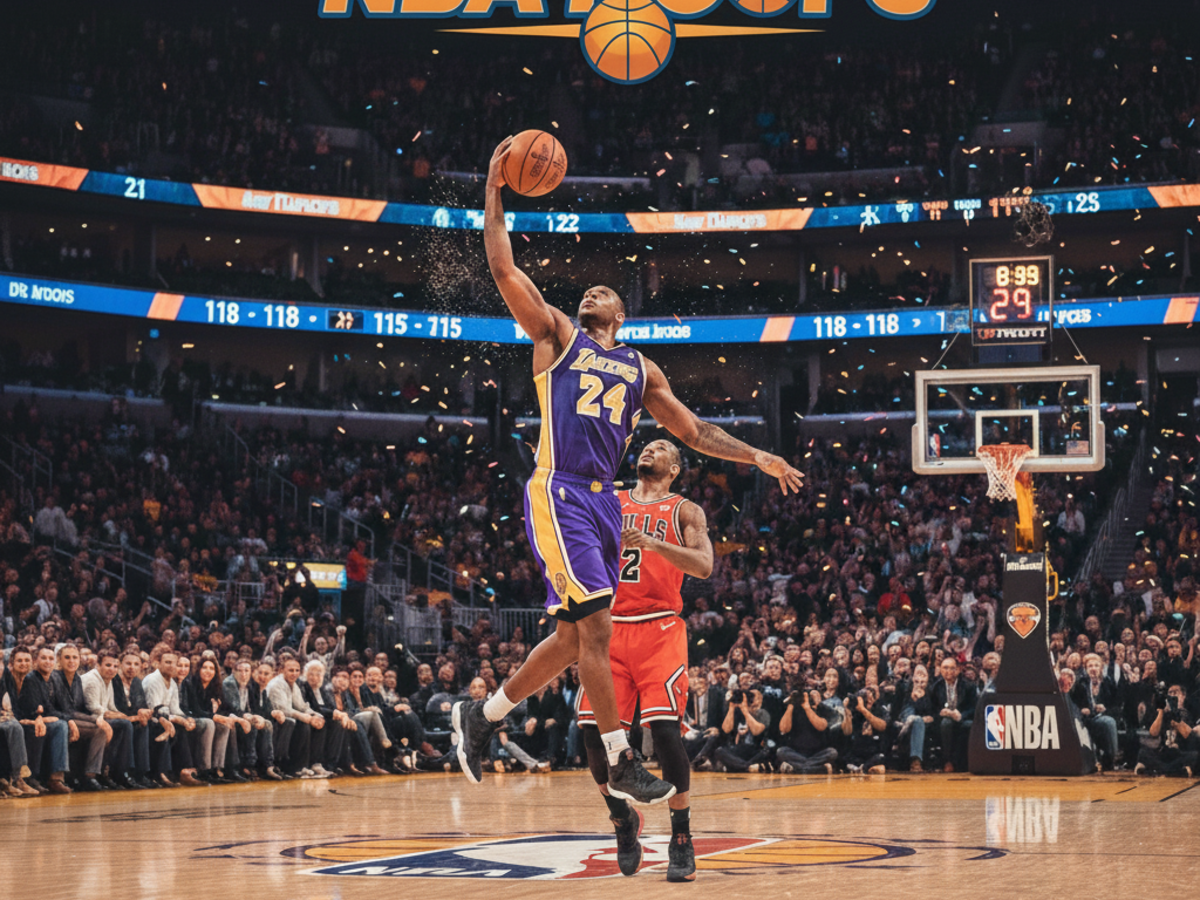
NBA Standings shake-up: LeBron’s Lakers surge, Tatum’s Celtics hold, Curry keeps Warriors alive
11.03.2026 - 17:42:41 | ad-hoc-news.de
The NBA standings got another late-season jolt last night as LeBron James pushed the Los Angeles Lakers closer to safer Play-In ground, Jayson Tatum helped the Boston Celtics steady their hold near the top of the East, and Stephen Curry once again dragged the Golden State Warriors deeper into the Western Conference Playoff Picture with a flurry of clutch threes. With every possession starting to feel like April basketball, the separation between contenders, pretenders, and lottery-bound teams is shrinking by the day.
[Check live stats & scores here]
Before diving into the narratives, one thing is clear from the updated NBA standings: there is almost no daylight between seeds in both conferences. A single cold shooting night or a three-game heater can still swing home-court advantage or push a team from comfort into Play-In chaos. Stars are ramping up their usage, defenses are tightening, and rotations are shrinking. This is when reputations are made and legacies get another chapter.
Last night’s drama: Lakers, Celtics and Warriors headline the action
LeBron James continues to treat Father Time like just another overmatched defender. The Lakers veteran star delivered another all-around line last night, steering Los Angeles to a crucial win that nudged them higher in the Western Conference race. He controlled tempo, hunted mismatches in the post, and repeatedly punished switches with drives that forced help and opened shooters in the corners. It was vintage LeBron: reading the game two beats ahead and making the right play almost every trip.
Running mate Anthony Davis provided the interior backbone again, anchoring the defense with rim protection and owning the glass. The box score told only part of the story. Every contested lob, every vertical contest at the rim, and every hard box-out helped turn what could have been a track meet into a more controlled halfcourt game that suited the Lakers. In crunchtime, they leaned into that identity, stringing together stops and letting LeBron close it on the other end.
On the other coast, the Celtics and Jayson Tatum needed a statement performance after a couple of uneven outings. They got exactly that. Tatum attacked early and often, mixing step-back threes from downtown with strong drives that put the opposing frontcourt in foul trouble. When he draws early whistles, Boston’s offense becomes brutally hard to guard: the floor opens up, and the Celtics start to rain threes in waves.
Jaylen Brown and Jrue Holiday supplied the two-way punch Boston has banked on all season. Brown sliced into the lane to punish overplays on Tatum, while Holiday was everywhere defensively, blowing up pick-and-rolls and turning live-ball steals into easy transition buckets. By the third quarter, the game had a playoff atmosphere. The crowd roared with every defensive stand, and Tatum responded with dagger jumpers that justified his firm place in the MVP race conversation.
Out West, no one does desperate basketball like the Golden State Warriors, and no one embodies that better than Stephen Curry. Chasing ground in the NBA standings, Golden State faced what felt like a must-have game, and Curry responded with a barrage of deep threes that reminded everyone why defenses still panic when he crosses halfcourt. Even on a night when some of his teammates struggled, Curry’s gravity bent the opposing defense until it snapped late in the fourth quarter.
Warriors head coach Steve Kerr has leaned more heavily on younger legs around Curry, but when the fourth quarter hit, the formula turned familiar: heavy Curry pick-and-roll, off-ball screens, and a defense forced into impossible closeouts. A couple of late threes from the logo broke the game open and may have just kept Golden State in realistic Play-In range.
Scoreboard recap: Clutch wins and missed opportunities
Across the league, the scoreboard told a story of separation and squandered chances. Several teams hovering in that tense middle tier between the 4 and 10 seeds had pivotal opportunities to bank wins and gain a cushion, while lottery-bound squads continued experimenting with rotations and giving young players longer leashes.
One of the defining themes of the last 24 hours was how razor-thin margins have become. Double-digit leads evaporated quickly as teams bombed away from three and pushed pace at every opportunity. Even when a team looked in control, a quick 10-0 run flipped the script, forcing coaches into quick timeouts and tighter rotations earlier than they’d like in a long regular season.
Coaches were candid afterward. One Western Conference coach admitted, in essence, that there is no such thing as a comfortable lead anymore: "You can play great for 44 minutes, then two bad minutes from your defense and they’re right back in it." Another East coach emphasized urgency: "If you’re not locked in on every possession right now, you’re going to be watching the playoffs from home." Those comments framed the night as more than just another slate of games; they were a warning about what happens to teams that assume tomorrow is guaranteed.
Updated NBA standings: Contenders, climbers, and the Play-In traffic jam
With last night’s results locked in, the NBA standings in both conferences tightened even further. While exact seed lines will continue to shuffle daily, the tier structure is becoming clear: true title contenders at the top, sturdy but incomplete challengers in the middle, and a volatile pack scrapping for Play-In survival at the bottom of the bracket.
Here is a snapshot of how the top of each conference is shaping up right now, with heavy implications for the playoff picture:
| Rank | Team | Conference | Record | Current Trend |
|---|---|---|---|---|
| 1 | Boston Celtics | East | elite mark | Steady at top behind Tatum |
| 2 | Milwaukee Bucks | East | top-tier | Giannis driving late push |
| 3 | Philadelphia 76ers | East | strong | Health of Embiid remains key |
| 4 | Cleveland Cavaliers | East | solid | Mitchell leading young core |
| 5 | New York Knicks | East | above .500 | Brunson powering surge |
| 1 | Denver Nuggets | West | elite mark | Jokic in full control |
| 2 | Oklahoma City Thunder | West | top-tier | Young core exceeding expectations |
| 3 | Minnesota Timberwolves | West | top-tier | Defense setting the tone |
| 4 | Los Angeles Clippers | West | strong | Healthy Kawhi keeps them dangerous |
| 5 | Los Angeles Lakers | West | around .500 | Climbing behind LeBron and AD |
This snapshot shows why the pressure is building. In the East, the Celtics, Bucks, and 76ers have separated themselves when healthy, with Cleveland and New York hovering as dangerous, defense-first threats that no higher seed wants to see in a first-round series. Every win down the stretch for Boston is less about securing the 1-seed and more about ensuring home-court through the conference finals.
In the West, the defending champion Denver Nuggets remain the reference point. Nikola Jokic once again has them operating with surgical precision in the halfcourt, and it shows in the standings. The surprise of the year remains the Oklahoma City Thunder, who are turning last season’s “fun young team” label into something much scarier: a legitimate top-three seed in a brutal conference. Minnesota’s defensive identity, fueled by Rudy Gobert’s rim protection and Anthony Edwards’ two-way explosion, has kept them in that top tier.
Below that, the LA Clippers, Lakers, Phoenix Suns, Dallas Mavericks, and Warriors are caught in a daily tug-of-war for positioning. The Play-In line is still a living, breathing organism; one losing streak could drop a team from a solid 5-seed into a one-game elimination scenario. For veteran-laden squads like the Lakers and Warriors, dodging that volatility is almost as important as avoiding injuries.
The Play-In pressure cooker: Who’s on the bubble?
For fans obsessively refreshing the NBA standings, the true heartburn comes from that 7–10 range in each conference. That is the Play-In zone, where a full season’s worth of work can hinge on a cold shooting night or foul trouble in a single-elimination setting. Right now, teams like the Lakers, Warriors, Mavericks, Heat, Pacers, and Hawks all find themselves either in that zone or circling dangerously close.
Coaches aren’t pretending otherwise. One Western assistant characterized the Play-In this way: "You treat it like an NCAA tournament game. There’s no pacing, no saving legs. You throw everything at it." That urgency is already seeping into regular-season rotations. Minutes for stars are climbing, and backup point guards with shaky handles are seeing their roles trimmed as margins for error vanish.
From a tactical standpoint, the Play-In scramble is also shaping how teams deploy their stars. Some coaches are staggering lineups more aggressively to guarantee that at least one of their primary creators is always on the floor. Others are using playoff-style matchups, hiding weaker defenders on non-shooters and switching more aggressively to cut off pull-up threes. We are seeing more playoff-level schemes in March and April than in recent years, and it is reshaping how the standings evolve day to day.
MVP race update: Jokic, Doncic, Tatum and Giannis keep raising the bar
The individual brilliance at the top of the league remains staggering. As the standings tighten, the MVP race is becoming as much about narrative and team success as it is about raw player stats. Still, the numbers coming from the main contenders are impossible to ignore.
Nikola Jokic is once again operating like an offensive cheat code. On a typical night, he flirts with a triple-double while barely looking like he is breaking a sweat, orchestrating Denver’s attack from the elbows and top of the key. His per-game line continues to live in the elite territory: around the high-20s in points, double-digit rebounds, and near double-digit assists on absurd efficiency. The eye test matches the analytics: when he is on the floor, the Nuggets play like a juggernaut; when he sits, their offense dips into pedestrian territory.
Luka Doncic keeps delivering video-game box scores for the Dallas Mavericks, stacking up 30-plus point nights with double-digit assists and strong rebounding from the guard spot. His usage is sky-high, and yet his passing vision continues to sharpen. He is hitting skip passes to the weakside corner with one hand and powering through contact at the rim like a wing, not a point guard. The flip side, as always, is the defensive burden and whether Dallas can defend well enough to turn his statistical pyrotechnics into top-tier seeding.
Jayson Tatum has steadily built his case not just on scoring, but on the Celtics’ dominance in the standings. When a team spends months atop the conference and you are its best two-way player, you are automatically part of the MVP conversation. Tatum’s blend of three-level scoring, improved playmaking, and switchable defense on wings and even some bigs is exactly the profile voters gravitate toward when his squad is winning at this clip.
Then there is Giannis Antetokounmpo, quietly posting another monster season for the Milwaukee Bucks while integrating a new backcourt star and different offensive structure. His nightly stat lines remain monstrous: around 30 points, double-digit boards, and a handful of assists, all while attacking the rim like a freight train. If Milwaukee finishes near the top and cleans up some late-game issues, Giannis will remain a constant presence on MVP ballots.
Even further down the list, players like Shai Gilgeous-Alexander and Anthony Edwards are making loud claims. Shai’s efficiency and late-game shot-making for the Thunder have turned them from a curiosity into a contender. Edwards, meanwhile, has become the heartbeat of a Timberwolves team that has punched above its weight in the West. Their emergence not only spices up the MVP race, it also signals a generational shift that could reshape how the standings look for years.
Top performers and box-score fireworks
Beyond the regular MVP candidates, last night delivered its share of box-score fireworks. A handful of players exploded for 30-plus points, and several bigs dominated the glass to notch monster double-doubles. In an era obsessed with pace and space, the sheer volume of threes taken and made remains eye-popping, but it is still the all-around lines that turn heads in the morning box-score scroll.
LeBron’s production once again came in that familiar superstar efficiency package: strong shooting around the rim, threes when the defense sagged, and valuable free throws drawn by attacking mismatches. His assist total underscored how much the Lakers still rely on his playmaking, particularly in crunchtime when their halfcourt offense can bog down without his creation.
Stephen Curry’s night, while built on his trademark three-point barrage, also showcased his underrated finishing at the rim and constant off-ball movement. He may be best known for daggers from deep, but it is the relentless relocation, the back-cuts, and the quick-hit drives that keep defenders off-balance long before he rises for a game-breaking shot from 28 feet.
Across the league, younger guards put up eye-catching lines as well. Several emerging playmakers posted near triple-doubles, featuring mid-20s scoring, double-digit assists, and strong rebounding from the perimeter. Those are the kinds of performances that get front offices excited: not just microwave scoring, but complete offensive orchestration.
It was not all glittering numbers, though. Some high-usage stars struggled from the field, posting inefficient shooting lines that cost their teams possessions in key stretches. Those off nights matter even more when the standings are this tight. One coach noted postgame that "your margin for having a bad night is basically gone" for anyone carrying MVP-level usage. In other words, stat lines are not just about highlight reels; they are directly tethered to playoff odds.
Injuries, absences, and how they shape the playoff picture
No discussion of the current NBA standings is complete without addressing injuries. Several key contenders are managing absences or nagging issues that could reshape the bracket. Even when stars play, they are sometimes doing so through clear discomfort, and teams are trying to thread the needle between fighting for seeding and protecting their biggest investments for May and June.
For some squads, the timing of injuries has been brutal. A core starter missing a week right now can mean dropping two or three close games, which in this environment is the difference between sixth place and ninth. That does not just impact the playoff picture; it can rewrite the narrative of an entire season. A team that looked like a home-court threat in the first round can suddenly find itself needing to win two Play-In games just to make the bracket.
On the flip side, there are teams finally getting healthier at exactly the right time. Rotations are stabilizing, continuity is improving, and defensive schemes are tightening because the same five or six key players are sharing the floor more consistently. One Eastern Conference coach said this week their priority is "banking reps" for their best lineups, not experimenting. With that continuity comes confidence in late-game sets on both ends.
From a fan’s standpoint, these injury swings add another layer of unpredictability to the standings. You might be watching a marquee matchup thinking about tiebreakers, only to learn that a core star is a late scratch and the calculus changes entirely. That is why teams at the top value banking wins early in the season: it buys some cushion against bad breaks late.
Coaches’ adjustments: Defense, pace and playoff-style schemes
As the playoff picture sharpens, coaching adjustments are becoming more pronounced. Teams that built their records on outscoring opponents in shootouts are dialing back the tempo a notch, trying to simulate the slower, more physical style of postseason basketball. You can feel it in the way teams defend the three-point line, send extra bodies to the glass, and muck up the middle with help defenders.
Switch-heavy defenses are everywhere right now, particularly among teams with versatile wings. The Celtics, for example, are comfortable switching across multiple positions with Tatum, Brown, and Holiday on the floor, trusting that their physicality can survive mismatches against most lineups. The Clippers and Timberwolves, in different ways, are doing similar things, betting on size and length to close gaps and deter drives.
Offensively, contenders are simplifying in the best possible way. More high pick-and-roll for their primary creators, more clear-out sets for mismatches, and more off-ball screening actions designed to free shooters from the corners. Coaches are shelving some of the cute early-season wrinkles and focusing on the bread-and-butter actions that will survive scouting and counters in a seven-game series.
This is where stars matter even more. In the postseason, when defenses take away your first and second option, you need players who can manufacture something out of nothing. Curry’s relocation threes, LeBron’s post playmaking, Doncic’s step-back off the dribble, Jokic’s mid-post orchestration, Tatum’s sidestep threes and Giannis’s downhill attacks are not just individual highlights; they are systemic release valves when a possession has bogged down.
Fan experience: Every night feels bigger now
You can feel the tension in arenas. Crowds are louder on defensive possessions, more reactive to officiating calls, and quicker to their feet whenever a star checks in at the scorer’s table. It feels, in some buildings, like playoff basketball has already arrived. The stakes of every run, every box-out, and every turnover are magnified by the constantly updated graphic of the NBA standings flashed on jumbotrons and broadcasts.
For fans at home, the second screen experience has become almost mandatory: one eye on the live game, the other on scores and live standings tabs. A late rally by a team in another arena can completely change tiebreaker math and seed projections. Those dynamics are especially wild on nights with heavy Western Conference slates, where half the teams jostling for the 5–10 seeds tip off within an hour of each other.
Social media, unsurprisingly, is in full overreaction mode. A single cold shooting night by a star can spark fevered debates about whether they have enough help, while a two-game win streak can birth think pieces declaring a team "back". Underneath the noise, though, the real story is more subtle: the grind of an 82-game season converging into a narrow runway toward the playoffs, where tiny edges begin to matter massively.
Looking ahead: Must-watch matchups and what’s at stake
The next few days on the schedule are loaded with games that could swing the NBA standings significantly. Marquee matchups between top seeds in opposite conferences will serve as measuring-stick tests, while intra-conference clashes between teams in that 4–10 tier could decide tiebreakers and ultimately home-court advantage or Play-In location.
Warriors games down the stretch have become must-watch TV simply because every outing feels like an elimination test. One off night from Curry and they risk sliding further down, but another heater from deep and suddenly they are eyeing the 7- or 8-seed instead of 9 or 10. Lakers contests have the same urgency, with LeBron and Anthony Davis now fully aware that their margin for error has evaporated.
In the East, Boston’s remaining games against top-tier opponents will say a lot about whether they enter the postseason as clear favorites or merely one of several threats. Milwaukee and Philadelphia will be closely monitored not only for results, but for how they look physically and rhythmically as they tweak rotations and integrate returning players from injury.
For the neutral fan, this is the sweet spot of the calendar. The MVP race is still open enough to spur nightly debate, the standings are volatile enough to justify late-night score checks, and the quality of play has clearly ticked up from the dog days of midseason. Every night has at least one game that could end up as a playoff preview or, in a few weeks, a turning point we look back on as the moment a seed line flipped.
The call to action is simple: keep an eye on the NBA standings, follow the playoff picture as it shifts with every result, and clear your evenings for the heavyweight clashes on the schedule. With stars like LeBron, Tatum, Curry, Jokic, Giannis, and Doncic all ramping up, the league is hurtling toward a postseason that feels as wide open as it has in years. Stay locked in, because the next big swing in the race might come on a random Tuesday night when a tired defense gives up one too many threes, and a team’s entire season tilts on a single possession.
[Check live stats & scores here]
As the dust settles each night, one number will keep drawing you back: where your team sits in the NBA standings. From the top seeds chasing home-court to the Play-In hopefuls fighting off elimination, the story of this season is being written in real time, one box score and one clutch possession at a time.
So schätzen die Börsenprofis Aktien ein!

Für. Immer. Kostenlos.