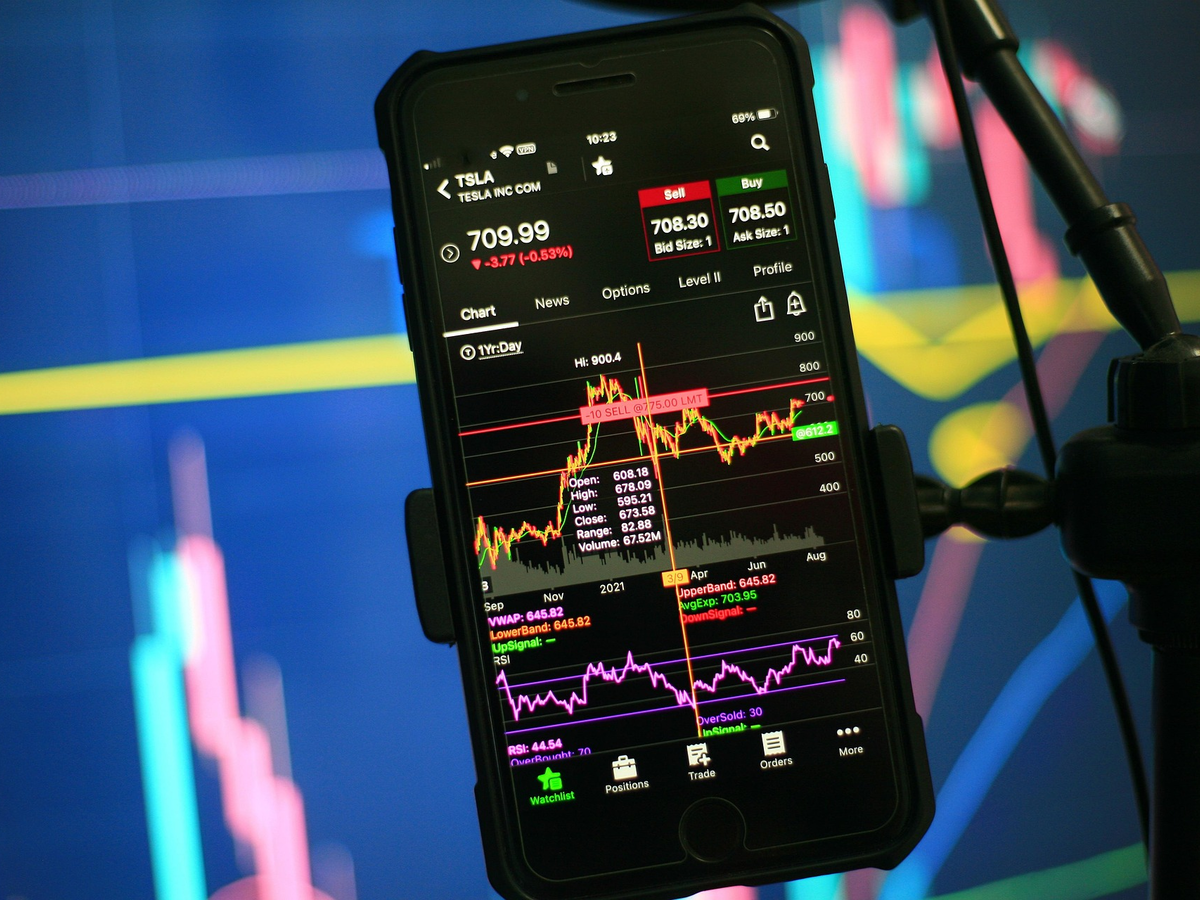
Nasdaq 100: Monster Opportunity or Tech Bubble Waiting to Detonate?
12.03.2026 - 05:59:48 | ad-hoc-news.de
Get the professional edge. Since 2005, the 'trading-notes' market letter has delivered reliable trading recommendations – three times a week, directly to your inbox. 100% free. 100% expert knowledge. Simply enter your email address and never miss a top opportunity again. Sign up for free now
Vibe Check: Right now the Nasdaq 100 is caught in a high-voltage tug-of-war between AI euphoria and macro reality. The index has been swinging in a dramatic but controlled range, not crashing, not exploding to a fresh vertical breakout, but grinding through a classic consolidation after a huge AI-led run. Think nervous bulls, patient bears, and every short-term trader trying not to turn into a bagholder.
Want to see what people are saying? Check out real opinions here:
- Watch deep-dive Nasdaq 100 breakdowns on YouTube
- Scroll fresh Wall Street mood swings on Instagram
- Binge viral short-form tips on tech investing on TikTok
The Story: The Nasdaq 100 is the purest play on global tech and AI dominance: semiconductors, cloud, software, and the mega-cap platforms that essentially run the modern digital economy. Under the hood, the narrative is being driven by a handful of mega forces:
- AI and data-center buildout turning chipmakers and cloud giants into cash machines.
- Bond yields and the 10-year US Treasury acting like gravity for all high-valuation tech names.
- Fed rate cut hopes that keep flipping between aggressive optimism and cold reality.
- Ongoing earnings season where every line in the outlook section can trigger a tech rally or mini tech wreck.
- Magnificent 7 dominance: a few giants deciding whether the whole index breaks out or rolls over.
The result: instead of a calm, gentle trend, we’re in a high-energy, twitchy environment. One session you see a powerful AI rally with software and chips ripping higher, the next session a sudden macro scare hits and there’s a sharp but controlled tech sell-off, especially in the highest multiple, zero-dividend stories. Market players are constantly asking: is this consolidation just a healthy pause before the next all-time high, or is this the first crack in an overhyped AI bubble?
CNBC’s tech and US markets coverage is laser-focused on this split personality. On the tech side, the big stories revolve around AI infrastructure spend, cloud growth, and semiconductor demand, especially around GPUs and advanced manufacturing. On the markets side, the talk track is dominated by the Fed, inflation readings, and the bond market’s message for growth stocks. Across YouTube and TikTok, you see two tribes: one camp screaming that “Tech Stocks Will Crash” and another camp convinced that every small dip is the last easy chance to get in before the AI supercycle sends everything into a parabolic breakout.
This tension is exactly what creates opportunity — and massive risk — in the Nasdaq 100 right now.
Why Bond Yields Are the Invisible Hand on Tech Valuations
If you trade the Nasdaq 100 and you’re not watching the 10-year US Treasury yield, you’re basically trading with one eye closed. Growth stocks are all about future cash flows. Higher yields mean those future dollars are worth less today in discounted cash flow models, and that crushes the fair value of high-multiple tech names.
Here’s how the logic plays out in the real world:
- When yields climb: Wall Street starts asking whether it’s still smart to pay huge premiums for growth that might only pay off far in the future. Valuation compression hits the most speculative names first, then slowly bleeds into even the quality giants. The result: underperformance in unprofitable tech, weakness in richly valued cloud/software, and a broader headwind for the Nasdaq 100.
- When yields drop or stabilize: The pressure eases. Suddenly, investors are more comfortable paying up for AI, cloud, and recurring-revenue software. Multiples can expand again, especially if earnings are coming in strong. That’s where you see those big green candles and aggressive Buy the Dip flows into the Nasdaq 100 and the big tech ETFs that track it.
Right now, yields are sitting in a tense, elevated-but-not-insane zone. Not a panic spike, but not cheap money either. That’s exactly why the Nasdaq 100 isn’t melting down but also isn’t blasting vertically to a euphoric all-time high every week. We’re in a fragile balance: every macro data release (jobs, inflation, GDP) can nudge yields and instantly flip the mood in tech from fearless to cautious.
For traders, this matters on multiple timeframes:
- Day traders: Use yield moves as a directional tell. Sudden yield spikes often line up with intraday pullbacks in mega-cap tech.
- Swing traders: Watch whether yields are trending higher or sideways. A gentle drift lower in yields has historically supported multi-week rallies in the Nasdaq 100.
- Position traders and investors: Focus on the macro regime. Are we in a high-rate, sticky inflation world, or a normalizing inflation, gently easing rates world? The answer changes how aggressive you can be on high-multiple AI leaders.
The Fed, Rate Cuts, and Why Growth Stocks Live and Die by Expectations
The Federal Reserve doesn’t directly set stock prices, but it absolutely sets the vibes. For growth-heavy indices like the Nasdaq 100, the direction and pace of rate cuts can be the difference between a smooth stair-step rally and a brutal derating cycle.
The current setup from Fed and CNBC market coverage looks something like this:
- Inflation is off the peak but not fully back in the comfort zone.
- Growth is slowing in a controlled way, not a total crash, which keeps hopes alive for a soft landing.
- Rate cut expectations are choppy: some weeks the market prices in faster cuts, other weeks data forces traders to dial back the optimism.
Every time the market leans too hard into the “Aggressive Fed Cut” fantasy, tech tends to surge, with AI names and high-beta software ripping higher. When reality hits — maybe the Fed sounds more cautious, or inflation data comes in hotter than hoped — you often see a sharp reset where the Nasdaq 100 gets smacked lower, especially at the speculative end.
This is why traders talk about “don’t fight the Fed,” but on tech, it’s really: don’t fight Fed expectations. It’s not just what the central bank does — it’s what the market thinks the Fed will do next that drives repricing.
Growth stocks, and especially the Nasdaq 100 heavyweights, benefit when:
- Rate cuts are seen as likely and relatively near, but not forced by a full-blown recession.
- Inflation appears to be trending lower without collapsing demand.
- The dollar isn’t spiking aggressively higher, which would hurt multinational tech earnings.
Right now, the macro script is cautiously supportive but fragile. There is enough hope for easier policy down the road to justify AI and cloud optimism, but enough uncertainty to keep volatility alive and prevent full-blown FOMO mania from dominating every session.
The Magnificent 7: How a Handful of Names Dominate the Nasdaq 100
You can’t talk about the Nasdaq 100 without talking about the Magnificent 7. Nvidia, Apple, Microsoft, Alphabet, Amazon, Meta, and Tesla (plus a few rising contenders) are the market-cap gravity wells of the entire index. Their performance doesn’t just influence the NDX — it practically scripts the daily candles.
Here’s how the big players set the tone:
- Nvidia: The undisputed poster child of the AI revolution. Every earnings report and even minor guidance tweak becomes a referendum on AI demand, GPU pricing power, and data-center capex. When Nvidia is in beast mode, traders extrapolate that strength to other chips, cloud platforms, and even AI-enabled software names. When it wobbles, everything AI-adjacent suddenly looks more fragile.
- Apple: Less about explosive growth these days, more about stability, buybacks, and the installed device base. For the Nasdaq 100, Apple often behaves like a defensive mega-tech: not the most explosive, but a key support pillar. Weakness in Apple signals concerns about the consumer and hardware cycle; strength reassures the market that Big Tech cash machines are still reliable.
- Microsoft: The stealth AI index inside the index. Between Azure, enterprise software, and AI integrations across its product stack, Microsoft is both a quality defensive and a high-conviction AI platform play. Its earnings and guidance often anchor sentiment around enterprise AI adoption.
- Alphabet and Meta: Ad giants turned AI and cloud players. Their ad revenue health says a lot about the global economy, and their AI spending and product rollouts signal how intense the arms race is. Tailwinds in digital ads combined with disciplined AI investment can turn them into powerful support engines for the Nasdaq 100.
- Amazon: Where consumer, cloud, and AI intersect. AWS is a core profit driver, and all those AI workloads have to live somewhere. Strong AWS numbers and upbeat commentary on AI workloads often spill over into the broader tech complex.
- Tesla: The wildcard. It’s less of a pure AI/cloud name and more of a hybrid bet on EVs, autonomy, and brand. Its volatility can add spice to the index, especially on earnings or macro risk-off days.
Across recent reporting on CNBC’s tech pages, the recurring themes around these giants are:
- AI spending and monetization timelines.
- Cloud growth resilience versus cost optimization by customers.
- Hardware cycles: PC, smartphones, and devices stabilizing or stalling.
- Regulatory pressure, especially around antitrust and data privacy.
Even when the broader Nasdaq 100 looks like it’s just chopping sideways, you’ll often find that under the hood the Magnificent 7 are playing musical chairs — one name selling off after earnings while another breaks out on a strong AI update. For active traders, this isn’t just noise; it’s a map of where capital is rotating inside the index.
Deep Dive Analysis: Under the Surface of the Nasdaq 100
Let’s rip open the hood and look at how the index is trading beyond the headlines.
- Key Levels: Since we’re working in SAFE MODE without referencing exact price points, think in terms of “Important Zones” instead of specific digits. The Nasdaq 100 is currently hovering in a major consolidation band just under a crucial resistance region that previously marked the last highs. Below that, there’s a broad support zone formed by prior breakout levels and multiple recent reactions. Dip buyers have been stepping in repeatedly around this support region, creating a visible line where bulls show up to defend the trend. If this important support band breaks decisively on heavy volume, that’s where the risk of a deeper tech wreck opens up. Above, there’s a well-defined resistance ceiling where every rally has so far met profit taking. A clean breakout through that zone, especially on strong AI or Fed-driven news, would likely shift sentiment into full-on FOMO mode and could push the index toward a new ATH area.
- Sentiment: Who’s in Control? Right now, sentiment is mixed but not broken. The Fear/Greed backdrop is hovering in a cautious-but-not-panicked zone. That means people are nervous about valuations and macro risks, but they haven’t thrown in the towel on tech. The VIX — the classic fear gauge — is not screaming crisis; it’s sitting in a range that suggests bouts of volatility, spikes on news, but no sustained panic. This blend creates the perfect environment for Buy the Dip mentality to keep resurfacing. Every sharp red day in the Nasdaq 100 tends to attract liquidity from traders and funds who missed the last AI surge and are desperate not to be bagholders of cash while tech quietly grinds higher long term.
Put differently: bears have arguments; bulls still have control until key support zones crack.
AI Hype vs. Real Cash Flows
One of the hottest debates you’ll see on YouTube and TikTok right now is simple: is AI a real, sustainable revenue engine, or just a bubble narrative propping up tech stocks?
On the hype side, you’ve got viral creators screaming about “the greatest tech revolution since the internet,” insisting that every GPU-related or AI-software name is destined for moon-landing price action. On the skeptical side, more macro-focused voices warn that capex can’t grow forever, competition will crush margins, and not every AI story becomes a cash machine.
The reality driving the Nasdaq 100 sits somewhere in the middle:
- Yes, AI demand is real: Enterprises are genuinely spending on AI infrastructure, tools, and integration. Cloud and semiconductor earnings confirm real dollars flowing.
- But the market has already priced in a lot of perfection: High-multiple AI leaders need to continuously deliver not just strong growth, but stunning guidance. Any hint of slowdown or margin pressure can flip a hero stock into a short-term villain, dragging the whole index.
That’s why earnings season matters so much. CNBC’s coverage spends a ton of time on AI commentary in conference calls — not just the numbers, but the tone. If CEOs start sounding cautious, the market will very quickly reassess how much future AI profit is already priced into the Nasdaq 100.
Rotation Inside Tech: Chips, Cloud, Software, and Speculative Names
The Nasdaq 100 is not a monolith. Inside the index, you can see money rotating between key segments:
- Semiconductors: When the AI narrative is on fire and macro fears are muted, semis tend to lead with explosive strength. If macro worries about global growth or inventory build-up resurface, they can sell off hard and fast.
- Cloud and Mega-Cap Platforms: Seen as the backbone of digital infrastructure. They often act like “quality growth” — less volatile than speculative AI names but still highly sensitive to Fed and yield expectations.
- Software-as-a-Service (SaaS): Recurring revenue is attractive, but valuations can get stretched. In risk-on phases, high-growth SaaS rips; in risk-off moves, it’s among the first to be de-rated.
- Speculative and unprofitable tech: This is the playground for short-term traders and the danger zone for late-stage FOMO. These names pop hard on narrative and liquidity, but when risk appetite fades, they can collapse brutally, turning many into unwilling bagholders.
For smart traders focusing on the Nasdaq 100, the goal is to ride the right rotations instead of chasing yesterday’s winners at any price. Watch where earnings beats are clustering, where guidance is strongest, and how money flows between these segments as macro data hits.
Sentiment, Fear/Greed, and the Buy the Dip Reflex
Sentiment is the hidden driver behind every candle. Right now:
- Fear/Greed readings are fluctuating between neutral and mildly greedy, but not in full euphoria. That’s actually a sweet spot for trend traders — strong enough for breakouts to stick, but not so euphoric that everyone is max long already.
- The VIX is behaving like an on/off switch. It spikes on surprises — hot inflation prints, hawkish Fed comments, geopolitics — and then fades as the dip gets bought. This pattern suggests that institutional money is willing to step in on pullbacks, especially in quality tech and AI leaders.
- Buy the Dip mentality is alive and well. Every time the Nasdaq 100 has a punchy red day, you see flows into big-tech ETFs and index products, plus heavy social chatter about “discount entries” and “last chance before the next breakout.”
The risk? When everyone gets conditioned to buy every small pullback, a deeper correction can hit harder than people expect. That’s where over-levered traders can get blown out. The opportunity? If you’re disciplined with risk and entries, this environment offers repeated second chances to join the bigger tech and AI trend without chasing the absolute top.
Risk Management: How Not to Become the Last Bagholder
For all the hype, the Nasdaq 100 is not a one-way ticket to easy money. Here’s how serious traders approach it:
- Respect the Important Zones: Know where the major support and resistance bands are on the chart. If the index is bouncing repeatedly from a key support zone, that’s a battle line where bulls clearly care. If that zone decisively breaks on volume, you do not want to be the last one stubbornly buying every dip.
- Watch the leaders: If the Magnificent 7 start breaking down together while the index looks calm on the surface, that’s a warning sign. The reverse is also true: when leaders are breaking higher on strong fundamentals, shallow Nasdaq 100 pullbacks can be opportunities.
- Use volatility intelligently: If the VIX is trending higher and macro news is heating up, you don’t want to be deploying maximum leverage on a blind dip buy. When volatility calms and earnings confirm strength, that’s usually a better environment to lean into the trend.
- Timeframe discipline: Don’t trade a multi-week consolidation like a one-minute scalp. If you’re a swing trader, accept that the index may chop before choosing direction. If you’re intraday, respect the macro calendar — big data prints can flip the tape in seconds.
Is the Nasdaq 100 a Risk or an Opportunity Right Now?
It’s both — and that’s exactly why global capital is obsessed with it.
The Opportunity Side:
- AI, cloud, and digital infrastructure are not fads. They are structural trends with long runways.
- The Magnificent 7 are still printing serious cash, not just dreams. That gives the Nasdaq 100 a powerful foundation.
- Fed policy is shifting from aggressive tightening toward a more balanced stance. As long as inflation doesn’t re-ignite, that’s structurally supportive for quality growth.
- Social sentiment shows that many retail investors are still underexposed, scared by past drawdowns. That leaves room for future FOMO flows if the index breaks decisively higher.
The Risk Side:
- Valuations in core AI and software names already embed very optimistic futures.
- Any serious re-acceleration in inflation could push yields higher and trigger a nasty valuation reset.
- Earnings expectations are high; disappointments are punished quickly and harshly.
- Concentration risk: with so much index weight in a few giants, any major stumble in the Magnificent 7 can pull the whole Nasdaq 100 down.
Conclusion: How to Play the Current Nasdaq 100 Regime
In this environment, blindly shorting tech because “it’s gone up too much” is just as risky as apeing into every AI ticker assuming infinite upside. The real edge comes from respecting the macro, tracking sentiment, and understanding the internal mechanics of the index.
Here’s a practical mental framework:
- If the macro stays stable, yields drift sideways to slightly lower, and the Fed sticks to a cautious-but-not-panicked tone: the path of least resistance for the Nasdaq 100 is an eventual break higher from this consolidation, powered by AI leaders and the Magnificent 7. In that case, dip-buying quality names and using the index for trend exposure can make sense — if your risk is managed.
- If yields spike on renewed inflation fears or the Fed turns more hawkish again: expect a sharper tech sell-off, especially in the more speculative corners of the Nasdaq 100. In that scenario, capital tends to rotate out of high-multiple growth and into safer havens.
- If earnings roll over across multiple mega-cap names: the “tech can’t lose” narrative breaks, and the index can transition from sideways consolidation into a deeper correction. That’s where discipline separates pros from bagholders.
For now, the Nasdaq 100 remains the arena where global capital, AI hype, and macro reality collide. It’s volatile, narrative-driven, and absolutely central to modern portfolios. Whether it’s a monster opportunity or a ticking time bomb depends less on headlines and more on how you handle risk, timing, and conviction.
Trade it like a pro: respect the macro, watch the leaders, let sentiment guide your aggression, and never forget that even the strongest AI narrative doesn’t protect you from leverage and poor risk management.
If you can ride the trend without becoming its victim, the Nasdaq 100 might be the defining trade of this cycle — not just a chart, but the front line of the digital economy’s future.
Tired of poor service? At trading-house, you trade with Neo-Broker conditions (free!), but with real professional support. Use exclusive trading signals, algo-trading, and personal coaching for your success. Swap anonymity for real support. Open an account now and start with pro support
Risk Warning: Financial instruments, especially CFDs on Tech Indices like the NASDAQ 100, are highly volatile and come with a high risk of losing money rapidly due to leverage. You should consider whether you understand how these instruments work and whether you can afford to take the high risk of losing your money. This content is for informational purposes only and does not constitute investment advice.
So schätzen die Börsenprofis Aktien ein!

Für. Immer. Kostenlos.