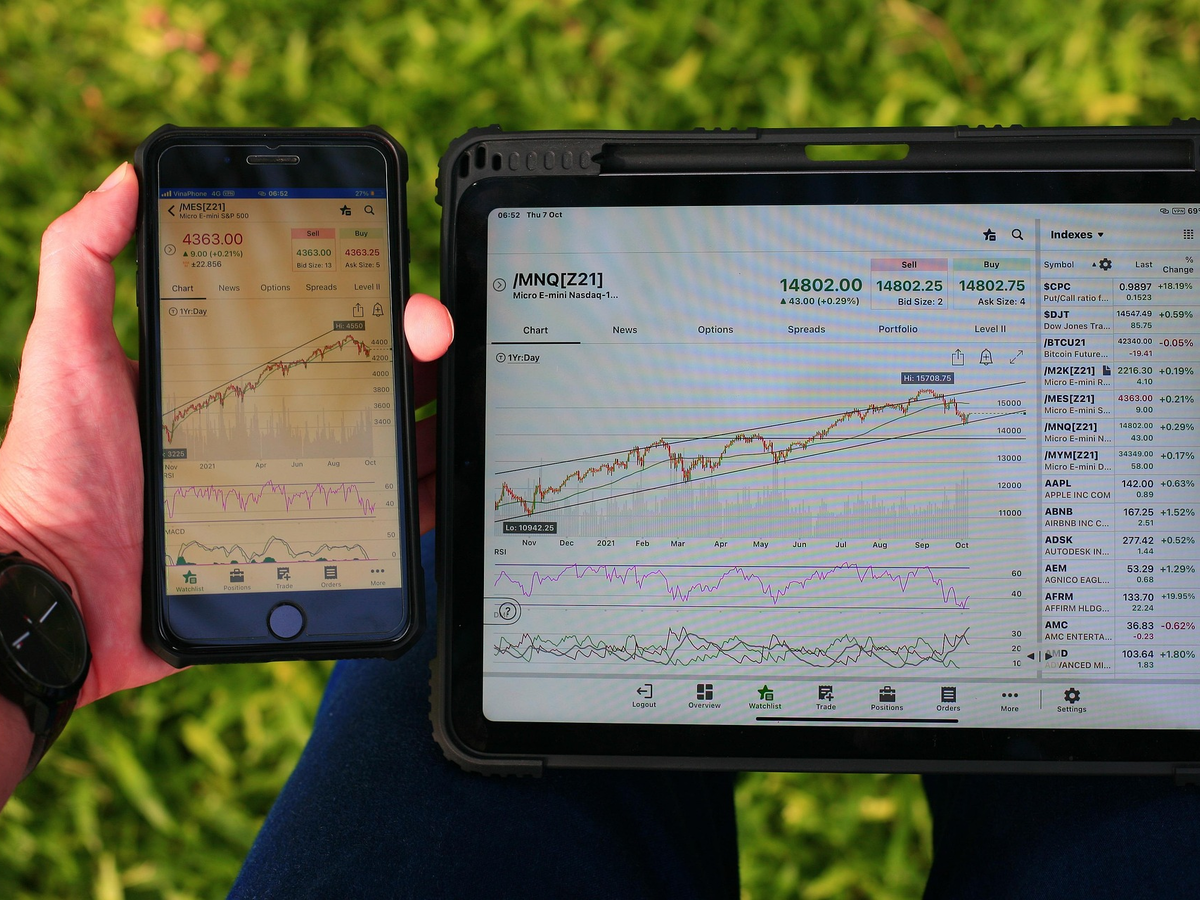
Nasdaq 100: Last Great AI Buying Opportunity – Or the Next Tech Wreck Loading?
13.03.2026 - 21:08:21 | ad-hoc-news.de
Get the professional edge. Since 2005, the 'trading-notes' market letter has delivered reliable trading recommendations – three times a week, directly to your inbox. 100% free. 100% expert knowledge. Simply enter your email address and never miss a top opportunity again. Sign up for free now
Vibe Check: The Nasdaq 100 right now is a full-on tug of war: AI euphoria vs. macro anxiety. After a powerful tech surge, the index is hovering in a crucial area, moving in a choppy, nervous way that screams indecision. Bulls are still flexing, but Bears finally smell blood and are circling the overextended high-flyers. Volatility is picking up, rotation inside Big Tech is wild, and every headline about the Fed, inflation, or semiconductors instantly swings sentiment from hype to panic. This is not a sleepy market – it is a live-wire environment where one surprise can trigger a sharp breakout or an ugly flush.
Want to see what people are saying? Check out real opinions here:
- Watch deep-dive Nasdaq 100 breakdowns on YouTube
- Scroll the latest Wall Street mood on Instagram
- Binge viral TikToks on tech stock trading hacks
The Story: The Nasdaq 100 is the purest leverage play on the global tech dream: AI, chips, cloud, software, e-commerce, and platform giants all packed into one index. But under the surface of every big green day lies a simple equation: growth stocks vs. bond yields.
When we talk tech valuations, we are basically talking about discounting future cash flows. The more the market believes earnings will explode in the future, the more it is willing to pay today. But that entire logic is chained to one villain: the yield on the 10-year US Treasury. When that yield drifts higher, the discount rate rises, and suddenly those far-out AI cash flows look a lot less shiny.
Here is the mental model:
- Low yields = cheap money = growth stocks feel like rocket fuel. Investors happily pay rich multiples for tech darlings because the opportunity cost of holding long-duration assets is low.
- High yields = expensive money = gravity returns. Those stretched valuations in hot AI names and mega-cap platforms come under fire. Any earnings miss or cautious guidance becomes a trigger for a sharp derating.
The interesting twist: tech has decoupled from yields several times in this cycle. Even when yields spiked, AI optimism and narrative momentum kept the Nasdaq 100 surprisingly resilient. Traders are basically saying, “Yes, yields are annoying, but AI is such a mega-trend that earnings will outrun the higher discount rate.” If that bet is right, current levels are still just a staging area before the next leg up. If it is wrong, this is a dangerous complacency zone.
Right now, the macro backdrop is a messy cocktail:
- Inflation data oscillates between relief and disappointment, keeping everyone guessing whether the disinflation story is real or stalling.
- The 10-year yield is swinging in a broad band, not collapsing, not exploding – just creating intermittent stress whenever it tilts higher.
- Economic data is soft in some corners and still solid in others, feeding both soft-landing and hard-landing narratives.
That uncertainty is exactly why the Nasdaq 100 is acting so jumpy. Every new data release instantly rewrites the script: one week it is “AI Supercycle, buy everything,” the next week it is “valuation hangover, time for a tech cleanse.”
Layer on top the AI frenzy: chipmakers, cloud hyperscalers, and AI infrastructure plays are still the center of the trade. Semiconductors, especially, have become the heartbeat of the index. Strong demand projections, huge capex plans from Big Tech, and relentless social media hype keep that segment in focus. But expectations are now sky-high – and that means even a small disappointment can trigger an outsized reaction.
Earnings season is the truth serum. When the Magnificent 7 step up to the mic, the index either secures a new narrative tailwind or gets slammed back into reality. In this environment, guidance matters more than rear-view numbers. The street wants to hear one word: acceleration. Any hint of AI monetization slowing, margin compression, or capex fatigue can flip the mood from “to the moon” to “take the money and run.”
Meanwhile, hair-trigger algorithms are amplifying every move. An upbeat comment about AI deployments or cloud demand can spark aggressive chasing. A single cautious phrase about consumer spending or ad budgets can ignite algorithmic selling. That is why the Nasdaq 100 often looks like it is overreacting: machines are reading headlines faster than humans, and liquidity in single names can suddenly vanish exactly when volatility spikes.
So we end up with a paradox: structurally, the long-term thesis on US tech and AI is powerful. Cyclically, the macro, yields, and Fed path are still unresolved. The Nasdaq 100 sits in the middle of this tension, grinding up and down inside a wide, emotional band where both breakouts and breakdowns are always on the table.
Deep Dive Analysis: Let’s talk about the real puppet masters of the Nasdaq 100: the Magnificent 7. These mega-caps dominate index weight and absolutely dictate its personality. When they trend together, the Nasdaq 100 looks unstoppable. When they diverge, the index turns choppy, rotational, and frustrating for trend followers.
Here is the high-level vibe across the group:
- Nvidia (NVDA) – Still the poster child of AI mania. Demand for GPUs, data center build-outs, and AI training capacity keeps sentiment heated. Every earnings call is basically a live referendum on the AI bubble vs. AI supercycle debate. Even after major rallies in the past, traders still crowd into dips, but positioning is heavy and expectations extreme.
- Microsoft (MSFT) – The quiet power player. Between Azure, enterprise software, and its AI integrations across Office and cloud, it is seen as a durable compounder rather than a pure meme AI trade. When the market gets nervous, money often hides here inside tech.
- Apple (AAPL) – More of a defensive growth icon now. The story has shifted from wild hypergrowth to ecosystem strength, services expansion, and hardware refresh cycles. Whenever global demand or China risk flashes red, Apple takes a hit – and drags the index with it – but buy-the-dip flows remain strong.
- Alphabet (GOOGL) – Lives at the crossroad of ad spending and AI transition. Market watchers are obsessed with how well it can defend its search moat while shifting huge resources into AI infrastructure and tools. Cloud growth narratives and ad budgets are key swing factors.
- Amazon (AMZN) – A two-headed beast: e-commerce cyclicality plus the AWS cloud giant. When consumer data softens, the retail side gets punished; when enterprise spending jitters hit, AWS sentiment wobbles. But AI services built on AWS give it a strong optionality narrative.
- Meta (META) – A volatile creature, leveraged to digital ad cycles and investor tolerance for massive AI and metaverse capex. When ad demand is buoyant and cost discipline is visible, the stock can squeeze sharply higher. Any hint of wasteful spending or user fatigue, and the Bears jump in fast.
- Tesla (TSLA) – The wildcard. A mix of EV growth, margin pressure, competition risk, and long-term bets on autonomy and AI. Its beta is high, and its trading is sentiment-driven. When risk appetite is on, Tesla rips. When risk is off, it sinks and takes spec tech mood down with it.
Each of these names sits at a different point on the risk spectrum, but together they are the engine of the Nasdaq 100. When three or four of them are simultaneously in strong uptrends, the index feels unstoppable. When leadership fragments – for example, chips are surging but consumer and ad names are struggling – the index grinds sideways with violent under-the-surface rotation.
Technically, the Nasdaq 100 is oscillating around important zones rather than cruising in a smooth uptrend. Instead of quoting specific price levels, think of the action like this:
- Key Levels: The index has carved out a broad band that acts as a primary battlefield between Bulls and Bears. The upper region is an overhead supply area where profit-taking often kicks in and previous buyers look to exit at breakeven. The mid-region is a chop zone, where short-term traders get whipped around as direction flips. The lower zone functions as a critical support area where dip buyers historically step in and Bears test their conviction.
- Short term, each test of the upper band without follow-through increases the risk of a deeper pullback. Each successful defense of the lower band, with strong rebounds and heavy volume, tells you that big money is still accumulating dips rather than abandoning the sector.
Now, plug in macro stress: whenever the 10-year yield spikes or the Fed turns more hawkish in its tone, the index gravitates toward those support zones. It is classic duration math plus fear of derating: future earnings might still be strong, but the present value can fall if the risk-free rate rises and risk premia widen.
On the flip side, whenever yields ease and Fed speakers sound more relaxed about inflation, tech gets its swagger back. Growth names catch a bid, AI leaders surge, and the index pushes back toward resistance. This dynamic is not subtle – you can literally watch intraday moves in yields and see tech futures respond almost instantly.
The Why – Bond Yields vs. Tech Valuations: For anyone trading or investing in the Nasdaq 100, understanding the 10-year Treasury yield is non-negotiable. Growth stocks like those in the index are basically long-duration assets. Their cash flows are expected to skew heavily into the future. So when you discount those future profits back to today, the discount rate you use is crucial.
Here is the intuitive cheat sheet:
- When the 10-year yield drifts lower, investors can justify paying higher price-to-earnings and price-to-sales multiples because the present value of future cash flows rises. That is why easing yields often trigger tech rallies, even without new fundamental news.
- When the 10-year jumps higher, that same math turns against you. Suddenly those premium multiples look stretched. Funds that were comfortable holding expensive AI leaders get nervous, and even high-quality names can see aggressive selling as portfolios rebalance toward less duration-heavy assets.
Another hidden factor: real yields (inflation-adjusted) matter even more. If real yields creep up, they signal tighter financial conditions in real terms, which is especially punishing for speculative and high-duration assets like unprofitable tech and concept AI plays. Conversely, falling real yields are rocket fuel for anything with a long payback period.
This is why you will often see days where earnings headlines are fine, but tech still sells off hard – because the bond market is re-pricing the discount rate. Stock traders love to focus on narratives, but the quants and macro desks are staring at the Treasury curve, and they move big blocks of capital whenever that curve shifts.
The Macro – Fed Rate Cuts and Growth Stocks: The Federal Reserve is the invisible hand behind the entire risk-on/risk-off cycle. Rate cuts are usually bullish for tech, but the nuance matters:
- If the Fed is cutting because inflation is under control and growth is still decent, that is a dream scenario for the Nasdaq 100. Lower rates spark multiple expansion, cost of capital drops, and the whole growth complex feels lighter.
- If the Fed is cutting because growth is collapsing and a hard landing is looming, then cuts are more like a fire extinguisher on an already burning building. In that case, tech might initially rally on lower yields but then correct as earnings expectations get slashed.
Right now, the market is constantly repricing how many cuts to expect and when they might land. Every CPI print, every jobs report, and every Fed speech either reinforces or challenges the soft-landing narrative. The Nasdaq 100 is hypersensitive to that. When the market leans towards a gentle slowdown with gradual cuts, tech thrives. When the story shifts toward “higher for longer” on rates or sharper slowdown risks, tech stumbles.
The most dangerous scenario for complacent Bulls is a mix of sticky inflation and slowing growth – stagflation vibes. That would force the Fed to stay tight while earnings come under pressure. In that environment, the Nasdaq 100 could suffer a deeper derating, especially in frothy AI names where multiples are built on perfection.
On the other hand, if inflation keeps gliding lower and growth just cools, not crashes, then you have the perfect cocktail for a renewed tech breakout: easing yields, improving real incomes, healthier risk appetite, and a Fed that can slowly pivot without panic. That is the dream that keeps Bulls buying dips.
The Sentiment – Fear, Greed, and the Buy-the-Dip Habit: Social feeds are full of hot takes: “Tech bubble 2.0,” “AI forever,” “crash incoming,” “ATH soon.” Underneath the noise, a few gauges tell you what is really going on:
- Fear & Greed Index: When this swings towards greed, you see classic late-cycle behavior: options speculation, YOLO calls on meme-ish AI plays, and FOMO buying of every shallow pullback. When it tilts back toward fear, dip buyers hesitate, volume dries up on up-days, and red candles stretch further than traders expect.
- VIX (Volatility Index): When volatility is low, option premiums are cheap, and traders happily sell volatility or lever up on calls. Low VIX with stretched tech valuations is often a warning sign that everyone is on the same side of the boat. When VIX spikes, it often coincides with fast, disorderly corrections in the Nasdaq 100 as risk-parity and vol-sensitive strategies de-risk.
- Buy the Dip Mentality: This has been the dominant habit of the last decade. Every pullback in Big Tech has trained traders to step in aggressively. The real inflection point comes when one dip does not get bought, or gets bought but fails quickly. That signals a deeper sentiment change. For now, the instinct to buy quality tech on weakness is still alive, but it is being tested more often and with sharper drawdowns.
In the current environment, sentiment is split: professional money is more cautious, retail still has pockets of raging FOMO around AI, and social media amplifies both extremes. That means you can get sharp squeezes higher on any good news, but you can also get sudden air pockets when liquidity disappears and sellers dominate the tape.
Who Is Really in Control – Tech Bulls or Bears? Right now neither camp has full control. The Bulls still own the long-term story: digital transformation, AI, cloud, automation, and software eating the world. These are not fads; they are structural trends. Every quarter, more of the global economy runs through US tech platforms.
The Bears, however, own the timing risks: earnings are cyclical, valuations are rich relative to historical norms in some segments, and macro headwinds could shave growth rates just as capital expenditure cycles peak. They argue that even great companies can be terrible investments at the wrong price.
In price action terms, this stalemate shows up as:
- New highs that are quickly sold into instead of clean, sustained breakouts.
- Pullbacks that are sharp but, so far, mostly contained within well-defined support zones.
- Rotations from the hottest AI leaders into more defensive or value-tilted tech within the index.
For traders, this is a dream if you respect risk: lots of two-way action, plenty of volatility, and clear zones where you can define your invalidation. For investors, it is more psychological: you are constantly questioning whether to add, trim, or just sit tight while headlines scream extremes every week.
How to Think About the Risk/Reward from Here: Forget calling exact tops or bottoms; focus on scenarios.
- Bullish Continuation Scenario: Inflation keeps cooling, the Fed gradually pivots, yields grind lower, AI spending maintains momentum, and earnings surprises skew positive. In this world, the Nasdaq 100 eventually breaks above its current resistance band and grinds toward fresh all-time highs. Dips are shallow and repeatedly bought.
- Sideways Chop Scenario: Inflation and growth are messy but not disastrous. The Fed stays data-dependent, yields move within a broad range, and earnings are mixed – some winners, some warnings. The Nasdaq 100 oscillates between its upper and lower zones, shaking out weak hands but not breaking structurally. Trend traders get frustrated; range traders feast.
- Bearish Reset Scenario: Inflation proves sticky or re-accelerates, the Fed leans more hawkish, growth slows, and earnings downgrades start to spread. In this setup, the index fails to hold key support zones and slides into a deeper correction. Valuations compress, multiples reset, and sentiment goes from FOMO to “just get me out.” Paradoxically, that is where the next true long-term buying opportunity emerges – but it feels awful when you are in it.
None of these paths is guaranteed. The only certainty is volatility and narrative whiplash. That is why risk management, position sizing, and time horizon matter more than any hot take.
Conclusion: The Nasdaq 100 sits at a fascinating crossroads. On one side, you have the strongest tech franchises on the planet, riding structural mega-trends like AI, cloud, and digital platforms. On the other, you have a macro environment still in flux, with bond yields, inflation, and Fed policy capable of flipping sentiment on a dime.
For active traders, this index is a playground – but only if you respect the downside. Chasing vertical moves with no plan turns you into a bagholder fast. The smarter approach is to map out those important zones: where momentum is likely to fade, where panic is likely to be overdone, and where risk/reward actually makes sense.
For longer-term investors, the key is accepting that volatility is the admission fee for owning high-growth tech. If you believe the AI and digitalization story is real over the next decade, then every emotionally charged drawdown is a potential opportunity – provided your position size and time horizon are aligned with your risk tolerance.
Right now, the Nasdaq 100 is not a one-way bet. It is a high-stakes negotiation between macro gravity and innovation momentum. If yields cooperate and earnings hold up, this could be remembered as a consolidation before the next tech breakout. If macro breaks bad, it could prove to be the late-stage distribution zone before a more serious reset.
Your edge will not come from guessing the exact path, but from preparing for all three scenarios – bullish continuation, sideways chop, and bearish reset – and knowing in advance how you will react in each. Structure beats prediction.
Bottom line: the risk is real, the opportunity is massive, and the Nasdaq 100 remains the purest expression of that trade. Whether you are a cautious swing trader or a long-term believer in US tech dominance, this is the moment to level up your analysis, tighten your risk controls, and stay brutally honest about your own FOMO.
The next big move in the Nasdaq 100 will not be gentle. When this range finally resolves, someone will be left holding the bag – and someone will have bought the dip at just the right time. Decide now which side of that story you want to be on.
Tired of poor service? At trading-house, you trade with Neo-Broker conditions (free!), but with real professional support. Use exclusive trading signals, algo-trading, and personal coaching for your success. Swap anonymity for real support. Open an account now and start with pro support
Risk Warning: Financial instruments, especially CFDs on Tech Indices like the NASDAQ 100, are highly volatile and come with a high risk of losing money rapidly due to leverage. You should consider whether you understand how these instruments work and whether you can afford to take the high risk of losing your money. This content is for informational purposes only and does not constitute investment advice.
So schätzen die Börsenprofis Aktien ein!

Für. Immer. Kostenlos.