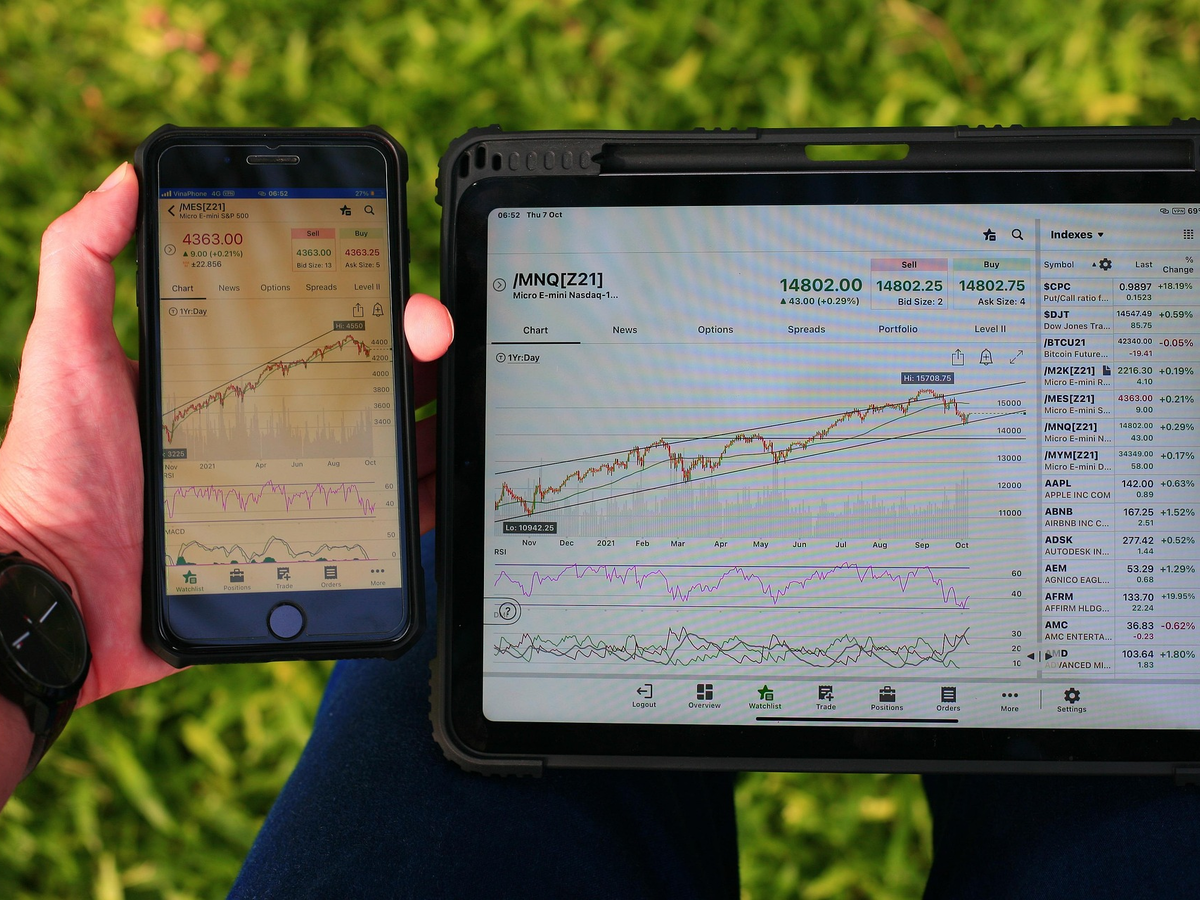
Nasdaq 100: Epic AI Opportunity or the Next Tech Wreck Waiting to Happen?
16.02.2026 - 09:21:18 | ad-hoc-news.de
Get the professional edge. Since 2005, the 'trading-notes' market letter has delivered reliable trading recommendations – three times a week, directly to your inbox. 100% free. 100% expert knowledge. Simply enter your email address and never miss a top opportunity again. Sign up for free now
Vibe Check: The Nasdaq 100 is in full high-volatility mode right now – a tug of war between euphoric AI bulls and macro-worried bears. Instead of drifting quietly, the index is swinging in energetic waves: explosive rallies on AI optimism, sharp pullbacks on rate and yield fears, and then aggressive dip-buying from traders who refuse to let go of Big Tech.
We are in SAFE MODE: current quotes are not date-verified, so we are not using specific index levels or percentage moves. But the character of the tape is crystal clear: this is a fast, momentum-driven battlefield, not a sleepy index crawl.
Want to see what people are saying? Check out real opinions here:
- Watch deep-dive Nasdaq 100 breakdowns from top YouTube market nerds
- Scroll the latest Wall Street sentiment and chart porn on Instagram
- Binge viral TikTok hot-takes on AI, tech stocks, and day-trading hacks
The Story: The Nasdaq 100 right now is where macro stress and AI hype collide. On one side, you have bond yields and the Federal Reserve putting a ceiling on how wild valuations can get. On the other, you have the most powerful tech companies in history printing eye-watering revenues from cloud, chips, and AI, turning every dip into a magnet for FOMO capital.
Bond Yields vs. Tech Valuations – Why Every Spike in Yields Hurts Your Favorite Tech Names
Here is the core logic: high-growth tech stocks are basically a bet on the future. Most of their story is about cash flows far out in time. When bond yields move higher, the so-called "risk-free rate" goes up. That means those future cash flows are worth less in today’s terms. Result: valuations look stretched faster, and the multiple on earnings or sales that investors are willing to pay compresses.
So when the 10-year Treasury yield creeps higher, the Nasdaq 100 often reacts with nervous, sudden pullbacks. You see algorithmic selling hit the mega-caps, volatility spikes, and traders start asking: "Is this still an AI supercycle, or are we just overpaying for growth in a tighter money world?"
Flip the script: when yields soften because markets expect more aggressive Fed rate cuts or softer inflation, growth stocks suddenly look attractive again. The whole tech complex can roar higher in powerful relief rallies: cloud names bounce, semiconductors surge, and the index as a whole rips back toward its upper trading zones. That is why every bond auction, every Fed speech, and every inflation print has become a mini-event for Nasdaq traders.
The Big Players: Magnificent 7 Still Steering the Ship
The Nasdaq 100 is not a democracy. It is a weighted kingdom dominated by a handful of giants – the so-called Magnificent 7. Their mood often is the index.
- Nvidia (NVDA): The undisputed AI poster child. Its chip demand from hyperscalers and AI data centers has turned into a powerful, trend-defining force. When Nvidia rallies aggressively, you usually see a broader "AI everything" move – semiconductors, cloud, and even second-tier AI plays get dragged higher. When Nvidia stumbles on guidance or valuation fears, the whole AI ecosystem suddenly looks fragile, and the Nasdaq 100 feels that shock.
- Apple (AAPL): The steady mega-cap consumer tech titan. Apple is more of a slow-burn player: less dramatic than some AI names, but a huge weight in the index. Concerns about smartphone demand, regulatory pressure, or China exposure can create a heavy, grinding drag on the Nasdaq, even if other names are flying.
- Microsoft (MSFT): The AI and cloud behemoth. With its bets on AI platforms and dominance in enterprise software, Microsoft is seen as one of the "safer" AI beneficiaries. Positive commentary on cloud demand or AI monetization can stabilize the entire tech complex and attract institutional buyers back into the index.
- Alphabet (GOOGL): Search, ads, cloud, and AI. Whenever there is a narrative about digital ad resilience or breakthroughs in model capabilities, sentiment tilts bullish. Any slip in AI competitiveness talk, or regulatory risk, and Alphabet becomes a drag on risk appetite.
- Amazon (AMZN): E-commerce plus AWS. Amazon is tightly linked to both consumer strength and cloud/AI demand. Strong cloud commentary can spark confidence in the entire AI infrastructure trade. Weak consumer or margin signals can trigger profit-taking across growth names.
- Meta Platforms (META): Advertising, Reels, and big metaverse spending swings. Meta has transformed from a sentiment disaster into a comeback story, and its ad strength often doubles as a proxy for digital economic health. Wild moves here frequently spill into the broader communication and growth complex.
- Tesla (TSLA): The wildcard. Not a pure software AI play, but absolutely a sentiment barometer. Tesla tends to exaggerate risk-on and risk-off moves. When it surges, it adds fuel to the "speculative growth is back" narrative. When it sells off aggressively, it can spook traders about richly valued growth more broadly.
Collectively, these names can drive outsized chunks of the Nasdaq 100’s daily movement. When the Magnificent 7 trade in sync to the upside, the index feels unstoppable, with powerful, trend-following breakouts. When they start diverging – some making fresh momentum highs, others rolling over – that fragmentation is a classic late-cycle warning for the current leg of the trend.
The Macro: Fed Rate Cuts and Why Every Word from Powell Hits Tech First
The Federal Reserve is the invisible hand on the Nasdaq’s throat. Rate expectations directly shape how traders price growth:
- If the market expects faster and larger rate cuts, growth stocks often explode higher. Cheaper money means lower discount rates and easier financing for innovation, buybacks, and M&A. That is rocket fuel for high-multiple tech.
- If the Fed signals higher for longer, growth gets hit. Even without an immediate crisis, just the idea that cash will stay attractive and borrowing costs elevated for an extended period can compress tech valuations and cool speculation.
Right now, the narrative is swinging back and forth between "soft landing with gradual cuts" and "sticky inflation forcing the Fed to stay tough." Every shift shows up immediately in the Nasdaq 100: futures gaps, intraday reversals, and algorithm-driven whipsaws around Fed comments.
The Sentiment: Fear, Greed, VIX, and Buy-the-Dip Culture
Zoom out from macro and look at the emotional layer of the market:
- Fear & Greed index: This composite of volatility, options, demand for haven assets, and stock strength is often hovering around elevated greed whenever AI headlines dominate. Episodes of sudden fear pop up around macro shocks or earnings disappointments, but they are increasingly short-lived as dip buyers step in aggressively.
- VIX (Volatility Index): The VIX has been in a choppy but generally moderate regime: not panic-high, but also not completely asleep. When it spikes, you see forced de-risking in crowded tech trades. When it cools, traders load back up on momentum and high beta Nasdaq names.
- Buy the Dip mentality: This is still alive and strong in the tech space. Every sharp sell-off in the Nasdaq 100 tends to attract both retail traders on social media and systematic strategies hunting mean reversion. That is why many "crashes" in tech recently have morphed into fast V-shaped recoveries rather than long, grinding bear markets. Bulls are conditioned to treat weakness as opportunity, not catastrophe.
But here is the risk: if one of these dips is not just a dip – for example, if earnings collectively disappoint, bond yields stay elevated, and AI expectations get reset – then the same buy-the-dip crowd can quickly turn into trapped bagholders. That is the danger zone where volatility can really spike and trend-following funds flip from buying to mechanically selling.
Deep Dive Analysis: Magnificent 7 Gravity and Nasdaq 100 Structure
The Nasdaq 100’s structure right now is powered by two overlapping forces: fundamental AI optimism and technical trend dynamics.
1. Magnificent 7 Influence
These mega-caps act like gravitational centers for the index:
- When AI and cloud earnings beat expectations, the Magnificent 7 can drag the entire index higher in powerful surges, even if smaller components lag.
- When one or two big names miss on guidance or face regulatory or margin pressure, you can see rapid, sharp drops in the index even while other sectors look healthy.
- Concentration risk is real: heavy exposure to the top names means that owning the Nasdaq 100 is effectively a leveraged macro bet on a handful of tech titans continuing to execute flawlessly.
2. Technical "Important Zones" (No Specific Levels in Safe Mode)
- Key Levels: Instead of exact points, think in terms of zones:
- Upper Resistance Zone: The area where recent rallies have repeatedly stalled. This is where breakout traders are looking for confirmation of a new leg higher, and bears are waiting to fade strength.
- Mid-Range Battleground: The choppy area in the middle of the recent range, where intraday moves are noisy and fakeouts are common. The market here is searching for a dominant narrative – bulls and bears are both probing.
- Lower Support Zone: The floor areas where previous sell-offs have bounced. This is classic dip-buy territory: if these zones hold, the bullish uptrend narrative remains intact. If they fail decisively, it opens the door to a deeper tech reset. - Sentiment: Are the Tech-Bulls or the Bears in Control?
Right now, the tape suggests an uneasy equilibrium with a bullish tilt:
- Bulls still control the narrative on AI, cloud, and semiconductors. Earnings from key players have largely reinforced the idea that demand for compute, data centers, and AI services is more structural than cyclical.
- Bears counter with valuation concerns, pointing to elevated multiples and historical precedents where tech manias eventually mean-revert hard.
- The real edge lies in timing: bulls win as long as the important lower support zones hold and macro does not crack; bears win if a macro shock or collective earnings disappointment breaks those zones and forces the crowd to unwind overcrowded growth trades.
Conclusion: Asymmetric Risk – Bubble Pop or Supercycle Pullback?
The Nasdaq 100 today is not a sleepy index for passive bystanders. It is a leveraged expression of one of the most powerful themes of this decade – AI and digital infrastructure – filtered through a macro regime that can flip from friendly to hostile in a matter of weeks.
If bond yields drift lower and the Fed nudges toward a smoother, data-dependent easing path, the AI and mega-cap growth story can absolutely push the Nasdaq 100 toward new momentum highs. In that scenario, every corrective dip into lower support zones is a tactical opportunity for disciplined traders with clear risk management.
If, however, yields stay stubbornly high, inflation surprises to the upside, or the Magnificent 7 collectively underwhelm on earnings and guidance, the current enthusiasm can quickly morph into a painful tech repricing. The same traders celebrating "buy the dip" can find themselves stuck as bagholders in a deeper, more prolonged tech drawdown.
The move now is not to blindly chase or blindly fade. It is to respect both the upside power of AI-driven earnings and the downside gravity of macro and valuation. For active traders, that means:
- Watching the 10-year yield and Fed rhetoric like a hawk.
- Tracking earnings, guidance, and commentary from the Magnificent 7 as your real-time health check of the entire Nasdaq 100.
- Using volatility spikes, fear surges, and tests of important support zones as strategic entry or exit windows, rather than reacting emotionally to every headline.
The opportunity is massive, but so is the risk. The Nasdaq 100 in this environment is a playground for prepared traders and a minefield for the careless. Decide which side you want to be on – but do it with a plan, not with hope.
Tired of poor service? At trading-house, you trade with Neo-Broker conditions (free!), but with real professional support. Use exclusive trading signals, algo-trading, and personal coaching for your success. Swap anonymity for real support. Open an account now and start with pro support
Risk Warning: Financial instruments, especially CFDs on Tech Indices like the NASDAQ 100, are highly volatile and come with a high risk of losing money rapidly due to leverage. You should consider whether you understand how these instruments work and whether you can afford to take the high risk of losing your money. This content is for informational purposes only and does not constitute investment advice.
So schätzen die Börsenprofis Aktien ein!

Für. Immer. Kostenlos.