
Mumford & Sons 2026: Tour Buzz, New Music Clues & Fan Theories
Veröffentlicht am: 26.02.2026 um 17:00 Uhr | Redaktionelle Verantwortung: Rafael Müller, Chefredakteur AD HOC NEWS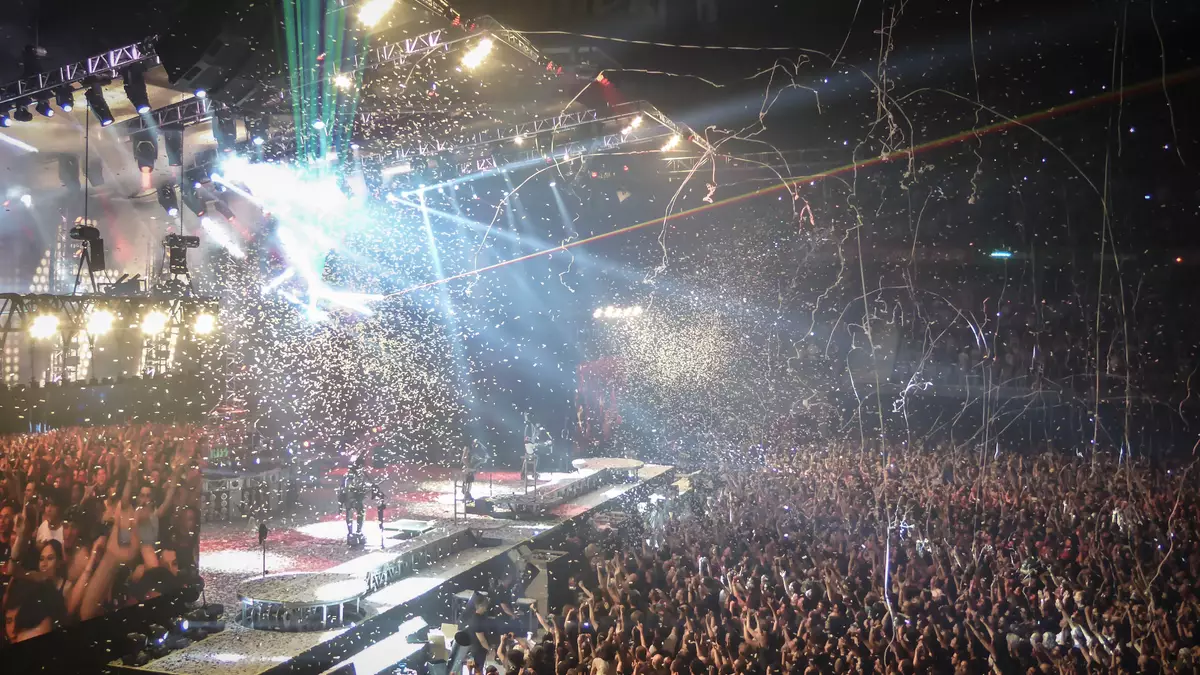
You can feel it in the timelines. Every time someone posts a grainy clip of “I Will Wait” exploding into a festival chorus or a crowd yelling every word of “Little Lion Man”, the comments are the same: “When are Mumford & Sons back on the road near me?” and “Is this build-up for a new album?” The buzz around Mumford & Sons in 2026 isn’t quiet or nostalgic – it’s loud, impatient and very, very online.
If you’re trying to keep up with dates, rumors, and what the shows actually feel like this cycle, the band’s own tour hub is your best starting point:
See all official Mumford & Sons live dates and ticket links
From headline festival slots to intimate theater runs, Mumford & Sons are quietly stacking a year that looks suspiciously like a full comeback season. And fans are already dissecting every setlist, merch design and offhand interview quote like it’s a coded message.
The Backstory: Breaking News in Detail
In the last few weeks, the story around Mumford & Sons has shifted from “Will they?” to “Ok, they definitely are.” While the band have never exactly gone away, 2026 has that different kind of energy – the sort that usually sits right before a new era.
Recent updates on their official channels and in music press have focused on fresh live announcements, with new dates dropping in waves rather than one huge tour dump. That slow rollout has fans convinced the band are testing markets, watching demand and leaving room to bolt on more shows and possibly a full album campaign.
Interview snippets over the last year have added more fuel. Marcus Mumford has talked about writing sessions that pushed the band outside their comfort zone, and the group have hinted that they’ve been experimenting in the studio with new producers beyond their longtime collaborators. One recurring theme: trying to hold onto the raw, communal feel of their early work while acknowledging that they’re not the same twenty-somethings yelling into banjos on tiny stages anymore.
There’s also the emotional context. After more than a decade of being lumped in with every “folk revival” headline, Mumford & Sons have lived long enough to become both meme and comfort band. That dual status makes this moment important. The new live push in 2026 feels like the band making a statement: we can still hit you in the chest, and we’re not just here to play the nostalgia hits.
In recent show reviews, writers have pointed out a noticeably tighter, more dynamic performance style. The group that once leaned heavily on stomping four-on-the-floor build-ups are now playing with more shade and space: quiet verses that actually feel quiet, subtle lighting cues, and reworked intros that let songs breathe before they explode. For fans who fell in love with the chaos of the early tours, that evolution is landing as a sign of growth rather than compromise.
For you as a fan, the implication is simple: if you see Mumford & Sons on a bill near you in 2026, it’s not "just another tour". It’s most likely a bridge into whatever their next studio chapter is. Expect cameras, expect live recordings, and expect them to try out songs that don’t exist on streaming yet – then quietly disappear from setlists once the album campaign locks in.
The Setlist & Show: What to Expect
Let’s get straight to what you actually care about when you click a tour link: what are they playing and how does it feel in the room?
Recent Mumford & Sons shows have leaned into a kind of three-act structure. The night usually opens with a familiar anchor – often something like “Babel” or “Guiding Light” – to snap the crowd into focus. From there, the band have been blending songs from across their catalog into a surprisingly coherent journey.
You can normally count on the core classics being in rotation: “Little Lion Man”, “The Cave”, “I Will Wait”, and the slow-burn punch of “Awake My Soul”. These are the tracks where you’ll feel the whole venue shake, from festival fields to indoor arenas. But the way they’re arranging them now hits differently. For example, “I Will Wait” has increasingly appeared later in the set, almost as a second wind when the crowd thinks they’ve already peaked.
Mid-set is where it gets interesting. Songs from Wilder Mind and Delta – albums that initially divided some fans with their more electric, atmospheric sound – are being recontextualized live. Tracks like “Believe”, “Tompkins Square Park”, and “The Wolf” carry a heavier, almost alt-rock intensity on stage now, with the band leaning into crunchy guitars and deeper low-end instead of the crisp, clean sheen of the studio versions.
There’s also usually at least one stripped-back pocket where the band bunches together at the front of the stage or on a secondary B-stage. Here’s where you might get a quietly devastating run through “After the Storm” or “Ghosts That We Knew”, with phones held in the air and a crowd that suddenly feels more like a choir. It’s in these moments that the original DNA of the band – four people trying to sing their hearts out over acoustic instruments – comes into sharp focus again.
Multiple recent setlists have also included unreleased or lightly teased tracks. Fans have reported hearing new songs that lean into darker lyrics paired with bigger, more expansive arrangements – think the emotional weight of early Mumford with the cinematic scope of their later records. These songs usually arrive without any official titles. The band might introduce them with a throwaway line like, “We’ve been working on some new stuff; here’s one we’re excited about,” then move on without further explanation.
Atmosphere-wise, expect a very specific emotional mix: high-energy, physically loud, but also strangely safe and communal. This isn’t the kind of show where people are too cool to sing. You will hear strangers harmonizing over your shoulder. There will be at least one moment where the band cuts all the instruments and lets the crowd carry a chorus – “And I will wait, I will wait for you” still hits like a confession screamed in unison.
Visually, the production has grown up. We’re talking warm, cinematic lighting palettes – golds, deep blues, and reds that swell with each chorus – rather than flashy gimmicks. Think fewer pyro stunts, more intentional mood-building. The focus remains on the band actually playing. If you’re used to pop tours with heavy choreography and pre-recorded elements, a Mumford & Sons show in 2026 can feel almost shockingly live in the best way: slightly imperfect, very human, and totally dependent on the crowd meeting them halfway.
What the web is saying:
Rumor Mill: What Fans Are Speculating
On Reddit, TikTok, and stan Twitter, Mumford & Sons discourse in 2026 has three main threads: Is a new album coming? Are ticket prices fair? and Is the band about to switch their sound again?
First, the album question. Users on subreddits like r/indiefolk and r/music have been collected-guardian-level with their evidence. They’re tracking everything from new song debuts in setlists to studio selfies with blurred-out whiteboards in the background. Some fans are convinced that the band are in the final stages of an album cycle: not actively teasing it by name yet, but already road-testing material. The pattern (new songs creeping into sets, more interviews about “what these last few years have been like”) lines up suspiciously well with how other big acts warm up their fandoms before a drop.
There are also theories about sonic direction. One popular TikTok thread compares early live versions of newer songs – based on phone recordings – to bands like The National or even Radiohead’s more open, ambient moments. Fans are reading this as a sign that the next Mumford era might lean further away from their hoedown stereotype and deeper into moody, expansive indie-rock. Others argue they’re hearing a return of more acoustic textures, banjos and all, just dropped into a bigger, room-filling soundscape.
Then there’s the always-spicy topic of ticket prices. Like every major touring act, Mumford & Sons sit in the middle of a very online debate about dynamic pricing and VIP packages. Some fans on Reddit have posted screenshots of prices jumping during presale, while others reply that compared with other acts of similar size, the band’s standard tickets are still relatively accessible. The general consensus: if you’re willing to sit slightly higher or further back, you can still get into a Mumford show without nuking your savings – but front-pit and VIP packages are very much in “this is a big night out” territory.
On TikTok, a different narrative is trending: the emotional value. Clips of strangers sobbing during “Awake My Soul” or entire stadiums humming that final note of “The Cave” are racking up millions of views with captions like, “$80 for therapy actually seems reasonable.” That’s the tension running through the discourse: the frustration of modern ticket economics versus the reality that for many fans, live music is one of the last communal emotional outlets that actually feels real.
Another theory floating around: some fans believe the band are purposely keeping festival sets slightly shorter and tighter to save the “deep cuts” for their own headline dates later in the year. On r/festivals, people have noted that while you’re guaranteed the big hits at multi-artist events, the real surprises – older songs like “Dust Bowl Dance”, or extended outros that turn into full-on jams – are showing up more on solo tour shows. Translation: if you’re the kind of fan who knows every lyric on Sigh No More, you’ll probably want to catch a dedicated tour stop rather than just relying on a festival slot.
Key Dates & Facts at a Glance
Here are some quick-hit details to keep in your notes app while you plan:
- Official live dates & tickets: All current 2026 shows and festivals are listed on the band’s live portal at mumfordandsons.com/live – this is the first place new dates will appear.
- Typical show length: Recent headline sets usually run between 90 and 120 minutes, depending on curfew and whether there’s a support act.
- Setlist staples you’re almost guaranteed: “Little Lion Man”, “The Cave”, “I Will Wait”, “Awake My Soul”, plus at least one track from Wilder Mind and Delta.
- New song likelihood: High. Fans at recent shows regularly report hearing at least one to three unreleased songs tested live.
- Venue mix in 2026: A blend of indoor arenas, large theaters, and major festivals across the US, UK, and Europe, with select outdoor amphitheater dates.
- Support acts: The band typically bring indie, alt-folk, or singer-songwriter openers with strong live reputations. Exact names vary by region and are usually announced show-by-show.
- Average ticket tiers: Standard seated and GA tickets usually come in several tiers based on view and proximity, with premium/VIP options including early entry or merch bundles in certain markets.
- Streaming favorites: “I Will Wait” and “Little Lion Man” remain their most streamed tracks globally, anchoring their presence on big playlists.
- Audience profile: A cross-section of late Gen Z, Millennials, and older fans who’ve followed the band since the early 2010s, making for a surprisingly multi-generational crowd.
FAQ: Everything You Need to Know About Mumford & Sons
Who are Mumford & Sons and why do people care about them in 2026?
Mumford & Sons are a British band who broke out at the end of the 2000s with a sound that smashed together folk instrumentation, indie-rock energy and stadium-sized singalongs. If you were anywhere near a radio or festival between 2010 and 2015, you probably heard “Little Lion Man” or “I Will Wait” on loop. What keeps them relevant in 2026 isn’t just nostalgia, though. It’s the fact that they’ve managed to grow their sound, shift lineups, experiment with bigger, more electric production, and still maintain a direct emotional line to their audience. For a lot of fans, their songs are time capsules tied to specific relationships, road trips, or messy life phases – which makes every new tour feel like a chance to revisit those memories in real time.
Where can I find the latest tour dates and ticket info?
The best and only truly reliable source is the band’s own website, specifically the live section at mumfordandsons.com/live. That page aggregates all confirmed dates – US, UK, Europe and beyond – with direct links to authorized ticket sellers. Third-party sites, fan accounts and TikTok comments can give hints, but they’re also where rumors and outdated info live forever. If you’re watching for a city near you, bookmark that link and check in around announcement-heavy times (usually when festivals are revealing their lineups or at the start of a new quarter).
What kind of crowd and vibe should I expect at a 2026 Mumford & Sons show?
In short: emotional but not pretentious. You’ll see a full spectrum of ages – groups of friends who saw the band on their first club tours, couples who picked “I Will Wait” as a wedding song, and younger fans who discovered them through playlists and festival livestreams. The vibe tends to be friendly and open; this isn’t a show where people stand with their arms crossed trying to look unimpressed. Expect lots of singing, some crying, and a crowd that’s very comfortable making noise. If you’re going solo, this is the kind of environment where you can end the night shouting lyrics with strangers and not feel out of place.
Are they playing only the old hits, or is there new material too?
Both. The band know exactly how important the early anthems are to their identity, so you’re extremely likely to hear the biggest songs from Sigh No More and Babel. But they’ve also been folding in deeper cuts and newer tracks, as well as material that hasn’t been officially released yet. In 2026, fans are reporting setlists that feel like a full-career snapshot with some future-tease sprinkled in. If you’ve checked out later albums like Wilder Mind and Delta, you’ll recognize their more expansive, electric side live – sometimes heavier and more intense than you might expect from their earliest stuff.
How early do I need to buy tickets, and what about pricing?
For major cities and weekend dates, you’ll want to jump on tickets as close to on-sale time as possible, especially if you care about floor/general admission or lower-level reserved seats. Presales – often email list or promoter-based – can go quickly, with prices sometimes rising under dynamic pricing systems as demand spikes. Standard seats further back or higher up often remain at more stable prices for longer. In 2026, fans are vocal about price frustration across the whole touring world, and Mumford & Sons are caught in that same ecosystem. The safest move is to buy directly through the links on their official live page, set realistic expectations about where you’ll sit or stand, and avoid last-minute third-party resale unless you’ve triple-checked legitimacy.
Do I need to know every song to enjoy the show?
Not at all. One of the reasons Mumford & Sons still draw big, varied crowds is that their shows are designed to be emotionally readable even if you’re not a deep-cut expert. The choruses are built for group singing, the dynamics are clear (you’ll know when to yell, when to listen, when to sway), and the band typically introduces at least a few songs with quick context or thanks. That said, if you want to level up your experience, it helps to run through the big albums – Sigh No More, Babel, Wilder Mind, and Delta – on shuffle in the week leading up to your show. You’ll recognize more hooks in the moment, which tends to intensify everything.
Why do people keep talking about their “sound change” and does it matter live?
Fans still love to debate the moment Mumford & Sons turned from stomp-and-clap folk to a more electric, full-band sound, especially around Wilder Mind. For some, that shift felt like a betrayal of what made the band special; for others, it was the only way they could keep evolving. Live in 2026, that debate feels less relevant because the band have learned how to thread all their eras together. Acoustic songs sit comfortably next to roaring rock sections; banjo textures reappear without dominating; and the newer production choices give old songs heavier impact. So if you were wary of their later albums, the shows themselves might actually change your mind by showing how those pieces fit into a bigger whole.
When is new music actually coming?
As of now, the band haven’t dropped an official release date for a new studio album, and any specific date you see floating unverified on social media should be treated as speculation. What is clear from their behavior – including the way they’re structuring setlists, talking in interviews, and scheduling shows – is that they’re in an active creative phase. Historically, Mumford & Sons have used tours to test new material, refine arrangements, and gauge fan response before finishing an album. If you care about being part of that process, catching a show in 2026 means you’re not just watching the past – you’re potentially hearing pieces of the next chapter before it hits streaming or vinyl.
Bottom line: if Mumford & Sons are circling your city this year, it’s bigger than a nostalgia trip. It’s a live snapshot of a band who’ve outlived trends, taken hits, changed shapes, and still somehow kept that core thing intact: a room full of people shouting their feelings into the dark together.


