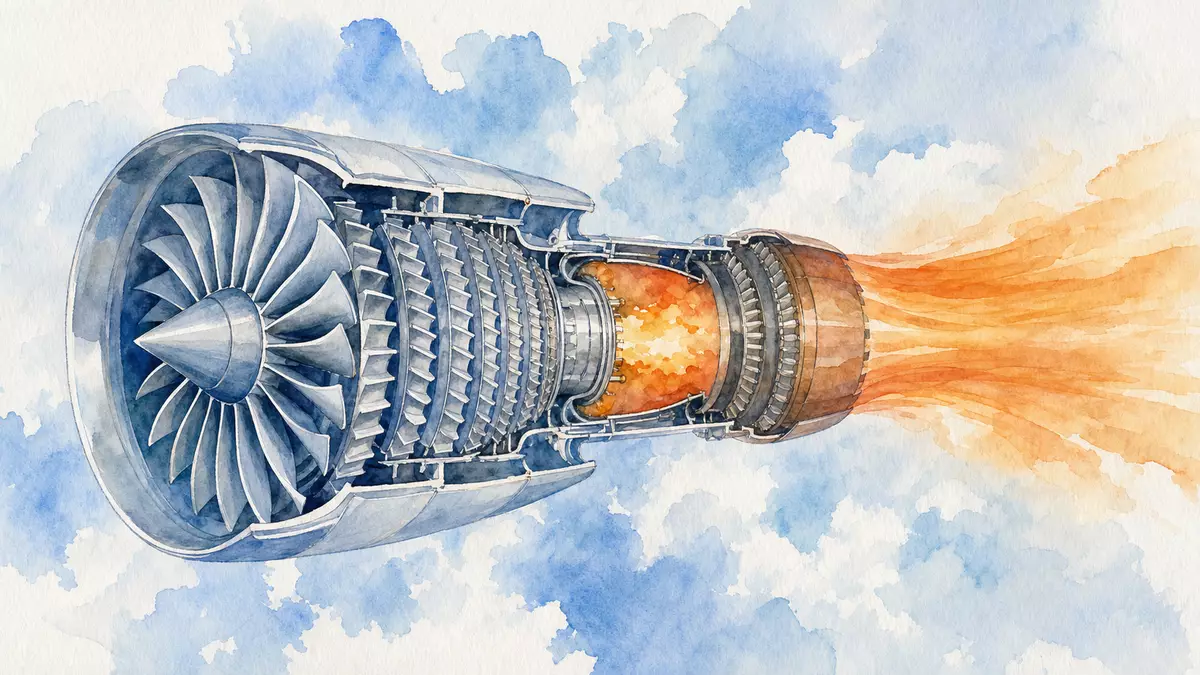
MTU stock reflects the engine maker's steady role in global aviation
Veröffentlicht: 15.07.2026 um 20:28 Uhr, Redaktion AD HOC NEWS, Redaktionelle Verantwortung: Rafael Müller (Chefredaktion)
MTU Aero Engines AG (ISIN DE000A0D9PT0) is Germany's leading independent aircraft engine manufacturer, and MTU stock gives investors exposure to the long-term growth of global aviation and related maintenance services. The company develops, manufactures and services aircraft engines for commercial and military customers, positioning it as an important partner in international aerospace supply chains. For investors, the interplay between air-traffic growth, airline fleet decisions and long-term service contracts is central to how MTU's earnings power translates into the valuation of MTU stock.
MTU's place in the aero engine market
MTU Aero Engines traces its roots back several decades and has become a core player in the design, development and production of aero engines and components. The company focuses strongly on high-technology parts such as turbine blades, compressor modules and other critical engine sections that must operate reliably under extreme conditions. MTU collaborates with major engine manufacturers on key programs, often contributing specific modules within a larger engine architecture. These partnerships make MTU an integral part of global engine platforms used by airlines around the world.
As an engine specialist, MTU splits its activities broadly between new engine production and aftermarket services. New engine deliveries tend to follow aircraft order cycles, which are influenced by airline capacity needs, fleet renewal plans and macroeconomic factors such as GDP growth and travel demand. Aftermarket activity, in contrast, is driven by engine usage over many years, with airlines and operators requiring regular maintenance, repair and overhaul services to keep fleets airworthy and efficient. This dual exposure gives MTU a mix of cyclical and recurring revenue streams, a combination that investors in MTU stock typically watch closely.
Commercial aviation and MTU stock
Commercial aviation is the largest end market for MTU. Airlines rely on modern, fuel-efficient engines to reduce operating costs, comply with environmental regulations and offer reliable service to passengers. MTU contributes modules and engineering capabilities to several widely used engine families that power narrowbody and widebody aircraft. As global air traffic expands over time, demand for such engines and their ongoing maintenance tends to grow as well, underpinning MTU's long-term business prospects.
The revenue trajectory of MTU's commercial business is shaped by several identifiable trends. First, structural growth in air travel increases the installed base of engines requiring maintenance and overhaul throughout their life cycles. Second, fleet renewal programs replace older aircraft with newer models featuring advanced engine technology, a process that often involves MTU components. Third, airlines' focus on cost efficiency and reliability encourages long-term service agreements, which offer predictable maintenance volumes to suppliers like MTU. For holders of MTU stock, these trends help frame expectations for future sales and cash flows.
MTU's financial performance in commercial aviation often reflects the balance between new engine deliveries and the pace of shop visits for existing engines. When aircraft deliveries are strong, MTU benefits from higher production volumes and associated revenue. When global air traffic is high and fleets are intensively utilized, scheduled and unscheduled maintenance can increase, supporting aftermarket revenues. This mixing of cycles provides diversification compared with a purely production-driven business, and it is one reason MTU stock is often seen as an industrial name with both cyclical and defensive elements tied to aviation.
Military and industrial engines
In addition to its commercial activities, MTU has a role in military and industrial engines. The military business encompasses work on engines used in fighter jets, transport aircraft and other defense platforms. These programs typically involve longer timelines, government procurement processes and specialist engineering requirements. MTU contributes components, design expertise and maintenance capabilities that must meet stringent performance and security standards. While military revenue can be more stable over program lifecycles, it depends on defense budgets and national priorities.
Industrial engine applications, such as energy generation or industrial power, form another pillar of MTU's offering. These engines may be used for power plants, marine propulsion or other heavy-duty scenarios where reliability and efficiency are critical. MTU's knowledge of high-performance turbine and compressor technologies translates into these markets, although aviation remains the company's core focus. For investors in MTU stock, these adjacent segments add diversification and can smooth revenue in periods when commercial aviation is subject to temporary shocks.
Maintenance, repair and overhaul as a profit driver
Maintenance, repair and overhaul services, often abbreviated as MRO, are central to MTU's long-term business model. Once an engine enters service, it accumulates flight hours and cycles that gradually lead to inspections, repairs and component replacements. MTU's deep understanding of its engine modules allows it to offer specialized MRO services that airlines and operators require to maintain safety, performance and regulatory compliance. These services are embedded in long-term contracts and agreements, making them a recurring revenue source.
From a profitability standpoint, MRO operations can be particularly attractive. The high technological content and regulatory intensity of engine maintenance services typically create barriers to entry, and customers rely on proven suppliers with certified capabilities. Over the life of an engine, the cumulative maintenance revenue can equal or exceed the original production value, depending on utilization and operating environment. Investors in MTU stock often view the expansion of the installed engine base and the associated MRO pipeline as a key driver of long-run margin potential.
MTU's MRO activities also benefit from digitalization and data analytics. Modern engines generate extensive operational data that can be analyzed to optimize maintenance schedules, predict component wear and reduce downtime. MTU can apply digital tools and predictive models to tailor maintenance interventions, improve reliability and potentially lower overall costs for customers. While the detailed implementation differs by program, the direction is clear: data-driven MRO is an important evolution that supports MTU's competitiveness and value proposition.
Technology focus and innovation
As an engineering-heavy company, MTU invests in advanced technologies for aero engines, including high-temperature materials, sophisticated cooling concepts and aerodynamic design improvements. Turbine blades, for example, must withstand extreme thermal and mechanical stress, and MTU works on alloy systems, coatings and manufacturing processes that enhance durability and efficiency. The company also contributes to compressor design, where optimized aerodynamics and precision manufacturing help increase overall engine performance.
Innovation does not stop at components; it extends to engine architectures and collaboration on next-generation propulsion concepts. MTU is involved in programs that aim to reduce fuel burn, lower emissions and minimize noise, aligning with environmental objectives in aviation. This may include work on geared turbofan designs, lightweight structures or hybrid-electric concepts in the longer term. For investors, MTU stock is indirectly linked to the success of these technology pathways, as competitive engines tend to secure more orders and associated aftermarket business.
Research and development spending in such a company is not just a cost but also a strategic investment. MTU must balance near-term profitability with the need to stay at the forefront of aero engine innovation. Being part of major collaborative programs helps distribute cost and risk, while providing access to broader market opportunities. Over time, successful engine platforms supported by MTU's technology can underpin revenues for decades, since engines remain in service for many years and generate ongoing maintenance work.
Environmental pressures and efficiency trends
Aviation faces growing pressure to reduce greenhouse-gas emissions and improve environmental performance, and this context directly affects MTU's business. Airlines, regulators and manufacturers are aligned on the need for more efficient engines and cleaner technologies. MTU plays a role by enhancing engine components that influence fuel burn and emissions, such as high-pressure turbines and compressors. Incremental efficiency gains accumulated across multiple design improvements can translate into meaningful reductions in fuel consumption per flight.
Beyond traditional efficiency efforts, aviation is exploring alternative fuels and potentially hybrid or electric concepts. Sustainable aviation fuels aim to lower lifecycle emissions, and while they can often be used within existing engine architectures, ongoing engineering work ensures compatibility and performance. MTU's knowledge of engines and combustion processes is relevant here. Over a longer horizon, more radical changes to propulsion may emerge, and while their timing and prominence are uncertain, MTU's core capability in high-performance turbines and compressors provides a foundation for adapting to future needs.
From an investment perspective, the environmental agenda adds another dimension to MTU stock. Success in offering efficient, environmentally aligned engine modules can support demand and reduce the risk of regulatory headwinds. Conversely, failure to keep pace with technological and regulatory developments could weaken competitive positioning. As aviation transitions step by step, MTU's role in central engine components positions it to participate in the industry's efficiency drive.
Business model resilience and risk profile
The resilience of MTU's business model depends on several structural features. The mix of original equipment manufacturing and aftermarket services provides diversified revenue streams that respond differently to cycles. Long-term engine programs and service contracts can run for several decades, creating multi-year visibility. Partnerships with major engine manufacturers extend MTU's reach across global fleets rather than limiting it to a single platform. These characteristics contribute to a degree of stability that can be attractive for investors in MTU stock.
Nonetheless, the company faces risks that are inherent in aviation and industrial markets. Global air travel can be affected by economic downturns, geopolitical events or health crises, which in turn influence airline profitability and fleet decisions. Engine development programs involve technological challenges, and engineering setbacks can delay revenue recognition or require corrective actions. Regulatory changes and environmental targets may necessitate additional investments in technology. Supply-chain disruptions, including those related to materials and logistics, can affect production timelines and costs.
Currency movements and financing conditions also play a role. As MTU is based in the euro area and participates in international programs, its revenue and cost base can be exposed to multiple currencies. Interest-rate environments influence financing costs and may affect airline investment decisions as well. Investors in MTU stock often weigh these risks against the structural need for reliable engines and maintenance services in aviation, assessing how the company manages complexity through program diversification, operational discipline and technological strength.
MTU stock as an industrial aviation exposure
MTU stock is typically viewed as part of the broader industrial and aerospace segment on European exchanges. The shares provide a way to participate in the long-term growth of global aviation without investing directly in airlines. Airlines' profitability can fluctuate sharply with ticket prices, fuel costs and competition, whereas engine manufacturers and service providers like MTU have exposure to fleet size and engine utilization over longer horizons. This distinction can be important for investors who prefer the more structural link to aircraft and engines.
Valuation of MTU stock often takes into account earnings expectations, cash-flow generation, balance-sheet strength and the pipeline of engine programs. Because engine platforms remain in service for many years, the present value of future maintenance revenue can be significant. Analysts and investors may consider metrics such as order backlog, installed base size and expected shop visits when assessing the stock. MTU's ability to convert technological capabilities and program participation into sustained profitability is a central element of such evaluations.
Compared with some heavy industrials that depend predominantly on one-off equipment sales, MTU benefits from the ongoing nature of engine maintenance. However, this also means that the company's performance is tied to the actual utilization of aircraft fleets. In periods when flight activity is high, maintenance needs can accelerate. During times of reduced flying, maintenance may be deferred, although safety and regulatory requirements impose minimum standards. MTU stock therefore reflects both cyclical factors and long-term structural demand for aviation services, a blend that some investors find appealing.
MTU and global supply chains
MTU operates within complex global supply chains that link multiple manufacturers, suppliers and customers. The company sources materials and components from specialized vendors, while delivering its own high-precision parts to engine integrators. Maintaining quality and reliability throughout this network is essential for safety, performance and regulatory compliance. MTU must manage relationships with suppliers, address capacity planning, and maintain robust quality-control processes to uphold its reputation and meet program commitments.
Globalization has expanded MTU's geographic reach, with engines featuring MTU modules operating worldwide. At the same time, supply-chain vulnerabilities such as logistics bottlenecks or regional disruptions can impact operations. Diversification of suppliers, inventory management and contingency planning are common tools in mitigating such issues. For investors, the efficiency and resilience of MTU's supply-chain management can influence cost structures, delivery reliability and long-term profitability, all of which are relevant to the perception of MTU stock.
Technological integration plays a role as well. Digital tools used for production planning, inventory tracking and quality metrics can help MTU adjust to changing conditions, optimize resource use and shorten lead times. Collaboration with engine integrators on forecasting and program planning helps align capacity with expected demand. These operational aspects, while less visible than headline engine programs, are part of the underlying execution quality that supports both customer satisfaction and financial outcomes.
Long-term demand drivers for MTU
Several long-term factors underpin demand for MTU's products and services. Global population growth, rising incomes in emerging markets and urbanization contribute to expanding air travel. Airlines respond by adding capacity, opening new routes and upgrading fleets to more efficient aircraft. As aircraft orders rise, engines featuring MTU components are built and delivered, increasing the installed base that will later require maintenance. Over time, this dynamic can support a steady expansion of MTU's business.
In addition, ongoing replacement of older aircraft with newer models plays a role. Airlines periodically retire older planes that are less fuel-efficient or more maintenance-intensive and acquire newer ones with improved technology. This fleet renewal cycle benefits engine manufacturers and their partners. MTU, as a contributor to modern engine platforms, participates in this process. The company may also benefit from new aircraft types designed for regional markets, long-haul operations or specialized missions, each requiring appropriate engines.
Defense spending trends further shape MTU's military business prospects. Government decisions on fighter jet programs, transport aircraft or other defense platforms can influence the volume and timeline of engine work in which MTU participates. Stability and multi-year planning in defense programs often provide visibility, though political changes can alter priorities. For industrial engine applications, demand may be linked to infrastructure investment, energy needs and industrial development. Together, these segments add layers of potential growth that complement the core commercial aviation business.
Competitive landscape and differentiation
MTU operates in a competitive environment alongside other engine manufacturers, component suppliers and maintenance providers. Large integrated engine companies design complete propulsion systems and may perform much of the associated work themselves, but they also engage specialized partners such as MTU for specific modules or services. MTU's differentiation lies in its expertise in high-technology engine components, its track record in major programs and its ability to provide certified maintenance services on complex equipment.
Competitiveness depends on multiple dimensions: technological capability, quality performance, cost efficiency and reliability. MTU must continuously refine manufacturing processes, invest in research and maintain high standards in operations. Being part of established engine families enhances its market position, but the company also needs to secure participation in future programs to sustain long-term growth. For investors, a key question is how effectively MTU's engineering assets convert into durable advantages and stable program positions that support MTU stock over extended periods.
Partnerships are central to this landscape. MTU collaborates with engine manufacturers, airlines and other stakeholders to ensure that its modules integrate seamlessly into engines and that maintenance services meet expectations. These relationships can open doors to new programs and markets, but they also require consistent performance. The company's ability to align with partners while maintaining its own strategic priorities contributes to its overall competitiveness.
Corporate profile and governance
MTU Aero Engines AG is headquartered in Germany and operates as a publicly listed company on a European exchange. The corporate structure includes production facilities, engineering centers and service locations that support engine programs and MRO activities. Governance is shaped by a supervisory board and management board under German corporate frameworks, with responsibilities divided between oversight and executive functions. Transparent reporting and regulatory compliance are important for maintaining trust among shareholders, customers and regulators.
Corporate responsibility extends beyond pure financial performance. MTU addresses topics such as workplace safety, employee development and environmental responsibility. The highly specialized nature of engine manufacturing demands skilled engineers, technicians and support staff. Education, training and retention strategies therefore matter for sustaining the company's capabilities. As environmental expectations evolve, MTU's approach to sustainability, energy use and emissions in its own operations complements its contribution to more efficient engines.
Shareholders in MTU stock include institutional investors, retail investors and potentially strategic holders interested in the aviation sector. The stock's liquidity and free float facilitate trading and portfolio adjustments. Communication with investors, including periodic reporting and presentations, helps explain MTU's strategy, program participation and market environment. Over the long run, alignment between management's strategic choices and shareholder expectations is important in shaping perceptions of MTU stock.
Representative product focus
A representative aspect of MTU's product portfolio is its work on high-pressure turbine components for modern commercial aircraft engines. These parts operate in the hottest section of the engine and must combine strength, thermal resistance and precise aerodynamic profiles. MTU applies advanced alloy technology, sophisticated casting or machining methods and protective coatings to produce turbine blades that meet demanding specifications. The performance of these components directly influences engine efficiency, reliability and maintenance intervals.
MTU's turbine blades exemplify the company's broader engineering capabilities. Designing such components requires deep knowledge of materials science, fluid dynamics and structural mechanics. Manufacturing them involves tight quality control and detailed process management. Once in service, these blades contribute to sustained engine performance over many flight cycles. Airlines and operators rely on such components to keep aircraft running safely and efficiently. For investors, the presence of these high-value products in MTU's portfolio underscores the technological depth that supports MTU stock.
MTU stock and trading venue
MTU Aero Engines AG is listed on a European stock exchange, where MTU stock is traded in the home-market currency. As an industrial and aerospace name, the shares are part of the broader regional equity universe that international investors follow for exposure to aviation-related manufacturing and services. Trading volumes reflect interest from both domestic and global investors who assess MTU's prospects within the context of aircraft deliveries, maintenance trends and technological developments.
The day-to-day price of MTU stock moves with market perceptions of earnings outlook, program news, macroeconomic conditions and sector sentiment. Periods of optimism about air travel and aircraft orders can support stronger valuations, while concerns about global growth or industry disruptions may lead to more cautious pricing. Over longer horizons, the stock's trajectory depends on how effectively MTU converts its engineering capabilities, program participation and MRO businesses into sustained cash flows and shareholder returns. In this sense, MTU stock functions as a financial mirror of the company's role in the global aero engine ecosystem.
MTU Aero Engines AG key facts
- Company: MTU Aero Engines AG
- ISIN: DE000A0D9PT0
- Ticker: MTU
- Exchange: European stock exchange
- Sector / Industry: Industrials / Aerospace and defense
- Index membership: European equity index
- Next earnings date: Not yet officially scheduled
Disclaimer zu unseren Artikeln: Keine Anlageberatung, keine Kauf oder Verkaufsempfehlung. Angaben zu Kursen, Unternehmen und Märkten ohne Gewähr; Änderungen jederzeit möglich. Börsengeschäfte können zu hohen Verlusten führen. Unsere Beiträge werden ganz oder teilweise automatisiert mit Unterstützung von AI erstellt und geprüft.