
Mosaic Company stock trades steady as fertilizer pricing shapes outlook
Published on 07/18/2026 at 13:16 | Editorial responsibility: Rafael Müller, Editor-in-Chief AD HOC NEWS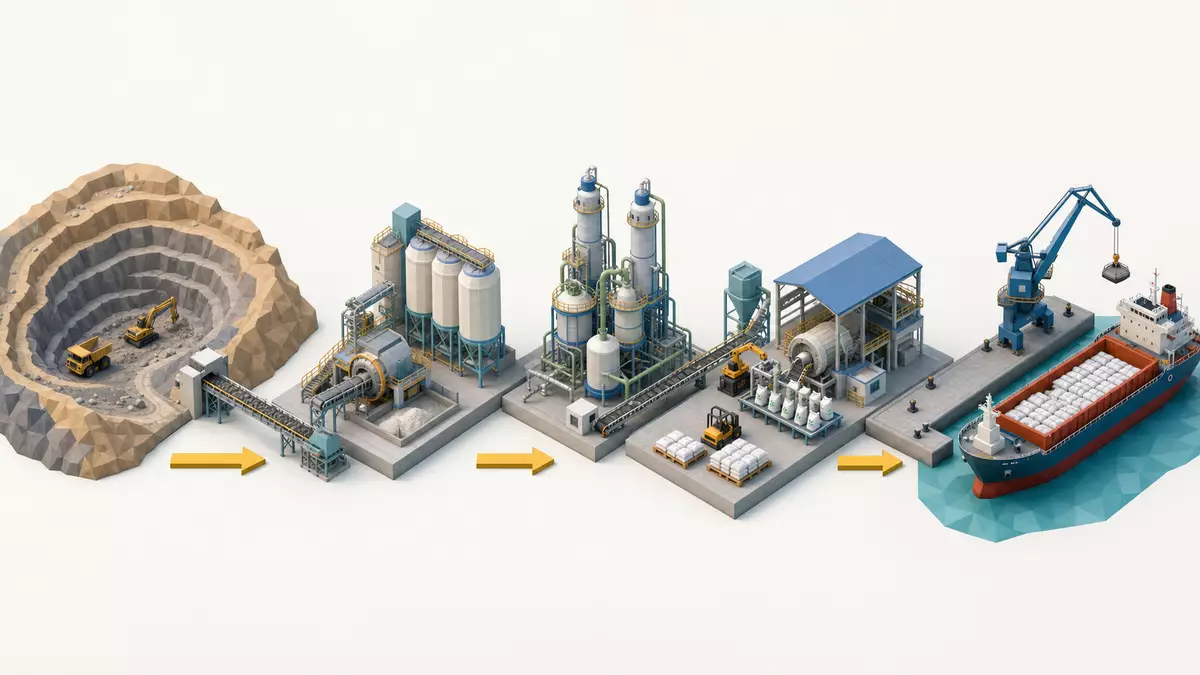
Mosaic Company stock captures the performance of one of the largest integrated producers of phosphate and potash fertilizers worldwide, with the group (ISIN US61945C1036) listed on the New York Stock Exchange under the symbol MOS. Mosaic Company reported full-year 2023 net sales of approximately $13.7 billion, according to its annual reporting for the period, against a backdrop of normalizing fertilizer prices following the exceptional conditions of 2022. The company highlighted that lower realized prices for key products reduced revenue compared with the prior year, even as volumes in certain segments held relatively stable.
Revenue trends and 2022 comparison
For investors, one central reference point is Mosaic Company's revenue trajectory relative to the 2022 peak. In 2022, Mosaic Company reported net sales of around $19.1 billion, driven by very high global fertilizer prices and tight supply conditions across both phosphate and potash markets. This means that 2023 net sales of roughly $13.7 billion were lower by about $5.4 billion compared with the prior year, illustrating how the normalization of commodity prices has translated directly into top-line pressure. The reduction in net sales between 2022 and 2023 underscores that the extraordinary pricing environment of 2022 is unlikely to be repeated in the near term, and that Mosaic Company now operates against a more typical cyclical backdrop.
This quantified comparison between 2022 and 2023 revenue frames the current earnings power of Mosaic Company stock. In 2023, while prices declined from the prior-year peak, Mosaic Company still generated significant cash flow that allowed it to continue returning capital to shareholders. The company reported that it repurchased a meaningful number of shares during the year and maintained its dividend, highlighting that the business model remained cash-generative despite the lower revenue base. For investors analyzing Mosaic Company stock today, the magnitude of the revenue decrease from the 2022 level provides context for interpreting more recent quarterly figures and management commentary on pricing trends.
Segment performance and margins
Mosaic Company's business is anchored in three core segments: Phosphates, Potash, and Mosaic Fertilizantes (its Brazilian-focused unit). In its 2023 and recent quarterly disclosures, Mosaic Company indicated that realized prices for phosphates and potash fell versus 2022, but still remained above long-term historical averages. This combination meant that segment margins compressed compared with the extraordinary levels in 2022, yet remained profitable. For example, Mosaic Company has reported that gross margin per tonne in its potash segment declined from the previous year's elevated levels, reflecting lower selling prices and higher input costs, but continued to support positive operating income.
In mosaic-like fashion across segments, Mosaic Fertilizantes experienced a similar normalization. In this unit, Mosaic Company noted that net sales and operating earnings were impacted by lower prices for finished fertilizers and distribution products compared with the prior year, but that volumes and mix helped mitigate some of the margin compression. The company emphasized that optimization of logistics, sourcing, and production planning is a key lever for preserving profitability as markets transition from peak pricing to more balanced conditions. This segment detail is important behind Mosaic Company stock, because it shows that the Brazilian business can be both a source of growth and a buffer against volatility in North American markets.
Management commentary around margins has frequently focused on balance sheet strength and capital allocation. Mosaic Company has signaled that despite the cyclical downturn in fertilizer prices, it aims to maintain a solid financial position, keeping leverage at levels that can weather commodity cycles. This discipline anchors its capacity to continue investing in operational efficiency projects, mine development, and potential capacity expansions, while also returning capital through dividends and buybacks. For shareholders, margin trends across segments and the associated cash flows form a core part of the Mosaic Company stock investment thesis.
Capital returns and dividend policy
Mosaic Company has complemented its operating performance with an active capital-return program. In recent years, the company has authorized and executed significant share repurchases, reducing its share count and amplifying earnings per share for remaining shareholders. In addition, Mosaic Company has maintained a regular dividend, which in recent periods has been set at a quarterly rate of around $0.21 per share, implying an annualized dividend of approximately $0.84 per share if maintained at that level throughout the year. This dividend level reflects Mosaic Company's confidence in its medium-term cash generation, even with fertilizer prices off their highs.
Compared with 2022, when Mosaic Company enjoyed exceptionally high margins and cash flows, the decision to sustain share repurchases and dividends into 2023 and beyond underlines a commitment to shareholder-friendly capital allocation. The balance between reinvestment and cash returns is a central consideration for investors looking at Mosaic Company stock, and the stability of the dividend, alongside the flexibility of buybacks, provides a tangible framework for assessing total shareholder return. In environments where fertilizer prices are more moderate, such capital-return policies can help smooth the cyclical nature of earnings and offer a clearer path for capital deployment.
Dividend sustainability is, however, closely tied to the trajectory of fertilizer demand and pricing. Mosaic Company has repeatedly highlighted global drivers such as population growth, dietary shifts, and limited arable land as structural supports for fertilizer demand. These factors are expected to underpin long-term consumption of phosphate and potash, which in turn supports Mosaic Company's ability to continue paying dividends and conducting share repurchases, provided that commodity prices remain at levels that cover production costs and a reasonable return on capital. Mosaic Company stock therefore reflects both cyclical and structural elements, with capital returns functioning as a bridge between these two dimensions.
Fertilizer pricing and global demand
The outlook for Mosaic Company stock is heavily shaped by global fertilizer pricing trends and agricultural fundamentals. After the sharp price increases in 2022, driven by supply disruptions, energy cost spikes, and geopolitical tensions affecting key producing regions, 2023 saw a gradual normalization of phosphate and potash prices. Mosaic Company has described this process as a return to more sustainable market conditions, where prices, while lower than the 2022 peak, remain sufficient to incentivize production and investment. The company views balanced markets as ultimately beneficial, because they reduce the risk of demand destruction among farmers and preserve long-term consumption.
In its market commentary, Mosaic Company has emphasized that global grain and oilseed demand continues to grow, supported by rising populations and changing diets in emerging markets. This growth in agricultural output requires nutrient application, which is where phosphate and potash fertilizers play a central role. Mosaic Company therefore expects that fertilizer demand over the medium to long term will remain robust, even if prices fluctuate from year to year. The firm's ability to adjust production, manage inventory, and calibrate sales into different regions allows it to respond to these fluctuations while keeping its operations aligned with demand trends.
Regional dynamics are also important. Mosaic Company has pointed to strong demand in North America, where farmers use phosphate and potash to support yields in corn, soybean, and other key crops, and in Brazil, where agricultural expansion continues to drive fertilizer consumption. These regional patterns mean that Mosaic Company's geographic diversification can help smooth out localized volatility in pricing or demand. By managing supply chains across these markets, the company aims to capture opportunities where demand is strongest and pricing is most favorable, which in turn influences the earnings profile that investors see reflected in Mosaic Company stock.
Strategic investments and sustainability
Beyond near-term pricing, Mosaic Company is investing in projects designed to enhance efficiency, reduce costs, and support sustainability objectives. The company has articulated strategies to lower the environmental footprint of its operations, including initiatives to reduce greenhouse-gas emissions intensity, improve water management, and mitigate the impact of phosphogypsum stacks. Mosaic Company's sustainability reporting provides metrics on emissions, energy use, and other environmental indicators, which are increasingly relevant for investors who incorporate environmental, social, and governance considerations into their assessment of Mosaic Company stock.
Strategic investments also encompass digital tools and precision agriculture partnerships that aim to optimize fertilizer application. Mosaic Company collaborates with agronomic service providers and technology platforms to help farmers apply phosphate and potash more efficiently, potentially reducing waste and environmental impact while improving yields. These initiatives can enhance the perceived value of Mosaic Company's product offerings beyond simple commodity price dynamics, contributing to customer loyalty and potentially supporting margins in competitive markets.
The company further invests in its asset base through mine development and infrastructure upgrades, aiming to maintain reliable production capacity in both phosphates and potash. Long-life reserves, particularly in potash, provide a foundation for sustained output over decades, and Mosaic Company's decisions about capital expenditure in these areas influence its long-term cost curve. For Mosaic Company stock, these strategic investments matter because they affect the company's ability to remain competitive across cycles and to capture value when market conditions are favorable.
Phosphate products support Mosaic revenue
Phosphate fertilizers form a major product category for Mosaic Company, and sales of diammonium phosphate (DAP) and monoammonium phosphate (MAP) are central contributors to the group's revenue. These products are widely used in global agriculture to provide essential phosphorus to crops, promoting root development and overall plant health. Demand for DAP and MAP is closely tied to planting decisions, crop prices, and weather patterns, but over the long term, the agronomic need for phosphorus remains stable, which supports Mosaic Company's phosphate business.
Mosaic Company produces phosphate fertilizers from its vertically integrated operations, which include mining phosphate rock, processing it into phosphoric acid, and further converting it into finished fertilizer products. This integration allows Mosaic Company to manage costs and quality more tightly than non-integrated producers, and it positions the company to respond to changes in raw-material and energy prices by adjusting production or sales strategies. As a result, the performance of phosphate products is a critical driver of Mosaic Company stock over time.
Mosaic Company stock and market valuation
Mosaic Company stock trades on the New York Stock Exchange and reflects investor expectations about future fertilizer prices, demand, and the company's execution of its strategy. Market valuation of Mosaic Company has at times assigned significant weight to near-term earnings driven by commodity prices, and in other periods has focused more on the long-term structural demand for nutrients and the company's asset base. The substantial difference between Mosaic Company's 2022 net sales of around $19.1 billion and its 2023 net sales of approximately $13.7 billion exemplifies how quickly earnings and cash flows can shift when fertilizer prices move, and this variability is embedded in Mosaic Company stock's risk and opportunity profile.
Investors considering Mosaic Company stock typically monitor metrics such as revenue, margins, cash flow, dividend levels, and share repurchases, alongside indicators of fertilizer pricing and agricultural demand. The quantified comparison between 2022 and 2023 revenue provides a concrete framework for understanding how earnings might evolve as markets normalize from extreme conditions. While the company does not control commodity prices, its operational decisions, capital allocation choices, and strategic investments influence how effectively it navigates the cycle and deliver value to shareholders.
In this context, Mosaic Company's combination of large-scale phosphate and potash production, global market presence, and ongoing capital returns makes its stock a representative vehicle for exposure to fertilizer markets. The company's ability to adapt to changing price environments, maintain a sound balance sheet, and invest in both efficiency and sustainability initiatives will continue to shape how the market values Mosaic Company stock over time.
Further details on Mosaic financials
More detailed figures, including segment data, cash flows, and capital allocation metrics, are available in Mosaic Companys investor materials and filings.
Mosaic Company at a glance
- Company: The Mosaic Company
- ISIN: US61945C1036
- Ticker: NYSE: MOS
- Trading venue: NYSE
- Sector / Industry: Materials / Fertilizers and agricultural chemicals
- Index membership: S&P 500


