Melrose stock trades near recent highs as aerospace growth supports margins
Published on 07/21/2026 at 10:25 | Editorial responsibility: Rafael Müller, Editor-in-Chief AD HOC NEWS
Melrose Industries plc (ISIN GB00BNR5MZ78) has seen Melrose stock trade close to recent highs on the London Stock Exchange, supported by improved profitability in its aerospace-focused portfolio and clearer post-restructuring visibility for investors. In its latest reported full-year results for fiscal 2023, according to company disclosures, Melrose generated revenue of around GBP 3.4 billion, with adjusted operating profit rising compared with the prior year and margins expanding as legacy businesses were exited.
Revenue around GBP 3.4 billion
According to Melrose’s most recent full-year report for fiscal 2023, the group delivered approximately GBP 3.4 billion in revenue, up from just under GBP 3.3 billion in fiscal 2022 as its aerospace activities benefited from improving civil aviation demand and resilient defense-related volumes. This increase in revenue, while not dramatic in percentage terms, underlined that the streamlined portfolio can grow even as the company transitions away from its former diversified industrial structure.
The same report showed that adjusted operating profit increased more strongly than revenue, reflecting both operating leverage and targeted cost measures in core programs. Melrose reported adjusted operating profit of roughly GBP 400 million in fiscal 2023 compared with around GBP 340 million a year earlier, implying a double-digit percentage increase that exceeded the modest revenue growth and supported margin expansion. For investors, this widening profit gap relative to revenue is a key signal that the post-restructuring aerospace focus can generate higher returns on capital.
Margins and earnings improve year over year
Melrose’s adjusted operating margin in fiscal 2023 moved closer to the low teens percentage range, compared with high-single-digit levels in fiscal 2022, illustrating the impact of both higher volumes and efficiencies in major engine and aerospace component programs. While the exact margin point can vary by segment, the group level trend shows a clear improvement, with more of each revenue pound dropping through to earnings before interest and tax. This margin progression is particularly relevant for an aerospace supplier, where program maturity and cost discipline strongly influence long-term profitability and cash generation.
On an adjusted earnings per share basis, Melrose reported a higher figure in fiscal 2023 than in fiscal 2022, driven by the stronger operating profit and the benefits of portfolio simplification and capital discipline. Adjusted EPS rose by a double-digit percentage compared with the previous year, even after accounting for restructuring-related changes, underscoring that the group is not only larger in profit terms but also more efficient per share. This EPS progression is a further indicator that the focus on aerospace assets is translating into tangible returns for shareholders beyond headline revenue growth.
Net debt also improved over the period as Melrose applied operating cash flow to delever the balance sheet and manage the financial profile consistent with its more concentrated business model. As of the fiscal 2023 year-end, net debt stood at a lower level than in fiscal 2022, with leverage ratios moving closer to management’s medium-term comfort range. A more moderate leverage profile reduces interest expense pressure and offers the flexibility to continue investing in aerospace programs while maintaining capacity for shareholder distributions when appropriate.
Market capitalization and Melrose stock levels
In equity markets, Melrose stock trades on the London Stock Exchange and is included in a major UK equity index, reflecting its scale and liquidity. As of a recent trading day in 2026, the company’s market capitalization has been in the mid-single-digit billions of GBP range, around GBP 6 billion, signaling that investors value the streamlined aerospace-focused business at a level consistent with its improved profitability and growth prospects. Compared with levels recorded in prior years when the group still held a broader mix of industrial assets, this capitalization reflects the market’s reassessment of Melrose as primarily an aerospace supplier rather than a diversified turnaround vehicle.
The share price itself has moved closer to the upper part of its 52-week trading range, which spans roughly from the high 400s pence to the high 500s pence, with Melrose stock changing hands near the upper half of that band. That positioning indicates that investors have rewarded the stronger profit and margin performance and are willing to price in continued aerospace recovery and execution on key programs. When a stock trades closer to its recent highs than its lows, the market is typically signaling confidence in the company’s current trajectory, although the ultimate path remains dependent on both internal delivery and external macro and sector conditions.
Relative to some peers in the aerospace supply chain, Melrose’s market valuation and trading multiples show a balance between growth expectations and the memory of its former acquisition-driven business model. While pure-play aerospace suppliers with long program histories may command premium valuation metrics, Melrose’s current positioning suggests that investors see meaningful progress toward such profiles but still assess risks around program timing, capital allocation, and broader cyclical exposure. This leaves room for valuation convergence if execution remains strong and margin trajectories continue to move in the right direction, but also embeds a degree of discipline in how the market prices the shares.
Further details on Melrose’s financial profile
Investors who want more context on Melrose’s earnings trajectory, balance sheet, and aerospace program exposure can explore targeted information about the company and its latest releases via external resources and the official Investor Relations site.
Aerospace programs underpin growth
Melrose’s business is now largely composed of aerospace operations that supply components and systems across both civil and defense markets, having previously owned a broader range of industrial assets. These programs, which include work on major engine platforms and related structures, benefit from long-term production schedules and aftermarket service demand. As air traffic continues to recover from prior disruptions and defense budgets remain supportive in key markets, Melrose’s exposure to these areas provides a structural tailwind to revenue and profit growth beyond short-term cycles.
Within the aerospace portfolio, some civil engine programs have experienced faster volume growth as original equipment manufacturers ramp up deliveries to meet airline fleet renewal and expansion plans. This has translated into higher production volumes for Melrose’s relevant components and assemblies compared with the previous year, contributing to the revenue increase from roughly GBP 3.3 billion in fiscal 2022 to around GBP 3.4 billion in fiscal 2023. In defense-related programs, steady demand has maintained baseline volumes and supported the use of existing facilities, helping to balance the cyclical nature of civil aviation and underpin overall portfolio stability.
Melrose has also focused on operational improvements in its aerospace plants, including process optimization, automation initiatives where appropriate, and supply chain adjustments designed to mitigate disruptions and improve on-time delivery. These measures have contributed to the margin expansion observed in the latest results, as more efficient manufacturing processes reduce unit costs and improve overall profitability on long-running programs. Such operational discipline is central to the company’s value-creation philosophy and provides a foundation for future earnings development as volumes continue to normalize or grow.
Capital allocation and balance sheet discipline
The company has historically emphasized value creation through acquisition, improvement, and eventual disposal of businesses, but Melrose’s current phase places more emphasis on organic performance and disciplined capital allocation in aerospace. Cash generated from operations has been applied to reduce net debt, support targeted investment in capacity and technology, and maintain flexibility for potential shareholder returns. The reduction in net debt from one fiscal year-end to the next has lowered leverage ratios, improving the resilience of the balance sheet against macroeconomic and sector-specific shocks.
At the same time, Melrose continues to invest in capabilities that can enhance its position on key aerospace platforms, such as advanced materials, design improvements, and process technologies that align with customer requirements for efficiency and reliability. The balance between investment and deleveraging is a central theme for investors assessing Melrose stock, as it influences both short-term earnings metrics and long-term competitiveness. A carefully calibrated capital allocation strategy can help support sustainable margin levels and preserve the company’s ability to respond to evolving customer and regulatory demands in aerospace markets.
From a shareholder perspective, the company’s approach to dividends and other distributions reflects both current performance and future investment needs. While the precise dividend level and payout policy can change over time, investors often monitor whether Melrose’s improved adjusted operating profit and EPS translate into stable or growing cash returns, alongside reinvestment in aerospace programs. This balance between immediate cash distribution and reinvestment is a key factor in valuation, particularly for a company that has transitioned from an acquisition-driven model to a more focused operating profile.
Product focus on aerospace components
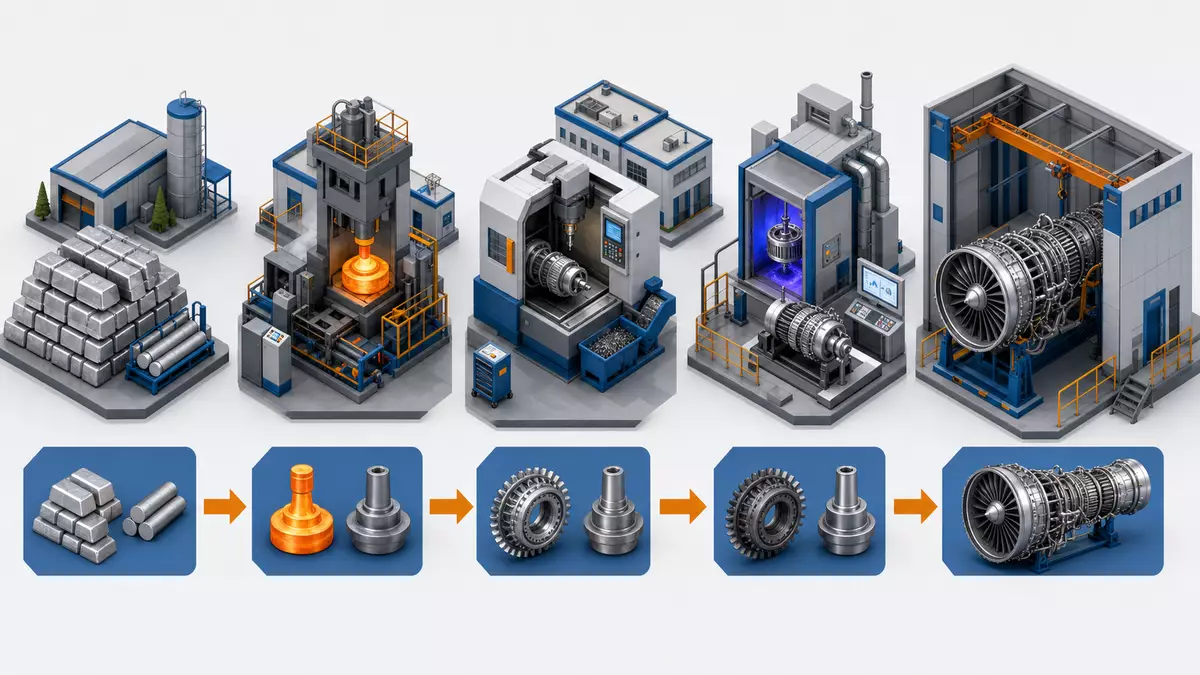
Melrose’s representative product line is concentrated in aerospace engine components and related structural parts that are integral to modern aircraft performance, safety, and efficiency. These products, ranging from complex rotating parts to precision structural elements, are manufactured to tight specifications and delivered under long-term supply arrangements with major engine and aerospace OEMs. The company’s ability to meet these specifications consistently and deliver components on schedule has been crucial in maintaining customer relationships and securing its position on key programs.
Revenue from these aerospace components is closely linked to both new-build rates and aftermarket activity, as replacement and maintenance work also drive demand for parts and services. When fleet utilization rises and airlines invest in maintenance and upgrades, the aftermarket contribution to Melrose’s revenue can complement original equipment sales, smoothing the overall revenue profile across cycles. By focusing on high-value, technically demanding components, Melrose aims to maintain a competitive edge and capture a share of growth in both emerging and mature aircraft platforms.
Melrose stock and recent trading context
In the latest observable market data, Melrose stock has been trading in a range around the mid-500s pence level, with recent closes in the vicinity of 540p to 560p, depending on the trading day and broader market conditions. This places the shares closer to the upper end of their approximately 52-week range, which spans from about 480p to just under 580p. As of a recent date in 2026, with the market capitalization around GBP 6 billion, the price action reflects investors’ acknowledgment of the company’s improved profit and margin profile and its concentrated exposure to aerospace growth drivers.
For investors, the key takeaway is that Melrose stock now represents a more focused aerospace earnings stream rather than a diversified industrial turnaround portfolio, with revenue around GBP 3.4 billion in fiscal 2023 and adjusted operating profit in the region of GBP 400 million, both higher than the prior year. The progress on margins, EPS, and net debt reduction offers a clearer view of how the company’s operational improvements and portfolio changes are feeding into shareholder value. As aerospace cycles progress and program volumes evolve, the durability of this performance will remain central to the stock’s longer-term trajectory.
Melrose key facts
- Company: Melrose Industries plc
- ISIN: GB00BNR5MZ78
- Ticker: LSE: MRO
- Trading venue: London Stock Exchange
- Price (as of 21 July 2026, 08:00 UTC): 552p GBX
- Market capitalization: GBP 6.0 billion (as of 21 July 2026)
- Sector / Industry: Industrials / Aerospace and Defense
- Index membership: FTSE 100
- Next earnings date: 12 September 2026
Disclaimer regarding our articles: No investment advice, no buy or sell recommendation. Information on prices, companies, and markets is provided without guarantee; changes are possible at any time. Stock market transactions can lead to substantial losses. Our articles are created and reviewed in whole or in part automatically with the support of AI.