
MEKO Frigate Order and Duisburg Restart Breathe New Life into Thyssenkrupp's Stock
Published on 07/03/2026 at 14:23 | Editorial boerse-global.de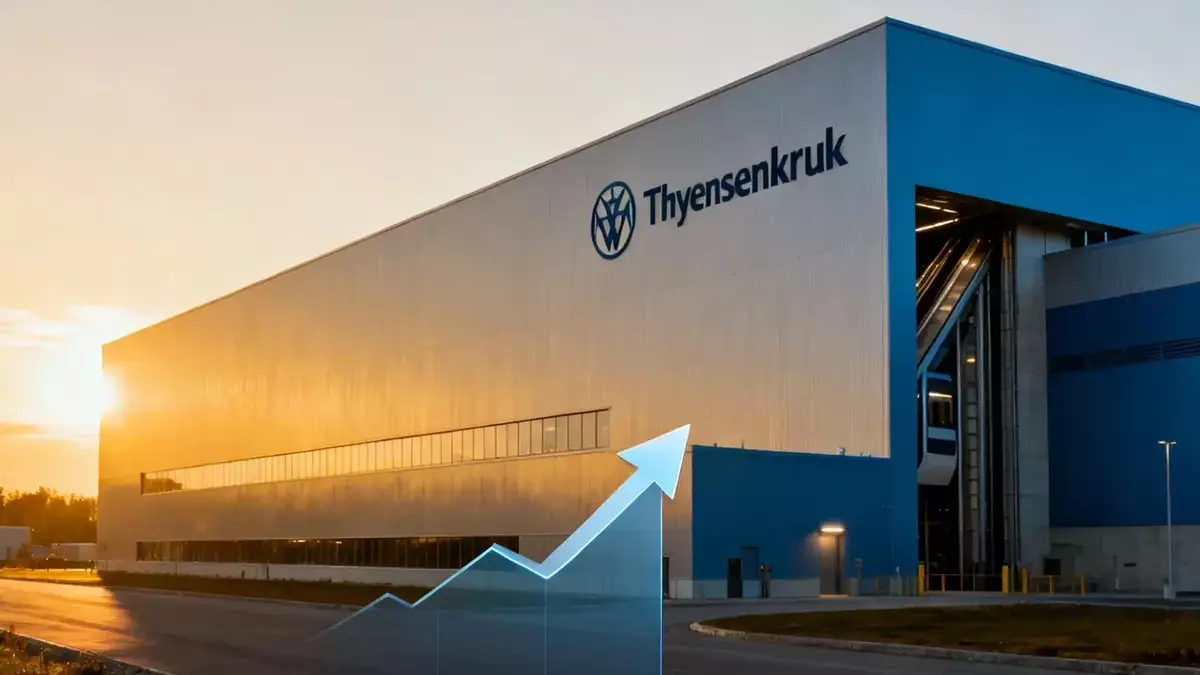
Thyssenkrupp shares shot up 4.6% on Friday to €11.82, recovering from €11.30 at the previous close, as a pair of catalysts from the defense and steel divisions gave investors fresh reason to bet on the industrial conglomerate. The stock’s weekly gain of 14.45% pushed the year-to-date advance to around 22%, leaving it trading well above its 50-day moving average of €10.74 and just 11% shy of the 52-week high of €13.24 set in October 2025.
The most powerful trigger came from the German government’s decision to award Thyssenkrupp Marine Systems (TKMS) an order for at least four new MEKO A-200 frigates, valued at roughly €6.63 billion. An option for four additional vessels, worth an estimated €5.3 billion, remains on the table until the end of 2026. The contract was made possible after Berlin pulled the plug on competitor Rheinmetall’s larger F126 frigate project—a sudden reversal that underscores the political vulnerability of state-backed naval deals. For TKMS, however, the win cements its standing as a key European defense player, with the first hulls scheduled for delivery from 2029.
On the steel side, Thyssenkrupp is nursing its domestic operations back to health. The Walzerei 4 finishing mill in Duisburg restarted production on 2 July 2026 after a lengthy shutdown caused by a furnace fire in autumn 2025. A successful test run the previous day has allowed the company to resume deliveries, a crucial step for stabilizing margins in the steel division after months of lost output. The timing is fortuitous: since 3 July, the EU has slashed the duty-free steel import quota by 47% to 18.3 million tonnes per year and doubled the penalty tariff on over-quota shipments to 50%. The combination of higher protection and a reactivated plant gives Thyssenkrupp a stronger hand in a market that has been hammered by global overcapacity.
Should investors sell immediately? Or is it worth buying Thyssenkrupp?
That global glut remains a persistent headwind. Analysts warn that the world’s excess steel capacity could balloon to 721 million tonnes by 2027, which would quickly erode the benefits of Europe’s trade barrier if international prices keep sliding. The defense business, too, is not immune to policy shifts—the abrupt cancellation of Rheinmetall’s F126 project proves that even big-ticket government orders can vanish overnight. Thyssenkrupp’s annualized share price volatility of nearly 49% leaves the stock prone to sharp pullbacks.
For now, the technical picture looks constructive. The relative strength index sits at 62.5, a level that suggests room for further upside before overbought territory. The share price is 18.14% above its 200-day simple moving average of €9.99, and the recent breakout above the 50-day line has been followed by a surge in volume. The next psychological barrier is €12.00; a clean break above that could open the path to the 52-week peak.
The immediate catalyst ahead is a forum on 8 July 2026, where German industry leaders will meet with the government to discuss a joint raw-material purchasing pool aimed at reducing dependence on China. If Thyssenkrupp secures a central role in that initiative, it would add another source of strategic optimism. Should the summit disappoint, the stock’s rapid ascent invites profit-taking—but with the defense order solidifying TKMS’s future and the steel mill running again, the fundamental floor is firmer than it has been in months.
Ad
Thyssenkrupp Stock: New Analysis - 3 July
Fresh Thyssenkrupp information released. What's the impact for investors? Our latest independent report examines recent figures and market trends.


