Max Strohe at Tulus Lotrek: Why Berlin’s Most Relaxed Michelin Star Feels So Intense
07.04.2026 - 09:15:03 | ad-hoc-news.de
You push open the heavy door of Tulus Lotrek Berlin and the room greets you before any person does. Low light. The faint electric hum of an overworked wine fridge. Bass murmurs under conversations. Warm, almost animal aromas rise from the open kitchen: roast butter, a hint of game, fermented garlic, the metallic top note of reduced jus clinging to the air. Your coat slips from your shoulders, and already your fingertips brush the grain of the wooden table. Unvarnished. Honest. No white tablecloth armor between you and what is coming.
Service glides past with plates that shine but do not preen. You hear the quiet crackle of skin meeting hot fat, that specific Maillard hiss that announces that a piece of meat is about to turn from raw ingredient into memory. Glasses ring softly. Someone laughs too loudly at the bar, and Ilona Scholl answers with a line that makes half the room turn their heads. You sit down, the chair solid under you, and feel your body sink not just into the seat but into a mood: casual fine dining, yes, but also something rougher, truer, more Berlin than polished.
The Protagonists: From Realschule to Federal Cross of Merit
To understand why this room feels like this, you need to know who runs it. Max Strohe, co-owner and head chef, did not grow up dreaming of Michelin stars pinned on a chef’s jacket. He left school early, zigzagged through odd jobs, and crashed more than once. He speaks about it openly. You taste that biography in his food: less perfectionism for its own sake, more stubborn insistence that pleasure must come first.
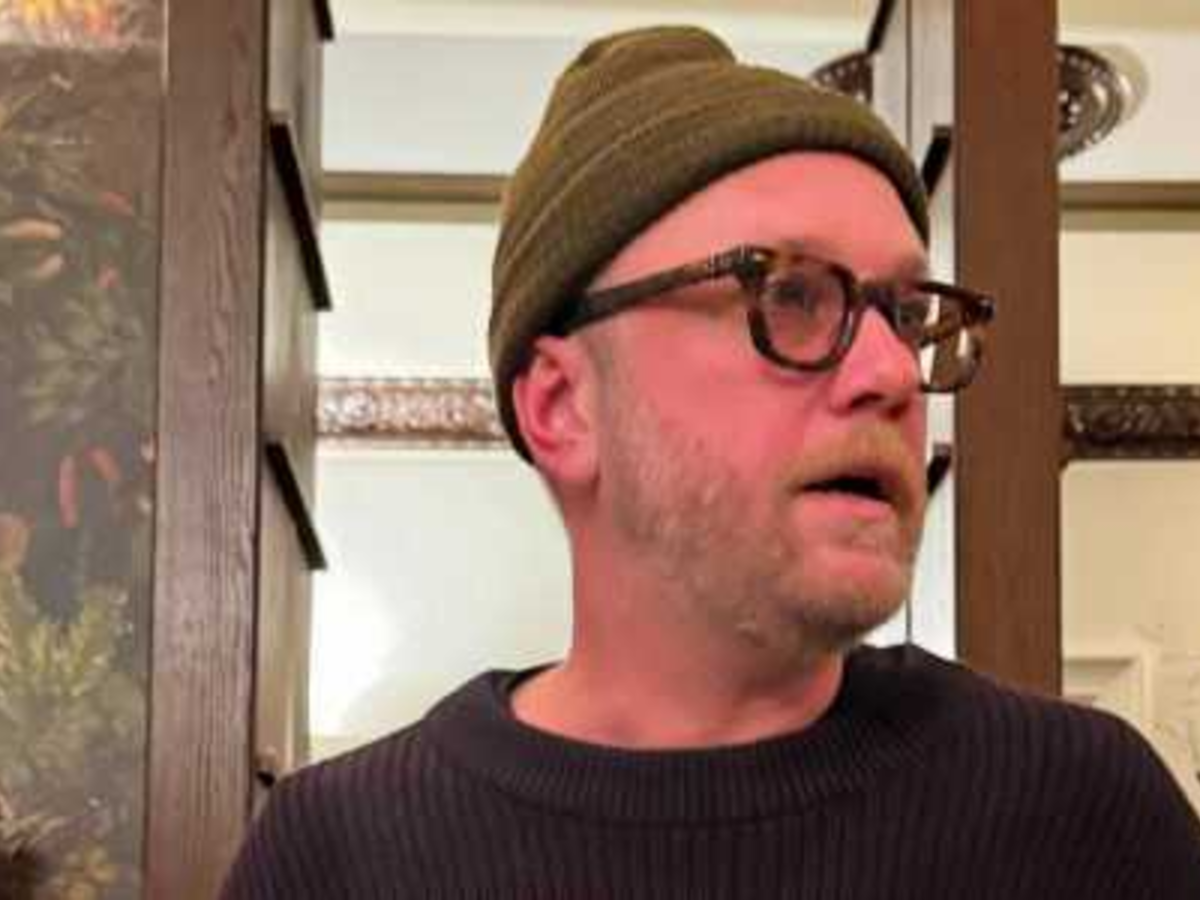
In the tiny Tulus Lotrek kitchen in Kreuzberg, his presence is physical. Broad shoulders, tattooed forearms, a stance like a former bouncer who learned to handle a whisk. He moves with a kind of tidy chaos, a rhythm that looks improvised but is, of course, drilled. A pan gets yanked from the stove with a motion that would look aggressive if it were not followed by such tender basting. Butter foams, thyme crackles. He tilts the pan, watches the fat flow, listens, then cuts the heat half a second before the line between deep brown and burnt.
Next to him, structurally and emotionally, stands Ilona Scholl. Co-owner, host, guardian of the door and the mood. She calls herself the “Gastgeberin” with an old-fashioned seriousness. You feel it when she greets you: no stiff script, no robotic sequence, just a sharp reading of what you need. Are you nervous about your first Michelin star restaurant? She cracks a joke, drops a swearword, and fine dining suddenly feels as approachable as your neighborhood pub. Are you celebrating something big? She pulls out a bottle that is technically off-list and tells a story about the winemaker like you are all in on a shared secret.
Together, Strohe and Scholl built Tulus Lotrek into something that German critics reluctantly had to take seriously. The Michelin star for this Berlin Kreuzberg address confirmed what regulars already knew: this is not a compromise between bistro and temple. It is both. Gault&Millau Berlin praised the cooking with high points, but what really set German commentators buzzing was the Federal Cross of Merit pinned to Max Strohe’s chest in 2023. Not for butter sauces, but for his tireless engagement in refugee aid and social projects, where he cooks and organizes like his life depended on it. From Realschule dropout to decorated citizen of the republic. You taste that arc in the way he plates caviar and cabbage on the same dish without blinking.
Culinary Analysis: Casual, Undogmatic, Precise
Look at the plates in front of you. They do not look like classic “tweezer food”. No forest of micro herbs erected for Instagram, no meaningless gel dots like traffic lights around a sad protein. Tulus Lotrek’s menu changes constantly, season 2025/2026 refusing to anchor itself in a single dogma. You see French technique, yes, but also Balkan, Middle Eastern and straight-up German comfort food influences elbowing each other on the same menu.
A first course might be a riff on something that sounds humble on paper: maybe a dish built on beetroot. The plate arrives with thick-cut wedges of beet, roasted until the edges blister and the sugars darken. When you cut in, the knife slides as if through soft butter. The aroma is deep and earthy, almost like dark chocolate crossed with damp forest floor. Strohe might glaze the beets in a reduced beet jus sharpened with raspberry vinegar and finished with brown butter. A slick of smoked sour cream underneath adds lactic tang and a faint whiff of campfire. On top, instead of ornamental cress, he piles crunchy roasted buckwheat for noise and chew. You take a bite. First, smoke and butter. Then the quiet sweetness of the beets grows, supported by acidity, grounded by the grain’s crunch. It is not “beautiful” in a porcelain-doll way. It is good-looking like someone who laughs with their whole body.
Then something richer arrives. Imagine a main course built around a piece of aged pork neck, dry-aged until the fat smells almost nutty. The slice lands in front of you, its surface lacquered from repeated basting, the edges dark with Maillard caramelization. When your knife presses down, you hear a faint crust crackle before it glides into rosy meat. The sauce is not a light drizzle. It is a pool. A dark, sticky reduction of pork bones, onions, and maybe a hint of star anise, cooked down until it clings to the spoon like silk. There is a flash of something acidic to cut through the richness—fermented celery, perhaps, offered as thin translucent sheets that tremble when you touch them with your fork. On the side, a potato element that is pure Strohe: maybe a foam, maybe a gratin, but always something that tastes like Sunday lunch at your grandmother’s table, just edited, sharpened.
This is what he means when he calls his style undogmatic. There is no manifesto pinned to the wall. No ideological ban on butter, cream or meat, no rigid adherence to Nordic minimalism or molecular trickery. Seasonal, yes, but not in a puritan way. Products come from people he knows, but the main point is still: does this taste good enough to make you close your eyes for a second? He respects vegetables enough to put them center stage without making them moral sculptures. He respects sauces enough to give them time, to let collagen and marrow and roasted bits transform into depth.
Next to all this, the stiff tweezer food that you still find in some Michelin-starred places in Berlin looks like cosplay. There, cooks arrange 14 micro-leaves on a scallop, check the angle with photo references and forget to ask whether the scallop tastes of anything but refrigerator. Here, plates may have droplets and herbs, but they are in service of flavor. Smear a bit of sauce with your bread, and you will not be scolded. You will be smiled at.
The tasting menu at Tulus Lotrek Berlin shifts with the seasons, but the logic remains: strong flavors, surprising but not random combinations, fat and acid in close conversation. One season you might see venison with coffee and black garlic, the bitter and the sweet playing together like a well-matched band. Another season you could get a fish course where the skin is crackling from pan-roast, laid on top of a broth so clear and aromatic it smells like sea air filtered through fennel. Even desserts follow this credo. Less sugar bomb, more balance. Imagine a plate built around quince: its perfume rising floral and high, supported by a butter sablé that shatters under the fork and a cream spiked with something herbal—vermouth, perhaps. Sweetness, yes, but also tension.
Media & Digital Echo: Kitchen Impossible and Beyond
If you think you recognize Max Strohe’s face even before your first visit, you probably do. German television found him, or he found it. On “Kitchen Impossible”, he stood in front of unknown dishes, cursed colorfully, sweated, failed, nailed it, laughed. What comes across on screen is what you experience in the dining room: a refusal to pretend, plus an almost tender relationship with food that never slides into narcissism.
When you want to see that mix of chaos and precision in motion, and watch how he handles foreign kitchens, you can find plenty of material online.Search Max Strohe clips on YouTube
But television is only part of the digital echo. Diners document their evenings relentlessly, and Tulus Lotrek’s dishes, rooms, and staff appear under the same hashtag over and over. Not as sterile studio shots, but as slightly blurred, warmly lit proof that fine dining can be loud, a bit sweaty, and joyful. If you want to see what lands on plates this week, how the glassware catches candlelight, or what wine is currently inflaming the comment sections, a quick dive into hashtags is enough.Discover visual impressions on Instagram
And then there is the verbal layer. On X, the platform where Berliners love to argue about everything from rent caps to ramen places, the name Max Strohe often appears in debates about the future of gastronomy. Topics like fair wages in kitchens, mental health behind the pass, and political engagement of chefs pull his name into the stream. If you want to follow how a Kreuzberg restaurant becomes a shorthand for a certain way of cooking and living, you watch these threads unfold in real time.Follow the latest discussions on X
Atmosphere & Service: Why It Feels Like a Living Room
Sit back for a moment and just listen. The soundtrack at Tulus Lotrek Berlin is not the discreet piano muzak you might expect from a Michelin-starred place in Kreuzberg. It can be hip-hop, it can be old soul, it can be something that makes your foot tap under the table almost against your will. The clink of cutlery, the low murmur of cooks calling orders, the sudden swell of laughter from a corner table: the room breathes.
The decor is not minimalistic chic. Walls carry color; there are pictures, objects, oddities that reveal that someone with a sense of humor furnished this place. Table distances respect personal space but allow you to eavesdrop if you feel like it. The light is soft enough to flatter faces but strong enough so you can actually see your food. Chairs are comfortable, not design experiments. When you touch the stem of your wine glass, it has the right weight, the rim thin enough to disappear almost entirely between lip and wine.
Service plays a huge role in that “living room” feel. The team under Ilona Scholl is drilled but not domesticated. They know their sauces, vintages, and regions, but they also know how to swear convincingly if that’s what the table needs to relax. They read body language. If you lean forward, curious, they dive into longer explanations about a winemaker in the Pfalz or a farmer in Brandenburg. If you lean back, eyes half-closed, they cut it short and let the plates speak.
There is structure beneath the apparent looseness. Glasses disappear and reappear just when you start wondering where to put that next sip. Crumbs vanish as if by magic. Allergies and preferences are not treated as a nuisance but as an additional puzzle in the nightly choreography. You are never rushed, but the pacing of the menu feels deliberate. Warm plates. Hot food hot, cold food cold. These are basics that too many restaurants forget; here they are non-negotiable.
This is casual fine dining in its most convincing form. You can show up in a blazer or in good jeans; both fit. You can talk business or whisper confessions. The room does not demand reverence; it offers comfort. And in that comfort, the food can hit harder.
Conclusion & Verdict: Why Tulus Lotrek Matters in Berlin
Berlin has no shortage of Michelin-starred restaurants. What it lacked for a long time was places that refused the old dichotomy between stiff temples of haute cuisine and cool, under-ambitious wine bars. Tulus Lotrek, with its star, its Gault&Millau recognition, and its constant presence in media, fills that gap. It proves that a Michelin Star in Berlin Kreuzberg can coexist with loud music, politically engaged owners, and plates that value flavor over Instagram geometry.
For you as a diner, this means choice. You can go there to celebrate, to impress, to process a break-up, or just because it’s Tuesday and you need a sauce that tastes like someone spent twelve hours caring about your evening. You walk in as a reservation number; you leave with the slightly dazed expression of someone who has been warmly, intelligently fed.
For the city’s food scene, Tulus Lotrek acts as a point of reference. Young cooks see that you can be undogmatic and still collect stars. Hosts see that you can be sharp-tongued and deeply caring at the same time. Critics see that you cannot dismiss such places as “just bistronomy”. It is serious cooking. It is also fun.
When you step back out into the Kreuzberg night, the smell of reduced jus and toasted bread still clings to your clothes. Street noise swallows you again. Somewhere behind you, in that small room glowing under its sign, the next plate is being wiped clean with a last piece of bread. The Maillard hiss sounds again. And you know that, sooner or later, you will open that heavy door again.
So schätzen die Börsenprofis Aktien ein!

Für. Immer. Kostenlos.