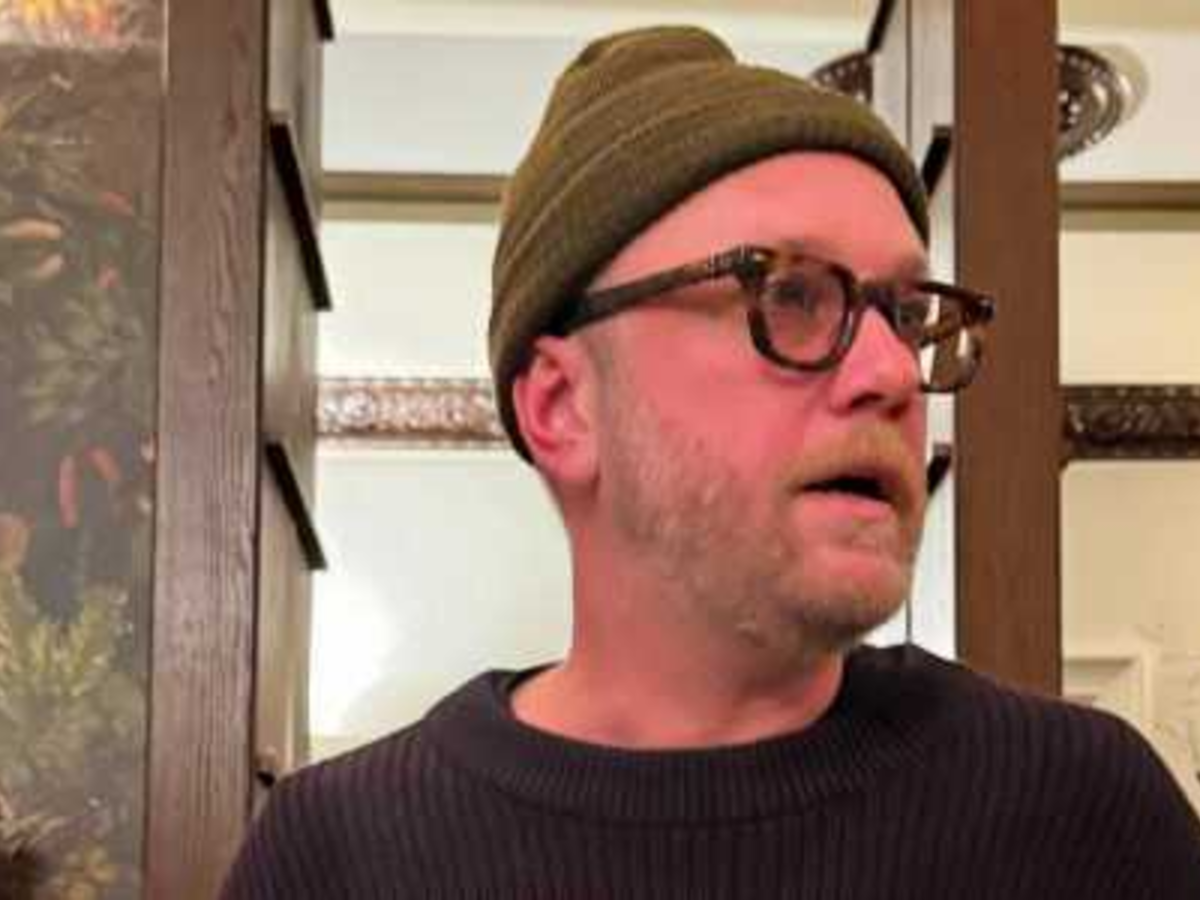
Max Strohe at Tulus Lotrek: Why Berlin’s Boldest Michelin Star Tastes Like Home
01.03.2026 - 09:15:06 | ad-hoc-news.de
The room at Tulus Lotrek Berlin hums before you even sit down. Glasses clink. Someone at the bar laughs too loudly, no one shushes them. Butter hits a hot pan in the open kitchen and you hear the faint hiss, the start of the Maillard reaction that will perfume the whole space. A server slides past you with a plate that smells of roasted poultry skin, citrus zest, and dark, sticky jus. You are not in a temple of silence. You are in a restaurant that wants you to eat.
The lighting is low but not moody. Wood tables, heavy cutlery, thick napkins. You grip the stem of your glass; it feels sturdy, reassuring. The air carries roasted meat, sharp vinegar, a little smoke, a hint of butter that clings to your clothes in the nicest possible way. This is the first thing you notice: comfort before prestige.
The Protagonists: Max Strohe and Ilona Scholl
To understand the room, you need to understand the two people who built it. Max Strohe did not walk a straight line through hotel schools and palace kitchens. He dropped out. Worked. Burned his hands in real kitchens where service was war and learning was brutal. That past never completely left him. You see it in the way his food refuses to be polite and small.
Opposite him, in the dining room, stands Ilona Scholl. Co-owner. Host. Sharp-witted. You feel her presence before you see her. The way service glides, the way a joke lands just when a table starts to overthink a wine pairing. She has become one of Berlin’s most distinctive front-of-house personalities, and the room carries her fingerprints: handwritten menus, unexpected wine choices, a tone that says, You belong here, even if you have never heard of Gault&Millau.
Together they built Tulus Lotrek into one of Berlin’s most talked-about addresses. A Michelin Star in Berlin Kreuzberg. Strong ratings in Gault&Millau Berlin. And then, a different kind of recognition: Max Strohe receiving the Federal Cross of Merit for his engagement in refugee aid and social initiatives. Not for porcelain plates, but for people.
That arc matters. From school dropout to decorated chef. From chaotic brigades to a restaurant that has become a reference point for Casual Fine Dining in Germany. When you sit down, you are not just eating a menu. You are tasting a life that refused to fit into the classic mold, and was rewarded for it anyway.
Culinary Analysis: Undogmatic, Generous, Precise
The cooking at Tulus Lotrek does not whisper. It talks to you directly. Fat, acid, crunch, umami. All in full voice. But it is not sloppy. Techniques are tight; sauces are reduced to the edge of madness, then pulled back.
Imagine a course built around poultry. Perhaps a free-range chicken or pigeon, depending on the season. The skin arrives deep golden, the Maillard reaction pushed until it smells almost like toasted hazelnut. You cut through it and the skin cracks audibly, a crisp shell over flesh that still glistens. Underneath, a jus so dark it almost reflects the candlelight, tasting of roasted bones, wine, and time. There might be something sharp alongside it: pickled celery, a bitter radicchio leaf, maybe a dot of citrus gel that smells faintly of bergamot when you lean in. Nothing about it feels fussy. Yet every element is in exactly the right place on the plate.
On another evening, you might meet a dish that walks the line between comfort food and technical showpiece. Think of a lush, almost indecently rich sauce built with cream and ferment, wrapped around a perfectly cooked piece of fish or offal. Something that sounds rustic on paper, but reveals quiet layers in your mouth: smoke, lactic sharpness, a faint sweetness at the end. You get a crunch from a fried shard, maybe a potato cooked so that it shatters at the edges, then goes soft at the core. This is not tweezer food. There are no microscopic micro-herbs parachuted in for no reason. Nothing stands on the plate solely to impress your Instagram followers.
The menu at Tulus Lotrek changes with the seasons, but the attitude stays the same. Max Strohe’s style is undogmatic. French technique, yes. German soul, definitely. Influences from everywhere he has eaten and everything he has watched. He is not afraid of bold seasoning. Pepper that you can actually feel. Acidity that grips your gums. Salt used as punctuation, not as background noise.
Where some Michelin-starred kitchens lean into ascetic minimalism, here you get generosity. Sauces that do not hide. Portions that feel like dinner, not like a tasting sample. Bread that makes a mess of crumbs across the tablecloth, because bread should. When dessert comes, you can expect something playful rather than ornamental. Perhaps an element of childhood memory recast with adult technique: ice cream with grown-up bitterness, a cake so moist you can feel it give under your spoon like warm clay.
Media, Screens, and the Digital Echo
Max Strohe is not only anchored behind the pass at Tulus Lotrek. You have probably seen his face lit by another kind of heat: studio lights. His appearances on TV formats like "Kitchen Impossible" have made him familiar to an audience that may never have walked down his Kreuzberg street. On screen, he brings the same mix of self-deprecating humor and stubborn seriousness that you feel in his cooking. He jokes, he swears, he sweats. He looks like a real cook, not a brand mascot.
If you want to see how this attitude translates into moving images, from chaotic competition kitchens to quiet shots of plated dishes, you can start with a simple search. Search Max Strohe clips on YouTube
Still images tell another story. The deep glisten of a jus under candlelight. The glow of the dining room. The scribbled wine notes, the smiles, the occasional badly focused shot of a plate because someone was too eager to eat first. If you want to sense the visual rhythm of Tulus Lotrek Berlin, scroll where guests and fans post without filter. Discover visual impressions on Instagram
And then there is the commentary track: debates about what Casual Fine Dining should be, arguments about pricing, portion size, and whether a Michelin Star in Berlin Kreuzberg has to look a certain way. If you are curious how critics, regulars, and first-timers argue about Max Strohe Restaurant nights long after the last plate leaves the pass, you can tune into the stream of opinion. Follow the latest discussions on X
This media presence does something subtle. It lowers the threshold. You arrive at Tulus Lotrek already knowing the face in the kitchen, the voice, the laugh. The distance between star chef and guest shrinks.
Atmosphere and Service: Why It Feels Like a Living Room
Plenty of restaurants talk about being "homely". Few manage it without sliding into kitsch. At Tulus Lotrek, the living-room feeling comes from behavior, not décor. You notice it in the way a server crouches slightly to your eye level when they explain a dish. In the way they watch your body language more than your plate. Glass empty? They will ask, not assume. Unsure about the menu? They will translate it into plain, funny language, not recite a script.
The soundtrack is human. Snippets of German and English, chairs scraping, the soft thud of bottles in an ice bucket. There is often music, but it does not demand attention. You can talk at a normal volume. You can laugh. You will hear other people do the same. The energy is closer to a great dinner party than to a tasting-room ceremony.
Ilona Scholl’s presence is key. Her approach to service bends around you. If you want to discuss every vineyard and every grape, she can go deep. If you just want “something white, not too sour”, she will smile and pour, without making you feel inadequate. The phrase "feel-good atmosphere" is overused, but here it is literal: you feel your shoulders drop as the evening goes on.
The design supports this mood. No intimidating white tablecloths. No spotlighted plates on bare tables like museum exhibits. Instead: warm colors, objects with a sense of humor, details you only notice on your second or third visit. You touch the back of your chair and it feels solid, not fragile. You drop your fork by accident and no one glares.
Conclusion and Verdict: Why Tulus Lotrek Matters in Berlin
Berlin has no shortage of ambitious kitchens. Nordic-influenced tasting menus in Mitte. Rigorous precision in Charlottenburg. Plant-focused experiments in Neukölln. In that landscape, Tulus Lotrek Berlin occupies a crucial middle ground. It proves that Michelin-level cooking can be loud, relaxed, even a little chaotic, without losing sharpness.
For the city’s food scene, this matters. It gives young cooks a different role model: you can be decorated and still be political, outspoken, imperfect. You can hold a Federal Cross of Merit and still serve food that gets on your fingers. You can run a Michelin Star Berlin Kreuzberg address and still welcome guests who have never read a guidebook.
For you as a guest, the relevance is more immediate. If you are tired of stiff experiences where each plate arrives like an exam question, Tulus Lotrek offers an alternative script. You sit. You eat. You drink. You feel. You leave with the taste of well-reduced sauces still on your tongue and the echo of human voices in your ears, not the afterimage of staged perfection.
Max Strohe and Ilona Scholl have built more than a destination for rankings like Gault&Millau Berlin. They have built a place where high gastronomy and everyday pleasure shake hands. In a city that constantly reinvents itself, that balance of rigor and warmth is exactly what keeps a restaurant not only relevant, but necessary.
If you care about where Berlin dining is going, you should experience what they are doing in Kreuzberg now—on the plate, in the glass, and in the room that feels, in the best sense, like a living room with a Michelin star.
So schätzen die Börsenprofis Aktien ein!

Für. Immer. Kostenlos.