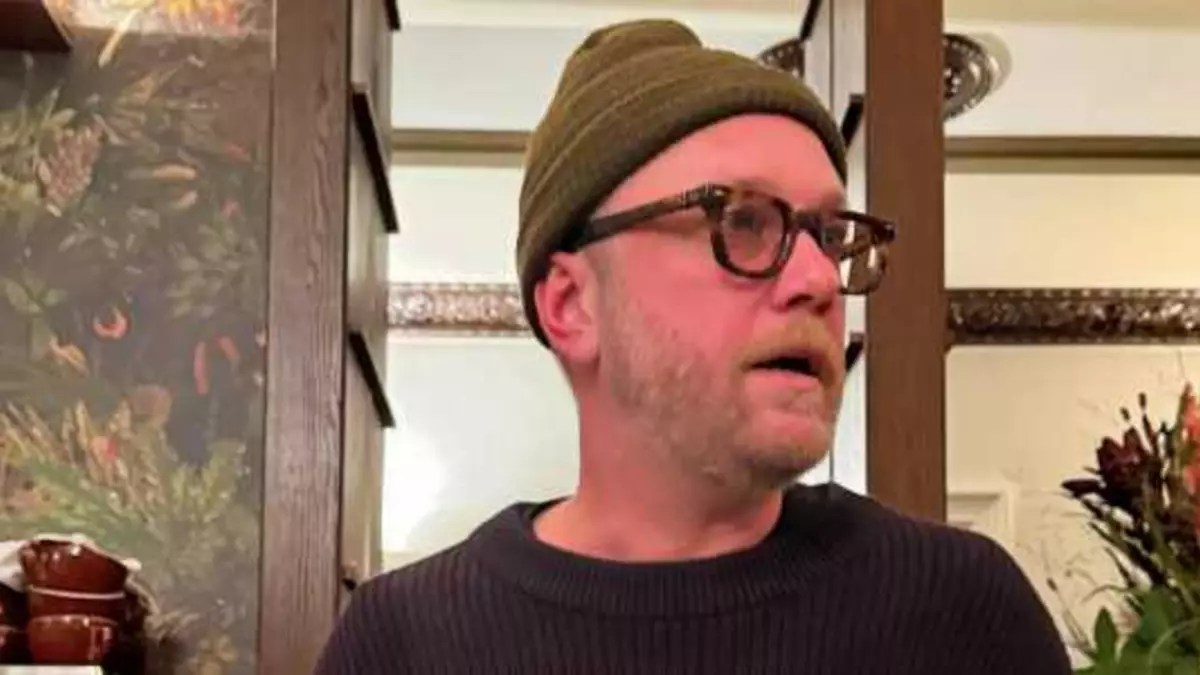
Max Strohe at Tulus Lotrek: How Berlin’s Wild Heart Reinvented Michelin Dining
Published on 03/18/2026 at 09:15 | Editorial responsibility: Rafael Müller, Editor-in-Chief AD HOC NEWS
The first thing you notice at Tulus Lotrek Berlin is the sound. A low, warm roar of conversations bouncing off dark walls. Glasses clink. Cutlery slides across porcelain with a soft scrape. From the open door to the kitchen you hear the sharp hiss of butter hitting hot steel. A pan is deglazed; a short, steamy sigh of white wine and stock fills the air. You sit down. The chair is solid, pleasantly worn in. The linen is soft, not starched to death. Someone laughs at the bar. You realize: this is not the usual shrine of hushed fine dining. You can breathe here.
The smell arrives before the menu. Brown butter. A hint of game. Citrus zest somewhere in the background. Toasted breadcrumbs. Your fingertips skim the edge of the table. A server puts a small amuse-bouche in front of you and explains it without reciting a poem. You lift it. It’s warm, crisp, almost too big for one bite. When you chew, you hear it crackle, then feel the gush of fat and acidity sliding across your tongue. You taste Maillard, smoke, something slightly feral, and a squeeze of freshness that snaps everything into focus.
You are in Kreuzberg, but not the Kreuzberg of flat whites and laptops. You are in the slightly off-kilter, gently theatrical world that chef Max Strohe and front-of-house mastermind Ilona Scholl have built. A world where a Michelin star sits happily next to loud laughter, and where the Gault&Millau Berlin praise hasn’t killed the sense of mischief.
To understand why this place matters, you have to start with them. The two protagonists. Not with a glossy hospitality CV, but with a biography that smells of cigarette smoke and chance. Max Strohe, once a school dropout and kitchen wanderer. A cook who bounced through Berlin’s restaurant ecosystem, collecting burns, knowledge, and stubbornness. Ilona Scholl, who turned the classic idea of service on its head and made the dining room a stage for radical warmth instead of stiff choreography.
Their story is not the polished narrative of perfect grades and hotel management school. It is the story of staying in the industry long enough to grow calluses on your hands and a clear idea in your head. In 2015 they opened Tulus Lotrek in Berlin Kreuzberg. The name nods to Toulouse-Lautrec, the painter of brothels and cabarets, and you can feel that spirit here: bohemian, a bit decadent, never sanitized. The lighting is low, the art on the walls is playful, the colors are rich, almost velvety. You are meant to feel disarmed, not intimidated.
Recognition came fast. A Michelin star for Berlin Kreuzberg. Strong ratings from Gault&Millau Berlin. Word spread among chefs: this was not another temple of tweezers and edible flowers. This was casual fine dining with real weight on the plate. Not casual in the sense of sloppy. Casual because you can come here and be yourself. Because Ilona might crack a joke while pouring your wine, and you will not be asked to whisper when you laugh.
Then came something even more unusual for a Kreuzberg restaurant born out of stubbornness and grit: the Federal Cross of Merit for Max Strohe. Awarded not for showy plates, but for his social engagement, his work with refugees and for standing up where others prefer to stay neutral. You taste that attitude in the food. It’s unafraid. It doesn’t beg for approval. It doesn’t try to fit the neat boxes of classic fine dining; it pushes against them while still honoring craft.
By 2025/2026, the Tulus Lotrek menu has evolved, but the DNA remains unchanged. Richness balanced by sharp acidity. Comfort wrapped in technical precision. You might start with a dish that feels like a handshake and a wink: perhaps a take on liver, one of Strohe’s recurring obsessions. Imagine a silky liver parfait, almost mousse-like, piped onto toasted brioche whose edges crunch audibly when you bite. On top: pickled onions, paper-thin, humming with sharpness. A glossy jus reduction streaks the plate in a dark, viscous line. When your knife cuts through, you feel no resistance. The parfait melts instantly against the warmth of your tongue, iron-rich but not heavy, tempered by the brightness of the vinegar and the faint sweetness of the bread. It’s lush, unapologetic, yet perfectly measured.
Another plate arrives. This one smells like forest and smoked fat. A game dish, maybe venison or wild boar, depending on the current season. The meat has that deep, slightly sweet aroma that only proper aging and controlled Maillard reaction can produce. The crust is firm, almost brittle, giving way to a tender, juicy center. Underneath, a puddle of sauce that glows under the light. It looks almost black, but when you drag your fork through it, you see mahogany. Long-simmered bones, wine, maybe a dash of coffee. A jus that has been reduced until time itself thickened. On the side, something playful: perhaps Brussels sprouts leaves fried until they crisp like potato chips, dusted with a citrusy spice. They crack between your teeth and release a faint bitterness that sneaks under the richness and lifts it, so nothing ever feels cloying.
Then the dish that anchors the whole idea of undogmatic cuisine: Strohe’s notion of a perfect burger, a subject that has followed him into interviews and TV appearances. Sometimes it appears in more refined form on the menu, sometimes as a staff meal legend that leaks onto social media. Think of a patty where fat ratio and grind are treated as seriously as a Michelin main course. The bun: brushed with butter, toasted until the edges singe just enough to give you that smoky tug in the nose. When you press it between your fingers, it has give, then resistance, then softness again. You bite. Juice spills. The sound is half squish, half crunch from the pickled elements. There is no overdesigned landscape of dots and gels around it. Just a precise stack of flavors tuned to make you happy.
This is what separates Tulus Lotrek from the era of tweezer food. You know the type: plates that look like design projects, where you are afraid to move anything because the visual concept might collapse. Here, the plating is beautiful but not neurotic. Objects are placed with care, not with anxiety. You can sense that every element exists for taste, texture, and temperature, not for Instagram alone. They still use tweezers in the kitchen, of course. But as tools, not as ideology.
The term casual fine dining has become a buzzword across Berlin, often diluted beyond meaning. At Tulus Lotrek, it still stands for something specific. It means that the techniques are high-end, the sourcing serious, the sauces correctly mounted. But your experience is not encased in glass. You can talk about the dish without needing a glossary. You can ask for more bread to mop up the jus without feeling crude. You are invited to enjoy, not to perform knowledge.
The media noticed. And then television came calling. Max Strohe’s appearances on shows like “Kitchen Impossible” turned his rough charm and intense focus into primetime entertainment. You see him on screen, jaw set, cursing under his breath while trying to decode someone else’s dish in a foreign kitchen. You can almost hear the same sizzle of pans that you heard at your table in Kreuzberg. The TV persona is not glossy. There is no airbrushed calm. Instead, you get a chef who reacts viscerally to success and failure, who sweats, who doubts, who grins when something finally works.
If you want to watch him in that arena, under the harsh light of studio cameras and the ticking clock, you can lose yourself for hours in video clips and recaps.
Watch the pressure, the failures, and the small victories of Strohe’s TV battles here: Search Max Strohe clips on YouTube
On Instagram, the story is different. There you see close-ups of plates, the almost obscene sheen of a sauce napped perfectly over meat, the glistening surface of a fish skin puffed in the pan until it sounds like biting into thin glass. You scroll and practically taste the salt on your lips.
See how the plates, the team, and the room look when the camera gets close: Discover visual impressions on Instagram
Then there is the raw edge of social media debates. Berlin’s food scene loves to argue. About stars, about prices, about what “Berlin enough” means. Whenever a new menu tweak at Tulus Lotrek surfaces, or a fresh Gault&Millau Berlin review drops, opinions start to fly across X (formerly Twitter). Some cheer the boldness, others question the comfort level of pricing in Kreuzberg, others simply crave that burger.
Follow those arguments, hot takes, and insider tips in real time: Follow the latest discussions on X
But all the digital buzz would mean very little if the room itself did not make sense. And this is where Ilona Scholl’s work becomes crucial. When you step inside, you do not feel processed. You are greeted like a guest, not a reservation slot. The air temperature is right; you never feel a draft. The chairs are substantial enough that you can sit for hours without thinking about your back. The background music is present but not intrusive; you register the beat, not the lyrics.
Lighting is key to the much-quoted feel-good atmosphere. Here, it’s warm and slightly golden, flattering without becoming murky. Faces look good. Food looks good. Wine glows ruby and garnet in the stemware. The distance between tables allows privacy but doesn’t kill the energy. You can eavesdrop lightly on your neighbors, hear fragments of conversations about wine, about politics, about someone’s terrible landlord. It feels like a Berlin living room, only with better glassware and more precise salt levels.
Service moves in and out of your field of vision like well-rehearsed actors, but without the stiffness of a play. They anticipate your needs, but they do not hover. They can explain the difference between two natural wines in clear language, not jargon. They will tell you if a dish is richer than you expect, or if the kitchen can adjust something without mutilating the concept. You feel guided, not lectured.
This might be the most radical gesture of all: hospitality over ego. Yes, there is a signature style. You recognize Strohe’s love for opulent sauces and bold protein choices. You see Scholl’s hand in the pacing, in the way the evening unfolds. But they don’t suffocate you with narrative. They leave room for you to experience the night on your own terms. If you want to talk in detail about where the lamb came from, they can. If you just want another glass of wine and a recommendation for dessert, they happily keep it simple.
You notice this when your main course arrives and the server pauses, giving you a moment to smell before talking. The plate radiates heat. The sauce shines. Steam curls upwards carrying notes of roasted garlic and herbs. You hold your fork, feel the slight weight of it, then cut into the protein. That tiny resistance before the blade slides through tells you everything you need: this is cooked with confidence. Not overthought. Not underdone for the sake of performing “doneness”. Just right.
In the context of Michelin star Berlin Kreuzberg, Tulus Lotrek plays a specific role. It stands against the idea that high-level food requires reverence and anxiety. It also stands against the lazy notion that Berlin cuisine must always be aggressively casual, anarchic, or performatively cheap. Here, you pay for quality and labor, and you feel it in every bite, every pour of sauce, every careful seasoning of a vegetable side dish.
By 2025/2026, Berlin has plenty of ambitious kitchens. Nordic-influenced tasting menus. Plant-based tasting experiences. Fusion restaurants drawing lines between continents. In that crowded field, Max Strohe Restaurant Tulus Lotrek remains singular. It is emotional but not sentimental. Rooted in French technique but open to global accents. Serious about flavor, unserious about snobbery.
The awards matter—Michelin, Gault&Millau, the Federal Cross of Merit—because they act as markers for outsiders trying to navigate the city’s scene. But within Berlin, among cooks and regulars, the reputation of Tulus Lotrek rests on something more basic and more durable: consistency of pleasure. You come here and you eat well. Every time. You feel seen. Every time. You leave slightly flushed from wine, salt, conversation, and the close, comforting warmth of the room.
As you step back out into the Kreuzberg night, the air feels colder and thinner. Car lights smear along the wet pavement. You can still taste the last sip of red on your tongue, still feel the smooth, fine-grained tannins. Maybe there is a faint echo of roasted bones and citrus peel clinging to your coat. You understand why food writers keep naming Tulus Lotrek among Berlin’s best restaurants. Not because it is perfect in a sterile way, but because it is alive.
If you care about how Berlin eats now—about how the city’s contradictions can coexist on one plate: luxury and roughness, technique and looseness, awards and anarchy—you should put Tulus Lotrek on your list. Better yet, on your calendar.
And when you sit there, with a spoon of dark, glossy sauce hovering in front of your mouth, while someone at the next table argues about the latest Kitchen Impossible episode, you will feel it. This is not just about tasting notes or guidebook stars. This is about a restaurant that put down roots in Kreuzberg and refused to choose between comfort and ambition.
You lift the spoon. The sauce coats your lips. You hear laughter behind you, the soft thud of a wine bottle set down on wood, the gentle clatter from the kitchen as the next dish is fired. You swallow. It is dense, bright, savory, and a little bit wild. Like the city outside. Like Tulus Lotrek itself.
Disclaimer regarding our articles: No investment advice, no buy or sell recommendation. Information on prices, companies, and markets is provided without guarantee; changes are possible at any time. Stock market transactions can lead to substantial losses. Our articles are created and reviewed in whole or in part automatically with the support of AI.