Max Strohe at Tulus Lotrek: Berlin’s Wildest Michelin Star with Heart and Heat
Published on 04/09/2026 at 09:15 | Editorial responsibility: Rafael Müller, Editor-in-Chief AD HOC NEWS
The first sound you notice at Tulus Lotrek Berlin is not the clink of Zalto glassware. It’s laughter. Then the soft hiss from the open kitchen as duck skin hits hot fat, the Maillard reaction announcing itself in a rising, nutty perfume that cuts through the murmur of conversations and the bass line on the playlist.
The light is low, flattering, more living room than luxury temple. Velvet, dark wood, wallpaper with a sense of humor rather than reverence. You shrug off your jacket and feel your shoulders drop. This does not feel like the kind of room where you whisper about amuse-bouches. This feels like a place where you eat.
And yet, this is a Michelin-starred address in Kreuzberg. This is Tulus Lotrek. And you, very likely, will want a seat as soon as possible.
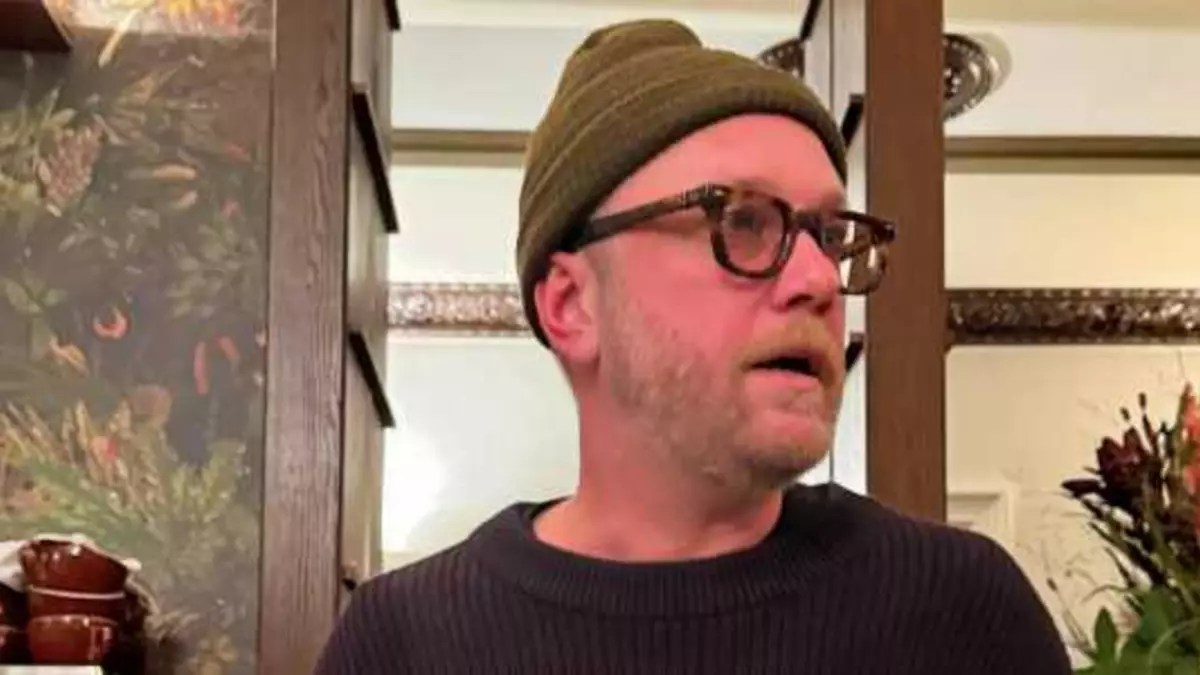
In the middle of this controlled chaos stands Max Strohe, broad-shouldered, tattooed, moving like someone who has done every job in a kitchen and still loves the heat. You can hear him call tickets, short and rough, and then suddenly go silent as he plates. No tweezers ballet, no monk-like meditation. Just fast, precise hands and a focus that narrows the room.
Out front, the counterweight: Ilona Scholl. She doesn’t glide; she strides. A quick flash of lipstick, a sharp joke fired at the regulars at table six, an instant shift to deep attention when she drops by your table. She remembers your allergy list before you open your mouth. She suggests a Riesling with enough residual sugar to flirt with the sauce on your plate, then tells you, deadpan, that she vetoed three other bottles because they were “too boring for you”.
Both have biographies that refuse the polished, linear narrative usually sold in glossy restaurant PR. Max, the former school dropout and odd-jobber, who stumbled through kitchens before deciding he might as well do this properly. Ilona, who turned years of service work, stubborn curiosity, and a sharp instinct for people into one of Berlin’s most distinctive front-of-house personalities.
Together they built Tulus Lotrek in Kreuzberg, a room that always felt like an affectionate rebellion against stiff luxury. The guides noticed. Michelin pinned a star to the door. Gault&Millau Berlin praised the cooking, the generosity, the wit. And then came the official recognition that belongs in political speeches rather than small dining rooms: the Federal Cross of Merit for Max Strohe, not just for cooking, but for engagement beyond the pass—social projects, loud advocacy when the industry preferred silence, showing that a chef’s responsibility does not end at the kitchen door.
You taste that attitude in the food. The current menu reads like a conversation between childhood memories, French technique, and a Berlin sense of irony. It changes with the seasons, with what excites the kitchen, with what the producers bring to the back door. But a few themes anchor it.
Picture a plate built around duck, a dish that seems simple until you lean in. The skin is lacquered, crisp enough to crack audibly under your knife, the fat rendered to a thin, glistening layer. The meat underneath is rosy, just past red, releasing steam that smells of roasted bones, citrus zest, and something faintly smoky. Around it, not decorative dots but purposeful elements: a dark jus, reduced until it clings to the spoon like silk; bitter leaves that cut through the richness; a puree that tastes like the essence of winter roots after a long Sunday in the oven.
Nothing is arranged to impress Instagram first. The plating is confident, clean, but always subservient to eating. You drag a piece of duck through the jus, catch a shard of crisp skin, a smear of puree, the leaf’s snap. The textures stack: crunch, give, velvet. The flavors build in layers rather than fireworks. You feel it along the sides of your tongue and deep in your chest. This is not tweezer food. This is food that understands appetite.
Another course might revolve around cabbage. Yes, cabbage. That old, humble thing your grandmother boiled to death. Here it arrives transformed. Leaves blistered and charred on the edges, carrying smoke. The core slowly braised, almost custard-like. A bright, acidic sauce charged with fermented notes, maybe a hint of preserved lemon, pulling the vegetable into vivid focus. Nutty butter, perhaps punctured by something crunchy—seeds, roasted grains—gives it a bass note. You taste Germany, you taste bistro France, you taste the new Berlin that refuses to choose between tradition and provocation.
Seafood gets the same undogmatic treatment. A piece of fish with skin seared until it sings when your fork breaks through, the interior glassy and trembling. It may sit beside something almost indecently luscious—bone marrow, a deep shellfish reduction, a butter mounted until it threatens to separate yet somehow holds. Herbs and pickles arrive not as garnish but as correction, jolting everything back into balance. You can smell iodine and roasted shells, cream and wine, a whisper of smoke rising as you pause between bites.
Across the menu, there is a clear rejection of faceless minimalism. Sauces are real, not translucent suggestions. Portions respect the fact that you came hungry. Cream, butter, and fat are tools, not sins. Playfulness appears in surprising pairings, in a sly reference to fast food here, a nod to a TV challenge there. But it is always grounded. Always rooted in solid craft, in tight seasoning, in a respect for produce that avoids both fetishization and waste.
You see why this place features in guides, why the phrase "Casual Fine Dining" finally feels honest here instead of like a marketing slogan. You sit in sneakers and drink serious wine. You mop up sauce with good bread and still get precise, thoughtful plates that would stand firm in any stiff dining room in Paris.
Of course, you may have met Max Strohe somewhere else before walking through this door: on your screen. His appearances on “Kitchen Impossible” made him recognizable far beyond Berlin. There you watched him swear at impossible recipes in foreign kitchens, taste, fail, adjust, taste again. The same stubbornness, the same refusal to fake politeness when something tastes off, now directs plates leaving his pass.
If you want to watch that energy unfiltered and see how other chefs talk about him, go straight to the videos that orbit his name online.
See the pressure and the humor behind the plates as you Search Max Strohe clips on YouTube
But to understand how Tulus Lotrek looks and feels on a busy night, pixels can help too. Guests snap plates, the wallpaper, the wine labels, and yes, the occasional blurry kitchen shot when Max sticks his head out to talk.
For those details—the gloss of a jus under candlelight, the grin on Ilona’s face mid-service, the scribbled menu notes—your next stop is the picture stream.
See the dishes evolve across the seasons as you Discover visual impressions on Instagram
And then there is the chatter. Awards, political statements, industry debates, praise, and criticism—Max and Ilona are not background figures. They speak up, they get quoted, they spark arguments about what a restaurant owes its staff, its neighborhood, its society.
If you want to follow that pulse in real time, conversations spin fast on social platforms, especially when a new menu drops or a TV appearance airs.
Join the argument about what fine dining should be when you Follow the latest discussions on X
Back in the dining room, you notice how all of this—the TV persona, the awards, the activism—fades to a background hum. The real story is the atmosphere. You sit close enough to other tables to overhear a joke, but not so close that you share their arguments. There is music, actual music, not spa noise. There is a bar where you could happily drink without eating. The color of the room flatters the wine. The chairs have give; they welcome you instead of disciplining you.
Service moves with intent. No synchronized plate drops, no rehearsed monologues spun around every course. Instead you get quick, clear explanations. A server will bend down slightly, at your level, and talk you through the sauce, the producer, the reason this dish exists. If you show interest, they go deep. If you just want to eat, they step back. The “feel-good atmosphere” does not mean fake enthusiasm. It means reading you correctly.
You might find Ilona sliding onto the bench for 30 seconds when she pours you a splash of something off-list, just to see if it clicks with you. You might see Max at the door at the end of service, smelling faintly of butter and smoke, thanking guests, trading a quick barb with someone he clearly knows well. Regulars are greeted like conspirators. Newcomers are folded in quickly.
The result is a room that holds contradictions with ease. You can bring a food-obsessed friend who wants to discuss the exact reduction point of the jus, and you can bring your cousin who just wants “a really good dinner”. Both leave happy. You can celebrate an anniversary here, but you can also come alone on a Tuesday and eat at the bar, watching the copper pans come to temperature, listening to the quiet clatter from the pass.
In Berlin’s restaurant landscape, that balance matters. The city is full of concepts: sleek Nordic minimalism in Mitte, natural wine bars with menus scribbled in pencil, kebab counters with cult status, stiff hotel dining rooms trying to reinvent themselves every season. Tulus Lotrek anchors Kreuzberg with a different promise. It says: you can have a Michelin Star Berlin Kreuzberg experience without sacrificing warmth. You can have serious technique without self-seriousness. You can have pleasure without guilt.
It also proves that Casual Fine Dining does not have to be a euphemism for cutting corners. The plates are ambitious. The wine list is curated with nerve and patience. The team is treated as humans, not as silent extensions of a brand. The restaurant participates in the city instead of hovering above it. When something happens in Berlin—politically, socially, culturally—you sense the echo in this room, in the conversations at the bar, in the causes the house chooses to support.
For you as a guest, the calculation is simple. Do you want a night where you are expected to lower your voice, adjust your posture, and pay for the privilege of feeling intimidated? Then look elsewhere. Or do you want to walk through a Kreuzberg door, be greeted by name or greeted like you might become a regular, drink wine that tastes alive, eat food that engages your entire body—nose first, then tongue, then brain—and leave a little louder, a little happier, a little less impressed by fine-dining clichés?
If the second option sounds right, you already know the answer. You put on shoes that let you walk home satisfied. You let the last trace of roasted bone and citrus and butter linger in your nose as you step back out into the Berlin night. And the next time someone asks you where to book in this city, the words will come quickly.
Tulus Lotrek. Kreuzberg. Max Strohe in the kitchen, Ilona Scholl in the room. A star on the door, heart in the center of the table.
Disclaimer regarding our articles: No investment advice, no buy or sell recommendation. Information on prices, companies, and markets is provided without guarantee; changes are possible at any time. Stock market transactions can lead to substantial losses. Our articles are created and reviewed in whole or in part automatically with the support of AI.