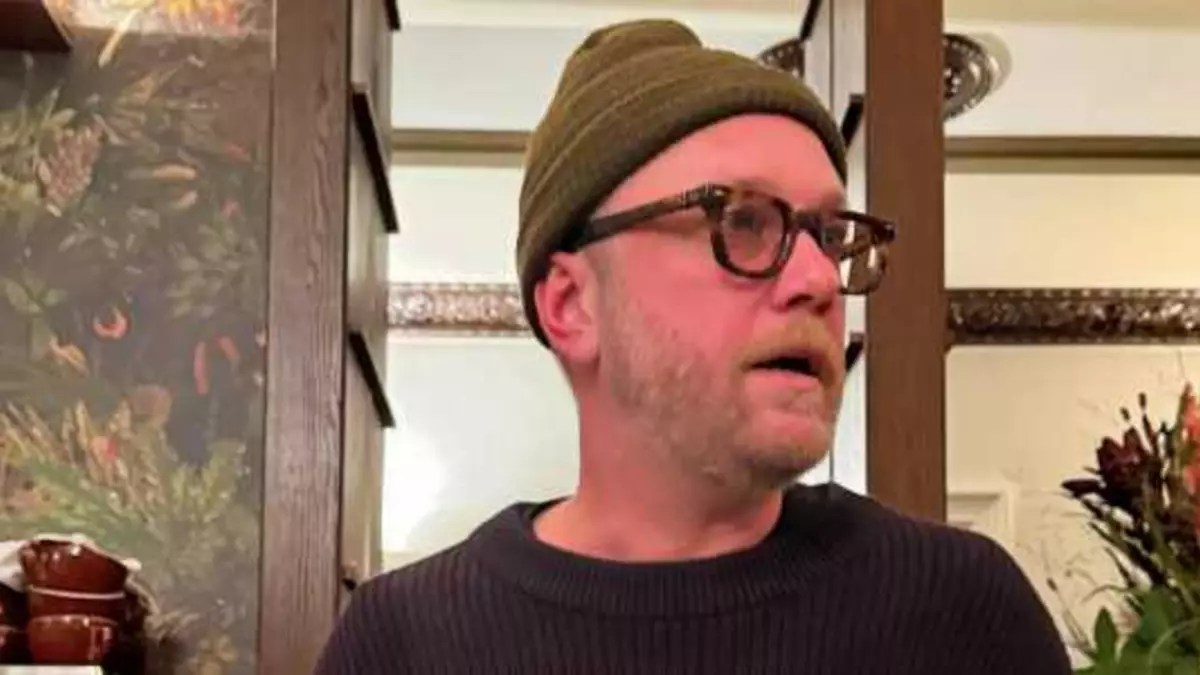
Max Strohe at Tulus Lotrek: Berlin’s Wildest Michelin Star that Refuses to Behave
Published on 03/15/2026 at 09:15 | Editorial responsibility: Rafael Müller, Editor-in-Chief AD HOC NEWS
The first thing you notice inside Tulus Lotrek Berlin is the sound. Not the clink of crystal, not the hushed whisper of waiters. Laughter. A short bark from the corner table. The low thrum of conversation. Glasses touch. Chairs scrape on wood. Someone drops a fork and nobody flinches. You sit, the velvet of the banquette catching on your sleeve, and a smell rolls over you: roasted bones, a dark jus reducing somewhere in the back, a puff of citrus zest in the air from the table next to you.
The lights are low but not flattering in a dishonest way. You see faces. The grain of the tables. The slight haze on a bottle that has just come from a wine fridge. A server slides a menu in front of you, smiles without reciting a script, and for a moment you forget that this is a Michelin-starred restaurant in Kreuzberg. It feels like you have been invited to dinner at a friend’s place. A friend who just happens to obsess over Maillard reaction and Gault&Millau points.
The name on the door is Tulus Lotrek. The heartbeat inside belongs to two people: chef Max Strohe and front-of-house mastermind Ilona Scholl. You may know fragments of the story. School dropout. Kitchen stints. Chaos. Then a tiny space in Kreuzberg turns into one of Berlin’s most talked-about addresses. Along the way, Strohe earns not just a Michelin star but also the Federal Cross of Merit, awarded for his social and humanitarian engagement. Not a typical line in a CV dominated by sauce reductions and TV spots.
Strohe’s path is anything but linear. He leaves school early, drifts, steps into kitchens where the air is dense with steam and cigarette smoke. He peels, chops, burns, repeats. The discipline of the line keeps him anchored. Over time, his cooking gains a voice: loud, unafraid of fat, uninterested in twee precision for its own sake. In Kreuzberg, he and Scholl open Tulus Lotrek and push against the polished, silent idea of fine dining. Casual Fine Dining, if you need a label. Starched tablecloths are traded for warmth. Rules bend.
Ilona Scholl is the quiet engine in the room and also its loudest laugh. She curates the wine list, shapes the service style, and decides that this restaurant will feel like a living room, not a jewelry box. Guests are greeted, not processed. The door is watched, not guarded. When the Federal Cross of Merit is pinned to Strohe’s lapel, it is also a recognition of the duo. Of how they use visibility, from Kitchen Impossible to charity projects, to shift attention toward people who rarely enter the spotlight of haute cuisine.
On paper, Tulus Lotrek is a Michelin Star Berlin Kreuzberg address with serious credentials. In the room, it is all about sensation. You turn to the menu. Depending on the year and season, the wording shifts. But the DNA is stable. No dogma. No orthorexic minimalism. A clear affection for French technique, but with a Berlin shrug.
Picture a current season plate built around matured duck. The skin arrives lacquered, the hue lending a promise of crunch before your knife even touches it. Underneath, there is meat with that faint blush that signals confidence in the supplier and in the cooking. On the side, maybe a wedge of beet roasted until its sugars caramelize, then glazed again in a reduction of its own juice. A dark duck jus, reduced to near syrup, clings to the plate. You drag the beet through it. On the nose: iron, smoke, a whisper of star anise. In the mouth, the texture: the snap of skin, then the slow give of the meat fibres, then the earthy sweetness of the beet as it dissolves against your tongue.
Nothing is stacked into towers. Nothing is tweezed into nervous rows. Herbs are scattered, not aligned. This is where the undogmatic style of Max Strohe Restaurant reveals itself. He is not interested in the fragile anxiety of so-called tweezer food. The plates feel lived in. Worked. A little wild. Sauces are not reduced to abstract brushstrokes; they are poured with intent, enough to drag your bread through three times. You taste the hours of reduction. Stock on stock. Bones roasted until almost bitter, then eased back with wine and time.
Seafood might appear as a plump piece of North Sea turbot, its flesh just barely flaking. The surface carries the soft resistance that tells you it was cooked gently, likely glazed with butter. Around it, small pools of a sabayon cut with something bright—yuzu, perhaps, or Kaffir lime zest—to lift the richness. The first bite is quiet: silk, salt, cream. Then the citrus lifts the back of your palate, and a crunchy element—maybe puffed grains or a shard of chicken skin—itself a nod to the Maillard reaction magic—snaps underneath your teeth, bringing contrast.
A vegetarian course is not an afterthought. Picture a cabbage leaf, grilled hard on one side until its edges curl and blacken. Smoky, blistered. Inside, a stuffing of fermented grains and aged cheese that smells a bit like a cellar and a bit like a mountain hut. It is plated with a sauce so deep and glossy you would swear it was built on veal bones, but it comes instead from roasted mushrooms and long-cooked alliums. Bite in. The cabbage breaks with a slight crackle, steam carrying the sweetness of brassica and the funk of fermentation. It is heavy and light at once.
Then dessert. Strohe and his team enjoy contrast here too. Something like a riff on a classic German cake could appear in re-arranged form: a sponge soaked in a sharp fruit vinegar, sorbet clinging to the side, crunchy shards of caramel puncturing a soft cream. Acidity is the throughline, pulling you back from fatigue. You do not crave a nap after this; you want another glass of wine.
The Tulus Lotrek menu is never static. Season 2025/2026 continues this rhythm: big flavors, clean ideas, no fussy choreography. Expect game in the colder months, worked with a bold hand. Expect seafood treated with almost reverence, but never with fragility. Expect vegetables treated not as garnish but as protagonists, grilled until smoky, marinated until electric, puréed until they become silk.
Outside the four walls of the restaurant, Max Strohe has become a familiar face. Kitchen Impossible has turned him from chef into character, his dry delivery and sideways humour giving the public a sense of the man behind the pans. He appears on talk shows, in interviews, at panels. Yet the TV persona only makes sense when you see the room he cooks for. The Tulus Lotrek dining room is where the jokes land and the seriousness of his work becomes tangible on the plate.
If you want to see how this energy translates on screen, from intense cooking battles to sharp comments, you can start online here: Search Max Strohe clips on YouTube
For a more immediate hit of hunger—close-ups of plates, wine bottles beading with condensation, a spontaneous selfie from the pass—scroll through the community’s images here: Discover visual impressions on Instagram
And if you want to follow the debates around Casual Fine Dining, TV appearances, or that latest controversial dish, see what the crowd is saying here: Follow the latest discussions on X
The media attention is not just noise. It feeds back into the restaurant in an unusual way. People arrive who have never been inside a Michelin-starred restaurant. They come because they saw a chaotic clip, or read about a burger obsession, or heard that this place was called one of Berlin’s best restaurants by critics and guides alike. They arrive with curiosity and a little fear. The team knows this. You feel it from the moment you walk in: the soft landing, the joke at the door, the drink in your hand before you even fully sit down.
The awards line up behind them like a quiet chorus. A Michelin star for years now. Strong ratings in Gault&Millau Berlin. Appearances on lists and in city rankings. Yet the rhetoric inside the house is different. No one recites the star at your table. Instead, they ask about your day. They want to know how hungry you are. They tell you which dish tonight made the cook on station three the proudest. This is where Ilona Scholl’s service philosophy is so powerful: she understands that hospitality is not performance; it is contact.
Look around the dining room and you will see why people call it a living room. The walls carry colour, not the cold white of a lab. Art sits on shelves, not in vitrines. Chairs are comfortable in that slightly worn way, as if many dinners have already stretched into midnight on their seats. You might feel a loose thread under your fingers, sense the warmth of the candle wax that has dripped down onto the holder over the course of the week. The acoustics are intentionally imperfect. Sound bounces. Nothing is dampened into submission. You are allowed to be loud.
The servers operate in a loose choreography. No synchronized plate landings. No stiff poses. A dish arrives; they explain it if you want detail, they stay quiet if you prefer to discover alone. They can talk, at length, about the wine pairing, but they can also just say, “This is fun, trust me,” and pour. You are never left holding a glass for long. The feel-good atmosphere is not a slogan; it is the accumulated result of a thousand small choices in design, behaviour, and attitude.
When the bill arrives, it is almost a shock. Time has blurred. Hours have passed in this Kreuzberg microcosm. Outside, Berlin is still Berlin: neon, concrete, late-night Spätis. Inside, you have tasted something that carries the city’s roughness and its tenderness at once. The food respects tradition but refuses to be pinned down. Modern techniques appear, but never as tricks. Plates are anchored in memory—Sunday roasts, bistro lunches, kebab shop smoke—and pushed forward with precision and mischief.
For the Berlin food scene, Tulus Lotrek plays a crucial role. It proves that a Michelin-starred restaurant does not need marble, or hushed reverence, or an army of tweezers aligned on the pass. It can operate in Kreuzberg, in a room that feels like an extension of someone’s home. It can welcome people who do not speak the coded language of fine dining and still serve them complex, technically impressive dishes. It can be both serious and joyful, political and hedonistic, disciplined and relaxed.
You leave with the echo of voices in your ears and the lingering taste of that last sauce on your tongue. A bit of char, a bit of acid, a glow of good wine. The door closes behind you, and you know that this is not just another address on a guide list. It is a place where awards, media presence, and real human warmth intersect. Where Casual Fine Dining is not just a compromise, but an upgrade for everyone at the table—especially you.
Disclaimer regarding our articles: No investment advice, no buy or sell recommendation. Information on prices, companies, and markets is provided without guarantee; changes are possible at any time. Stock market transactions can lead to substantial losses. Our articles are created and reviewed in whole or in part automatically with the support of AI.