

Max Strohe at Tulus Lotrek: Berlin’s Wildest Michelin Star and Its Surprising Soul
Published on 02/19/2026 at 09:15 | Editorial responsibility: Rafael Müller, Editor-in-Chief AD HOC NEWS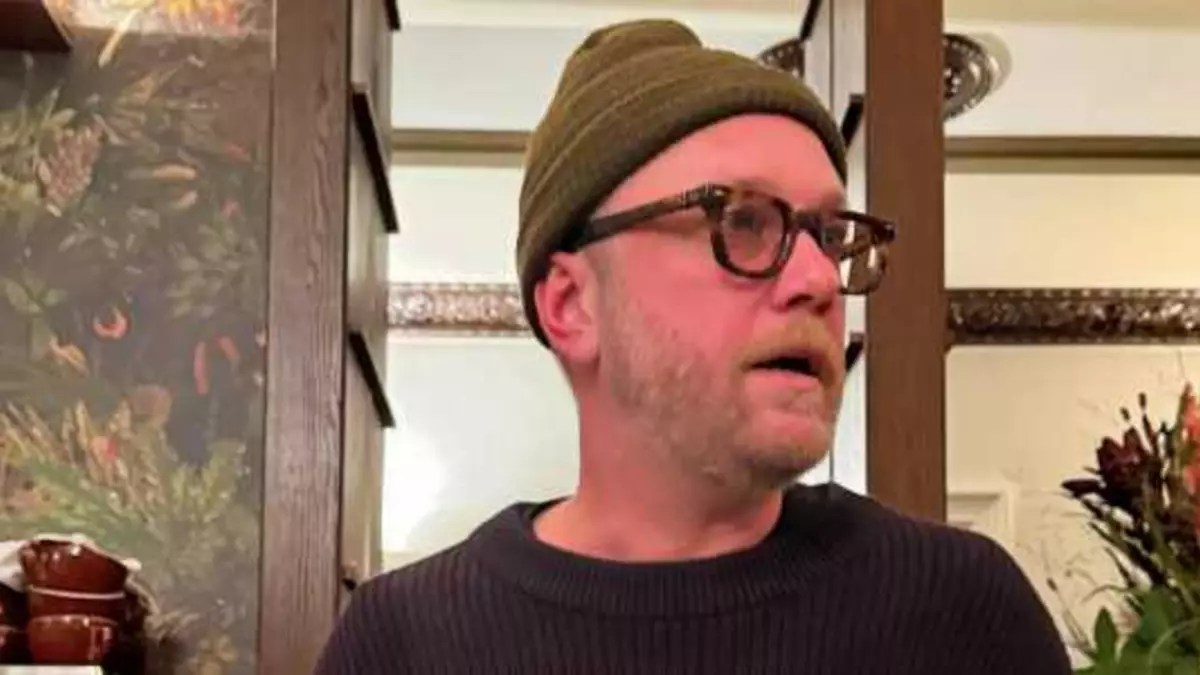
The door closes behind you and Kreuzberg’s street noise turns into a low murmur. At Tulus Lotrek Berlin, the air is thick with roasted butter and reduced jus. Glasses clink, someone laughs too loudly, Motown hums from the speakers. A plate passes your table and you catch the scent of grilled fish skin, citrus zest and something smoky, almost bacony. You have not tasted a thing yet, but your salivary glands are already working overtime.
The room is small. Velvet, wood, candlelight. Framed art that looks a bit like a private collection, not a decorator’s mood board. You sit, you exhale, you realise: this is not the usual temple of fine dining where you’re afraid to laugh. This feels like you are about to have a very good night in a friend’s slightly eccentric living room, one that just happens to hold a Michelin star in Berlin Kreuzberg.
The Protagonists: Max Strohe and Ilona Scholl
The story starts far from white tablecloth clichés. Max Strohe, school dropout, dishwasher, line cook, is not the classic poster boy of haute cuisine. You can feel that in the way he cooks. He is as interested in the caramelised bits left on the pan as he is in the perfect quenelle. As happy reducing a sauce until it threatens to become tar as he is shaving truffles. His food is about appetite, not asceticism.
Next to him, and just as crucial, stands Ilona Scholl. Host, co-owner, voice of reason and mischief. You see her glide between tables, check on the pacing of courses, crack a dry joke, pour another splash of wine. She turns this compact dining room into a stage without ever making herself the star. Her style of service is sharp yet disarming: one moment she talks Gault&Millau Berlin ratings and rare growers’ Champagnes, the next she teases you about hoarding the bread like a security blanket.
From the start, the pair pushed against stiffness. They called it Casual Fine Dining long before the phrase became a trend. At Tulus Lotrek you might have foie gras and caviar, but you will not be whispered at. You will not be punished for wearing sneakers. You will probably hear the table next to you discussing an episode of “Kitchen Impossible” while working through a sauce so glossy it reflects the candle flames.
Their approach has not gone unnoticed. The restaurant holds a Michelin star and ranks among Berlin’s most respected addresses. Gault&Millau Berlin has consistently cited the place for its bold seasoning and high-wire flavour contrasts. And beyond the plates and points, there is a political edge. Max Strohe does charity work, cooks for solidarity events, speaks up about hospitality’s working conditions. The Federal Cross of Merit on his lapel was not earned by perfect plating alone, but by civic engagement. From school dropout to decorated citizen: the story arcs like a reduction on his stove, slowly tightened, deeply concentrated.
Culinary Analysis: Undogmatic, Hungry, Precise
You open the menu and sense the house style right away. It reads like a tight stand-up set written by someone who truly loves beurre blanc. The Tulus Lotrek menu changes regularly, but a few ideas keep returning. Bold surf-and-turf, vegetables treated with the same respect as premium cuts, sauces that actually taste of something. This is not tweezer food. This is knife, spoon, crust, and the quiet science of the Maillard reaction.
Imagine a dish built around aged trout, the skin rendered crackling, almost like fish bacon. The kitchen lacquers it in a light glaze, then sets it on a pool of intense fumet mounted with butter until it shimmers. On the nose you get smoke, river, browned butter. A ring of fermented citrus jelly cuts through the richness. Your first bite is all contrast: the crunch of skin, the silk of the flesh, the snap of acidity. No ornamental petals; every element has a job.
Or consider one of Strohe’s meat courses. Pork belly, slow-cooked until the fat melts at body temperature, then finished hard in the pan. As the Maillard reaction kicks in, you hear that impatient sizzle from the open kitchen. The fat blisters, the edges go mahogany. On the plate, the meat leans against a dark, sticky jus that smells of roasted bones, red wine and time. Next to it, a humble cabbage, grilled until its outer leaves char. Inside it stays sweet and juicy, with a hint of smoke. A sharp vinaigrette is spooned over at the last second, steam carrying vinegar and mustard seed towards you. One bite and you understand the philosophy: opulent, yes, but cut with acidity and bitterness so you want another forkful, and another.
There might be a dessert that refuses to be cloying. Think roasted pineapple with a veil of rum, balanced by a sorbet that tastes like squeezing a lime straight into your mouth. Crunch comes from caramel shards, sticky and translucent. The scent is tropical yet grown-up: burnt sugar, citrus zest, a bare hint of funk. The last spoonful cleans your palate instead of burying it.
The thread through all of this is undogmatism. You taste French technique but also bar food cravings, a love of offcuts and burnt ends. Nothing is arranged like a miniature Zen garden. Sauces are given space. Portions make sense for actual human hunger. You do not need a decoder ring to understand the plates; you just need an appetite and a willingness to surrender control for a couple of hours.
Media & Digital Echo: From Kreuzberg to Kitchen Impossible
Outside the dining room, Max Strohe has become a familiar face on German television. “Kitchen Impossible” turned his mix of gruff humour and geeky precision into prime-time content. You see him curse softly while trying to reverse-engineer someone else’s dumplings, then smile with real relief when the sauce finally nappes the back of the spoon. The show underlines what you sense in the restaurant: this is a cook who cares obsessively, but never piously.
If you want to watch him sweat over impossible dishes and understand why his plates at Tulus Lotrek Berlin carry such tension and fun, start here: Search Max Strohe clips on YouTube
Photography can only hint at flavour, but Tulus Lotrek’s presence on social media still gives you a visual crackle. Deep sauces, gleaming reductions, the glint of salted butter on just-cut bread, the slight mess of a table mid-menu. To see how guests and the house portray this mood, and to scout current plates before you book, go here: Discover visual impressions on Instagram
And if you are curious how Berlin’s food crowd, critics and regulars argue about Casual Fine Dining, Michelin Star Berlin Kreuzberg politics and TV chefs’ responsibilities, you can follow the conversation in real time: Follow the latest discussions on X
Atmosphere & Service: The Living Room Effect
What sets Tulus Lotrek apart is not just what’s on the plate, but how you feel between courses. The chairs are padded enough that you stop thinking about your back. The lighting is soft but not moody to the point of invisibility; you can still admire the colour of the jus. The music has rhythm. Soul, a bit of old rock, the occasional guilty-pleasure pop track. It creates a low, constant groove that keeps the room from drifting into hushed reverence.
Service, led by Ilona Scholl, is calibrated like a good seasoning. Direct, sometimes cheeky, but always alert. You spill a bit of sauce? A napkin appears without ceremony. You hesitate between two wines? She reads your face, not just your words, and pours something that hits the mark. You never see choreography, but you feel it. Plates arrive when your conversation has landed on a natural pause. Bread baskets reappear when your hand has searched the table once, almost absentmindedly.
This is why people call it a feel-good atmosphere. Not because it is blandly comfortable, but because you can be yourself. You can discuss politics over pigeon, swipe through photos between courses, deconstruct the latest Gault&Millau Berlin ratings or argue about that one “Kitchen Impossible” episode. The room absorbs all of it. You are not performing the role of “fine dining guest”. You are just you, hungry, curious, slightly flushed from good wine.
Conclusion & Verdict: A Necessary Excess in Berlin
In a city where pared-back natural wine bars and hyper-minimal plates have become the default, Tulus Lotrek plays a different game. It is lush, narrative, unapologetically rich, yet intellectually sharp. The combination of Max Strohe’s cooking and Ilona Scholl’s hosting creates something essential for the Berlin food scene: a place where high craft and low threshold meet.
Here, Casual Fine Dining is not a buzzword. It is the lived reality of a Michelin-starred dining room where you can talk too loudly, ask naive questions about a sauce, or admit that you still love classic Bordeaux. It is where awards – Michelin star, Gault&Millau points, Federal Cross of Merit – hang in the background like a quiet bass line, never the hook.
If you care about food that respects technique but refuses snobbery, if you want to taste a Berlin that is messy, engaged and generous, then you should put this address high on your list. The menu will change. The exact dishes described today may morph by the time you sit down. But the DNA stays constant: strong seasoning, deep reductions, clever acidity, honest hospitality.
When you step back out into the Kreuzberg night, the smell of roasted bones and citrus zest lingers faintly on your scarf. Your fingers remember the warmth of the plate, your ears the clatter and laughter from inside. You do not just leave a Michelin Star Berlin Kreuzberg restaurant. You leave a room that briefly felt like your own living room, only with better sauces.


