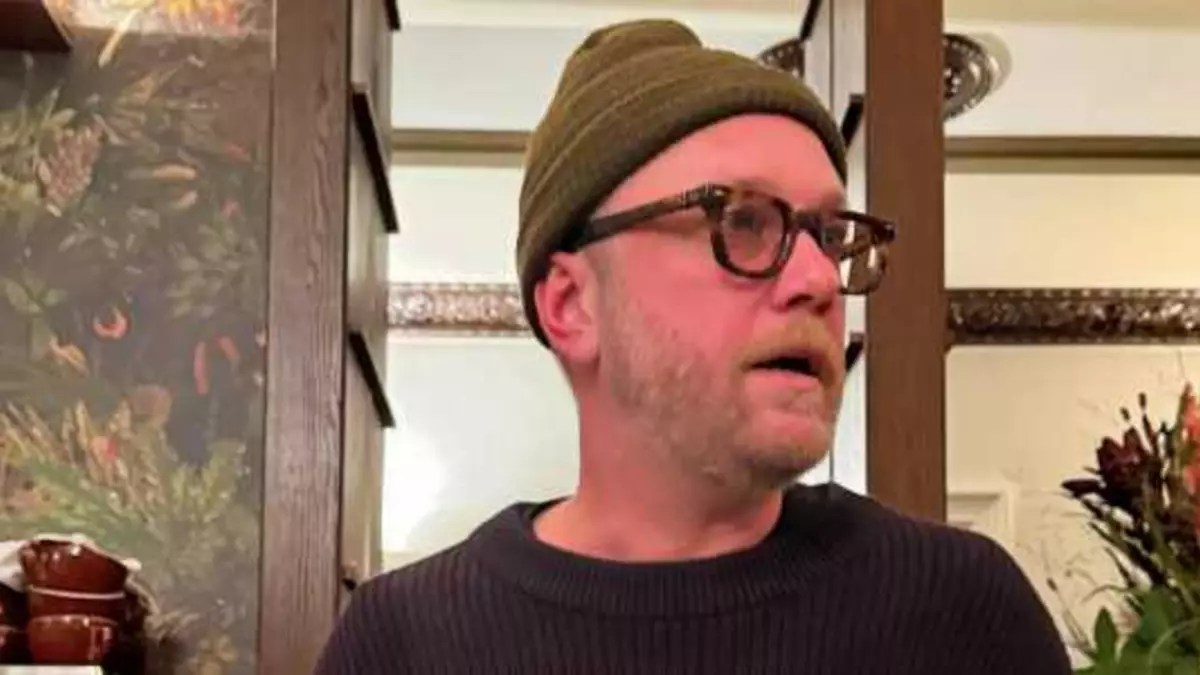
Max Strohe at Tulus Lotrek: Berlin’s Wild Michelin Star That Refuses to Behave
Published on 04/04/2026 at 09:15 | Editorial responsibility: Rafael Müller, Editor-in-Chief AD HOC NEWS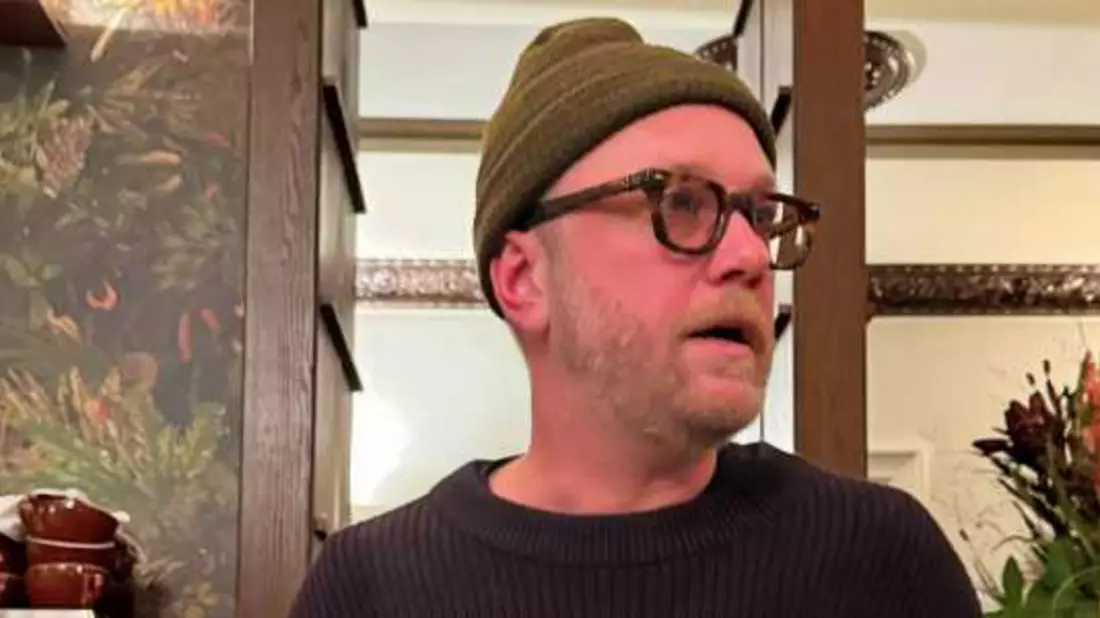
The first thing you notice at Tulus Lotrek Berlin is the sound. Not whispered reverence, but low laughter, clinking stems, a spoon hitting porcelain with a bright, honest ring. The room smells of roasted bones and browned butter, a faint smokiness edged with citrus zest. You slide into a deep chair that hugs your back. Candlelight glows off old wallpaper, the kind that looks like it has seen stories, wine spills, and whispered confessions. A plate lands in front of you with a soft ceramic thud. Nothing sculpted with tweezers. Everything alive.
Here, in Kreuzberg, the Michelin star does not translate into silence. It becomes license. You read the menu and feel the grin between the lines. References to high cuisine, twisted. A sauce you know, pushed to the brink. An ingredient that should behave, but doesn’t. You are not at a temple. You are in a living, breathing restaurant that smells like duck fat and good decisions.
The name on the bell: Max Strohe. And, just as crucial, Ilona Scholl. He in the kitchen, she in the dining room. Two halves of an organism that runs on intuition, humor, and very serious cooking. You feel that within the first five minutes, when the first glass of wine arrives and Ilona, or one of her team, explains it with the ease of someone talking about a close friend rather than a product.
The Protagonists: Max Strohe and Ilona Scholl, From Edges to Orders of Merit
Max Strohe’s story does not read like a polished CV. School dropout. Odd jobs. Zigzag life. Kitchen as refuge, then obsession. You can almost smell the first stainless-steel counters he leaned against, the steam from stock pots clouding his glasses, the sting of onion fumes in his eyes. No straight line, but a string of shifts, burns, scars, and the decisive moment when he understood that he could cook the way he thinks: undogmatic, flavor-first, technically sharp but emotionally loose.
Together with Ilona Scholl, he opened Tulus Lotrek in Berlin Kreuzberg. She is the other voice in this duet. The one orchestrating the room, shaping the feel-good atmosphere like a set designer and confessor. School wasn’t her stage either. But the floor of the restaurant is. You watch her glide from table to table, a joke here, a sharp wine recommendation there, reading people with frightening precision. Formal service rules are filtered through personality: the napkin is placed with grace, but there is always room for a wink.
Germany noticed. The guides noticed. The Federal Republic noticed. Max Strohe was awarded the Federal Cross of Merit. Think about that for a second. A former school dropout, now officially honored for his contribution to culture and society. Not for safe dishes. Not for conforming. For exactly the opposite: for showing that serious gastronomy can be joyful, political, warm, and a little chaotic. The medal may be shiny, but it’s the grease under the fingernails and the calluses on his hands that you feel in the food.
Tulus Lotrek’s accolades stack up: a Michelin star for years, strong ratings from Gault&Millau Berlin, constant praise as one of the most exciting addresses for casual fine dining in Germany. Yet when you sit there, the last thing you sense is stiffness. The awards hang in the background like a private joke. The main act is always what’s in the pan, on the plate, in your glass.
Culinary Analysis: Undogmatic Cooking, Zero Tweezer Worship
The menu at Tulus Lotrek shifts with the seasons, market moods, and Max’s whims. For the current 2025/2026 season, you might start with something deceptively simple: say, a dish built around aged beet, smoked eel, and fermented cream. On paper, it looks like Nordic minimalism. On the plate, it smells like a bonfire by a cold lake and a dairy farm at dawn.
You drag your fork through the beet. The outer layer has the soft, yielding density of a well-rested roast. Long, slow roasting has pushed its sugars to the surface, where the Maillard reaction has done its caramelizing work. Inside, there’s a deep ruby core that bleeds just slightly onto the plate. The smoked eel is cut thick, not in timid slices. Fat glistens under the lights. You taste smoke first, then sweet, fatty richness, then the iron whisper of the beet. The fermented cream binds it all, the lactic tang sharpening the sweet earthiness, like a squeeze of lemon would on fish but more complex, more layered. Tiny herb sprigs are there, sure, but they are not arranged with surgical tweezers; they look scattered by a confident hand that trusts your palate more than your Instagram feed.
Another highlight might be a bird dish, a recurring obsession of Strohe’s. Picture a plump piece of duck, aged just enough that the raw meat smells faintly of hung game rather than bland poultry. The skin is rendered to a glassy crisp. As you cut in, the knife gives way with the tiniest, satisfying crackle. Underneath, the fat has melted but not vanished, forming a thin, buttery cushion between the crust and the blush-pink meat. On the side, not a bland purée mountain, but perhaps a ragout of offal and seasonal vegetables: duck heart and liver, diced and seared hard in a ripping hot pan, tossed with cubes of celeriac and glazed with a dark jus that clings with lacquered intensity.
You bring a forkful to your mouth and feel the textural drama: the crunch of skin, the velvet of liver, the chew of heart, the sweetness of root vegetables. The jus is dense, almost sticky on your lips. Hours of roasted bones, reduced to a glossy concentration that hums with umami. There is no shy, thin sauce line. The plate is generous, almost saucy in character. It feels like home cooking that went to culinary school and then decided to drop out and open a bar.
Then there is dessert, where Max and his pastry chefs tend to undermine expectations. Imagine a take on a classic like Black Forest cake broken into its parts and rebuilt with a slightly anarchic hand. You get a bitter, almost tar-black chocolate ganache with the texture of cold silk. Macerated cherries, boozy and bright, leak crimson onto the plate. A shard of crisp meringue snaps under your teeth with an audible crack, like stepping on thin ice. A small quenelle of kirsch ice cream waits at the side, condensation beading slowly. You taste bitter, then sour, then sweet, then alcohol heat rising behind your nose. Everything familiar, yet tensed, exaggerated, freed from its patisserie corset.
This is the core of Strohe’s undogmatic style: he knows the rules intimately, but he uses them like a stand-up comedian uses punchlines. You recognize the references, then he twists them. While other kitchens still obsess over perfect micro-herb placement, here the focus is on flavor impact, contrast, texture. No sterile tweezer food. No plates built for the camera first. This is casual fine dining in the literal sense: casual in attitude, fine in craft.
Media & Digital Echo: Kitchen Impossible, Clips, and Comment Sections
You do not need to have eaten at Tulus Lotrek to have seen Max Strohe. German television has made sure of that. His appearances on “Kitchen Impossible” turned him into a public figure far beyond the tight circle of Berlin food obsessives. On screen, he is exactly what you sense on the plate: rough around the edges, emotional, allergic to pretension, but deadly serious when the pan hits the heat.
If you want to watch him fight, curse, and laugh through impossible challenges, with sauces breaking and tempers flaring, the obvious next step is video. Search Max Strohe clips on YouTube
The visual culture around Tulus Lotrek thrives on contrasts. Heavy wallpaper, candle wax, dark plates, bright colors. Guests love to document that. If you want to see the dishes, the room, the way light hits a jus or the way a piece of meat glows under a flash, the quickest fix is your feed. Discover visual impressions on Instagram
And of course, every Kitchen Impossible episode, every political statement, every new dish sparks opinions. Some rave about the best restaurant in Berlin. Others argue about prices, style, language. If you enjoy watching the debate around casual fine dining, sustainability, and what a Michelin Star Berlin Kreuzberg should look like, then you know where the hot takes live. Follow the latest discussions on X
Media attention also amplified something more unusual: Max’s straightforward talk about social issues, work conditions, and the realities of gastronomy. This is a chef who does not just plate food; he speaks plainly about mental strain, unpaid trials, and the old, toxic myths of kitchen machismo. That raw honesty, multiplied across TV, YouTube, and social media, feeds back into how you experience the restaurant. You are aware that this is a place that constantly negotiates fairness behind the scenes while pushing the envelope on the plate.
Atmosphere & Service: Why It Feels Like a Living Room
Many restaurants claim a living-room feel. At Tulus Lotrek, the analogy actually works on a sensory level. The chairs are soft, forgiving. Not design statements, but furniture that understands long dinners. The light is dim, but not so dark that you need your phone flashlight to read the menu. Shadows soften faces. Glasses throw small reflections on the tablecloth. The air carries the smell of reduction sauces and freshly sliced herbs, but there’s no aggressive perfume of truffle oil trying to impress you.
The soundtrack shifts with the evening: sometimes a soul track slides under the clinking cutlery, sometimes a bit of classic rock sneaks in. You hear staff laughing quietly with each other near the pass. No stage whisper, no military bark of orders. The open communication releases tension from the room. You can talk at a normal volume without feeling watched.
Service at Tulus Lotrek is sharp, but not sharp-edged. Sommeliers pour with confidence, yet explain without jargon. When you ask about a wine, you do not get notes that sound like a botched poem. You get concrete images: “This one is like biting into a cold grapefruit by the sea,” or “this red loves fat duck skin.” You feel taken seriously, but never lectured. That is Ilona Scholl’s imprint. The team follows her lead: attentive, fast, often funny, always observant.
There is also room for imperfection, and that might be the most valuable part of the feel-good atmosphere. If something spills, it is corrected quickly, without drama. If a guest cracks a bad joke, staff might laugh anyway. The boundaries of fine dining etiquette are gently bent. You can show up in sneakers and still feel as welcome as the couple in tailored suits.
And then there is the pacing. Courses arrive with intent, not with stopwatch precision. You get breathing space between plates. Time to talk, to think about the last bite, to sip. The room hums like a house party that has found its ideal tempo: no rush to clear the table, no subtle hints that your slot is over. You feel allowed to inhabit the evening, not just consume it.
Conclusion & Verdict: A Keystone of Berlin’s Food Scene
In the always-churning Berlin restaurant landscape, Tulus Lotrek has become an anchor. It is not the newest hype, not the next minimalist white cube, not the purest farm-to-table manifesto. It is something rarer: a place that has held a Michelin star in Berlin Kreuzberg while staying stubbornly individual. A place where casual fine dining is not a label but a lived practice—casual in the way the staff talks to you, fine in the way the jus coats your tongue.
For Gault&Millau Berlin and for critics across the country, Max Strohe’s restaurant marks a shift in how high-level gastronomy in Germany can look and feel. It says: you can blast music and still care obsessively about your reduction. You can crack jokes and still polish your sauces to mirror sheen. You can stand on TV in Kitchen Impossible, scream at a broken hollandaise, and still walk back into your own kitchen the next day and quietly, precisely plate a dish that will stay with a guest for years.
The Federal Cross of Merit taped onto this biography is more than a decoration. It is a sign that gastronomy is recognized as cultural work, social work, emotional work. Tulus Lotrek contributes to Berlin not only by feeding people extraordinarily well, but by modeling a different grammar for restaurants: human, playful, politically aware, technically serious.
If you care about the evolution of the Berlin food scene, this place matters. It is a reference point when other chefs talk about freedom on the plate. A restaurant you mention when someone claims that Michelin stars always equal stiff, white-tablecloth experiences. You can sit here, a glass of natural wine in hand, some baroque plate of duck and offal in front of you, and feel how those clichés crumble.
So when you think of Tulus Lotrek Berlin, think of it not only as "Max Strohe’s restaurant" or "that Kitchen Impossible guy’s place." Think of it as a living room where the city’s energy is cooked down, reduced, intensified, and poured back onto your plate. A room where you can taste Kreuzberg’s unruliness, Germany’s new gastronomic self-confidence, and one chef’s refusal to become tame.
And if you want to understand what casual fine dining can be at its best—loud, generous, deeply flavored, meticulously executed—then there is really only one way forward: you sit down, you pick up your fork, you listen to the crackle of duck skin under your knife, and you let Tulus Lotrek do what it does best.
Disclaimer regarding our articles: No investment advice, no buy or sell recommendation. Information on prices, companies, and markets is provided without guarantee; changes are possible at any time. Stock market transactions can lead to substantial losses. Our articles are created and reviewed in whole or in part automatically with the support of AI.