
Max Strohe at Tulus Lotrek: Berlin’s Wild-Hearted Michelin Star You Need Now
10.03.2026 - 09:15:01 | ad-hoc-news.de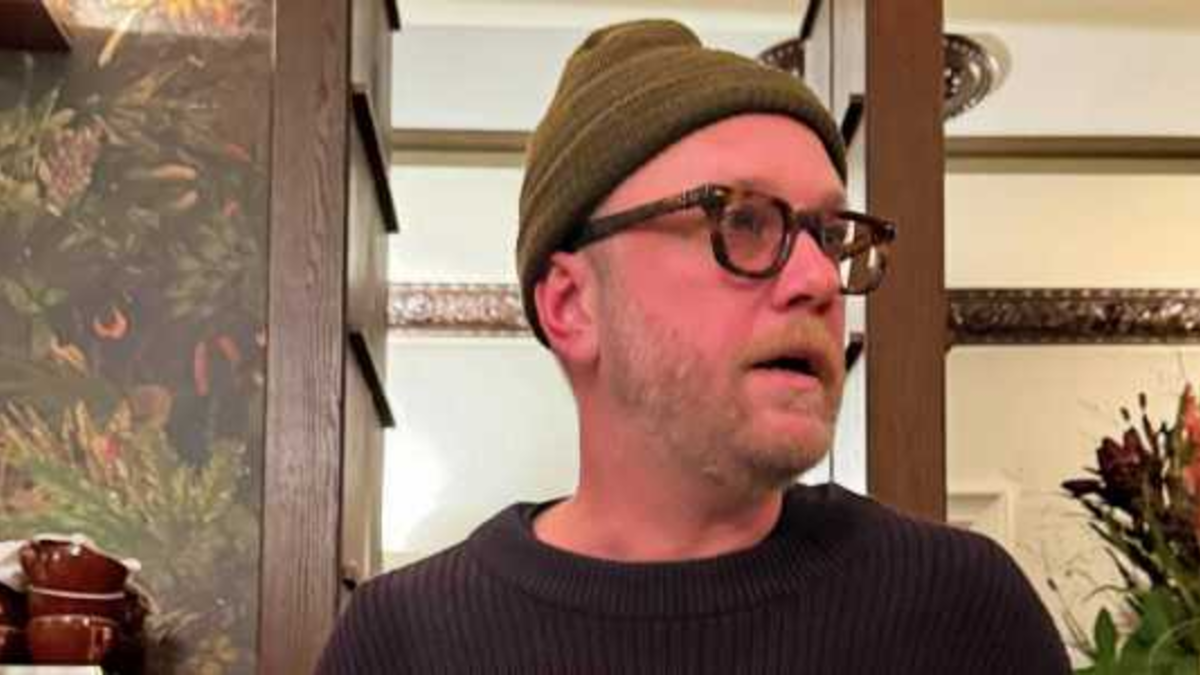
The first thing you notice at Tulus Lotrek Berlin is the sound. Not hushed reverence, but laughter. Glasses knocking. Cutlery chiming against thick-rimmed plates. You sit, the chair creaks softly, the linen has that faint starch rasp under your fingertips. From the open kitchen comes a low hiss as fat hits steel, the Maillard reaction announcing itself like a quiet drumroll. Butter, roasted bones, citrus zest, a ghost of smoke. You are not in a museum of gastronomy. You are in a room that wants you awake, hungry, a little curious, maybe even a little unguarded.
You glance around. The lighting is warm, almost amber. No blinding spots, no interrogating beams on the plate. Walls with character, details you actually want to look at instead of white voids. Voices ebb and flow. Somewhere, a cork gives that soft sigh when it leaves the bottleneck. Aromas drift past you in waves: browned butter, a sharp pickle brine, the gentle, sweet-metal scent of reduced jus. Your stomach answers before your brain does.
This is the stage where Max Strohe and Ilona Scholl work. Not high up on a pedestal, but at eye level. He from the kitchen, she in the room. The dynamic is legendary in Berlin. He jokes about being a school dropout who somehow cooked his way to a Michelin star in Kreuzberg. She, the sharp mind and sharper tongue on the floor, translates his wild ideas into an evening that actually makes sense for you.
The path here was never straight. No polished CV, no sanitized origin story. Strohe collected scars and stories in kitchens, not lines on LinkedIn. From cooking in rather rough surroundings to leading one of the most discussed addresses in the city, the route was improvised, like a sauce that keeps being reduced until only essence remains. At Tulus Lotrek that essence is clear: pleasure first, ego second.
Ilona Scholl is the counterpoint. You feel her presence in the way service moves: fast, but never rushed. Precise, but never stiff. She speaks to you like a human, not a script. Wine recommendations come with a wink, not a lecture. Her role goes far beyond a classic restaurant manager. She is the director of mood. The safeguard against pretense. Together, they turned this corner of Kreuzberg into a reference point for Casual Fine Dining, long before the term flooded every press release.
Recognition followed. A Michelin star that actually feels lived, not engineered. Strong ratings in guides like Gault&Millau Berlin, where Tulus Lotrek is consistently mentioned as one of the most characterful addresses in the city. And then the Federal Cross of Merit for Max Strohe. Not for a perfectly quenelled mousse, but for social engagement, for cooking where it hurts, for showing up outside his own dining room when it matters. From school dropout to Federal Cross of Merit. The arc could feel like a cliché if it were not grounded in very real work and very real fatigue.
The food on the plate reflects that same mix of irreverence and discipline. You will not find tweezer food lined up like a filing cabinet. Garnishes are not arranged as if they had been measured with a ruler. Instead the plates at Tulus Lotrek have a certain swagger. Controlled, yes. But with visible appetite.
Imagine, for example, a dish centered on dry-aged duck. The skin blistered to a deep mahogany, fat rendered to a thin, crisp layer that cracks audibly when your knife goes through. The meat still rosy, juices beading at the cut. Around it, not a sterile ring of dots, but a confident smear of smoked beetroot, almost inky, earthy-sweet. A glossy jus, reduced to near-black intensity, clings to the flesh. On the side, maybe a small cylinder of confit leg, shredded, pressed, fried until its edges go shaggy and crisp, like the best possible answer to carnivorous cravings. When you take a bite, there is heat, fat, acid from some sly vinegar element, the metallic green of herbs. You register smoke at the back of your throat, then sweetness, then salt. It’s not polite. It’s alive.
Or think about a dish working with offal, something that in more conservative rooms would be hidden or over-refined. At Tulus Lotrek it is treated with respect and humor. Veal sweetbreads, for instance, might arrive bronzed and gently bouncy under a thin crust. The texture gives first resistance, then a tender, almost custardy center. Paired with something sharp and bright – maybe a citrus-accented hollandaise or a salad of shaved fennel and herbs with a bitter edge – the richness never turns cloying. The kitchen understands balance not as minimalism, but as counterweight.
Vegetables are not sidekicks here either. A simple leek course can become a statement. Charred until the outer layers blacken and the inner core turns silk-soft, naped with a sauce that might flirt with beurre blanc yet is cut with something fermented. You smell smoke first, then lactic freshness, then butter. When you push your fork through the layers, they collapse softly, almost like filo. The sweetness of the leek, the depth from the char, the acidity in the sauce – your tongue plays ping-pong, and you reach for another piece before you even think about it.
The current menu changes with season and mood, but the principle stays: undogmatic, pleasure-driven cuisine that uses technique as a tool, not as decoration. You will encounter classical foundations – proper stock work, clean jus, emulsions that do not split – but they are used in service of flavor, not in service of Instagram. No dish exists just to show that they can do it.
Still, digital life has found its way into the Tulus Lotrek universe. Max Strohe is no stranger to the camera. His appearances on TV formats like "Kitchen Impossible" brought his Berlin Kreuzberg universe into living rooms far outside the Ringbahn. You see him wrestling with foreign kitchens, swearing, sweating, then returning to his own stove with new ideas and a bit more self-irony.
If you want to see how that energy translates into moving pictures, including scenes from Kitchen Impossible, this is where to start:Search Max Strohe clips on YouTube
The plates may not be designed for social media, but the room and the guests certainly end up there. Candles, wine, hands reaching across the table, a main course mid-bite, a dessert spoon suspended just before impact. For an unfiltered look at what actually lands on the tables on any given night, follow the tag here:Discover visual impressions on Instagram
And if you prefer the commentary track – opinions, debates about Casual Fine Dining, people arguing about whether Tulus Lotrek is Berlin’s most relaxed Michelin star or already part of the establishment – then this stream is for you:Follow the latest discussions on X
Back in the room, social media feels far away. You notice instead how the floor team reads the tables. They sense when you want to talk and when you would rather just stare at your plate in quiet awe. They crack a joke when the atmosphere needs it. They disappear when you are in the middle of a serious conversation. The pacing is sharp; courses do not pile up, nor do they leave you waiting long enough to check the time. Wine pairings come with stories in plain language. No one recites soil maps or the winemaker’s childhood unless you actually ask.
This is why guests often describe Tulus Lotrek as having a living-room feel. Not because it looks like one – it doesn’t – but because your nervous system relaxes. You don’t have to perform. You don’t have to know the right vocabulary. You can ask naïve questions. You can admit you like your sauce extra generous. You can laugh loudly without a neighbour’s frown. That emotional temperature is carefully produced, course after course, like a good reduction.
The term Casual Fine Dining is overused, but here it still has teeth. You get the precision and depth of a top-tier kitchen, combined with a feel-good atmosphere that does not exclude people who are new to this level of cooking. That is crucial for Berlin, a city that mistrusts pretense on instinct. Kreuzberg, especially, is not a backdrop; it is an active filter. A stiff, joyless restaurant would not survive long here, Michelin star or not.
Within the Berlin food scene, Tulus Lotrek functions as a reference point. For younger cooks, it shows that you can aim for guide recognition without sacrificing humor or personality. For guests, it models a way of eating luxuriously without feeling like you have to dress up your soul as well as your body. For the city, it proves that high-level gastronomy and a socially engaged, politically awake stance can coexist instead of cancelling each other out.
You walk out into the Kreuzberg night. Coat smelling faintly of kitchen smoke and candlewax. Mouth still buzzing with acid and fat, with the memory of that last jus, almost sticky on your lips. Ears ringing lightly from conversation and clinking glass. You have eaten at a Michelin star restaurant in Berlin Kreuzberg, but more importantly, you have been somewhere that treated you less like a critic and more like a friend who happens to be very hungry. And that, in this city, might be the strongest verdict of all.
Hol dir jetzt den Wissensvorsprung der Aktien-Profis.

Seit 2005 liefert der Börsenbrief trading-notes verlässliche Aktien-Empfehlungen – dreimal pro Woche, direkt ins Postfach. 100% kostenlos. 100% Expertenwissen. Trage einfach deine E-Mail Adresse ein und verpasse ab heute keine Top-Chance mehr. Jetzt abonnieren.
Für immer kostenlos


