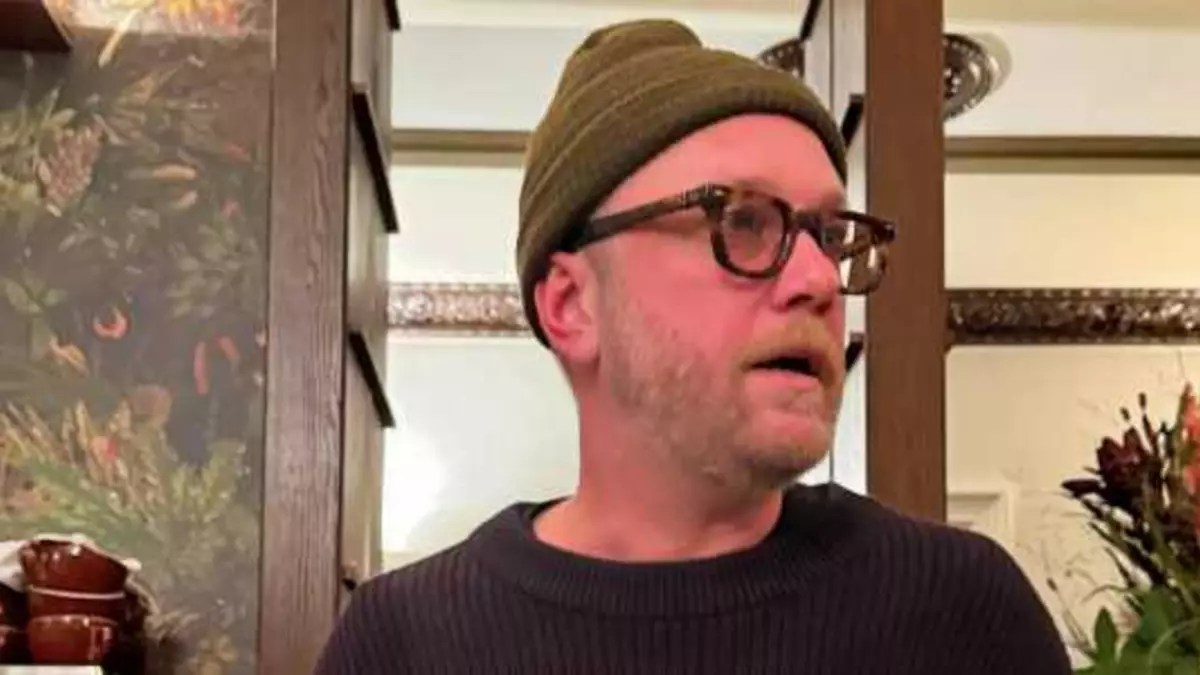
Max Strohe at Tulus Lotrek: Berlin’s most relaxed Michelin star with attitude
Published on 02/26/2026 at 09:15 | Editorial responsibility: Rafael Müller, Editor-in-Chief AD HOC NEWS
The door closes behind you and the city noise dies. Low light. The faint clink of Zalto stems. A soft bass line undercuts the murmur of conversation. Someone laughs in the open kitchen, a sharp, bright sound over the hiss of butter hitting hot steel. You catch it first in the air: roasted chicken skin, brown butter, a whisper of citrus zest. This is Tulus Lotrek Berlin, and it smells like someone actually cooks here, not like a showroom for ceramics.
You slide into your seat. Velvet that gives slightly under your hands. Tables close enough that you can eavesdrop, far enough that you can confess your secrets. On the wall, art that looks more like a friend’s living room than a luxury dining room. No white tablecloths. No starched fear. Just a hum. You are not being tested. You are being welcomed.
The Protagonists: Max Strohe and Ilona Scholl
To understand this room, you have to understand the pair behind it: Max Strohe and Ilona Scholl. He, the autodidact in the kitchen. A school dropout, dishwasher, cook, grafter. She, the host, the sharp mind in the dining room, the person with the memory for faces and the perfect one-liner when the evening needs it. Together, they built Tulus Lotrek in Kreuzberg into one of the most distinctive addresses in German gastronomy.
There is biography in every plate here. Strohe grew up outside the polished lanes of classical haute cuisine. Less Escoffier, more trial and error. He learned the Maillard reaction not as theory, but as the exact second when a piece of meat moves from grey to deep nut-brown and the smell in the pan suddenly turns nutty, irresistible, almost dangerous. That sensorial memory is all over his cooking.
Ilona Scholl, meanwhile, runs the floor with the charm of a best friend and the precision of a sommelier who knows exactly how far you will stretch for a bottle. She leads you through the Casual Fine Dining concept with ease: serious product, serious technique, unserious attitude. Sneakers under the table, but Grand Cru in the glass if you want it.
Their approach did not go unnoticed. One Michelin Star in Berlin Kreuzberg. Strong ratings in Gault&Millau Berlin. And then the political recognition: Max Strohe receiving the Federal Cross of Merit for his civic engagement and social projects. A cook, once a dropout, decorated by the state. You taste that irreverence, that refusal to conform, in every course.
Culinary Analysis: Undogmatic, Precise, and Very Human
Strohe calls his kitchen undogmatic. You feel that freedom in the menu’s shifts from lush French technique to global references, without the usual passport tourism. This is not tweezer food lined up like soldiers. He uses tweezers when he must, not as a religion.
Imagine a dish that anchors a current Tulus Lotrek menu: a poultry course built around a dry-aged chicken. The skin is rendered to a glassy crisp, the fat beneath completely melted. When your knife breaks through, it sounds like the shell of a crème brûlée. The meat is juicy, almost silky, fibers glistening. Underneath, a jus that tastes like ten birds reduced into one spoonful: roasted bones, caramelized wings, a hint of acidity to keep it from turning heavy. Maybe there is a celery root purée, smoky and faintly sweet, or a bright element with citrus zest to cut through the richness. You alternate bites: crisp skin, soft flesh, deep jus, then a crunch of pickled vegetables that sting the tongue and reset your palate.
Another plate might show his playful side. Picture a dish riffing on the idea of a kebab or a burger, a nod to the everyday eating that shaped him. The meat cooked hard and fast to lock in the juices, an aggressive sear where the Maillard reaction pushes the flavor towards dark caramel and roasted coffee. Instead of default mayo, a sharp, fermented cream. Acidity humming. Herbs that smell of garden soil after rain. The bun element maybe deconstructed, maybe not; Strohe is as likely to tuck everything into a classic form as he is to dismantle it and reassemble it on porcelain. The point is not concept. The point is that when you bite, it drips, it crunches, it floods your mouth with fat and salt and acid in measured sync.
He has a knack for sauces. A beurre blanc that holds to the fish like silk, never splitting, the butter and wine in perfect emulsion. A red wine reduction that coats your tongue, with just enough bitterness from the tannins to keep you taking the next sip of wine. These sauces do not sit on the plate as decoration; they bind the dish, wet the fork, stain the bread you use to chase the last streaks away.
This is where the contrast to stiff fine dining is sharpest. In many star kitchens, you encounter plates where nothing may move, where components perch on dots of gel, where the main sound in the room is anxiety. Here, the plates look generous. Colors bleed into each other. The food looks touchable. It says: eat me, not photograph me. The technique is there, but it never upstages pleasure.
Media & Digital Echo: From Kitchen Impossible to Your Screen
Part of why you may feel you already know Strohe before you sit down is his presence on TV. He is not the chef who hides in the pass and appears only for the applause lap. Shows like Kitchen Impossible have turned him into a familiar face, the guy who swears, sweats, and still pulls off the plate in the last minute. You see the same energy here, focused but unpretentious.
If you want to watch him fight against the clock and the clatter of pans, and see how that pressure translates to the calm confidence of Tulus Lotrek, you can start here: Search Max Strohe clips on YouTube
For a sense of how his dishes actually look when they leave the pass in Kreuzberg—sauces glossing under the lights, herbs still breathing, desserts trembling slightly as the plate lands—scroll through the hashtag universe: Discover visual impressions on Instagram
And if you care about the debates that swirl around him—about Casual Fine Dining, about fair working conditions in gastronomy, about awards, politics, and the meaning of a Michelin star in Berlin—join the ongoing conversation here: Follow the latest discussions on X
This digital echo amplifies what Tulus Lotrek already stands for: serious food that does not take itself too seriously, and a chef who is willing to speak plainly in a field often bogged down by coded language and hushed reverence.
Atmosphere & Service: The Living Room Effect
What makes people call this place a living room rather than a temple is not just the décor, though that matters. The chairs have a bit of give. The lighting flatters without hiding. You feel the slight nap of the fabrics when you lean back. The soundtrack is present, but never shouts over your conversation.
The real core of the feel-good atmosphere is service. You are not recited to; you are spoken with. The team explains, but does not lecture. If you want to know every producer, they will go there with you. If you just want to know which glass of Riesling will handle both the fish and the poultry, they will cut the story short and pour. There is laughter at the tables, and it does not feel out of place.
Small details lock in the comfort. Bread arrives warm, with butter that bends under your knife instead of shattering like wax. When a plate is hot, they tell you, but they do not squeal about it. Your water glass never sits empty, but you never feel watched. If you drop your fork, the replacement appears almost before you look up.
Most of all, you sense that Ilona Scholl has built a culture. Staff greet regulars by name, yet newcomers are not made to feel like they are crashing a private club. The room holds that delicate balance: you are at a Max Strohe restaurant with a Michelin star, yet you can lean back, loosen your shoulders, and say what you like without worrying about etiquette. The star sits in the background; your evening sits in the foreground.
Conclusion & Verdict: Why Tulus Lotrek Matters in Berlin
In a city crowded with trends—ramen today, neo-bistro tomorrow, ferment-everything-next-week—Tulus Lotrek has become an anchor. It shows that you can operate at the level of the best Michelin Star spots in Berlin Kreuzberg without dressing the experience in stiffness or cliché. It proves that Casual Fine Dining can be more than a marketing phrase: it can be a true philosophy where rigor in the kitchen meets warmth in the dining room.
For the Berlin food scene, Strohe and Scholl’s project is a reference point. Chefs look at the way he layers flavor and fat, at the way his sauces work, and understand that comfort and complexity are not opposites. Restaurateurs study Scholl’s approach to hospitality and see a path away from the binary of either luxury arrogance or chaotic cool. Critics note the consistent quality, the refusal to plateau after awards, the integration of TV fame without turning the place into a pure fan zone.
You, as a guest, feel all of this on a more direct level. You feel it when the plate lands and the aroma rises in a warm wave to your face. When your knife slides through slow-cooked meat that barely resists. When the last dessert bite—a precise interplay of sugar, acid, and salt—leaves a faint, elegant echo on your tongue. When you stand up at the end of the night, slightly flushed from wine, light buzzing in your eyes, and think: I could come back here next week, and it would not feel like a special occasion. It would feel like another night in a very good living room which just happens to hold a Michelin star.
That is the quiet revolution of Tulus Lotrek. Not just that it is excellent. But that it makes excellence feel human, accessible, and alive. In Berlin, right now, there are many places to eat. There are fewer where you might actually want to stay. This is one of them.
Disclaimer regarding our articles: No investment advice, no buy or sell recommendation. Information on prices, companies, and markets is provided without guarantee; changes are possible at any time. Stock market transactions can lead to substantial losses. Our articles are created and reviewed in whole or in part automatically with the support of AI.