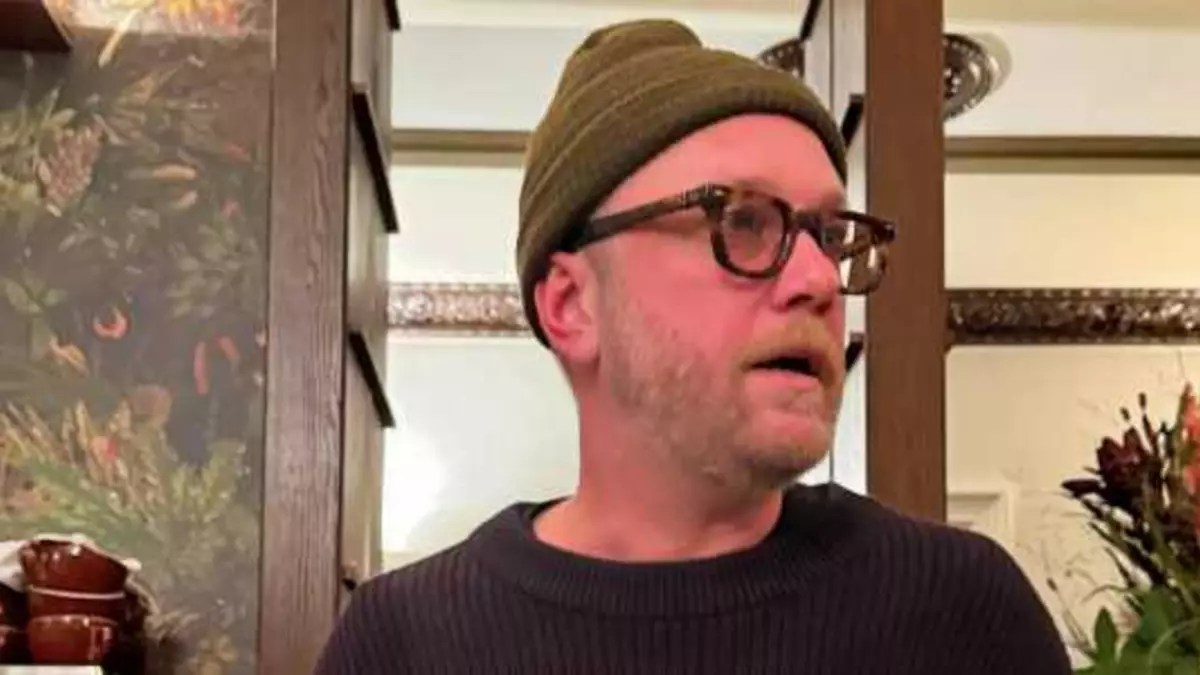
Max Strohe at Tulus Lotrek: Berlin’s most relaxed Michelin drama in Kreuzberg
Published on 02/24/2026 at 09:15 | Editorial responsibility: Rafael Müller, Editor-in-Chief AD HOC NEWS
The door closes behind you at Tulus Lotrek Berlin and the city noise dulls to a low hum. Glasses clink. Someone at the bar laughs too loudly. Butter and roasted chicken stock hang in the air, warm and dense, with a faint whiff of yeast and scorched leek. From the open hatch you hear the hiss of a pan as fat kisses steel and the Maillard reaction does its quiet, brown magic. You sink into a chair that feels more like a friend’s sofa than a serious restaurant throne, and you realise: this place means business, but it refuses to look like it.
The light is low, flattering, almost conspiratorial. Candles tremble slightly when the door opens. The playlist jumps from old-school soul to something that sounds like a dive bar at 2 a.m. This is Casual Fine Dining in its most literal form: Hendrick’s on the bar, Michelin star on the door, and zero interest in behaving like a white-tablecloth museum.
The Protagonists: Max Strohe and Ilona Scholl
To understand what lands on your plate here, you need to know who stands in front and behind it. In the kitchen, chef-owner Max Strohe. School dropout. Late bloomer. Dishwasher, line cook, everything in between. A man who speaks the way his sauces taste: direct, unfiltered, but with a long, slow finish. Next to him, not in the kitchen but everywhere else that matters, his partner and co-owner Ilona Scholl. The host. The strategist. The one who reads a room in three seconds and adjusts the volume, the wine, or the joke accordingly.
They opened Tulus Lotrek in Kreuzberg with more attitude than budget. No glossy investor story. Instead: graft, stubbornness, and a clear idea that fine dining should feel like a night out, not a catechism. Over the years, the industry took note. A Michelin star for their undogmatic cuisine. Strong ratings in Gault&Millau Berlin for food that tastes of butter, stock, reduction, not ego. Regular appearances in city rankings of places you actually want to eat at, not just tick off.
Then came something almost surreal for a former school dropout: the Federal Cross of Merit for Max Strohe. Not for the beurre blanc, but for his social engagement, especially for cooking and organising support in crisis zones and for people on the margins. You can taste that attitude in the restaurant. It is serious cooking without the stiff righteousness. Politics and pleasure at the same table, but never in a preachy way. You eat, you laugh, you maybe donate, and you go home slightly better fed in every sense.
Culinary Analysis: Plates with Nerve, Not Tweezers
The current Tulus Lotrek menu reads like a chef’s stream of consciousness, but it is more precise than it first appears. You choose a set menu with options, and then the kitchen starts riffing. You will see classic French foundations, German memories, global detours. You will not see ten micro-herbs arranged with surgical forceps on an oversized plate. Strohe cooks with tweezers when he must. He plates with a spoon when he can.
Take a starter that has become a kind of signature mindset: a dish built around dry-aged fish and its own bones. On your plate, a slice of firm, almost meaty fish, skin crisped to the edge of bitterness. The smell hits you first: saline, nutty, a little smoky. Beside it, a silky sauce pulled from roasted bones, white wine, and obscene amounts of butter, reduced until it clings to the spoon like satin. There might be a sharp, almost bratty element on the side: fermented radish, or pickled kohlrabi with just enough acidity to cut through the fat. You stab your fork in, and the textures line up. Crackle from the skin. Juicy, almost translucent flesh. Sauces that wrap your tongue and refuse to let go. This is not minimalist, it is maximalist with discipline.
Or a meat course, usually some luxurious cut that refuses to behave politely: perhaps a piece of venison or pork neck with a glossy jus so dark it almost reflects the candlelight. You press your knife through the crust and feel that slight resistance, then a soft, yielding center. On the nose: roasted onion, brown butter, a hint of juniper, maybe cocoa. The jus is sticky, intense, clearly reduced from gallons of stock to a few spoonfuls. No decorative dots. Instead, a generous spoon of sauce, a potato element that actually tastes like potato, and a vegetable side cooked just to the point where bite and sweetness meet. You chew and you hear, faintly, the sound of the crust breaking against your teeth. The plate does not whisper, it speaks in full sentences.
Dessert at Tulus Lotrek keeps that same energy of refusal. You might get something like a citrus-focused plate with bitter notes left intact. Imagine a mound of blood orange segments, slightly torched, their surface caramelised and fragrant. Underneath, a cream with the bright, lactic tang of cultured dairy, and on the side, an ice cream that is surprisingly savoury in its depth, maybe based on browned butter or roasted hazelnuts. The first spoonful is cold, sharp, a slap of acidity. Then the fat. Then the crunch of some carefully burnt crumb that walks the line between caramel and charcoal. Your palate wakes up again, right when you thought you were done.
Across all these dishes, the style stays clear: undogmatic. Technique-forward but not technique-obsessed. Where much of contemporary fine dining leans on tweezer food, perfect dots, and painfully symmetrical arrangements, Strohe allows his plates to look like food. Sauces allowed to spill, portions that are generous enough to feel like dinner, not a tasting seminar. You taste stock. You taste time. You taste someone who cares more about the inside of your mouth than the perfect Instagram angle.
Media & Digital Echo: From Kitchen Impossible to Your Screen
If you have seen Max Strohe on television, especially on shows like “Kitchen Impossible,” you already know his rhythm. Slightly chaotic energy. Fast talk, dry humour, but with a stubborn respect for craft. Those appearances turned him from a Berlin insider hero into a national face of Casual Fine Dining: someone who can swear on camera, sweat over a sauce, and still make you hungry through the screen.
When you want to see how that intensity looks in real service, you can go hunting for clips instead of just taking anyone’s word for it. Search Max Strohe clips on YouTube
The restaurant itself lives strongly through images: dim light, plates that verge on baroque, guests leaning into their glasses. If you want to preview the textures, colours, and slightly anarchic plating before you book, scroll through the crowd-sourced snapshots. Discover visual impressions on Instagram
Of course, where there is opinionated cooking, there is opinionated debate. From discussions about Kitchen Impossible episodes to threads about pricing, reservations, and awards, the digital echo chamber is noisy and revealing. If you want to follow the praise, criticism, and in-jokes around Tulus Lotrek and its chef, tap into the live feed of the industry’s favourite gossip platform. Follow the latest discussions on X
Atmosphere & Service: Why It Feels Like a Living Room
Plenty of restaurants claim a feel-good atmosphere; few actually achieve it without sliding into kitsch. At Tulus Lotrek, the living-room effect comes from a set of very deliberate decisions. The chairs embrace rather than correct your posture. The tables are close enough that you might overhear your neighbour’s dessert choice, but not so close that you eavesdrop on breakups. The lighting flatters faces, not plates.
Then there is the service, steered by Ilona Scholl. You are greeted like a regular even when you walk in for the first time. Menus land with context, not with recited poetry. If you look lost in the wine list, someone appears at your side with suggestions that feel like friendly recommendations, not upselling tactics. Glassware clinks softly, not in rigid ceremony, and nobody flinches if you laugh too loudly. A spilled drop is just that: a drop, not a crime scene.
The feel-good atmosphere also comes from the soundtrack and the timing. Courses arrive with enough pause to breathe, talk, and digest, but never so slow that you start checking your phone. The room has a low, buzzing soundscape: cutlery, murmurs, a bark of laughter from the corner table, the distant sizzle from the stove. No one shushes you. No one hovers. You are free to perform your own version of a big night out.
Crucially, the Michelin star does not weigh heavily here. This is not a temple. It feels more like that friend’s apartment where the host always cooks too much, opens better bottles than the budget allows, and insists you stay for one last drink. The difference: here the jus is clearer, the reduction tighter, the bread warmer, the butter saltier and more precise.
Conclusion & Verdict: A Berlin Marker, Not Just a Restaurant
In a city full of trends, Tulus Lotrek holds its ground as something rarer: a restaurant that sets a standard and keeps evolving without losing its core. For Berlin, it proves that Michelin-level cooking in Kreuzberg does not have to look or feel like a showroom. It can be loud, slightly chaotic, emotionally generous. It can make room for politics and fun at the same table. It can give a school dropout a Federal Cross of Merit and still serve you a plate of food that drips, crunches, and stains the tablecloth just a little.
For you as a guest, the equation is simple. If you want tweezer food, flawless silence, and plates that look better than they taste, there are other addresses. If you want Casual Fine Dining that actually respects the word "casual"—a feel-good atmosphere, a host who watches over the room like a benevolent hawk, and a chef who cooks like he has nothing to prove and everything to share—then this Kreuzberg dining room is where you should point your evening.
You will walk out late, slightly flushed, clothes scented with roast and butter, head buzzing from wine and conversation. And you may catch yourself, halfway home, already planning the next visit, wondering what Max Strohe will decide to put on the Tulus Lotrek menu by then—and who will be sitting at the next table when you find your living room in Berlin again.
Disclaimer regarding our articles: No investment advice, no buy or sell recommendation. Information on prices, companies, and markets is provided without guarantee; changes are possible at any time. Stock market transactions can lead to substantial losses. Our articles are created and reviewed in whole or in part automatically with the support of AI.