Max Strohe at Tulus Lotrek: Berlin’s Most Human Michelin Star in Kreuzberg
16.03.2026 - 09:15:05 | ad-hoc-news.de
The door closes behind you at Tulus Lotrek Berlin and the street noise cuts out like a sliced cable. Warm light, not too soft, hits copper tones and dark green walls. Glasses clink, somebody laughs too loudly at the bar, the bassline of a playlist hums in the background. You smell roasted meat fat, a quick flash of citrus zest, the faint sweetness of reduced jus. A server slides past with plates that send a ribbon of smoke toward your table. You are not in a hushed temple of haute cuisine. You are in a room that wants you awake.
You catch the rhythm first. Short distances, quick steps, no panic. The open kitchen breathes hot air into the space, carrying aromas of butter, yeast, char. You hear the muffled thud of a chef tapping a steak to test resistance, the sharp crack of bread crust being torn, the metallic chime of a spoon on porcelain checking the ripple of a sauce. This is where your evening starts: not with reverence, but with appetite.
The Protagonists: From school dropout to Federal Cross of Merit
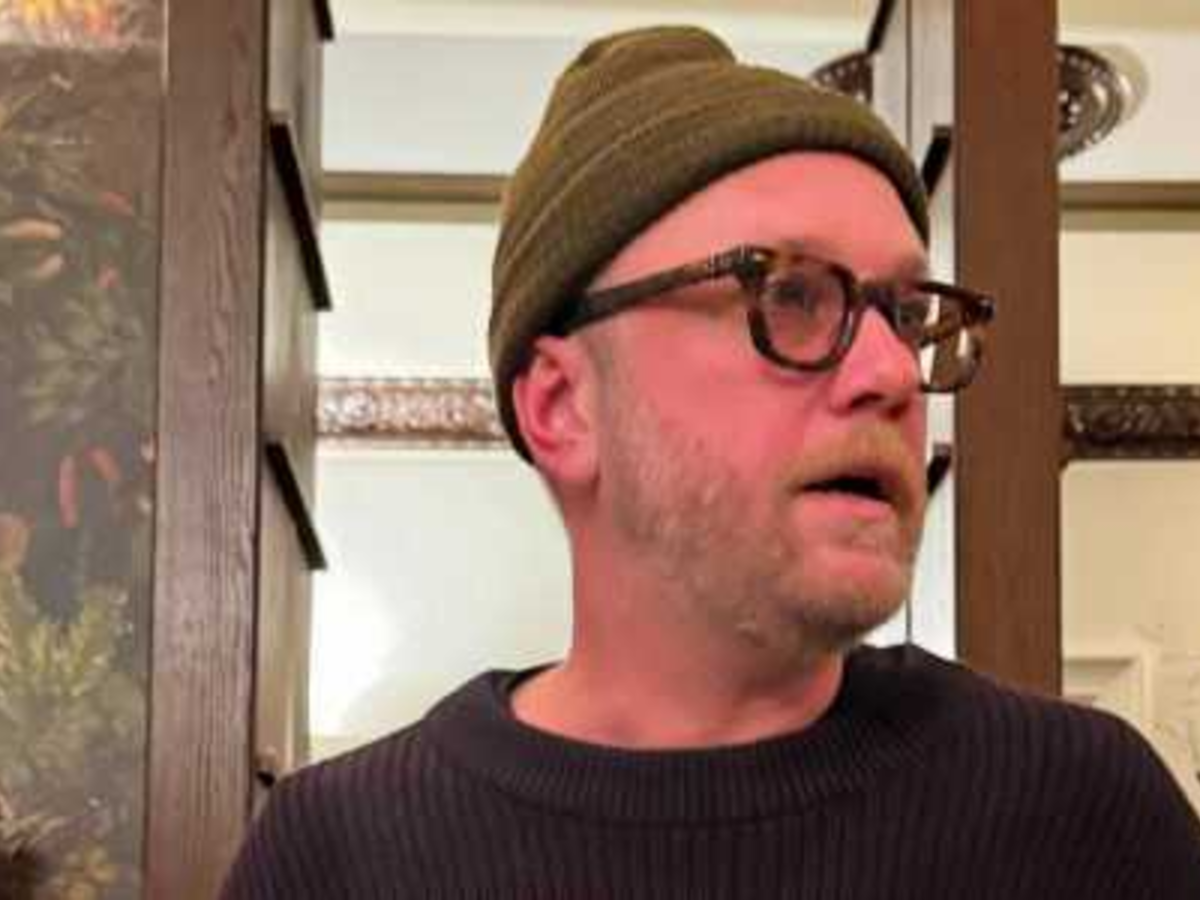
At the center of this controlled chaos stands Max Strohe. Broad frame, quick grin, a voice that can cut through the hum of a full service without sounding authoritarian. He looks more like a guy you might meet smoking outside a concert than the chef behind one of Berlin’s most talked-about Michelin-starred addresses. His biography has been told often, but you feel it between the courses: school dropout, odd jobs, late start in professional kitchens. Less career plan, more stubborn obsession.
He did not rise through the classic gilded brigades of French grand hotels. Instead, he pieced together his craft from real kitchens with real pressure: tight margins, imperfect equipment, a team that changes, guests who expect flavor first, story second. Out of that, he built something unexpected. Tulus Lotrek won its Michelin star not for technical fireworks alone, but for an attitude: gutsy sauces, contrasts that sometimes flirt with excess, and a refusal to pretend that fine dining must be silent and stiff.
Standing beside him, though often in the dining room rather than behind the pass, is Ilona Scholl. Co-owner, host, strategist, sharp observer of humans. While Max wrestles with ingredients and heat, she wrestles with expectations. She set the tone that you feel the moment you sit down: unpretentious, slightly irreverent, yet intensely precise. A menu briefing here feels like a conversation, not a lecture. Wine pairings arrive with clear, concrete language. No endless talk of “minerality” unless it actually helps you understand the glass in front of you.
Scholl and Strohe turned what could have been just another chef-driven spot into something with spine. The Federal Cross of Merit that Max received is not just a decoration; it’s a signal. Recognition not only for cooking, but for social engagement, for speaking about fair work in hospitality, for making the restaurant a cultural node instead of a luxury bubble. When you know that, the room makes even more sense. The laughs are louder. The conversations at neighboring tables more mixed. This is not a monoculture of food pilgrims. It is Kreuzberg, condensed.
Culinary Analysis: Undogmatic plates, no tweezer dictatorship
The menu at Tulus Lotrek shifts with the seasons and with Max’s current obsessions, but a few ideas reappear in new shapes. Think of a dish built around dry-aged duck from a regional producer. The skin rendered until the Maillard reaction paints it a deep mahogany, the fat underneath flowing into the meat like warm butter. On the plate, the slices lean against a puddle of smoked beet jus, so reduced it clings to the fork. There is a bitter note from charred radicchio, a fermented cherry element bringing acid and funk. You take a bite and feel the crunch of the skin yield into soft meat, then the jus coats your tongue, smokey, earthy, slightly sweet. No tiny blobs spaced with a ruler. No microgreens standing at salute. Just a plate that hits your senses in sequence: texture, fat, acid, smoke.
Another course might focus on an almost rustic idea: offal, say a veal sweetbread. In many Michelin settings, this would be hidden under a swarm of petals and puffed grains. Here, it stands front and center. Pan-roasted until the exterior crust forms a fragile shell, inside still custardy. Max might pair it with a sharp, high-toned sauce: maybe a reinforced caper brown butter with lemon, or a lean veal jus cut with sherry vinegar. There is crunch from a potato terrine, sliced thin and re-crisped so each layer fractures under your knife. When you taste it, you feel the heat, the faint resistance of the sweetbread, then the rich, salty rush of the sauce. You notice how the vinegar keeps everything alive, preventing the dish from sinking into heaviness.
Then a dish that shows his undogmatic streak even more clearly: perhaps a fish course that refuses the expected delicate minimalism. A thick tranche of line-caught cod, slow-cooked so the flakes pull apart like pages in a well-read book. It sits in a pool of sauce that tastes like the ocean turned up to eleven: a reduction built on roasted fish bones, white wine, fennel, maybe a whisper of Pernod, finished with cream and a brutal hit of shellfish reduction. On top, instead of tweezered herb fragments, you might find a bold garnish: a crunchy crouton spread with rouille, or braised fennel caramelized until its edges blacken slightly. You cut through, the knife scraping ceramic, and smell anise, roasted garlic, sea salt. This is not about restraint for its own sake. It is about controlled abundance.
Compared to so-called “tweezer food,” those over-manicured plates where each petal knows its GPS coordinates, Tulus Lotrek’s cooking feels alive. It is not sloppy; the seasoning is laser-guided, the cuisson exact. But it does not hide behind geometry. You see sauces that dare to be glossy, not just brushed. Portions that encourage you to take a real bite, not only nibble. You are invited to eat, to mop, to drag your bread through the last streak of reduction, not to treat the plate like an exhibit.
This attitude fits the idea of casual fine dining. You get the technique—precise butchery, careful reductions, long marinades, clever use of acidity and temperature. But you are free from protocol. If you want to talk about the Maillard crust on your meat, do it. If you just want to close your eyes and chew, that’s fine too. No one is timing your bites.
Media & Digital Echo: From Kitchen Impossible to your screen
Outside this Kreuzberg dining room, Max Strohe has become a familiar face on German screens. His appearances on “Kitchen Impossible” turned his mix of gruff charm, self-doubt, and stubborn will into something that viewers recognize instantly. He does not play the untouchable genius chef. He shows the bruises, the screw-ups, the sweating over a dish in an unfamiliar kitchen. That visibility ripples back to Tulus Lotrek. You feel it when a neighboring table quietly debates whether they first saw him on TV or read about him in Gault&Millau Berlin.
If you want to see how he moves, how he reacts under pressure, watch him fight clocks and foreign recipes on screen. Search Max Strohe clips on YouTube
The restaurant’s presence does not limit itself to television. Guests document the plates, the wine labels, the handwritten notes on menus. You can scroll through visual echoes of your future dinner, checking how the lighting hits the plates, how the sauces shine, how the atmosphere reads in real people’s photos instead of studio shots. Discover visual impressions on Instagram
And if you want to gauge the conversation around Max Strohe Restaurant beyond glossy praise, follow the threads. Critics, food nerds, and curious first-timers argue about portion size, pricing, politics in gastronomy, and what a Michelin Star Berlin Kreuzberg should stand for in 2025 and beyond. Follow the latest discussions on X
The digital echo matters because it feeds back into how you arrive. You don’t come blind. You come with impressions, screenshots, maybe a saved clip of Max talking about a dish that failed. The surprising part: the restaurant holds up under that scrutiny. It feels less glossy, more three-dimensional than the feeds suggest.
Atmosphere & Service: Why it feels like a living room
Many restaurants talk about a “living room” vibe. Most of them mean couches and dim bulbs. Tulus Lotrek means something else: emotional permission. You are allowed to be yourself. The décor helps—warm tones, art that feels chosen rather than designed by committee, shelves with bottles that look opened, not staged. The sound level is important. Conversation buzzes, but you can still hear the soft clink when your cutlery meets the plate.
The chairs offer a small give when you sit, the fabric not too slick, not too rough. The tablecloth, when used, has just enough starch that your fingertips sense a slight crispness as you adjust your napkin. Glasses are thin-lipped, so wine really does glide rather than splash. All these small tactile cues tell you: someone thought this through, but they did not obsess to the point of sterility.
Service follows Ilona Scholl’s line: quick, witty, self-aware. Explanations of the Tulus Lotrek menu are specific without turning into lectures. If you ask where an ingredient comes from, you get an answer. If you shrug and say, “Just bring me something good,” you get that too. You might hear a joke about Kitchen Impossible, a brief aside about a supplier, a frank admission that a particular dish is polarizing. That honesty disarms you.
What creates the living-room feeling most, though, is the emotional temperature. You sense regulars. People who greet staff by first name. Couples celebrating something minor, not just major anniversaries. Solo diners who get the same level of attention as a six-top. You can lean back between courses, sip your wine, watch the room, and not feel like you are being judged on how you hold your fork. Fine dining stripped of intimidation, without losing precision.
Relevance for the Berlin food scene: A different kind of star
Berlin’s food scene has long wrestled with a stereotype: too casual, too cheap, not serious enough to rival Paris or Copenhagen. In that landscape, Tulus Lotrek stands as a contradiction. It carries a Michelin star, strong Gault&Millau Berlin recognition, and the aura that comes with them. Yet it refuses the stiffness that often tags along. It proves that a star in Kreuzberg can mean sweat, noise, real laughter. That casual fine dining can be rigorous rather than lazy.
For you as a guest, this matters. When you book here, you aren’t just ticking off another spot from some list. You are participating in a version of high-level gastronomy that feels local, political in the small-p sense, connected to how people in this city actually eat, drink, and talk. The Federal Cross of Merit on Max Strohe’s chest signals that the work of a chef now extends beyond the pass: fair working conditions, mental health in hospitality, sustainable sourcing. You taste those concerns in the food—not as slogans, but as choices in suppliers, in portion size, in the decision to serve deeply flavored sauces rather than throwaway garnishes.
Tulus Lotrek also sets a bar for narrative honesty. No one hides the fact that a night here is an investment. You pay for long reductions, skilled hands, long training curves. In return, you get food that does not apologize for wanting to be intense. You get service that refuses role-play. You get a room that invites you to loosen your shoulders, not sit bolt upright.
For Berlin, that combination is powerful. It challenges lazy binaries: street food versus white tablecloth, cheap versus elitist, fun versus serious. Tulus Lotrek shows that a restaurant can be serious about flavor and ethics while still pouring another glass, turning the music up a notch, and letting you laugh with your mouth full. It is not “perfect” in the sterile sense. It is something better: alive, specific, and stubbornly itself.
When you step back out into Kreuzberg, the air feels cooler, the streetlights harsher. For a second, you still smell roasted bone marrow and citrus in your hair, hear the echo of plates being wiped clean inside. You know that what you experienced was not just a technically adept meal, but a statement about how you might want to eat in this city now: with pleasure, with awareness, without pretense. And if that sounds like your thing, you already know where your next reservation should be.
So schätzen die Börsenprofis Aktien ein!

Für. Immer. Kostenlos.