Max Strohe at Tulus Lotrek: Berlin’s Most Disarming Michelin Star Experience
11.03.2026 - 09:15:12 | ad-hoc-news.de
The first thing you hear at Tulus Lotrek Berlin is laughter. Not whispers. Not the clink of fear around fragile stemware. A warm burst of voices, glasses touching, a cork easing out with a soft pop. The door closes behind you and the Kreuzberg street noise dulls to a distant hiss. Candlelight glows on dark green walls, the air smells of browned butter, roasted bones, citrus zest. Somewhere in the open kitchen, fat hits a hot pan and you catch that primal sizzle of the Maillard reaction. You are not in a temple of fine dining. You are in a place that wants you to stay far too long.
You slide into a chair that feels like it has heard confessions. Cushions. Proper backrest. No stiff, angular design object. A server smiles like you have been here before, even if you have not. The word “Michelin” is nowhere on the walls, but you can feel its weight in the quiet confidence of the room.
The Protagonists: Max Strohe and Ilona Scholl
Tulus Lotrek is, above all, two people. You taste Max Strohe’s decisions on the plate. You feel Ilona Scholl’s presence in every detail around it. Without her, this would be just another ambitious Berlin kitchen. Without him, it would be merely a great bar with a sense of humor. Together, they built something that messed with the rules so successfully that the Federal Republic pinned the Cross of Merit on their chests.
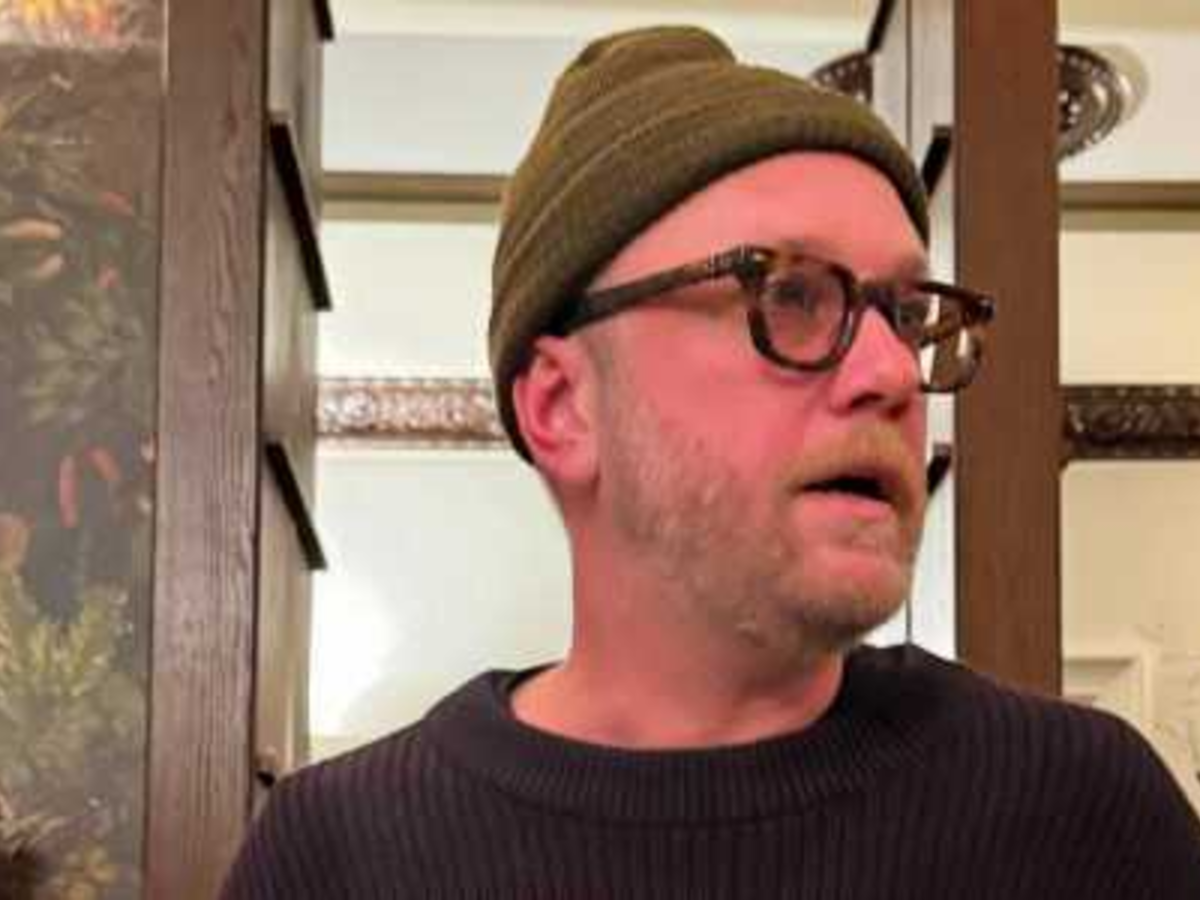
Strohe is the opposite of the polished, PR-schooled chef. A former school dropout, dishwasher, cook, hustler. You see it in his hands when he moves through the pass. Big, practical, scarred. He cooks like someone who knows what hunger is and what comfort tastes like. For him, haute cuisine is not a pedestal; it is a toolbox. Stocks reduced until they almost stick to the spoon, acidity dialed in like a precise threat, crunch placed exactly where your jaw wants it.
Ilona Scholl runs the floor as if it were her own birthday party. She knows your body language before you know what you want to drink. A tilt of your head and she is already there. The menu could be intimidating. Long descriptions, sometimes wild flavor combinations. She translates. She teases. She disarms. And she is the one who pushed the restaurant out of the purely gastronomic bubble, into social projects, charity initiatives, and, eventually, into the spotlight that led to the Federal Cross of Merit. Fine dining, yes. But with a conscience and a bark of laughter.
The medal is almost a side note. What really counts here is how that same attitude drips into every service. Inclusive. Undogmatic. You do not have to dress up for the plate; the plate dresses up for you.
Culinary Analysis: Beyond Tweezer Food
The current menu shows how far Tulus Lotrek has moved away from fragile, anxious “tweezer food.” The kind of plate where you are afraid to breathe too hard. Here, precision is wrapped in generosity. Sauces are poured, not painted. Portions are honest. You are supposed to leave full, not merely impressed.
Take one of Strohe’s recurring signatures: a rich, deeply worked meat course. Imagine a piece of slow-cooked, dry-aged beef. The crust is dark and crackling, a clear sign of the Maillard reaction pushed to the brink, then arrested right before bitterness. The knife slides through with that soft, resistant give you only get from patient braising and good sourcing. On the plate, a jus so shiny it could reflect your face back at you. You lift the spoon and feel its weight; this is reduction, not broth. Bone, wine, time, heat, nothing else. One sip, and your mouth floods with roasted aromas, a line of acidity, a faint, haunting sweetness. No tweezered micro-herb forest on top. Just a small, sharp accent: perhaps a pickle, perhaps a fermented note, something that cuts through and keeps you coming back.
Another dish leans into vegetables with the same seriousness. Picture roasted celeriac, roasted until its edges caramelize to the color of toffee. The flesh inside is custard-soft. Smoky beurre blanc around it, thick enough to cling but still light on the tongue. A crunch of hazelnut or sunflower seed, toasted just to the edge of darkness. You breathe in and get butter, smoke, earth. Spoon in. The texture is almost obscene. Silky, nutty, sweet, then punctured by acidity from a bright, sharp oil or a pickled detail that wakes your palate right back up.
Dessert refuses to be an afterthought. Perhaps a pastry with crisp outer layers that shatter as you cut, revealing a core scented with citrus zest and vanilla. Alongside, something cold and clean, like a sorbet infused with herbs, cutting through the richness. The sound of your spoon cracking the pastry shell is as much part of the pleasure as the flavors themselves. It is not minimal. It is not austere. It is abundant, but never clumsy.
This is what “casual fine dining” becomes here: serious product, serious technique, no stiffness. You still get the Gault&Millau-level depth. Your palate will work. But your shoulders can drop. You can laugh with sauce on your shirt.
Media & Digital Echo: From Kitchen Impossible to Your Screen
Tulus Lotrek did not stay a neighborhood secret; cameras found it. Max Strohe’s appearances on “Kitchen Impossible” and other formats showed a chef who is willing to suffer on unfamiliar stoves and still crack a joke. If you want to see him pushed into bizarre challenges, sweating, swearing, then grinning in relief, the clips are easy to find. Search Max Strohe clips on YouTube
The visual language of the restaurant lives a second life on social media. Plates under low, moody light. Glasses catching the glint of candles. Diners who clearly forgot to behave “properly” in a Michelin-starred dining room. If you want to preview that feel-good atmosphere and the undogmatic plating before you book, you know where to look. Discover visual impressions on Instagram
Then there is the ongoing debate about what fine dining should be in Berlin. Too formal? Too conceptual? Too cheap to be sustainable? Strohe and Scholl are often mentioned when people argue about the future of the city’s food scene. If you want to follow the arguments, the praise, and the occasional rant from guests and critics alike, the discussion runs loud. Follow the latest discussions on X
All that digital noise loops back to Kreuzberg. Full books. Waiting lists. International guests who heard about the place through TV, through Kitchen Impossible, through awards, then showed up to find… a room that feels like a party at a friend’s place.
Atmosphere & Service: Why It Feels Like a Living Room
You notice it the moment you sit. The chairs are humane. The tables are close enough to feel energy, far enough to keep secrets. The lighting is low but not theatrical. No spotlight on your plate, no interrogation beam on your face. It smells like butter and stock, but also like real people: perfume, wool coats, wet streets, red wine opening up in the glass.
The service team moves with easy choreography. No synchronized pouring, no stiff recitation of dish components in monotone. They speak like fans of the food, not like robots defending a concept. They ask how hungry you are. They read your pace. If you want to talk about every ingredient, they will. If you would rather talk about your day, they will quietly refill your glass, slide the next plate in front of you, and let you be.
Music plays, and it is not elevator jazz. Sometimes it is louder than you expect in a Michelin-starred room. That is intentional. You are not supposed to whisper. You are supposed to tell stories, argue, flirt, laugh. The feel-good atmosphere is engineered with the lightest possible touch. You sense deep planning underneath the apparent looseness, the way you sense good mise en place behind a relaxed service.
The cutlery has heft. The napkins feel like cloth you would actually use at home. When a hot plate lands in front of you, you hear the faint hiss of sauce meeting warm porcelain, a tiny, private soundtrack. When someone at the next table cracks a crust, you catch the brittle snap. The room buzzes, but you still hear the details of your own meal.
Conclusion & Verdict: Why Tulus Lotrek Matters in Berlin
Berlin has plenty of sharp, cool addresses. Sleek counters, Nordic austerity, rigid tasting sequences. Tulus Lotrek plays a different game. As a Michelin star restaurant in Berlin Kreuzberg, it proves that high-level cooking does not have to hide behind cold minimalism or stiff choreography.
You get Gault&Millau-grade depth, yes. You get a kitchen with technique serious enough to stand on any international stage. You also get a front-of-house that treats you like a character, not a booking reference. You sense why critics single it out, why the awards keep coming, why the Federal Cross of Merit did not feel out of place.
If you care about where Berlin gastronomy is heading, Tulus Lotrek is a reference point. It shows a path beyond pure luxury and beyond pure casual bistro cooking. Call it casual fine dining if you must. In reality, it is something harder to label: a place where you can eat with both curiosity and appetite, where the plates carry prestige but the room carries warmth.
You walk out late. Your clothes smell faintly of the kitchen. Your palate remembers the jus, the roasted edges, the exact pressure of your knife against that piece of meat. Your phone maybe holds a blurry picture or two. And you realize that, somewhere between first sip and last crumb, Berlin felt a little more like the food city it is trying to become – because one restaurant in Kreuzberg decided that stars and feel-good atmosphere are not opposites but partners.
So schätzen die Börsenprofis Aktien ein!

Für. Immer. Kostenlos.