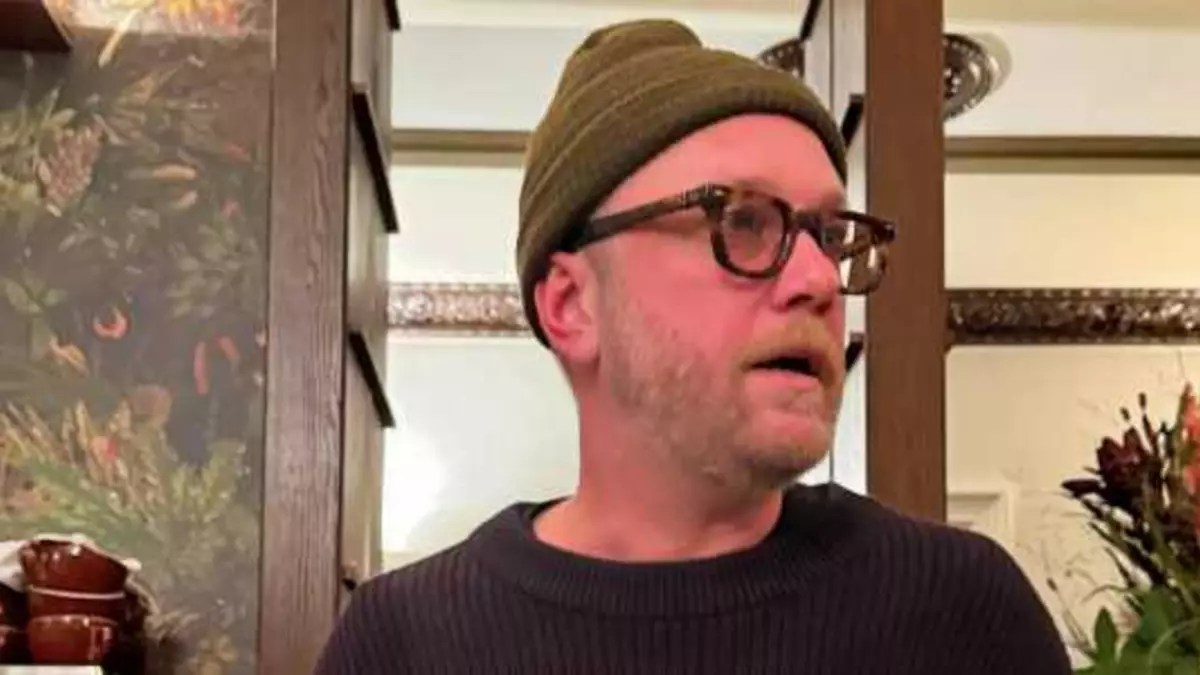
Max Strohe at Tulus Lotrek: Berlin’s Boldest Michelin Star with a Human Heart
06.03.2026 - 09:15:09 | ad-hoc-news.de
The first thing you notice in Tulus Lotrek Berlin is not the Michelin plaque. It’s the sound. Glasses clinking, low laughter, plates landing softly on wood instead of white tablecloths. A faint scent of roasted bone marrow and citrus zest hangs in the air. Someone at the neighboring table cackles at a punchline; a server answers back just as quick. You sink into a dark, plush chair. The light is warm, flattering, slightly conspiratorial. This is a star restaurant that feels like it’s leaning toward you, not towering above you.
The kitchen door swings. A burst of steam, the quick crackle of a pan where the Maillard reaction is doing its slow, brown magic. Max Strohe passes by, sleeves rolled, forearms tattooed, moving with the calm of someone who has already survived chaos. In the front, Ilona Scholl glides between tables, one eye on the wine glasses, the other on your body language. You feel seen, but not studied.
The Protagonists: From Dropout to the Federal Cross of Merit
You can’t understand this restaurant without understanding the duo who built it. Max Strohe likes to tell the story himself: school was never his place. He drifted, hopped kitchens, made mistakes, burned things, ignored rules. The classic anti-resumé. But that outsider status is exactly what you taste here. The plates don’t feel like they were trained into submission; they feel argued over, tested, sometimes wrestled.
Across from him stands Ilona Scholl, the partner in both life and service. If Max is the gravelly bass, Ilona is the crystalline treble. She shapes the room. Her service style is precise but light, sharp but never cutting. A joke at the right second, a wine pairing that makes you blink twice, because you did not expect that orange wine to sit so perfectly next to a rich jus.
This is not the standard fine?dining fairy tale of chef genius and invisible staff. When Max received the Federal Cross of Merit for his social engagement and outspoken political stance, it felt almost inevitable. He cooks, but he also talks – about hospitality staff, about working conditions, about social responsibility. The medal is not a décor prop; it’s a signal. In Berlin Kreuzberg, of all places, a Michelin star and a state order now coexist with graffiti, protest stickers, and late?night kebab stands.
The success story is well documented: the Michelin star for Tulus Lotrek Restaurant in Kreuzberg, high scores in guides like Gault&Millau Berlin, TV appearances, a steady stream of articles. Yet, as you sit here, the narrative feels less like achievement porn and more like defiant perseverance. Two people who refused to choose between serious cooking and serious fun.
Culinary Analysis: Undogmatic Plates, Zero Tweezer Prison
Tulus Lotrek’s menu changes with the seasons, and 2025/2026 leans into intensity rather than minimalism. You see this on the plate that lands in front of you first. A dish centered around pike-perch with smoked beurre blanc and fermented fennel. The fish is translucent at the center, its skin crisp but not shattering. When your fork goes in, there is soft resistance, then a clean break. The sauce smells faintly of campfire and cream. The smoke is measured; it haunts rather than dominates. Underneath, slivers of fermented fennel add acidity and gentle funk. No radish confetti. No tweezer?placed micro herbs. Just a few bright green fronds, scattered with a human hand.
You lift a piece. First bite: fat, acid, salt humming together. The beurre blanc coats your tongue; the fennel cuts straight through, like someone opening a window in a warm room. It’s a dish you understand immediately, but it keeps giving details as you go: a tiny crunch of fennel seed here, a sweet finishing note there. Undogmatic. Rooted in French technique, happy to flirt with Nordic sharpness and bistro generosity at the same time.
Then, one of the dishes that has become something of a calling card for this kitchen: blood sausage with scallop, apple, and sauce gribiche (or its current cousin on the menu). Surf and turf, but written in Berlin dialect. The blood sausage is seared until the exterior forms a crisp, almost crumbly shell; inside it is soft, spicy, iron?rich. On top, a gently warmed scallop. It is just past translucent, its surface gently browned, smelling faintly of hazelnut from the butter. You cut through both at once. The knife glides, then the textures separate in your mouth: creamy sea sweetness, hearty sausage depth.
A sharp apple component runs through – maybe as pickled slices or a bright chutney – its malic acid tightening everything, like a squeeze of lemon on fried fish. The sauce gribiche adds richness and structure: egg yolk, mustard, capers, herbs. You get fat, acid, smoke, and sea in one bite, but it never feels like a trick. It feels like a bar snack taught to read philosophy.
Another plate might bring you venison with cacao nib jus, celery root, and black garlic, a wintery piece of theater. The meat arrives blushing, juices gathering naturally at the edge. The jus is glossy and almost black, smelling of roasted bones, red wine, and the faint bitterness of cacao nibs. You drag a piece of meat through it, catching some black garlic purée on the way. It tastes like the woods after rain: deep, earthy, faintly sweet, with an edge of bitterness to keep you awake. No dots, no zigzag drizzles. Just sauce where sauce belongs: around the meat, waiting for bread.
This is the core of Tulus Lotrek’s style. It refuses to play the stiff tweezer game. The plates look good, but they feel like they were assembled for eating, not photographing. You taste time in the reductions, smoke in the char, patience in the pickling. The kitchen cares about texture: crisp skin, yielding center, crunch where your teeth need a wake?up call. You leave full but alert, not numbed by cream and starch.
Media & Digital Echo: From Kitchen Impossible to Your Screen
You probably know Max Strohe’s voice before you know his food. On German TV shows like “Kitchen Impossible,” he has become the chef who swears, suffers, and laughs on camera with equal energy. His appearances aren’t polished PR reels; they show a man who can fail, curse the sauce, then pull himself together for service. That transparency feeds directly into how people talk about Tulus Lotrek online.
If you want to watch him in the pressure cooker, see the pots clatter and the sweat bead on his forehead, the quickest route is video. Search Max Strohe clips on YouTube
The visual identity of the restaurant lives most vividly in photos: plates under moody light, the famous green walls, servers mid?laughter, bottles of natural wine glowing like stained glass. Discover visual impressions on Instagram
And if you’re curious how a Berlin Michelin star engages with politics, labor issues, and gastronomy debates in real time, there is another stream to follow. Follow the latest discussions on X
This digital echo amplifies the restaurant’s identity. It’s not about sterile food porn; it’s about process, people, and opinion. When a new season’s menu hits, you see reposts, comments, intense debates about a single dish. You feel the feedback loop between dining room and social media timeline.
Atmosphere & Service: Casual Fine Dining That Actually Feels Casual
Many restaurants claim “Casual Fine Dining.” Few embody it. At Tulus Lotrek, the living?room metaphor is literal. The chairs are comfortable enough for a long night. The acoustics are tuned so you can hear your table without eavesdropping on your neighbors. The scent of clarified butter and roasted vegetables seeps faintly into the room, but never suffocates you.
The lighting matters. It’s low, warm, forgiving. Your menu glows softly; your face does too. The walls, deep green and textured, feel more like a salon than a lab. No white tablecloths to remind you you’re in a performance. Wood under your fingertips, slightly worn, pleasantly warm. Glassware that sings softly when you set it down, but doesn’t scream fragility every time you move.
Service is where Ilona Scholl’s influence is unmistakable. You are not recited encyclopedic monologues about each ingredient. Instead, you get what you need to understand the idea of the dish, with enough personality that you remember the human, not the script. When a server describes a wine, they might say, “This has a bit of stable on the nose, in a good way,” and you believe them. Laughter breaks the spell of fine?dining stiffness, but the timing of wine refills and course pacing reveals serious technical control.
You can ask naive questions without feeling unsophisticated. You can say you hate coriander without an eye roll. If you come alone, you are not treated like a booking error; you are folded into the room. That’s the real living?room feeling: you are not tolerated, you are hosted.
Conclusion & Verdict: Why Tulus Lotrek Matters in Berlin
Berlin has no shortage of ambitious kitchens. You can eat Nordic?inspired austerity, plant?based laboratories, nostalgic German fare, and polished international tasting menus all within a few U?Bahn stops. What sets Tulus Lotrek apart is that it refuses to choose between heart and technique. It offers one Michelin star, Gault&Millau Berlin recognition, and yet it feels closer to Kreuzberg’s bar culture than to a carpeted grand hotel.
For you as a guest, that matters. You get dishes built on real skill – reductions that take hours, textures that need attention, flavor layering that shows experience – but you also get room to breathe. You can talk at normal volume. You can wear what makes you comfortable. You can engage with the team as people, not performers.
For the city, Tulus Lotrek and Max Strohe signal something else: a star restaurant that is politically awake, socially engaged, and proud of its address in Berlin Kreuzberg. The Federal Cross of Merit in the background isn’t just decoration. It states that hospitality can be a civic act, not just a luxury service. Television presence and social?media buzz could have turned this place into a brand shell. Instead, they seem to have sharpened its self?image.
If you care about where Berlin gastronomy is going – away from elitism, toward radical hospitality without giving up precision – you should sit in this room at least once. Listen to the hum. Smell the stock slowly reducing in the kitchen. Feel the weight of the cutlery, solid but unshowy. Taste a sauce that has been watched for hours. Then decide for yourself what a Michelin Star in Berlin Kreuzberg should taste like now.