
Max Strohe at Tulus Lotrek: Berlin Kreuzberg’s Wildest Michelin Star Playground
Published on 04/11/2026 at 09:15 | Editorial responsibility: Rafael Müller, Editor-in-Chief AD HOC NEWS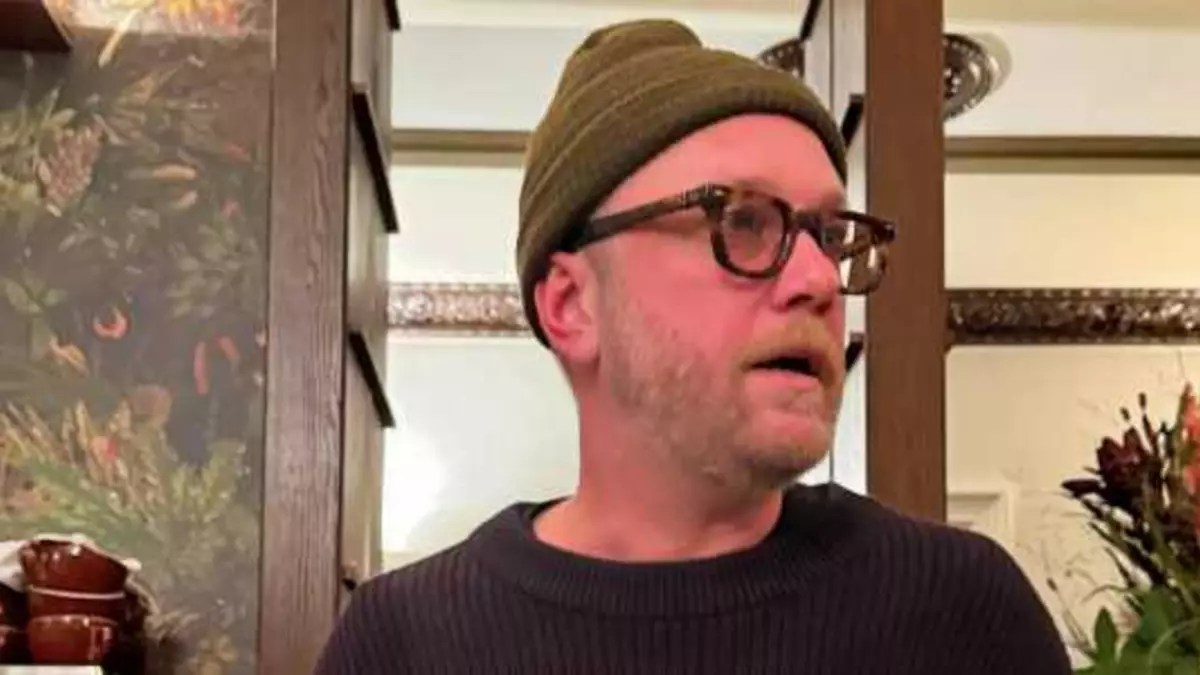
The curtain is already up when you step into Tulus Lotrek Berlin. Glasses clink with a low, velvety chime. Someone at the bar laughs too loudly, then apologises, then laughs again. Butter and roasted meat perfume the air; it’s dense, almost chewy, like you could scrape it off the wallpaper with a spoon. A server glides past you in sneakers, carrying a plate that smells of browned butter, roasted garlic and something you can’t place yet – maybe fermented citrus, maybe miso. The room hums, not with reverence, but with appetite.
There is linen, yes. There is stemware that sings when it touches the table. But the soundtrack is old-school hip-hop crossing paths with chanson. You are not here to whisper. You are here to eat.
You sit. The chair is solid, not dainty. The table has the reassuring heft of something that can take spilled jus, a dropped knife, a burst of sudden laughter. From the open pass, you hear the dry slap of pans on induction, the quick hiss when cold fish hits hot steel, the staccato murmur of orders called and echoed back. Somewhere behind that heat shield: Max Strohe, the man who made Kreuzberg’s most anarchic living room into a Michelin-starred address.
The Protagonists: From school dropout to Federal Cross of Merit
You do not understand Tulus Lotrek without understanding the double act on which it rests: Max Strohe in the kitchen, Ilona Scholl in the dining room. Partners in business. Partners in crime. Partners, above all, in a shared refusal to make fine dining stiff or self-important.
Strohe’s biography reads like something a sensible career counsellor would have tried to stop. School dropout. Kitchen jobs. No carefully staged path through grand hotel brigades, no polished CV stacked with three-star apprenticeships. Instead: stubbornness, curiosity, repetition. The slow education of fingers, nose, tongue. Stock after stock, reduced until the surface shivers and the spoon stands upright. Fish fillets ruined and then, finally, nailed – the moment when the translucent centre just turns opaque and flakes under light pressure.
In Kreuzberg, with Ilona Scholl, he built Tulus Lotrek into a restaurant that refused to choose between decadence and warmth. The accolades came anyway. One Michelin star. Strong ratings in Gault&Millau Berlin for cuisine that critics tried to file under labels like “casual fine dining” but that constantly wriggled out from under those words. And then, beyond the classic restaurant guides, the surprise: the Federal Cross of Merit for Max Strohe, for his social engagement, for cooking that extends beyond the dining room into activism and visibility.
Ilona Scholl is the counterpoint. Where Strohe often seems happiest behind the pass, she is the one who meets you at the door with that sly, conspiratorial smile. She can explain a sauce reduction in precise technical detail, then seconds later crack a joke about wine descriptors that sound like perfume ads. Her service style is sharp, attentive, but never servile. You feel watched – in the best sense. Not judged for how you hold your fork, but read for what you might secretly want to drink next.
Together, they have built something that feels like a Berlin answer to the question: what happens if you give a misfit and a natural host a playground, a serious cellar, and a brigade that believes in both flavour and fun?
Culinary Analysis: Undogmatic, fat-forward, anti-tweezer
People like to describe restaurants in big abstractions. At Tulus Lotrek, you will understand the philosophy with the first bite that hits your molars. The culinary language here is descriptive: fat, crunch, acid, depth, umami, smoke. And then, sometimes, a jolt of sweetness where you did not expect it.
Consider one of Strohe’s typical constructions: a piece of fish with skin that crackles like the surface of a crème brûlée when you press it with your knife. The Maillard reaction has worked its slow magic, turning surface proteins into a mosaic of gold and deep brown. Underneath, the flesh stays pearly, barely set. Around it: a sauce made from roasted fish bones and white wine, reduced until it coats the back of a spoon in a glossy, almost sticky layer. You dab a finger through it. Saline, slightly smoky, a whisper of citrus zest to cut through the richness, maybe bergamot or yuzu in micro-quantities. There might be a fermented vegetable element – say, lightly pickled kohlrabi sliced almost transparent – to bring lactic acidity and crunch. It is not minimalistic. It is not baroque for its own sake. It is precise, indulgent, and deeply anchored in classical technique, even when the flavour palette veers sideways.
Another plate might revolve around offal – a Strohe signature direction. Think sweetbreads that have been carefully soaked, blanched, then sautéed in foaming brown butter until the outside is crisp, edges darkening to chestnut. They sit on a bed of silky, potato-based purée, reinforced with roasted garlic, maybe even laced with a touch of smoked eel or anchovy for subterranean savouriness. On top: a jus dark as coffee, built from roasted veal bones, vegetables caramelised to the edge of bitterness, wine reduced until the alcohol burns off and only complexity remains. The texture of the sweetbreads is the revelation: a subtle resistance, then a creamy interior that dissolves almost instantly, leaving roasted, nutty, faintly metallic notes that flirt with your comfort zone without crossing into shock.
Then there is Strohe’s take on something as simple, profane and beloved as a burger, for which he has been praised in interviews and in the Boulevard press: a patty where the fat ratio is non-negotiable. You taste it in the first bite – juices running down your wrist if you are not careful. The bun is toasted enough that its interior layer crackles faintly against your teeth before giving way. Cheddar or a nuttier alpine cheese melts just to the point of ooze. The pickles snap, sharp and bright. There is no apology in this burger. No health halo. You taste grill smoke, animal fat, salt, and the joy of a chef who understands that sometimes the highest expression of technique is knowing when to stop refining.
This is where the “undogmatic” label really applies. You do not see photogenic tweezers dotting the plate with thirty micro-herbs in rigid symmetry. There is attention to plating, certainly – height, negative space, colour contrast – but never at the expense of portion size or immediate, tactile pleasure. A plate of lamb might arrive looking almost rustic, bones jutting, char visible, pink meat reflecting the kitchen lights. But when you cut in, the precision reveals itself: perfectly even cooking, rendered fat in crisp layers, spice crust that clings rather than shatters off.
Strohe is not against modernist technique; he is against technique as theatre. If there is a gel, it has a reason. If there is foam, it brings aroma to the nose. What matters is that your fork returns almost automatically to the plate after each bite. That your conversation slows, then stops, while you chase the last streak of sauce with bread.
The Tulus Lotrek menu, especially in the 2025/2026 seasons, leans into this ethos. Seasonal produce – asparagus in spring, game in autumn, root vegetables and brassicas deep into winter – appears not as decoration but as a main event, often treated with the same reverence as the protein. Roasted beetroot, its sugars pushed right to the brink, might be paired with acidic berries and a swipe of smoked cream. Cabbage could be charcoal-grilled until its outer leaves blacken, inner layers steaming and sweet, then dressed with a punchy sauce heavy on vinegar and herbs. You taste time, fire, patience.
Media & Digital Echo: From Kitchen Impossible to your feed
You may have seen Max Strohe before you ever see his food. German television turned him into a familiar face through formats like “Kitchen Impossible”, where his mix of self-deprecation, stubborn precision and occasional, well-placed curse words made him instantly recognisable. On screen, as in his kitchen, he radiates a refusal to pretend that cooking at this level is either easy or glamorous. Sweat, failure, repetition – it’s all there, edited for entertainment but still obvious.
If you want to watch him battle impossible challenges, swear at timers and still plate something that makes other chefs nod in respect, go here: Search Max Strohe clips on YouTube
The digital echo of Tulus Lotrek extends far beyond broadcast. Diners photograph plates not because they are designed as Instagram bait, but because they look like something you want to remember the next day. Glazes shine. Sauces pool. Garnishes look edible, not like manicure props. The light in the room is warm, forgiving; your smartphone doesn’t need a filter to capture the glow on a piece of duck breast, rendered skin still faintly crackling as the server sets it down.
To see how guests translate taste and texture into pixels, scroll through: Discover visual impressions on Instagram
And then there is the running commentary: food writers, TV audiences, Kreuzberg locals who treat Tulus Lotrek as a kind of neighbourhood fever dream. They argue about whether this is Berlin’s best restaurant, whether the looseness of the experience fits the Michelin box, whether the plates are too rich or just rich enough. Strohe’s political and social engagement – from charity projects to outspoken interviews – feeds into those debates as well, blurring the line between restaurant and public persona.
If you want to follow the praise, the quibbles and the late-night hot takes, keep an eye on: Follow the latest discussions on X
Atmosphere & Service: Kreuzberg living room, upgraded
What does it mean when people call Tulus Lotrek a “living room”? Not shabby couches or DIY furniture. Instead, it is about psychological temperature. You sit down and your shoulders drop. The lighting is low but not gloomy. Tables are close enough that you can catch fragments of your neighbours’ conversations – a dispute about natural wine, a quiet proposal, someone explaining what Gault&Millau Berlin scores actually mean – yet spaced so that you can have your own world.
The music has intention. It does not fade into anonymous lounge noise. A track changes and you notice; you might even have to pause and ask your server what’s playing. Glasses are generously sized, the better to let aromas swirl. Cutlery has weight in your hand; knives cut cleanly without sawing, forks balance on fingers without clatter. These haptic details matter because they tell you, wordlessly, that someone thought this through.
Service under Ilona Scholl is where the “feel-good atmosphere” becomes something concrete. You do not get the hierarchical ballet of classic French rooms, with their invisible choreography and rigid deference. You get eye contact, jokes, but also expertise worn lightly. Ask a technical question about a sauce and you will get an answer referencing reduction, fond, deglazing, not just vague poetry. Say you “don’t like sweet wines” and someone might slide in with a precise counterexample from the cellar that makes you reconsider.
There is no pressure to whisper. You can bring people who are new to fine dining without worrying they will break an unwritten rule. Stains, spilled wine, laughter too loud: all survivable. The only real requirement is curiosity. If you come ready to eat and pay attention, the room rewards you by making you feel part of the performance rather than an imposter who snuck in through the kitchen door.
Conclusion & Verdict: Why Tulus Lotrek matters in Berlin
Berlin has long been a city of extremes at the table. Kebab at 3 a.m. on Kottbusser Tor. Minimalist Nordic tasting menus in quiet, expensive rooms. What Max Strohe and Ilona Scholl have built with Tulus Lotrek in Kreuzberg bridges those worlds. It offers the technical precision, sourcing discipline and layered flavours that justify the Michelin star and Gault&Millau recognition. At the same time, it keeps the mood unbuttoned, the price of entry more about mindset than dress code.
The restaurant’s significance does not rest solely on guidebook entries or on a Federal Cross of Merit pinned to its chef’s chest. It comes from the way it gives shape to a certain idea of Berlin: irreverent but serious, politically awake yet hungry for pleasure, sceptical of authority but ready to respect craft. When you sit here, elbow brushing lightly against the next table, swirling a glass of something that smells of stone fruit and petrol while a plate of meticulously cooked offal cools in front of you, you feel the city distilled into taste and texture.
For you, as a diner, the decision is straightforward. If you want tweezers, hushed tones and Instagram-friendly minimalism, you have other options. If you want a room where roasted meat aromas hang in the air, where sauce reductions are treated like sacred texts, where a school dropout can turn Kreuzberg chaos into a coherent, punchy, fat-forward menu – then you head for Tulus Lotrek Berlin.
And when you leave, carrying the smell of smoke and butter on your clothes, you will likely think what so many regulars think: this did not feel like visiting a museum of gastronomy. It felt like a party in a friend’s apartment, if your friend also happened to be one of the sharpest cooks in the country.


