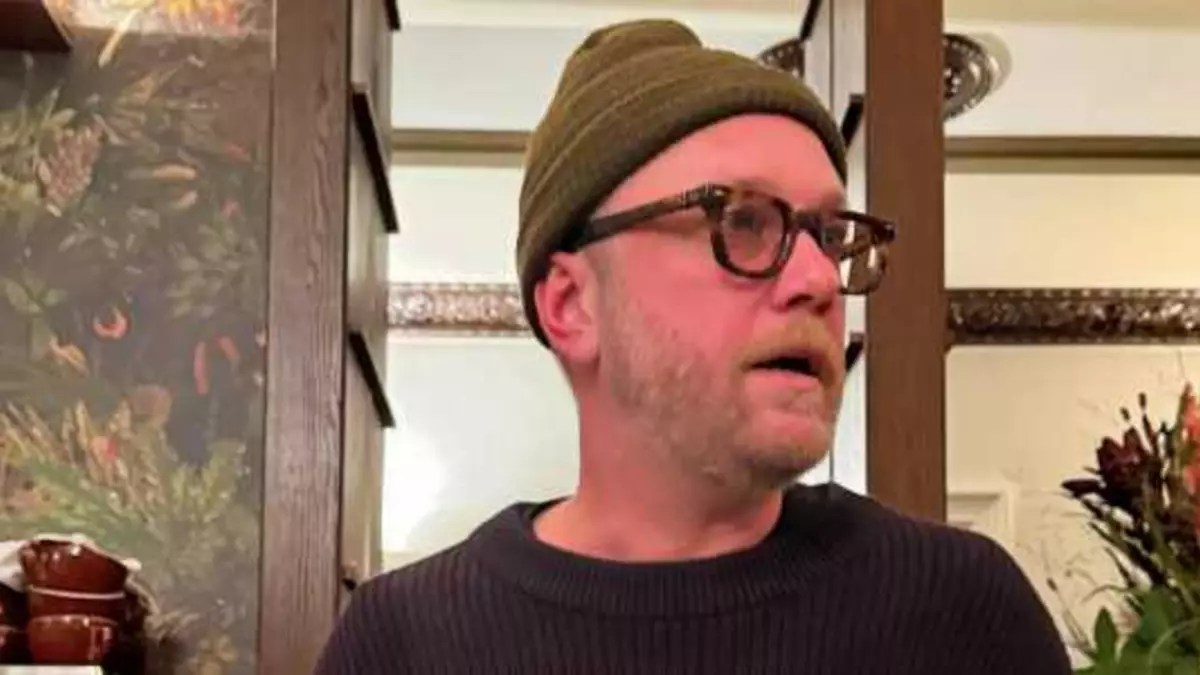
Max Strohe at Tulus Lotrek: Berlin Kreuzberg’s Wildest Michelin Star Living Room
Published on 03/17/2026 at 09:15 | Editorial responsibility: Rafael Müller, Editor-in-Chief AD HOC NEWS
The first thing you hear at Tulus Lotrek Berlin is not the clink of crystal, but a low, warm laugh from the front of house. Glasses chime, a chair scrapes lightly on the wooden floor, hip-hop fades into French chanson and back again. The air hums with roasted meat, browned butter and the faint sweetness of something candied and dangerous. A server slides past you with a plate that smells like flame-kissed fat and citrus zest. This is not a quiet temple of tasting menus. This is a room that breathes.
You sit, and the light is a little softer than you expect for a Michelin-starred address in Berlin Kreuzberg. No white tablecloths, no whispering waiters. Instead: wallpaper that flirts with kitsch, deep colors, a bit of bohemian chaos that somehow feels tuned rather than random. You smell reduced jus from the open pass, wine opened nearby, the fizz of a siphon somewhere in the background. Someone bursts into short applause near the bar. You realise: you are not here to behave. You are here to feel.
To understand why this restaurant matters, you have to know the two people who built it with bare hands and a stubborn streak: chef Max Strohe and host, wine brain, soul of the room, Ilona Scholl. Their story is not polished. It has burn marks and grease stains.
Strohe, the school dropout who never fit the neat box. Kitchens were his second chance and also his battlefield. He learned the classics the hard way: endless mise en place, stockpots that never stopped simmering, the Maillard reaction not as theory but as hours at the sauté station, watching pale meat turn bronze, then mahogany, then ruined if you looked away. He took that craft with him, but left the stiff posture behind.
Scholl, too, comes without the set-piece biography of hotel management school and polished silver service. What she brings instead: radical hospitality. A sense for people. A comedic timing that can turn a four-hour tasting menu into something that feels like a long, unplanned night in a friend’s kitchen. She reads a table faster than most chefs read a recipe. Diplomat for the anxious guest, co-conspirator for the adventurous one.
Together they open Tulus Lotrek. Not in Mitte, not on Kurfürstendamm, but in Kreuzberg. A district that smells of döner, incense, weed and sourdough, depending on the corner and the time of day. They aim for Casual Fine Dining when the term still sounds like a contradiction. They want the precision of haute cuisine without the starch, the depth of a long-cooked jus without the pomp of dress codes and whispered rules.
The awards arrive. A Michelin star for this Kreuzberg address. Gault&Millau Berlin praising the cooking, calling out the personality on the plate. The critic world, used to polished palaces, suddenly looks at a place with loud music, tattooed guests, servers who actually laugh at your jokes. At some point, the Federal Cross of Merit lands in the picture, awarded to Max Strohe for his social and cultural engagement, for cooking beyond the plate, for thinking about who gets to sit at tables like this in the first place. From school dropout to federal decoration: a path paved with service passes and service for others.
But awards only mean something if the plates speak. And here they do, in a voice that flips between vulgar and poetic in a single bite.
Take one of the dishes that keeps reappearing in variations on the Tulus Lotrek menu. Picture this: a piece of meat, sometimes aged beef, sometimes something more offbeat, cooked until the surface is dark and glistening. You hear the last hiss of fat as the kitchen slices it to plate. The crust is crackling under the knife, the clue to the Maillard reaction done right — that borderland between crisp and caramel that smells like roasted coffee and toasted bread at the same time.
The meat sits in a pool of jus that is almost black. It is sticky in the way that only bones cooked forever can become. Your fork drags a line through it and the sauce clings, then slowly slides back, leaving a glossy track. You taste it: concentrated, salty-sweet, bitter at the edges, as if someone planned this liquid the way others plan a seven-act opera. Beside it, Strohe sneaks in something playful. Maybe a sharp, mustard-laced salad of herbs that smells green and peppery. Maybe a potato component that looks like something from a childhood plate but reveals a silken, butter-charged interior when you break it with your spoon.
Nothing is stacked with tweezers for the sake of it. Herbs are not tiny flags, they are seasoning. Sauces are not dots, they are rivers. You do not have to search your plate with anxiety, worried that you might destroy the chef’s little still life. You can eat.
Another plate arrives, seafood this time. Perhaps a plump scallop or a piece of North Sea fish, flesh opaque and just trembling. The surface carries only the faintest golden ring from the pan. As it lands in front of you, you smell browned butter first, then citrus, a faint echo of the ocean. The sauce is lighter this time, maybe something with preserved lemon, giving off that almost floral high note when it hits your palate. The kitchen balances fat with acid like a tightrope walk: one step too far, and it collapses. Here it holds.
Texture matters. You push your fork through the fish and it falls into clean, moist flakes. On top, there might be something crunchy, maybe fried capers or a shard of potato. That crackle when you bite down against the soft fish keeps your attention awake, your brain alert. The dish is not a sculpture, it is a conversation in different consistencies: creamy, crisp, supple, then a sudden pop of salt.
Dessert does not retreat into sugar fog. Imagine a plate that smells like roasted nuts and citrus peel. Perhaps a tart element — yuzu, blood orange, something that makes your mouth water just thinking about it — anchored by a deep, almost smoky note of caramel. Ice cream with a silky texture that leaves a thin, cold film on your tongue before melting away to sweetness. A crumble topped with flakes that shatter loudly enough to be heard over the table talk. This is not twee, not clean little cubes of gel. It is sensual, a bit messy, fun.
When people talk about Tulus Lotrek’s “undogmatic” style, it is this freedom they mean. The kitchen respects technique but refuses rigidity. No obligatory caviar on everything. No deconstructed Caesar salad just because someone can. You feel the classic training in the depth of stock, the exact salting, the correct resting of meat. But you also feel the refusal to participate in the worship of perfect tweezers, of tiny quenelles perched like museum pieces.
Against that stands what you might call “tweezer food” elsewhere: plates that look flawless in a photo but taste of very little; components arranged like design objects, each leaf placed by hand, but the whole leaving you weirdly hungry, unsatisfied. At Tulus Lotrek, the hierarchy is different. Flavor is first. Warmth is second. Instagram follows, if it wants.
This attitude extends beyond the pass and onto the screens that keep modern chefs in the public eye. Max Strohe does not hide in Kreuzberg; he steps into the glare of television. You may have seen him on shows like “Kitchen Impossible”, battling under time pressure, cursing, sweating, laughing in the way only someone completely invested in their craft can. The TV format loves him because he is neither saint nor villain. He is a cook — flawed, fast-talking, emotional.
If you want to see how that on-screen energy translates back to his plates, you can start with moving images. Search Max Strohe clips on YouTube
To understand how the food actually looks when it leaves the Tulus Lotrek pass and lands on real tables, scroll instead through guest snapshots and carefully framed close-ups. Discover visual impressions on Instagram
And if you want to follow the conversation around him — the debates about what fine dining in Berlin Kreuzberg should be, about awards, about politics, about who gets a seat where — then you head for the social noise. Follow the latest discussions on X
Back in the room, you notice that the digital persona and the physical space line up. Tulus Lotrek does not pretend to be neutral. The walls have opinions. The playlist has opinions. The wine list, curated by Scholl with the zeal of someone who would rather pour you something controversial than something bland, zigzags from clean German Riesling to wild, slightly hazy natural wines that smell a bit like cider and a bit like a barn in August. If you want only safe labels, you can have them. But you are gently nudged, teased, sometimes pushed, to sip beyond your comfort zone.
Why does it feel so disarming here, even though you know you are in one of Berlin’s most decorated dining rooms? It starts with pace. Service at Tulus Lotrek is attentive but never stiff. Someone tops up your glass without sneaking. They ask how you are in a tone that makes it sound not like script, but like curiosity. You hear the soft whoosh of plates being cleared nearby, the clatter that would be edited out in stricter houses. Here it becomes part of the soundtrack.
Then there is the seating. Tables are close enough that you might overhear your neighbour’s laughter, but not so close you feel trapped. Chairs are comfortable, with a bit of give when you lean back after a particularly rich bite. Fabric brushes your arms as servers move past, but it never feels intrusive. It feels like a busy living room at 10 p.m., when the night is just warm enough and nobody is checking the time yet.
Décor plays the game of contradiction. A chandelier here, a slightly tacky, almost baroque detail there, and in between serious glassware and heavy cutlery that sits cool and solid in your hand. The plates are beautiful but not precious: you do not worry about scratching them with your knife. Colors are deep, saturated; you sense burgundy, forest green, maybe a moody blue in the corner of your eye. All this adds up to a space that removes the psychological armor many people bring to fine dining. You do not have to perform politeness. You just have to be present.
This is the feel-good atmosphere people mention when they talk about Tulus Lotrek. Not feel-good as in bland, spa-like comfort. Feel-good as in the freedom to swear softly when something tastes outrageously good. To ask naive questions about sauces without fear. To show up as a couple celebrating, a group of industry people on a late night off, or two friends who scraped together money for one serious dinner a year — and feel equally legitimate in the room.
For Berlin’s food scene, this matters. The city has long balanced on a strange line: global hype about “the Berlin restaurant scene”, and, at the same time, a deep distrust of anything that looks too luxurious. Tulus Lotrek, with its Michelin star on one hand and Kreuzberg chaos on the other, functions as a bridge. It shows that Casual Fine Dining is not a marketing phrase but a real possibility: you can eat at the highest technical level without sacrificing humor, without surrendering to hushed reverence.
It also broadens the idea of what a star restaurant can look like in Germany. No hushed villas, no hotel lobbies, but a room that could easily be the backdrop for a late-night bar if you swapped out the cutlery. A room where hip-hop, French chanson and punk might share the playlist with the same ease that French technique shares the plate with German regional products and global seasoning.
Max Strohe and Ilona Scholl have carved out a specific stance: they refuse to separate pleasure from politics entirely. The Federal Cross of Merit on the wall is more than decoration. It hints at questions they keep asking: Who can afford these menus? How can a restaurant with one of Berlin’s most respected kitchens still reach beyond the usual, comfortable clientele? You feel these questions not like a lecture, but like a low undercurrent. Charity dinners, social projects, public appearances where Strohe uses his visibility not just to sell seats but to stretch the conversation around food justice, access, solidarity.
All this does not change the fact that you are, in the end, a paying guest in a restaurant. But it changes how that role feels. You are not just consuming a product. You are briefly part of a small, intense ecosystem: cooks, servers, winemakers, dishwashers, farmers, critics, neighbours downstairs who sometimes complain about the noise. A web that hums around every plate of perfectly rested meat, every vividly acidic sauce, every glass of wine that smells like apricots and stone and a bit of rebellion.
When you step back into the Kreuzberg night, the air smells of rain on pavement and the smoke of a nearby grill. You taste a last ghost of sauce on your tongue, a last echo of citrus, fat, salt. In your ears, the laughter from inside still rings, mixed with the sound of a tram in the distance. You understand why people talk about Tulus Lotrek Berlin as one of the most distinct addresses in the city: not the safest, not the most conventional, but perhaps the one that feels most alive.
In a city overflowing with small plates and concept slogans, Tulus Lotrek stands as something rarer: a place where the technical excellence of a Michelin star restaurant and the unfussy warmth of a Kreuzberg living room do not cancel each other out. They charge each other. You arrive tense, curious, maybe sceptical. You leave a little looser, your senses sharpened, your expectations of what fine dining can be quietly, firmly re-written.
Disclaimer regarding our articles: No investment advice, no buy or sell recommendation. Information on prices, companies, and markets is provided without guarantee; changes are possible at any time. Stock market transactions can lead to substantial losses. Our articles are created and reviewed in whole or in part automatically with the support of AI.