Max Strohe at Tulus Lotrek: Berlin Grit, Michelin Precision and Radical Comfort Food
Published on 03/19/2026 at 09:15 | Editorial responsibility: Rafael Müller, Editor-in-Chief AD HOC NEWS
The first sound at Tulus Lotrek Berlin is not the clink of crystal. It is laughter. A quick burst from the bar. A low rumble from the back corner. Glassware chimes in, cutlery joins, chairs scrape the wooden floor with a soft groan. Warm light bounces off the patterned wallpaper. You feel your shoulders drop. Someone passes with a plate that smells of roasted poultry skin, fermented garlic and butter that has just crossed the line into hazelnut brown. You are not in a hushed temple of gastronomy. You are in a room that breathes.
The tables stand close enough that you can read other guests’ body language, far enough that you still whisper your first impressions to your companion. The air smells of roasted bones, citrus zest, a faint echo of smoke. It is Kreuzberg outside, with its late-night kiosks and graffiti-sprayed facades, but here the noise condenses into something focused. Casual fine dining, yes. But not casual in the lazy sense. Casual in the way a well-worn leather jacket fits exactly right.
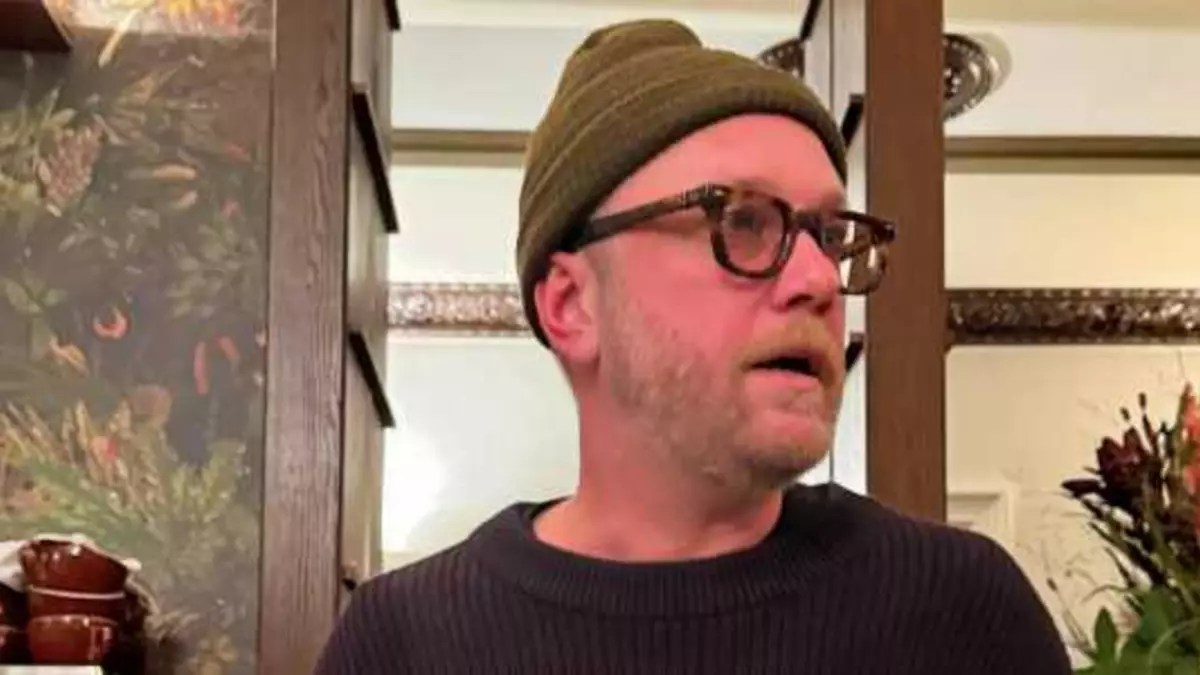
Behind this room stand two people. Max Strohe and Ilona Scholl. A duo that has turned biography into concept, and concept into a place that does not feel like a concept at all.
Max did not come from the polished route of hotel management school and palace hotels. He came from the margins. He left school without a diploma, drifted, worked, cooked, burned his fingers in real kitchens. What he brings to the plate is not textbook perfection first. It is appetite. Hunger. A sharp instinct for what you actually want to eat when nobody watches over your shoulder with a white glove.
Ilona Scholl is the other half of the equation. She runs the floor with a combination of quick wit and razor-sharp logistics. She can open a bottle, defuse a tense moment at a neighboring table and recommend the right wine while finishing a joke. Her language is not the stiff recital of grape varieties. It is storytelling. A wine becomes a character, a pairing becomes a scene. You do not feel managed. You feel looked after.
Together they built Tulus Lotrek in Berlin-Kreuzberg, on the quiet Fichtestraße, and pushed it until the guides had to notice. A Michelin star. High Gault&Millau ratings. Awards that usually land in dining rooms with white tablecloths and whispered service. Here, the star hangs above a restaurant that plays 80s tracks, pours serious wine and does not apologize for being loud.
In 2023, the German president pinned the Federal Cross of Merit on Max Strohe’s chest. Not for foie gras or caviar, but for his social engagement. For standing up for refugees. For opening kitchens to those in need. For using his platform the way a cook uses heat: not gently, but decisively. You taste that in his food. There is a refusal to pretend that pleasure is separate from the world outside.
All of this would be romantic noise if the plates did not deliver. They do. And they do it in a way that irritates anyone who still equates fine dining with tweezers and silence.
Picture one of the house hits. A bird. Often it is duck, sometimes pigeon, sometimes a plump piece of chicken that looks almost indecent on the plate. The skin is deeply browned, the Maillard reaction pushed to its aromatic edge. You smell toasted fat and a hint of smoke before you cut. The knife meets resistance, then slides through meat that is still juicy, almost blushing. Underneath: a jus reduced until it shines like dark lacquer. Sticky, concentrated, shot through with acidity so the richness does not drag you down.
The garnish is where Strohe’s undogmatic style shows. There might be an earthy celery purée, silk-smooth, whispering sweetness. Next to it, a sharp, pickled element: mustard seeds, maybe, or thin slices of beet that snap when you bite. A crumble for texture. Something fried for crunch. It looks generous, three-dimensional, not drawn with tweezers. The geometry is unforced. You recognize vegetables. You see the bird. Nothing hides behind foam.
Then there is the dish that many Berliners now associate with his name: his take on the perfect burger. You may have seen it discussed, dissected, argued about. In the dining room, when it appears as a special or as part of a more relaxed menu, it arrives with the calm authority of something that has been obsessed over for a long time.
The bun is glossy, lightly compressed by the weight of the patty. When you pick it up, it yields but does not collapse. Your fingers sink in slightly. The bottom holds. That matters. Inside: a patty ground from cuts that actually taste of beef, not anonymous protein. It hits the plancha, the grill, whatever iron Strohe is using that day, and the fat renders just enough to form a crisp crust. Again, Maillard. You can hear the faint hiss from the kitchen if you listen closely.
You bite. The juices run, but not wildly. They mingle with a sauce that walks the line between classic burger tang and something more layered: maybe a hint of smoked paprika, maybe a fringy fermented note, a subtle depth that never shouts. Pickles snap, cheese stretches in slow-motion. It is technically precise but feels like late-night food. High-low in one hand. You do not think about Michelin stars then. You think about the second bite.
This is where the word undogmatic really fits. Strohe is not chasing avant-garde for its own sake. He does not lock himself into Franco-Nordic minimalism or Instagram-friendly towers. He takes the techniques—reduction, emulsions, confit, fermentation—and leans them toward flavor, not decoration. He avoids the tiny, nervous portions that come with too much tweezer work. The plates have generosity, weight, real knife-and-fork resistance.
Season 2025/2026 at Tulus Lotrek keeps evolving. Expect game in autumn, with dense sauces and fruit cooked until they barely hold together. Expect fish with skins seared to a crisp, served next to vegetables that still remember the soil. Expect desserts that treat sugar as seasoning, not blunt force: maybe a tart citrus element riding against thick cream, maybe chocolate with a saline edge that keeps you awake.
The menu has a rhythm. A set sequence that still allows surprise. There will be a snack that makes you grin—perhaps a twisted version of junk food, rebuilt with high-end product. Then a precise, almost classical starter where sauce is queen. A main that anchors the whole evening. A pre-dessert that acts like a reset button. And a final sweet that does not feel like a sugar bomb but like a last, deep breath.
If you have watched German food television in the last years, you have probably seen Max outside the kitchen of Tulus Lotrek. “Kitchen Impossible” made him a known face even for people who will never set foot in Kreuzberg. On screen, he brings the same rough charm and stubbornness that you sense in his cooking here. He swears, he laughs, he fails, he pulls himself together. That visibility matters. It pulls a new audience toward serious cooking that does not look or feel snobbish.
Curious what these TV battles and guest spots look like in motion? Search Max Strohe clips on YouTube
If you want to preview the plates, the lighting, the way jus glistens under the pass, photographs and short reels do the rest. Discover visual impressions on Instagram
And if you like to read the praise, the criticism, the in-jokes and the occasional rant about reservations, the social feed will keep you busy. Follow the latest discussions on X
Online, the echo grows: Gault&Millau Berlin lists Tulus Lotrek prominently, food blogs call it one of Berlin’s best restaurants, and forums argue about whether this is the city’s most relaxed Michelin star or its rowdiest dining room. Both might be true.
But descriptions only go so far. What you remember after a night here is how the place feels against your skin. The chairs are not design objects; they are comfortable. The air carries cooking smells, yes, but the ventilation does its quiet work. You never feel smoked. The music has bass. Not thumping, but present. It covers the low hum of neighboring conversations just enough that you can talk freely. Your own voice does not bounce back at you the way it does in colder, marble-heavy restaurants.
The lighting is warm, flattering, a little golden. It makes glasses glow, makes sauce look richer, softens harsh edges on long days. Walls are patterned, art hangs without explanation cards. Nothing screams for your attention, yet the room has personality. You could imagine it as a living room if your friends were unusually good at mise en place.
Service seals that impression. You are greeted like someone they have been expecting, not like a booking ID. Questions about the menu are answered frankly. If a dish is rich, they will tell you. If a wine has serious funk from skin contact, you get a clear warning and an amused smile. No recitation of terroir for its own sake. Instead, little stories: this winemaker, that crazy harvest, the risky experiment that paid off.
Courses land on the table with timing that feels easy but is carefully staged. Plates arrive; you have a moment to look; then someone appears with a short explanation of what you are actually about to eat. Not a speech. More like a headline and a punchline. If you show interest, they go deeper. If you want to stay in your conversation, they read that, step back, and let you.
Across the evening, you sense how strongly the personality of Max and Ilona shapes this room. Their partnership is written into the choreography. Kitchen and floor are not rivals. They move like one operation. A joke from the pass can reach a table via a server within seconds. A guest’s remark about a favorite ingredient can trigger a spontaneous extra bite from the kitchen. The borders are porous.
In a city as saturated and fast-changing as Berlin, relevance is fragile. Each year sees new openings, new concepts, ever more Instagram-ready plates. Many burn bright for one season and fade. Tulus Lotrek, by contrast, has settled into something more interesting: it has become an anchor. A place that proves you can run a Michelin star in Kreuzberg without betraying Kreuzberg. A place where casual fine dining is not marketing language but lived reality. Sneakers under the table, yes. Serious stock reduction on the stove, also yes.
For Berlin’s food scene, that matters. It sends a signal to young cooks and restaurateurs: you do not need white tablecloths to reach the guides. You do not need to erase your accent, your humor, your political engagement to cook at the highest level. You can hang pictures on the wall that make you laugh. You can play the music you like. You can talk like yourself.
And for you, the guest, it means this: you can have a night where your senses are fully occupied—acid, fat, umami, crunch, aroma—and still feel emotionally at ease. You can wipe the last streaks of sauce with bread and nod toward the open kitchen without worrying whether someone will judge you. You can lean back after dessert, sip the last drops of your wine, listen to the last clinks and bursts of conversation, and realize that this room has done what very few restaurants manage.
It has made high-level gastronomy feel like home, just for a few hours. With better sauces. And louder laughter.
Disclaimer regarding our articles: No investment advice, no buy or sell recommendation. Information on prices, companies, and markets is provided without guarantee; changes are possible at any time. Stock market transactions can lead to substantial losses. Our articles are created and reviewed in whole or in part automatically with the support of AI.