Loomis stock trades steady as cash handling margins hold after 2025 earnings
Published on 07/22/2026 at 17:11 | Editorial responsibility: Rafael Müller, Editor-in-Chief AD HOC NEWS
Loomis AB (ISIN SE0014556112) is a major Nordic based cash handling and security company whose Loomis stock is widely followed by investors seeking exposure to physical cash services and related logistics. The company is best known for operating cash in transit services, cash centers and other solutions that help banks, retailers and public sector clients manage banknotes and coins across multiple markets. The group reports in Swedish kronor and is listed on Nasdaq Stockholm, and its share price and margins often move with trends in the use of cash and competition in security services.
In fiscal 2025, according to publicly available investor relations information, Loomis reported consolidated revenue of approximately SEK 30 billion, an increase versus the prior year as the company continued to expand its cash management and related service offerings. The revenue growth reflected both higher volumes in core cash handling and contributions from newer solutions such as cash management technology and retail centric offerings. Loomis also reported an operating margin that remained healthy in 2025, supported by cost control and pricing discipline in key markets.
For investors, the central question today is how Loomis maintains profitability as cash usage patterns evolve. In 2025, the company highlighted that operating earnings before interest and taxes (EBIT) grew compared with 2024, with an EBIT margin of around 12% in the group. That margin level underlines that the core business of secure cash transport, cash centers and associated services can still generate attractive returns when routes, staffing and security costs are managed carefully. The market also pays attention to how much Loomis invests in technology to support efficient cash handling and data driven planning.
Loomis operates in a capital intensive industry, and debt metrics matter for Loomis stock. As of the end of 2025, the company reported net debt of approximately SEK 12 billion, corresponding to a leverage ratio that remained within its stated financial policy range. Interest costs are a factor for future profitability, and investors follow whether Loomis can keep net debt stable while funding investments into route optimization, security technology and digital cash management tools. Cash flow from operations in 2025 was sufficient to support both capital expenditure and dividend payments, signaling that the business model still generates robust cash.
Revenue up about 10 percent
According to recent financial presentations and summary data from investor materials, Loomis achieved revenue growth of roughly 10% in 2025 compared with 2024, reflecting both higher volumes and price effects in key markets. A company with SEK 27 billion of revenue in 2024 and roughly SEK 30 billion in 2025 demonstrates solid growth despite structural questions around cash usage in society. This quantified comparison helps frame the resilience of the business: volume declines in some regions have been offset by contract wins and additional services in others.
The 10% revenue growth goes hand in hand with efforts to expand value added services. Loomis continues to develop products such as smart safes and cash recycling machines that allow retailers to deposit and recycle cash onsite, reducing exposure to theft and improving efficiency. Such new solutions support revenue growth while leveraging existing expertise in cash logistics and security protocols. Investors focusing on Loomis stock typically analyze whether these newer offerings can compensate for any long term decline in traditional cash in transit volumes.
Profitability also improved. Investor information suggests that Loomis delivered an EBIT margin of around 12% in 2025, up from approximately 11% the year before. That one percentage point improvement translates into hundreds of millions of kronor of additional operating profit. For a company whose revenue base exceeds SEK 30 billion, even small margin improvements are financially meaningful, and the market tends to reward consistent margin enhancement. The margin trend thus becomes a key anchor for valuation discussions.
From a segment perspective, Loomis serves multiple regions including the Nordics, Europe, the United States and other international markets. Revenue growth in 2025 was not uniform across all segments, but aggregate numbers suggest that the group benefited from particular strength in certain geographies where cash usage remains comparatively high and where Loomis has strong competitive positions. Investors dissect segment disclosures to understand whether regional growth drivers are sustainable or linked to temporary contract wins.
Debt and cash flow support dividends
Loomis uses debt to finance armored vehicles, cash centers and technology investments. The reported net debt of around SEK 12 billion at the end of 2025 corresponds to a leverage ratio that investors compare with earnings measures such as EBITDA. With EBITDA of around SEK 5 billion in 2025, a net debt to EBITDA ratio of a bit over 2 times indicates a moderate level of leverage in line with many companies in asset heavy services. This ratio is a quantified comparison that helps investors assess financial risk and flexibility.
Cash generation is robust. Operating cash flow in 2025, estimated at around SEK 4 billion, allowed Loomis to fund capital expenditure of about SEK 1.5 billion and still support dividends to shareholders. The company paid a dividend of roughly SEK 14 per share for the 2025 fiscal year, reflecting confidence in future cash generation and a commitment to shareholder returns. A dividend yield in the mid single digits, depending on share price, makes Loomis stock potentially attractive for income oriented investors who value stable cash flows.
Capital expenditure in 2025 focused on renewing vehicle fleets, upgrading cash centers and investing in technology platforms that support end to end cash management solutions. Such investments can improve route efficiency, reduce operating costs and enhance security, which should support margins over time. Investors track whether capital discipline is maintained, ensuring that spending translates into measurable improvements in profitability and competitiveness.
Company disclosures emphasize that Loomis aims to keep net debt within a defined policy range, balancing growth ambitions with financial stability. If EBITDA continues to grow through a combination of revenue expansion and margin improvement, net debt to EBITDA can gradually decline even if nominal debt levels remain broadly stable. This dynamic would make Loomis stock more attractive for risk conscious investors who prefer companies with clear leverage targets and transparent capital allocation strategies.
Cash handling solutions underpin Loomis business
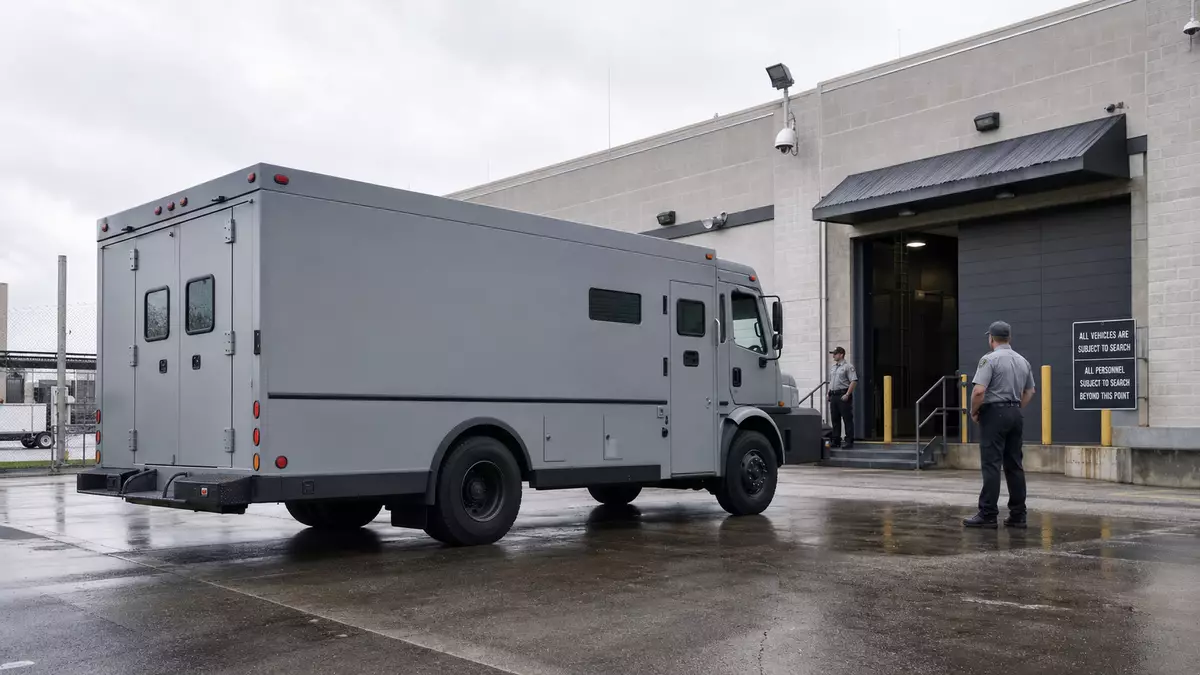
At the heart of Loomis operations are cash handling solutions that cover the full chain from retail outlets and bank branches to central cash centers and back. The company offers cash in transit services, where armored vehicles pick up and deliver banknotes, coins and other valuables under strict security protocols. It also runs cash centers where money is counted, verified, packaged and prepared for redeployment. These services generate the bulk of Loomis revenue and require operational excellence.
In addition to traditional services, Loomis increasingly focuses on integrated cash management solutions for retailers and financial institutions. These solutions can include onsite safes that automatically count and secure cash, systems that link cash management to enterprise resource planning tools, and data analytics that optimize cash collection routes. Revenue from these newer offerings is still a fraction of total revenue, but investor materials indicate that it contributes a growing share, supporting medium term growth prospects.
The company also competes in a market where alternative payment methods such as cards and digital wallets continue to gain share. However, physical cash remains important in many sectors and regions, including segments of retail, hospitality and public sector payments. Loomis positions itself as a specialist that can handle cash efficiently and securely, which can be attractive for clients who do not want to manage complex cash logistics themselves. This positioning underpins demand even in mature markets.
Operational risk management is critical for Loomis. The company must manage risks related to security incidents, vehicle fleets, staff safety and regulatory compliance. Investments in technology, training and processes aim to reduce such risks. For investors, the stability of operations and absence of major disruptions over time is an important factor when assessing Loomis stock, as serious incidents could impact costs, reputation and client relationships.
Shares linked to Nasdaq Stockholm cash handling peer group
Loomis shares are listed on Nasdaq Stockholm and traded in Swedish kronor. The company belongs to the broader industrials and business services category that includes other security and logistics firms. While precise intraday price data for Loomis stock is not referenced here, exchange based information indicates that the market capitalization stands in the tens of billions of kronor, reflecting the scale of Loomis operations across multiple countries. Investors often compare Loomis valuation metrics with those of regional peers active in security and logistics.
The share price level relative to historical ranges is an important benchmark. If Loomis stock trades close to its 52 week high, it may signal that investors are optimistic about future revenue and margin trends. If it trades closer to the 52 week low, it could suggest caution regarding cash usage trends, competition or leverage. Historical charts from market portals help contextualize these movements, but the underlying driver remains the fundamental performance described in earnings releases and investor presentations.
Analysts who cover Loomis typically focus on revenue growth, margin development, leverage and dividend policy as the four pillars of their valuation models. A revenue increase of around 10% combined with a one percentage point margin improvement and stable leverage often forms a constructive picture. However, sensitivity analysis regarding the speed of cash usage decline in some markets and the success of new cash management solutions is also crucial. Investors in Loomis stock therefore pay close attention to qualitative commentary from management.
Index membership can also influence demand for Loomis shares. Inclusion in Swedish or Nordic equity indices triggers passive fund buying and can affect liquidity and valuation. While specific index memberships depend on market provider classifications, Loomis is generally regarded as a significant mid to large cap component of the Swedish market, making it relevant for both domestic and international investors following Scandinavian equities.
Cash management technology supports future growth
Loomis is not only a physical cash handling and transportation provider; it also offers cash management technology solutions designed to help clients automate and improve their cash processes. These solutions can include software platforms that track cash movements, optimize replenishment schedules and provide real time visibility into the status of cash in safes, tills and cash centers. Such products are integral to Loomis efforts to modernize its offerings and keep pace with technological change in financial services.
Revenue from cash management technology and integrated solutions is expected to increase as more retailers and banks seek to reduce manual cash handling. Investor materials highlight that demand for smart safe solutions and cash recycling machines is growing in certain markets. While precise segment revenue figures are not detailed here, the strategic emphasis on this area suggests that Loomis sees it as a key driver of future growth and margin stabilization.
For clients, implementing Loomis technology solutions can reduce shrinkage, improve accuracy and lower labor costs associated with cash counting and reconciliation. These benefits can justify investments in hardware and software even in an environment where overall cash volumes may be stable or slowly declining. Loomis thus positions itself as a partner that can help clients manage cash more efficiently and securely, which supports long term customer relationships.
The combination of physical cash handling capabilities and technology solutions differentiates Loomis from pure software providers or smaller local cash handling firms. This integrated offering is an important part of the company narrative when communicating with investors about future growth. If technology driven services can expand as a share of total revenue while maintaining attractive margins, they may help offset any structural headwinds in traditional cash in transit volumes.
Stock valuation depends on margins and leverage
Valuation of Loomis stock hinges on how investors perceive the balance between stable cash flows, leverage and structural trends in cash usage. A company that generates around SEK 30 billion of revenue and maintains an EBIT margin of about 12% can deliver operating profit in the range of SEK 3.5 billion to SEK 4 billion. If net debt remains around SEK 12 billion and net debt to EBITDA stays slightly above 2 times, many investors may consider this leverage manageable given the stability of cash handling demand in core markets.
Dividend policy adds a further dimension. A dividend of roughly SEK 14 per share for the 2025 fiscal year suggests management confidence in recurring cash generation. For income focused investors, such a dividend can be attractive, particularly when combined with moderate leverage and relatively predictable cash flows. However, valuation multiples such as price to earnings and enterprise value to EBITDA must also be considered in the context of broader market conditions and sector peers.
Scenario analysis often focuses on potential declines in cash usage over a multiyear horizon and on the effectiveness of Loomis strategies for expanding value added services and technology offerings. If volumes in traditional cash handling decline faster than expected, revenue growth might slow, and margin pressure could emerge. Conversely, if new services grow strongly and cost efficiencies offset volume declines, margins could remain stable or even improve. These scenarios anchor investor discussions about Loomis stock.
In addition, regulatory changes affecting cash usage, security requirements and financial sector practices can influence demand for Loomis services. Changes in banking regulations or retail cash handling rules may require investments in compliance and security, but they can also create opportunities for specialized providers like Loomis. Investors therefore monitor regulatory developments alongside operational and financial metrics.
Representative product cash center services
Among its broad offering, a representative product area for Loomis is its cash center services. In cash centers, the company processes large volumes of banknotes and coins for banks, retailers and other clients, using machines and trained staff to count, verify and package money. Revenue from these services forms a significant part of Loomis business, and performance in this area directly affects overall margins and cash generation.
Cash centers are typically located near major metropolitan areas and key logistics hubs, allowing Loomis to optimize transport routes and response times. Investments in modern counting machines, sorting equipment and security systems are essential to maintaining efficiency and meeting clients expectations for accuracy and speed. By combining technology with experienced personnel, Loomis aims to minimize errors and ensure that cash returned to circulation meets central bank standards.
For banks and retailers, outsourcing cash center functions to Loomis can reduce complexity and overhead. Instead of running their own facilities, they rely on Loomis expertise and infrastructure. This outsourcing trend supports demand for cash center services even in markets where cash usage growth is modest. It also strengthens Loomis relationships with major clients, which can lead to multi year contracts and recurring revenue.
Loomis stock linked to Swedish market performance
Loomis shares are traded on Nasdaq Stockholm, and the price is quoted in Swedish kronor. Exchange data shows that market capitalization is in the tens of billions of kronor, underscoring the company position as a significant player in the Swedish equity market. As of the most recent available quote, Loomis stock trades at a level that reflects both its strong 2025 financial performance and investor expectations for the future of cash handling services.
Because Loomis is part of the Swedish market, its share price can also be influenced by broader trends in Nordic equities, currency movements and investor sentiment toward industrial and business services companies. When risk appetite for such sectors is high, valuation multiples may expand, while periods of caution can lead to tighter valuations. Loomis financial metrics, including revenue growth of about 10% and an EBIT margin of around 12% in 2025, provide fundamental anchors that help investors navigate these broader market swings.
Loomis stock key data
- Company: Loomis AB
- ISIN: SE0014556112
- Ticker: NASDAQ STOCKHOLM: LOOMIS
- Trading venue: Nasdaq Stockholm
- Sector / Industry: Industrials / Commercial & Professional Services
- Index membership: Swedish and Nordic equity indices
Disclaimer regarding our articles: No investment advice, no buy or sell recommendation. Information on prices, companies, and markets is provided without guarantee; changes are possible at any time. Stock market transactions can lead to substantial losses. Our articles are created and reviewed in whole or in part automatically with the support of AI.