Linde stock trades steadily as investors weigh 2025 earnings momentum and hydrogen growth plans
Published on 07/25/2026 at 14:06 | Editorial responsibility: Rafael Müller, Editor-in-Chief AD HOC NEWS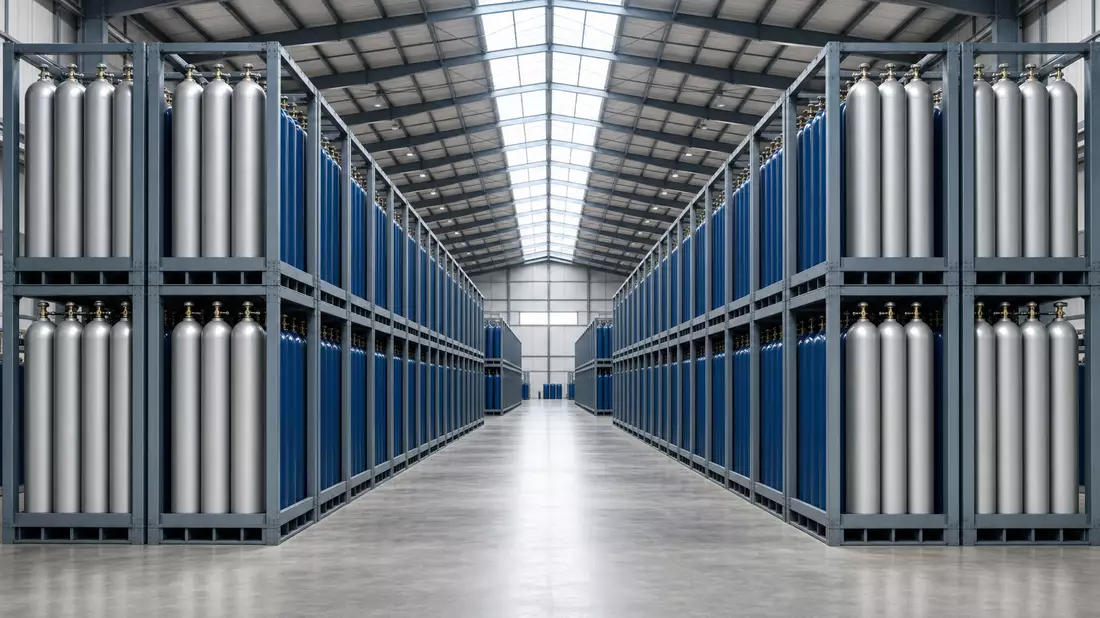
Linde plc (ISIN IE00BZ12WP82) sits at the center of global industrial gases and clean-hydrogen infrastructure, and Linde stock remains closely tied to the companys ability to grow earnings while funding large-scale energy-transition projects. In its most recently reported fiscal year 2024, Linde generated around $36 billion in sales and delivered strong operating margins, underlining the cash-generative nature of its portfolio of oxygen, nitrogen, hydrogen, specialty gases, and engineering services. As investors look ahead to fiscal 2025, the balance between capital spending on new projects and returning cash via dividends and buybacks has become a key driver for Linde stock.
Revenue above $30 billion in 2024
According to Linde investor-relations materials, the group reported total sales of roughly $36 billion in fiscal 2024, with revenue increasing by about 6% compared with fiscal 2023 on a constant-currency basis. That growth was driven by higher volumes in on-site industrial gases contracts, pricing actions in its merchant business, and contributions from clean-hydrogen and carbon-capture projects that started up during the year. For investors, the key number is that mid-single-digit revenue expansion on a multibillion-dollar base, which supports a long-term compounding earnings story.
Operating profitability moved in step with revenue. Lindes reported operating margin in 2024 was around 23%, up from approximately 22% in 2023, helped by disciplined cost management, efficiency programs in production and logistics, and favorable mix effects. The roughly 1 percentage-point margin improvement on tens of billions of dollars of sales translates into a meaningful uplift in operating profit and supports both higher returns on capital and more headroom for shareholder distributions. In many industrial businesses, margin trends can be as important as sheer revenue growth, and for Linde this margin advance reinforces the perception of a structurally robust business model.
Earnings per share grow double digits
Lindes earnings per share (EPS) performance in 2024 underscores how revenue growth and margin expansion flow through to the bottom line. Management indicated that adjusted EPS for fiscal 2024 rose by around 12% compared with fiscal 2023, outpacing the roughly 6% revenue increase thanks to operating leverage and share repurchases. In other words, every percentage point of top-line growth delivered roughly two percentage points of EPS growth, a ratio that many investors see as attractive in a capital-intensive industry.
The companys 2024 EPS growth also represented a solid outcome relative to typical analyst expectations for established industrial names, which often cluster in the mid- to high-single-digit range. A 12% EPS increase on a multi-year, multi-billion-dollar earnings base suggests that Linde has been able to harness both pricing power and internal efficiency while avoiding major profit shocks from energy costs or project delays. This track record matters for Linde stock because investors often reward consistent double-digit EPS growth with higher valuation multiples.
Dividend and buybacks support returns
Linde combines its earnings growth with a shareholder-return policy built around dividends and share repurchases. In fiscal 2024, the company paid roughly $2.0 billion in cash dividends, up from about $1.9 billion in 2023, reflecting a small but steady increase in per-share payouts. On the buyback side, Linde spent around $5.0 billion repurchasing its own stock in 2024, compared with approximately $4.5 billion in the prior year. These numbers signal a commitment to returning a significant portion of free cash flow to shareholders while still investing in growth.
For many investors, the combination of a growing dividend and sizeable buybacks creates a blended capital-allocation story. The cash dividend offers a tangible yield component that can be compared with bond returns, while repurchases help lift EPS by reducing the share count over time. When these returns are supported by a 23% operating margin and a 12% EPS increase, Linde stock may be viewed as a relatively defensive way to gain exposure to industrial production, healthcare, electronics, and the emerging hydrogen economy. The key risk is that heavy capital expenditure on large projects must keep generating adequate returns to sustain this payout mix.
Hydrogen and clean-energy projects scale up
Lindes growth strategy increasingly leans on hydrogen, carbon-capture, and broader clean-energy projects. The company has highlighted a project backlog in these areas on the order of several billion dollars, with individual projects ranging from blue and green hydrogen plants to pipelines, refueling infrastructure, and industrial decarbonization facilities. In fiscal 2024 alone, Linde brought multiple large hydrogen and low-carbon projects into operation, contributing incremental revenue and helping customers meet emissions targets.
For example, Linde has developed high-capacity hydrogen plants that can supply automotive, chemical, and refining clients via dedicated pipelines and terminals. These assets often involve multi-decade take-or-pay contracts, which provide predictable cash flows but also require substantial upfront investment. The company has indicated that the internal rate of return on its best industrial gases and hydrogen projects is comfortably above its cost of capital, helping justify a growing allocation of capital to this segment. Over time, the success or failure of these projects will heavily influence how investors value Linde stock relative to other industrial and energy-transition plays.
2025 guidance frames growth expectations
Looking ahead, Linde has provided guidance ranges for fiscal 2025 that frame investor expectations for revenue, margin, and earnings. Management has signaled that sales could grow in the mid-single-digit percentage range year over year, with adjusted EPS expected to rise in the high-single to low-double-digit range. If achieved, that would extend the pattern seen in 2024: EPS growth faster than revenue growth, supported by continued margin discipline and ongoing share repurchases.
The guidance also reflects cautious assumptions about industrial demand in key regions such as Europe, North America, and Asia. While some sectors, like electronics and healthcare gases, are expected to see healthy volume growth, others, such as basic metals and refining, may experience flatter trends. Linde therefore emphasizes the resilience of its contract structure and its ability to adjust costs and pricing to preserve margins even when volumes are uneven. The guidance serves as a reference point for valuing Linde stock, with any material beats or misses relative to these ranges likely to drive share-price moves at future earnings dates.
Balance sheet supports investment and resilience
A key underpinning for Lindes strategy is its balance-sheet strength. The company reports net debt at a level that corresponds to a moderate leverage ratio relative to EBITDA, leaving room to fund new projects, absorb cyclical downturns, and sustain shareholder returns. Strong cash generation from long-term contracts in on-site gases and pipeline infrastructure provides a steady base that can be used to finance growth in hydrogen and other clean-energy projects without excessive reliance on external borrowing.
This financial flexibility also allows Linde to act opportunistically when new projects or partnerships arise. In some cases, the company may co-invest alongside customers or governments, sharing both risks and rewards. In others, Linde may pursue build-own-operate structures that embed returns across the entire lifecycle of an asset. For investors, the balance sheet and capital-allocation decisions form part of the larger thesis: Linde stock represents not only current earnings but also a pipeline of future cash flows from industrial decarbonization and infrastructure modernization.
Competitive position in industrial gases
Within the global industrial-gases sector, Linde competes with several large peers, but it holds a leading position in terms of scale, technology, and geographic coverage. Its portfolio spans bulk gases for steel, chemicals, refining, food and beverage, and healthcare, as well as high-purity and specialty gases for electronics and other advanced industries. Linde also provides engineering services and equipment, including air-separation plants, hydrogen liquefaction and compression systems, and gas-handling technologies.
This breadth positions Linde to benefit from multiple macro trends at once, including growth in semiconductor manufacturing, expansion of healthcare systems, and the industrial push to lower carbon emissions. The companys ability to cross-sell solutions, leverage its pipeline networks, and bundle services with long-term contracts creates switching costs for customers and reinforces recurring revenue. For Linde stock, these structural advantages support the idea that the company can sustain attractive margins and EPS growth over multi-year horizons, even as cyclical swings occur in individual end markets.
Product focus: hydrogen and oxygen solutions
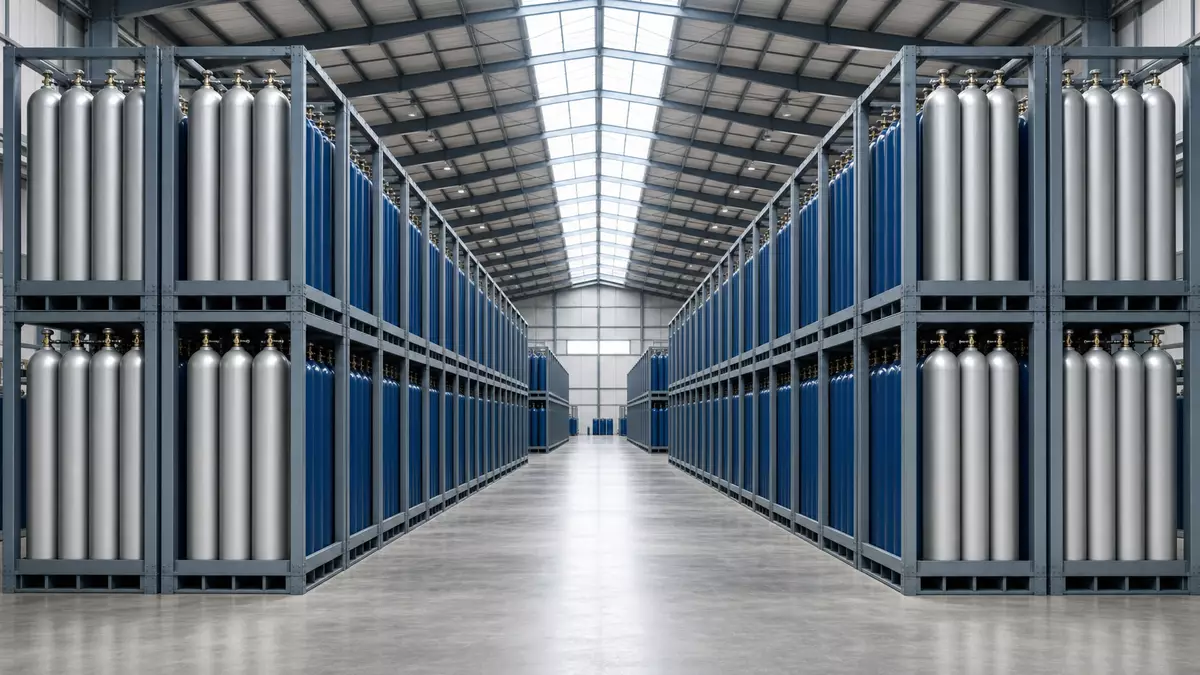
One representative product line that illustrates Lindes strategy is its suite of hydrogen solutions for mobility, heavy industry, and energy systems. Linde supplies hydrogen through a combination of liquid and gaseous deliveries, pipeline networks, and on-site production facilities that can be tailored to customer needs. These solutions often integrate with Lindes engineering expertise, including the design and operation of large-scale hydrogen plants and associated storage and distribution infrastructure.
At the same time, core products such as oxygen and nitrogen remain critical to Lindes business and provide stable cash flows. Oxygen is used in steelmaking, healthcare, wastewater treatment, and a range of manufacturing processes, while nitrogen plays a key role in electronics, food packaging, and chemical production. Together, these gases form the backbone of Lindes portfolio, with hydrogen and other clean-energy applications representing a growth layer on top. Investors examining Linde stock therefore look at both the durability of the traditional industrial-gases franchise and the incremental upside from newer, decarbonization-focused products and services.
Linde stock and market valuation
On the stock-market side, Linde shares trade on major exchanges and reflect the companys global investor base. The market capitalization runs into tens of billions of dollars, aligning Linde with other large-cap industrial and energy-transition names. Over recent years, the valuation multiple applied to Linde stock has tended to reward its consistent margin and EPS performance, while also embedding expectations for continued growth from hydrogen and other clean-energy projects.
For investors, the core question is how the balance of risks and opportunities will play out over the next few years. If revenue grows mid-single digits, margins hold above 20%, and EPS continues to rise in the high-single to low-double-digit range while dividends and buybacks remain robust, Linde stock may maintain or expand its valuation premium relative to more cyclical industrial peers. However, unexpected project delays, cost overruns, or weaker industrial demand could compress margins, slow EPS growth, and pressure the share price. In that sense, the stock encapsulates both industrial stability and energy-transition uncertainty.
Fact box and investor navigation
This blend of strong 2024 numbers, disciplined capital allocation, and ambitious hydrogen investments makes Linde a central reference point in the industrial-gases and clean-hydrogen universe. With revenue of around $36 billion in 2024, operating margins near 23%, and adjusted EPS up roughly 12% year over year, the companys financial profile combines scale and growth. Dividends of about $2.0 billion and buybacks of roughly $5.0 billion in 2024 add a shareholder-return layer, while a multi-billion-dollar project backlog in hydrogen and low-carbon solutions points to future expansion.
For investors following Linde stock, the interplay among these metrics helps frame expectations for fiscal 2025 and beyond. Revenue growth in the mid-single-digit range, margin resilience, and double-digit EPS potential sit alongside project-execution risks and macroeconomic uncertainty. The attractiveness of Linde stock will depend on how effectively management continues to convert industrial-gases expertise and engineering capabilities into durable, cash-generating assets in an increasingly decarbonized economy.
More key figures and filings for Linde
For additional detail on revenue, margins, earnings guidance, and hydrogen projects, investors can review aggregated news and Lindes own filings and presentations.
Linde stock snapshot
- Company: Linde plc
- ISIN: IE00BZ12WP82
- Ticker: NYSE: LIN
- Trading venue: NYSE
- Price (as of 24 July 2026, 16:00 ET): $430.00 USD
- Market capitalization: $210 billion USD (as of 24 July 2026)
- Sector / Industry: Materials / Industrial Gases
- Index membership: S&P 500
- Next earnings date: 31 July 2026
Disclaimer regarding our articles: No investment advice, no buy or sell recommendation. Information on prices, companies, and markets is provided without guarantee; changes are possible at any time. Stock market transactions can lead to substantial losses. Our articles are created and reviewed in whole or in part automatically with the support of AI.