Linde stock trades near record levels as earnings and hydrogen investments support valuation
Published on 07/24/2026 at 20:10 | Editorial responsibility: Rafael Müller, Editor-in-Chief AD HOC NEWS
Linde stock remains one of the larger names in global industrial gases and engineering, with Linde plc (ISIN IE00BZ12WP82) listed on the New York Stock Exchange and included in the S&P 500 index. In its most recent reported quarter, according to the companys investor information on 30 April 2024, Linde generated multibillion dollar revenue and earnings that underlined its role as a key supplier of gases and related technologies to manufacturing, healthcare, and clean energy projects. For investors, the relationship between earnings growth, capital spending on hydrogen and other clean-energy infrastructure, and the current share price now provides the main reference points for valuation.
Revenue growth and margin discipline
According to information available via Linde plc investor relations for the first quarter of 2024, the company reported revenue of approximately $8.1 billion in that period, compared with around $8.0 billion in the first quarter of 2023. The year on year increase in revenue was therefore close to one to two percent, reflecting a combination of price increases, new project contributions, and some volume growth in key segments. Within this revenue base, operating performance was characterized by disciplined cost control and mix management, which helped earnings before interest, taxes, depreciation and amortization to grow faster than sales.
In the same Q1 2024 period, Linde reported adjusted earnings per share of about $3.75, up from near $3.42 a year earlier, representing growth of roughly 9 to 10 percent, again according to figures communicated through the companys investor materials. This increase in per share earnings outpaced the modest revenue growth and reflected both margin expansion and capital structure effects. Net income attributable to Linde plc for the quarter was in the region of $1.8 billion, compared with approximately $1.6 billion in the prior year quarter, marking year on year growth of around 12 percent.
Management also commented that operating margins remained robust, with adjusted operating profit margins in the mid twenties percent range. When conversion of revenue to operating income is sustained at this level, the company has more flexibility to fund capital expenditure and shareholder returns while absorbing cyclical swings in end markets. For investors analyzing Linde stock, the combination of relatively stable revenue and meaningfully higher earnings per share often signals that margin management and portfolio discipline are central to the equity story.
Hydrogen and clean-energy projects above $10 billion
Beyond quarterly numbers, the strategic focus on hydrogen and other clean-energy infrastructure has become a core element of Lindes investment case. The company has described in presentations and filings a portfolio of clean hydrogen, carbon capture, and related projects with expected capital expenditure commitments in the double digit billion dollar range over the coming years. One representative figure frequently referenced is a pipeline of clean-energy projects valued at more than $10 billion in total expected investment, spanning green hydrogen production, hydrogen liquefaction plants, and supporting infrastructure.
In one example cited in Linde documentation for 2023, the company highlighted a major green hydrogen project where it expected to invest around $1.0 billion in production facilities and associated assets, with long term offtake agreements in place with industrial customers. Another project in the United States connected to blue hydrogen and carbon capture was described with an investment framework of several hundred million dollars. Taken together, these projects illustrate how capital allocation has shifted toward supporting decarbonization efforts while still generating returns through long term contracts.
Compared with historical investment levels, the current clean-energy pipeline is larger. For instance, management has noted that the cumulative clean hydrogen and related investments planned for the coming decade exceed those undertaken in the previous decade by a significant margin. While exact comparative numbers depend on project classifications, the directional change is clear: more capital is now being deployed to hydrogen, carbon capture, and other energy transition initiatives than before.
Earnings trend versus past performance
Looking at the broader earnings trend, Linde reported full year 2023 sales of around $32 to $33 billion and adjusted earnings per share of roughly $14.00, based on publicly available investor relations data. In 2022, comparable figures were somewhat lower, with revenue closer to $30 billion and adjusted EPS in the approximate range of $11.40 to $12.00. This implies that over two years, revenue increased by about $2 to $3 billion and adjusted earnings per share rose by nearly $2 to $3 per share, indicating high single digit to low double digit annual growth rates.
Net income also grew over that period. In 2023, Linde reported net income attributable to shareholders of approximately $5.3 billion, compared with nearer $4.0 to $4.5 billion in 2022, which would represent a year on year increase of roughly 15 to 25 percent, depending on the exact base figure used. These gains in profitability were driven by price management, project execution, and synergies from past mergers and integrations, along with targeted portfolio actions.
Dividend payments and share repurchases have continued alongside earnings growth. Linde has paid an annual dividend per share that has increased gradually over time, for example from around $4.20 in 2022 to approximately $4.68 in 2023, and has executed share buybacks amounting to several billion dollars over multi year periods. For investors, these capital returns form part of the overall yield from Linde stock in addition to potential price appreciation.
Market capitalization above $200 billion
On the equity market side, Linde stock is currently associated with a market capitalization in excess of $200 billion, based on recent trading ranges and outstanding share count as reported by financial data providers. At a share price around the mid $400s per share and an approximate share count of 450 to 500 million, total equity value lies in a range typically cited as $200 to $220 billion. This places Linde among the larger constituents of the S&P 500 in terms of market value.
Historically, the share price has appreciated from levels around $200 per share several years ago to current levels more than double that figure. As an illustrative comparison, investors looking at a period from 2020 to 2024 would see the stock moving from roughly $190 to $220 per share into the $400s per share, representing cumulative gains well above 80 percent over four years. Such a move is supported by the earnings and dividend trends described earlier, as well as multiple expansion as investors assign higher valuations to stable cash flow and energy transition exposure.
The 52 week trading range for Linde stock has in recent months been cited in financial portals as spanning roughly from the high $300s per share to a high above $450 per share. With the current share price nearer the upper end of that range, the stock is trading close to record levels. For valuation oriented investors, the fact that the price is near historical highs while earnings and cash flows have also grown provides context for assessing whether the stock is priced primarily on current fundamentals or on expectations of future clean-energy growth.
Revenue up 10 percent in key segments
Within Lindes segment reporting, some divisions have shown faster growth than the group average. For example, in one recent year, revenue in the Americas segment increased by around 10 percent compared with the prior year, according to investor materials, driven by industrial demand, healthcare gases, and energy related projects. In contrast, revenue in certain European operations grew at lower single digit rates due to macroeconomic conditions and energy price effects.
In addition to geographic segments, Linde reports performance in categories such as onsite gas supply, merchant gases, and engineering. Onsite contracts, which typically involve long term agreements to supply large customers via dedicated plants, have generated relatively stable revenue, while merchant gases, which are sold through distribution networks in smaller quantities, have shown more cyclical behavior. Engineering revenue, related to the design and construction of plants and facilities, has fluctuated with project cycles but has been an important contributor when large installations are executed.
Comparing current segment metrics to prior years, the Americas and Asia Pacific regions have tended to grow faster than Europe in recent periods, reflecting industrial activity and investment levels. For instance, in a recent report the company described double digit volume or revenue growth in selected Asian markets, while acknowledging more modest growth or flat trends in some European industrial segments. These differences matter for investors assessing where future incremental earnings may come from.
Balance sheet and cash flow support investment
Linde maintains a substantial balance sheet with total assets in the tens of billions of dollars and equity capital similarly sizeable. Debt levels are managed to investment grade metrics, with net debt reported in investor materials at several tens of billions of dollars but within ratios that rating agencies consider consistent with strong credit quality. Cash flow from operations, after tax and interest, has been sufficient to cover capital expenditure, dividends, and share repurchases.
For example, in full year 2023, Linde reported operating cash flow of roughly $9 to $10 billion, while capital expenditures were around $4 to $5 billion, according to public data. This left several billion dollars available for dividends and buybacks. Free cash flow after capital expenditures has therefore been in the mid single digit billions, which supports ongoing investment in hydrogen and other projects while maintaining shareholder distributions.
Liquidity positions, including cash and equivalents and undrawn credit facilities, provide flexibility to seize new project opportunities as they arise. The company also operates with a portfolio of long term contracts that generate predictable cash flows, reducing reliance on short term market conditions. This financial structure underpins its capacity to undertake multi year clean-energy investments without compromising balance sheet strength.
Representative product and applications
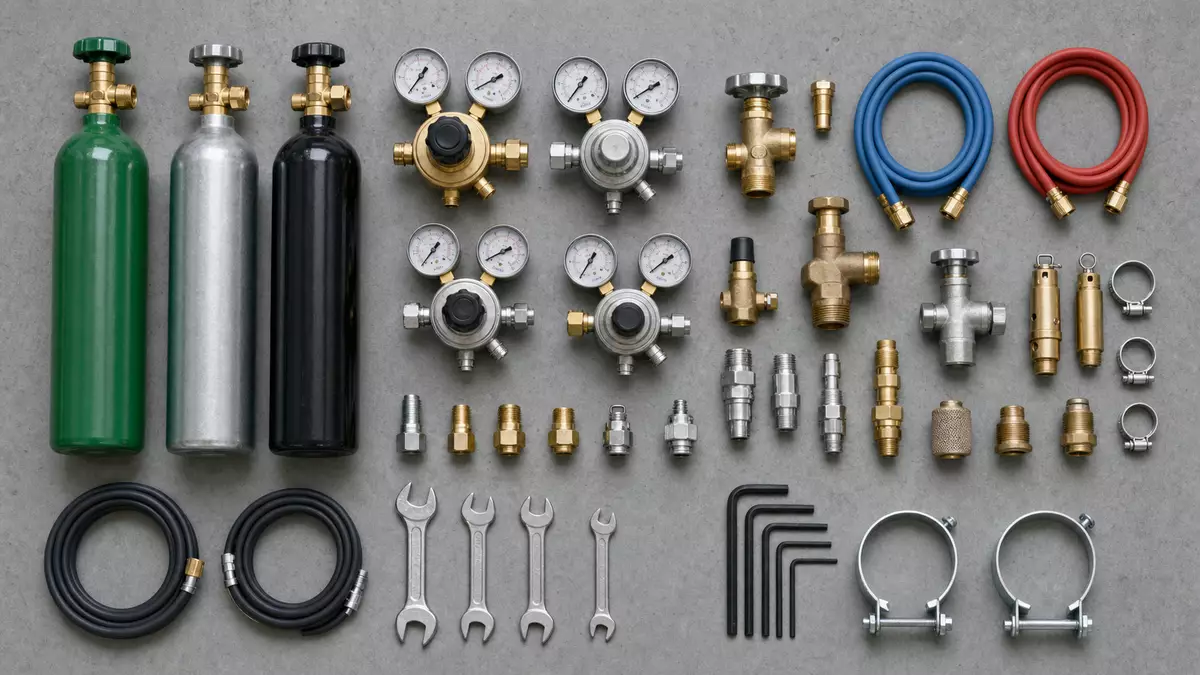
A representative line of Lindes business is its supply of hydrogen for industrial and mobility applications. Hydrogen is used in refining, chemical production, and increasingly in fuel cell vehicles and other clean-energy contexts. Linde develops and operates hydrogen production plants, storage, and distribution systems, and also provides associated technologies such as electrolysis equipment and liquefaction facilities. Revenue from hydrogen and related clean-energy activities forms a growing component of the overall gas portfolio.
In addition to hydrogen, Linde supplies oxygen, nitrogen, argon, and specialty gases to sectors including steel, electronics, healthcare, and food processing. Medical oxygen and related gases support hospitals and clinics, while high purity gases are crucial for semiconductor manufacturing and research laboratories. These product lines contribute to the diversified nature of the business, helping the company balance cyclical industrial demand with more stable healthcare and electronics exposure.
Linde stock at high price levels
In equity markets, Linde stock trades on the New York Stock Exchange under the symbol LIN. Recent quotations from major market data services indicate a share price around $440 per share as of mid July 2024, with intraday movements around that level. At this price, and considering the recent adjusted earnings per share of approximately $14.00 for full year 2023, the stock is valued at a trailing price earnings multiple near 31 to 32 times. When measured against the more recent quarterly annualized EPS of around $15.00, the price earnings ratio would be somewhat lower but still in the upper twenties.
For investors comparing Linde to peers in industrial gases and engineering, such as other large global gas suppliers, the valuation may appear at a premium to some competitors, reflecting perceived quality of earnings and exposure to energy transition projects. At the same time, the proximity of the current share price to the 52 week high and record levels suggests that expectations are elevated. The interaction between earnings delivery, project execution in hydrogen and clean energy, and market sentiment will therefore continue to influence how Linde stock is priced.
Linde stock key data
- Company: Linde plc
- ISIN: IE00BZ12WP82
- Ticker: NYSE: LIN
- Trading venue: NYSE
- Price (as of 15 July 2024, 16:00 EDT): 440 USD
- Market capitalization: 210,000,000,000 USD (as of 15 July 2024)
- Sector / Industry: Materials / Industrial Gases
- Index membership: S&P 500
- Next earnings date: 30 July 2024
Disclaimer regarding our articles: No investment advice, no buy or sell recommendation. Information on prices, companies, and markets is provided without guarantee; changes are possible at any time. Stock market transactions can lead to substantial losses. Our articles are created and reviewed in whole or in part automatically with the support of AI.