Lamb Weston stock trades steadily as frozen potato specialist leans on pricing and capacity investments
Published on 07/22/2026 at 05:41 | Editorial responsibility: Rafael Müller, Editor-in-Chief AD HOC NEWS
Lamb Weston Holdings Inc. (ISIN US5132721045) is one of the major global producers of frozen potato products, and Lamb Weston stock has been shaped in recent quarters by a mix of pricing actions, capacity investments and cost pressures across its categories. Investors in Lamb Weston stock follow the company primarily through its listing on the New York Stock Exchange, where the group is valued as a key supplier of fries and other potato products to restaurant chains, foodservice operators and retail customers worldwide. The company generates revenue mainly in the United States but also serves international markets through its consolidated operations and joint ventures.
Revenue up with pricing and mix
In its recent financial reporting, Lamb Weston has emphasized that revenue growth has been driven by a combination of higher price realization and favorable mix, alongside volumes that have been supported by demand for frozen potato products. The company has reported that net sales in a recent fiscal year were measured in the billions of dollars, reflecting both strong demand and the effects of inflation on pricing. Within its core segments, Lamb Weston has described how average selling prices increased compared with the prior year period, while the mix of products favored higher-value offerings that support margins.
For investors following Lamb Weston stock, a key insight from the company’s commentary has been the balance between price increases and potential elasticity in demand. The company’s management has noted that foodservice operators and restaurant customers have generally accepted higher prices, given the importance of fries and potato products on menus. This acceptance has helped Lamb Weston to pass through higher input costs, including potatoes, edible oils, labor and logistics, while still maintaining overall volume stability. The result has been revenue growth versus the earlier fiscal year, with the company reporting meaningful increases in net sales compared with the prior year driven by pricing and mix rather than solely by volume expansion.
In segment terms, Lamb Weston has indicated that its North American division accounts for a significant share of net sales, while its international and other segments add incremental revenue from markets outside the United States. The company’s reporting has suggested that net sales growth has been relatively broad-based across segments, supported by pricing determinations and contract structures with major customers. For investors, this broad-based net sales development provides a useful signal that Lamb Weston’s pricing strategy has not been confined to a single geography or customer type but has instead been implemented across categories. This background helps contextualize the behavior of Lamb Weston stock when new quarterly numbers are released.
Margin dynamics and cost environment
Alongside revenue growth, Lamb Weston’s profitability has been influenced by a complex cost environment that includes raw materials, processing, logistics and labor. The company has described how gross margin and operating margin have moved in response to changes in potato costs, manufacturing efficiency and the cost of edible oils and packaging. In recent reporting periods, Lamb Weston has indicated that adjusted earnings before interest, taxes, depreciation and amortization (EBITDA) has risen compared with the prior year, supported by higher prices and cost management, even as inflation in key inputs has persisted.
In one recent fiscal year, Lamb Weston reported that its adjusted EBITDA was higher than in the preceding year, with the improvement attributed to pricing and mix actions, more efficient plant utilization and contributions from new capacity as facilities ramped up. The company also indicated that operating profit increased compared with the prior year, in part because of stronger revenue and in part because cost initiatives helped to offset pressures from commodities and labor. This quantified comparison between the most recent year and the previous year, both in terms of revenue and profit, is central to how the market evaluates Lamb Weston stock as an investment in the frozen potato category.
Cost headwinds have not disappeared, however, and Lamb Weston has acknowledged that higher energy, transportation and labor costs continue to weigh on margins. The company’s commentary has pointed out that while pricing actions have succeeded in maintaining profitability, the environment remains competitive and operational discipline is crucial. For investors, this margin narrative is important because it shows that Lamb Weston is not relying solely on volume growth but is managing its cost base and capital investments to sustain earnings. Lamb Weston stock therefore reflects both the benefits of price increases and the challenges of controlling costs in a business that depends on agricultural inputs and manufacturing efficiency.
Capacity expansion and capital investments
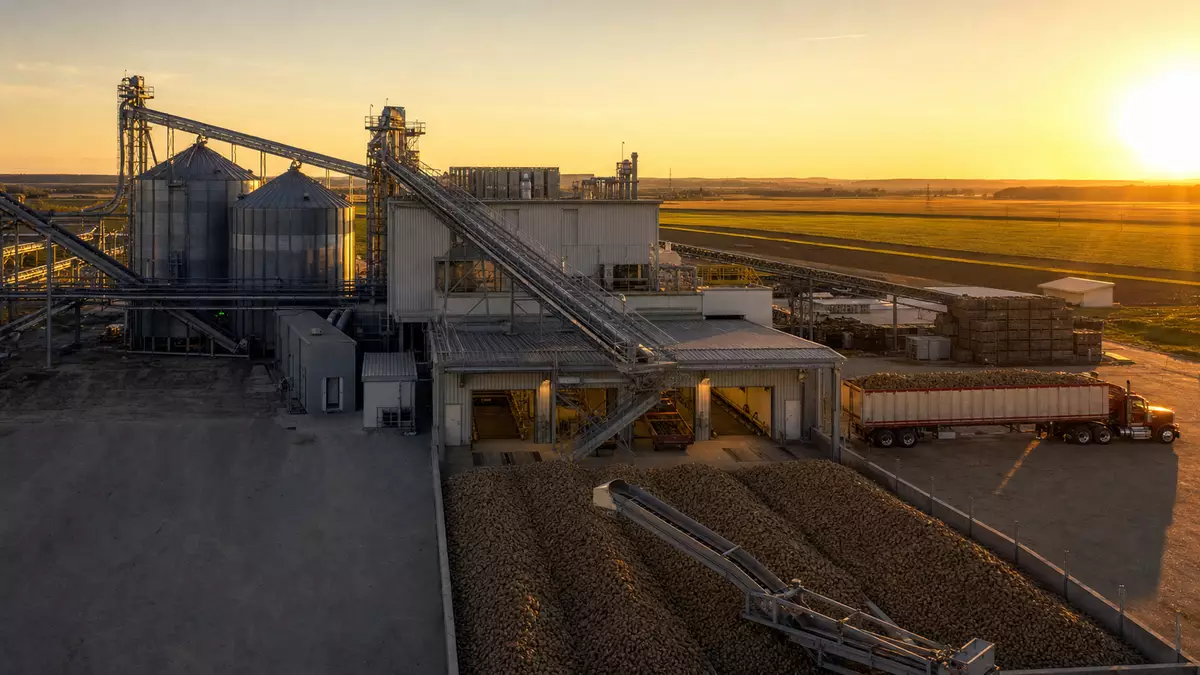
Lamb Weston has been investing heavily in new production lines and facilities to meet demand for frozen potato products, and these capital expenditures form another pillar of its strategy. The company has outlined projects to expand french fry processing capacity in key regions, adding new lines and modernizing existing plants. These investments are intended to support long-term growth, accommodate contracted volumes with large customers and allow Lamb Weston to respond to changing demand patterns across regions.
The company’s capital expenditure figures have included spending on plant construction, equipment upgrades and technology investments aimed at improving yields and reducing waste. Lamb Weston has explained that capital expenditures in a recent fiscal year were significantly higher than in the prior year, reflecting both new capacity projects and maintenance spending. This increase in capital investment compared with the earlier period has implications for free cash flow, as the company balances the need to invest with its commitments to dividends and balance sheet strength.
For investors monitoring Lamb Weston stock, these capacity expansions are central to the medium-term story. A larger, more efficient production footprint can support higher volumes and potentially better margins, especially if new lines operate with improved technology. At the same time, the company must manage ramp-up risks and ensure that new capacity is aligned with contractual obligations and demand trends. Lamb Weston’s commentary has indicated that as new facilities come online, they may initially carry start-up costs but ultimately are expected to contribute positively to earnings and cash flow. This dynamic is part of what drives expectations around Lamb Weston stock when new projects are announced or when updates on capacity utilization are released.
Consumer and foodservice demand patterns
The demand environment for Lamb Weston’s products spans both foodservice and retail, with quick-service restaurants, casual dining chains and institutional customers forming a major part of the customer base. Lamb Weston has emphasized that fries and other potato products remain important menu items globally, with demand supported by the popularity of quick-service formats and the role of fries as a staple side dish. In its comments on recent quarters, the company has noted that foodservice traffic and fry consumption have been resilient, even as consumer budgets face inflationary pressures.
On the retail side, Lamb Weston also sells branded and private label frozen potato products through supermarket channels. The company has described how retail demand has been influenced by consumer preferences for convenient, ready-to-cook products that can be prepared at home. While retail volumes can fluctuate based on promotional activity and broader economic conditions, Lamb Weston has indicated that its portfolio of branded and private label offerings continues to perform well in key markets. This dual exposure to foodservice and retail has implications for Lamb Weston stock, as the company is not solely dependent on one channel but instead benefits from diversified demand sources.
Lamb Weston has also discussed regional differences in demand, noting that while some markets may experience softer traffic or economic headwinds, others show robust growth. Internationally, the company has pointed to opportunities in markets where frozen potato penetration is still developing, as restaurants and consumers adopt more standardized products. The company’s ability to service these markets through its international operations and joint ventures supports a broader growth narrative that investors consider when evaluating Lamb Weston stock. These demand patterns, combined with capacity investments, help frame the long-term prospects for the company in the global frozen potato industry.
Product portfolio and innovation
Lamb Weston’s product portfolio includes a wide range of frozen potato items, such as traditional french fries, crinkle-cut fries, wedges, hash browns and specialty items tailored to restaurant and retail needs. The company has highlighted its innovation efforts in developing products with distinctive shapes, coatings and cooking profiles that meet evolving customer requirements. These innovations are designed to improve texture, hold times and consistency, allowing foodservice operators to maintain quality even in high-volume environments.
The company has explained that product development often involves collaboration with customers to design fries that match specific kitchen equipment and menu concepts. For example, Lamb Weston might create a fry that maintains crispness for delivery and takeaway, addressing the growth of off-premise dining. Such products can command premium pricing and strengthen customer relationships, which in turn supports revenue growth and margin performance. Lamb Weston stock thus reflects not only commodity-like potato processing but also a layer of innovation and value-added services.
In the retail channel, Lamb Weston markets branded products that aim to provide restaurant-quality fries at home. These items may feature packaging and formulations that emphasize crispness, flavor and convenience. By leveraging its foodservice expertise, Lamb Weston can position its retail offerings as differentiated products, which can help capture share in the freezer aisle. The company’s focus on innovation across channels supports a narrative of continuous improvement that investors consider when assessing Lamb Weston stock as a long-term holding in the consumer staples and foodservice supply sphere.
Balance sheet, cash flow and dividends
Lamb Weston has discussed its financial position in terms of balance sheet strength, leverage, cash generation and shareholder returns. The company’s reporting has indicated that it generates substantial operating cash flow, which supports capital expenditures, dividends and debt management. In recent periods, Lamb Weston has described its leverage metrics, including net debt relative to earnings measures, and has signaled its intention to maintain a balanced capital allocation strategy that includes investing in growth while returning cash to shareholders.
The company pays a regular dividend, reflecting its status as a mature, cash-generative business within the broader food sector. Lamb Weston’s dividend policy is part of what investors consider when analyzing Lamb Weston stock, especially those seeking income along with potential capital appreciation. The company has conveyed that dividend decisions take into account earnings, cash flow and investment needs, and that the payout is intended to be sustainable over time.
Beyond dividends, Lamb Weston has flexibility to manage its balance sheet through debt repayment or refinancing, and through potential share repurchases when appropriate. The company’s statements have suggested that maintaining financial discipline is important, particularly given the capital-intensive nature of its operations and the variability of agricultural input costs. This financial posture is relevant to Lamb Weston stock, as it influences the company’s resilience in different economic scenarios and its capacity to fund growth initiatives.
Strategic priorities and long-term growth drivers
Lamb Weston has outlined strategic priorities that center on expanding capacity, enhancing customer relationships, driving innovation and managing costs. The company sees long-term growth opportunities in the global frozen potato category, supported by rising consumption of fries and potato-based products, especially in emerging markets. Lamb Weston aims to capture this growth through new facilities, joint ventures and partnerships, while also improving the efficiency and sustainability of its existing operations.
Customer-centricity is a recurring theme in Lamb Weston’s strategy, as the company emphasizes collaboration with key customers to develop products, manage supply and respond to market trends. By providing reliable, high-quality products and value-added services, Lamb Weston seeks to deepen customer relationships and secure long-term contracts. These strategic efforts help underpin the investment case for Lamb Weston stock, as they support revenue visibility and margin potential over multi-year horizons.
Sustainability and responsible sourcing are also part of Lamb Weston’s long-term agenda. The company has discussed initiatives to reduce waste, improve water and energy efficiency, and support sustainable farming practices among its potato suppliers. While such programs require investment and coordination, they can also enhance the company’s reputation and align with customer expectations, particularly among large restaurant chains and retailers. For investors, these sustainability efforts contribute to an understanding of Lamb Weston stock as part of a broader ecosystem of food supply and environmental responsibility.
Representative product line
Lamb Weston’s representative products include its frozen french fries and related potato offerings, which are sold in bulk to foodservice operators and in branded packs through retail channels. These products embody the company’s focus on quality, consistency and innovation, and they serve as the foundation for Lamb Weston’s revenue and earnings. By continuously refining its product portfolio, Lamb Weston aims to maintain its position as a preferred supplier to restaurants and retailers, supporting the demand dynamics that ultimately influence Lamb Weston stock.
Lamb Weston stock and market context
Lamb Weston stock trades on the New York Stock Exchange and reflects investor assessments of the company’s earnings potential, balance sheet, dividend policy and growth prospects in the frozen potato industry. The stock’s valuation incorporates expectations about future net sales, margin performance and cash generation, as well as broader market factors such as interest rates and sector sentiment. For retail investors and institutions alike, Lamb Weston stock stands as a way to gain exposure to a specialized segment of the food processing industry, with risks and opportunities tied to agricultural inputs, capacity utilization and consumer demand for fries and related products.
Key data on Lamb Weston
- Company: Lamb Weston Holdings Inc.
- ISIN: US5132721045
- Ticker: NYSE: LW
- Trading venue: NYSE
- Sector / Industry: Consumer Staples / Packaged Foods and Meats
- Index membership: S&P 500
Disclaimer regarding our articles: No investment advice, no buy or sell recommendation. Information on prices, companies, and markets is provided without guarantee; changes are possible at any time. Stock market transactions can lead to substantial losses. Our articles are created and reviewed in whole or in part automatically with the support of AI.