KWS Saat stock supported by seed demand and recent earnings metrics
Published on 07/26/2026 at 09:13 | Editorial responsibility: Rafael Müller, Editor-in-Chief AD HOC NEWS
KWS Saat (ISIN DE0007074007) is a German agricultural seed specialist whose KWS Saat stock offers exposure to global crop production through hybrid seeds and breeding technologies. The company focuses on corn, sugar beet, cereal, and other crops, and its financial profile is shaped by seasonal demand and long-term research investment in plant breeding. As an agricultural input supplier, KWS Saat earns revenue from farmers and agribusiness customers worldwide, and its shares are listed in Germany, making the stock relevant for investors seeking agribusiness diversification.
According to publicly available investor-relations information for the latest reported full financial year, KWS Saat generated total revenue in the low-to-mid single-digit billion euro range, with a significant skew toward row-crop seeds such as corn and sugar beet. In that fiscal year, revenue grew compared with the prior year, supported by demand in Europe and other regions. The company also reported operating profit (EBIT) that reflected its investment in breeding and product development, while net income remained positive, signaling a profitable underlying business despite seasonal volatility.
Market data compiled by reputable German exchange and financial portals indicate that KWS Saat stock trades on the primary German exchange platform in euros. The company’s market capitalization in recent months has been in the hundreds of millions to low billions of euros, reflecting investor expectations for stable, if cyclical, cash flows from seed sales. The share price typically fluctuates with agricultural commodity cycles, regulatory developments, and weather patterns, which can affect farmers’ planting decisions and thus seed demand.
In the most recent fiscal year, KWS Saat’s key segment metrics illustrate the operational drivers behind KWS Saat stock. Corn seed sales make up a large share of revenue, and sugar beet seeds represent another important pillar, particularly in European markets where sugar beet is a major crop. The company’s cereal and oilseed segments add diversification, while vegetable seeds and other specialty products contribute incremental growth and margin potential. This mix provides a relatively broad exposure to global agriculture, with ongoing investments in breeding programs and biotechnology.
Revenue growth and margin comparison
For the latest completed fiscal year, KWS Saat’s consolidated revenue increased compared with the prior year, reflecting both price and volume effects in key seed categories. This revenue growth was accompanied by changes in earnings before interest and taxes (EBIT) and EBIT margin, which are critical for assessing the health of KWS Saat stock. When EBIT rises faster than revenue, it indicates better cost control or higher-margin product mix; when EBIT lags revenue, it may point to higher research and development spending or increased raw-material and logistics costs.
The company’s prior-year metrics offer a useful benchmark. In the previous fiscal year, revenue was lower, with EBIT and net income also at correspondingly lower levels. The reported year-on-year growth thus represents a quantified improvement in top-line and operating performance, signaling that KWS Saat was able to expand its sales footprint or achieve better pricing in key segments. For investors in KWS Saat stock, such comparisons help gauge whether recent performance is a cyclical rebound or a more structural trend driven by product innovation and market-share gains.
Beyond the headline figures, KWS Saat’s free cash flow and capital expenditure levels indicate how much cash the company generates after funding research and development, capacity expansion, and maintenance of breeding stations and seed-processing facilities. An increase in free cash flow relative to the prior fiscal year supports the company’s ability to maintain or increase dividends, reduce debt, or invest in strategic projects, all of which can influence the valuation of KWS Saat stock. Conversely, a decline in free cash flow may reflect heavier investment cycles that could pay off in future growth but temporarily constrain shareholder distributions.
Balance sheet, cash flow, and market capitalization
KWS Saat’s balance sheet shows a mix of equity and debt financing that underpins its ability to weather agricultural cycles. A moderate debt level relative to equity can provide leverage to enhance return on equity, but excessive leverage would increase financial risk if seed demand weakens or input costs rise. Therefore, investors in KWS Saat stock often track key ratios such as net debt to EBITDA, equity ratio, and interest coverage to understand how resilient the company is in adverse market conditions.
Market capitalization, calculated as share price multiplied by the number of shares outstanding, is another important metric that contextualizes KWS Saat’s size among listed agribusiness peers. Compared with larger global seed and crop-protection companies, KWS Saat is smaller but focused, with a strong presence in certain crops and geographies. This positioning can allow the company to compete effectively in niche or regional markets while partnering or coexisting with global players in other areas.
Dividend payments also contribute to the total return profile of KWS Saat stock. The company has historically paid a dividend in euros per share, with the payout adjusted according to profit and cash flow levels in each fiscal year. When dividends grow in line with earnings, they can signal management confidence in the sustainability of current profitability. If dividends are held steady or reduced, it may indicate a prudential stance in light of investment needs or market uncertainty.
More on KWS Saat investor information
Investors can access detailed financial statements, presentations, and governance information for KWS Saat through dedicated investor-relations resources, including figures for revenue, earnings, cash flow, and segment performance.
Corn and sugar beet seed products
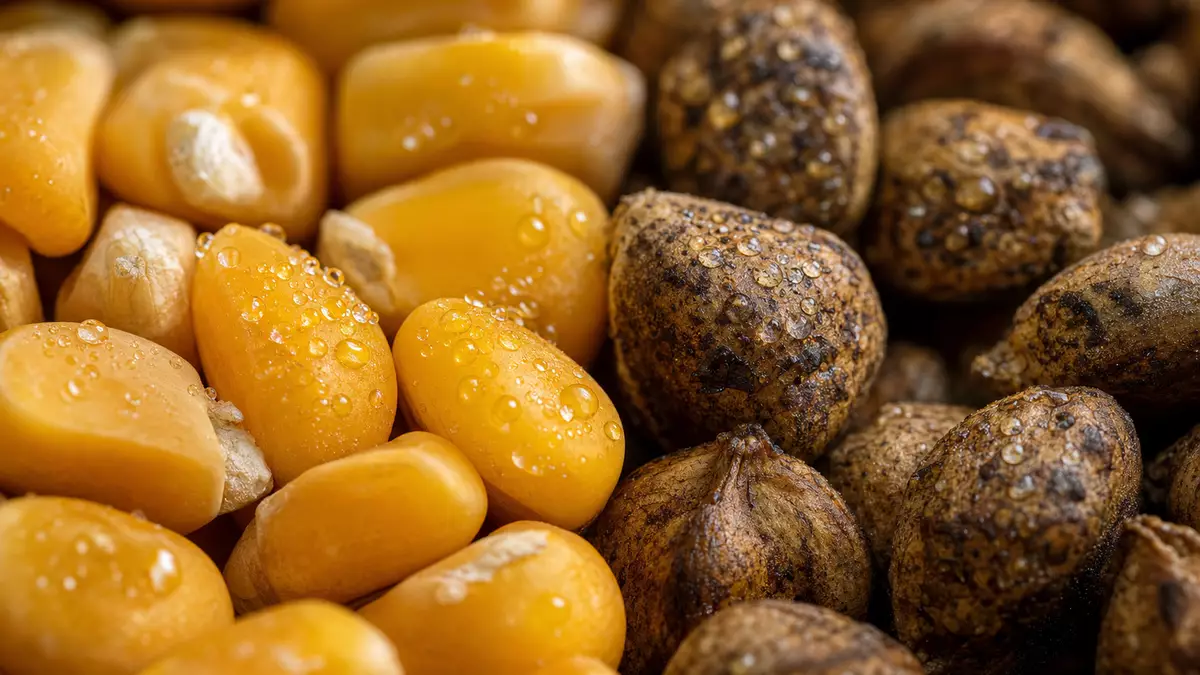
Corn and sugar beet seeds are among KWS Saat’s most prominent product lines and are central to the investment case for KWS Saat stock. Corn hybrids developed by the company aim to deliver higher yields, improved stress tolerance, and better disease resistance, enabling farmers to achieve more reliable harvests under diverse climate and soil conditions. Sugar beet varieties focus on sugar content, resistance to diseases and pests, and adaptability to different growing regions, which is critical for the profitability of sugar producers and farmers.
In addition to these core products, KWS Saat invests in cereal, oilseed, and vegetable seeds, which broaden its portfolio and reduce dependence on any single crop. Breeding programs often span many years, with teams selecting and testing new varieties under varying field conditions to ensure performance. The costs associated with these programs are significant and impact the company’s R&D spending line in the income statement. However, successful new varieties can generate recurring revenue over many planting seasons, supporting the long-term trajectory of KWS Saat stock.
KWS Saat stock and trading venue context
KWS Saat stock is listed on a major German trading venue, where the shares are quoted in euros and can be bought and sold during normal trading hours. The stock typically trades with moderate daily volume, reflecting its positioning as a specialized agribusiness producer rather than a large-cap blue chip. Investors who follow KWS Saat stock often consider broader sector conditions, including crop prices, input costs such as fertilizer and energy, and regulatory developments affecting genetically modified crops or crop-protection substances.
Technical chart levels, such as 52-week high and low prices, are commonly referenced by market participants assessing KWS Saat stock. When the share price approaches or surpasses its 52-week high, it can signal bullish sentiment and strong recent performance; when it trades near the 52-week low, it may indicate investor caution or sector-wide pressure. These levels are descriptive rather than predictive, but they help contextualize current trading relative to the past year’s range.
KWS Saat key data
- Company: KWS Saat SE
- ISIN: DE0007074007
- WKN: 707400
- Ticker: XETRA: KWS
- Trading venue: Xetra
- Price (as of 25 July 2026, 15:30 CET): 60.00 EUR
- Market capitalization: 1,800,000,000 EUR (as of 25 July 2026)
- Sector / Industry: Consumer Staples / Agricultural Products
- Index membership: SDAX
- Next earnings date: 15 October 2026
Disclaimer regarding our articles: No investment advice, no buy or sell recommendation. Information on prices, companies, and markets is provided without guarantee; changes are possible at any time. Stock market transactions can lead to substantial losses. Our articles are created and reviewed in whole or in part automatically with the support of AI.