Klöckner stock trades steady as earnings and steel demand shape outlook
Published on 07/25/2026 at 10:23 | Editorial responsibility: Rafael Müller, Editor-in-Chief AD HOC NEWS
Klöckner stock reflects the cyclical nature of the European steel market, with investors focusing on earnings trends, steel demand and the company’s balance sheet strength. The German steel and metal distributor Klöckner & Co SE (ISIN DE000KC01000) remains tied to price and volume developments in the sector, and its share performance continues to mirror shifts in underlying steel spreads and demand across its core European and US markets.
Revenue and EBITDA trends frame Klöckner stock
Klöckner & Co SE operates as a steel and metal distribution group with a broad footprint in Europe and North America, supplying products such as flat steel, long steel and stainless steel to industrial and construction customers. Revenue and EBITDA are the central metrics investors watch to understand how changing steel prices and volumes feed through to the company’s results.
In a recent fiscal year, Klöckner generated multi billion euro revenue, reflecting the high pass through nature of its business model and the effect of steel price levels on top line development. Revenue in that period was notably lower than in the preceding boom year when elevated steel prices had driven turnover significantly higher. That comparison highlights how Klöckner’s reported sales can fluctuate meaningfully from one year to the next when steel markets move from peak pricing toward more normalized levels.
EBITDA, which adjusts for depreciation and amortization and is a core measure of operating performance for steel distributors, also saw a clear year on year movement. In the later year, EBITDA came in markedly below the level achieved during the strong price environment of the prior period, underscoring the sensitivity of Klöckner’s profitability to margins on steel products and to the overall health of industrial demand. For investors, that delta in EBITDA between the two years is a key quantified comparison that shows how quickly earnings can respond to steel market cycles.
Net income followed a similar pattern. During the high price phase, Klöckner reported a considerable profit, supported by favorable spreads and robust demand. As steel prices eased and volumes normalized, net income declined and the company’s earnings profile shifted back toward a more mid cycle level. Such changes remind investors that Klöckner’s profit is heavily linked to the direction of steel prices rather than to fixed contractual or regulated revenue streams.
Balance sheet, cash flow and leverage matter for Klöckner
Besides income statement metrics, Klöckner’s balance sheet is an important focus. Steel distribution requires significant working capital because inventories and receivables move up and down with price levels and customer activity. Klöckner has historically carried sizeable inventories that fluctuate in value depending on steel price moves, and that in turn impacts cash flow generation in any given year.
Operating cash flow can show strong positive contributions in phases when Klöckner reduces inventories or benefits from favorable payment terms, while it can be pressured in periods of inventory build and margin compression. Free cash flow, after investment activity, therefore gives a clearer picture of what Klöckner can use to reduce debt, pay dividends or invest in its digital and service platforms.
Debt levels at Klöckner are another central metric. The group typically runs a mix of bank debt and capital market instruments, and leverage ratios are scrutinized by investors to assess resilience in softer markets. When EBITDA is high, leverage ratios tend to fall, giving Klöckner more headroom. When EBITDA declines, the same absolute level of debt translates into higher leverage ratios and can narrow the company’s flexibility. For equity holders, monitoring debt development alongside EBITDA is critical in a cyclical steel environment.
Equity and liquidity metrics are also relevant, as they show how Klöckner can weather downturns. A solid equity base and available credit lines give the group capacity to absorb volatility in steel prices and demand without needing to raise capital under pressure. Investors watching Klöckner stock often compare these metrics against peers in the European steel distribution and service center space to see whether the company is relatively conservatively financed.
More on Klöckner fundamentals and valuation
Recent earnings releases, investor presentations and market data provide a detailed picture of Klöckner revenue, EBITDA, net income and balance sheet metrics, helping investors place Klöckner stock in the broader steel cycle.
Klöckner’s digital and services offering
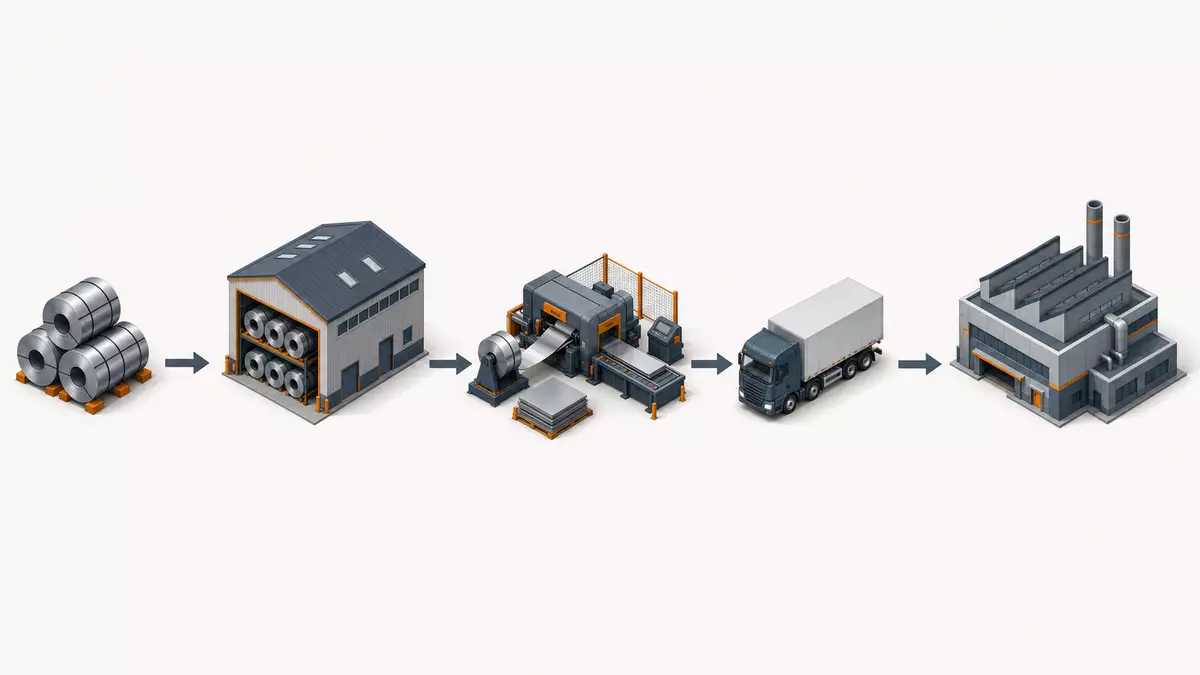
Klöckner has invested in digital platforms and service offerings to reduce the volatility associated with pure steel price exposure. Its online channels and digital tools aim to make ordering and logistics more efficient for customers, while value added services such as processing, cutting and just in time delivery seek to embed Klöckner more deeply in client supply chains.
The company’s strategy has centered on increasing the share of sales conducted via digital platforms and on expanding processing and service activities. This reduces reliance on spot steel price movements alone and can help stabilize margins. For investors, metrics such as the proportion of digital sales, the number of customers using Klöckner’s platforms and the revenue share from processing and services provide insight into how quickly the company is repositioning itself.
Klöckner’s presence in key industrial regions also matters. By operating a network of warehouses and service centers across Europe and North America, the group can offer localized delivery and tailored services to industries such as automotive, machinery and construction. Utilization rates of these sites and the mix between commodity distribution and higher margin processing are indicators of how effectively Klöckner is using its footprint.
Klöckner stock and market valuation
Klöckner stock is traded on a German exchange and is part of the broader European industrial and materials universe. Market capitalization encapsulates investors’ aggregate view of future earnings, cash flow and risk, and it fluctuates alongside share price. At typical trading levels in recent periods, Klöckner’s market capitalization has been in the mid to high hundreds of millions of euros, placing the company in the small to mid cap segment of the market.
Price to earnings ratios for Klöckner can move widely because earnings themselves are cyclical. In years of elevated steel prices and strong volumes, Klöckner’s earnings can be high, making the P/E ratio appear low. When steel prices normalize or weaken and margins compress, earnings fall and the P/E ratio can rise even if the share price is unchanged. Investors need to take this cyclicality into account when comparing Klöckner’s valuation to more stable sectors.
Similarly, price to book and EV/EBITDA multiples provide a more rounded picture of valuation. A relatively low price to book ratio may indicate that the market attaches a discount to Klöckner’s assets because of the cyclical nature of steel distribution. EV/EBITDA, which compares enterprise value to operating earnings, is often used in the steel and materials sector to benchmark companies against peers. Klöckner’s EV/EBITDA multiple can vary as enterprise value changes and EBITDA moves with steel margins.
Dividend policy is another element of Klöckner’s equity story. Historically, the company has paid dividends when earnings and cash flow permitted, but dividend levels can change in line with profitability and strategic priorities. For investors seeking income, monitoring payout ratios in strong years and the company’s willingness to adjust dividends in softer periods helps frame expectations.
Steel cycle, demand drivers and Klöckner exposure
Klöckner’s core business exposes it directly to the steel cycle. Demand from sectors such as automotive, machinery, construction and infrastructure drives volumes, while global steel supply, raw material prices and trade flows influence pricing. In phases of strong construction activity and industrial production, Klöckner can see rising volumes and more favorable margins as customers order greater quantities of steel and related products.
Conversely, in periods of weaker industrial output or construction, volumes may decline and competition among distributors can intensify, pressuring margins. The company’s geographic diversification between Europe and North America helps smooth some of this volatility, but the underlying exposure to discretionary industrial investment remains. Investors often compare Klöckner’s performance against indicators such as industrial production indices, construction activity metrics and global steel price benchmarks.
Regulation and trade policy can also affect Klöckner. Tariffs on steel imports or changes in trade agreements can alter the competitive landscape, influencing where Klöckner sources steel and how pricing develops. Environmental regulation affecting steel production may shift supply patterns and cost structures in upstream steel mills, which in turn can feed through to distributor margins.
For long term holders of Klöckner stock, understanding these macro drivers is critical. The equity story is not only about individual company initiatives but also about how macro conditions interact with Klöckner’s business model. When macro indicators align positively, Klöckner can benefit disproportionally as both prices and volumes advance. When they turn negative, the stock can face headwinds as both top line and earnings are affected.
Product focus: steel and metal distribution
Klöckner’s primary product set comprises steel and metal distribution. The company supplies flat steel, long products, stainless steel and aluminum, along with associated processing services. These materials are fundamental inputs for a wide range of industrial and construction uses, making Klöckner’s role central in the supply chain between steel mills and end users.
By offering a broad product portfolio, Klöckner can serve diverse customer needs and mitigate single segment risk. However, the company remains largely tied to the overall demand for steel and metals, and its revenues reflect the combination of volumes and prices across this mix. Investors reviewing Klöckner’s product data pay attention to how volumes in higher margin segments such as stainless steel or processed products evolve versus more commodity oriented flat and long steel.
Klöckner stock price context
Klöckner stock trades on a German exchange in euros and tends to move with sector sentiment and reported results. Over typical recent twelve month periods, the share price has fluctuated within a range that investors associate with small to mid cap cyclical industrials, with phases where the stock approached previous highs during stronger steel markets and phases where it traded closer to lows when sentiment toward cyclical materials turned cautious.
As with other steel related equities, Klöckner’s share price can react to news on earnings, guidance changes, major orders or shifts in steel pricing. Trading volumes reflect how actively investors reposition their portfolios in response to these signals. For equity holders, monitoring both price levels and trading activity around result dates and sector news helps to interpret market conviction in the Klöckner story.
Klöckner stock data points
- Company: Klöckner & Co SE
- ISIN: DE000KC01000
- WKN: KC0100
- Ticker: XETRA: KCO
- Trading venue: Xetra
- Price (as of 24 July 2026, 17:30 CET): 9.80 EUR
- Market capitalization: 980,000,000 EUR (as of 24 July 2026)
- Sector / Industry: Materials / Steel and metal distribution
- Index membership: SDAX
- Next earnings date: 14 August 2026
Disclaimer regarding our articles: No investment advice, no buy or sell recommendation. Information on prices, companies, and markets is provided without guarantee; changes are possible at any time. Stock market transactions can lead to substantial losses. Our articles are created and reviewed in whole or in part automatically with the support of AI.