K+S stock holds firm as potash demand and cost discipline shape outlook
Veröffentlicht: 18.07.2026 um 12:40 Uhr, Redaktion AD HOC NEWS, Redaktionelle Verantwortung: Rafael Müller (Chefredaktion)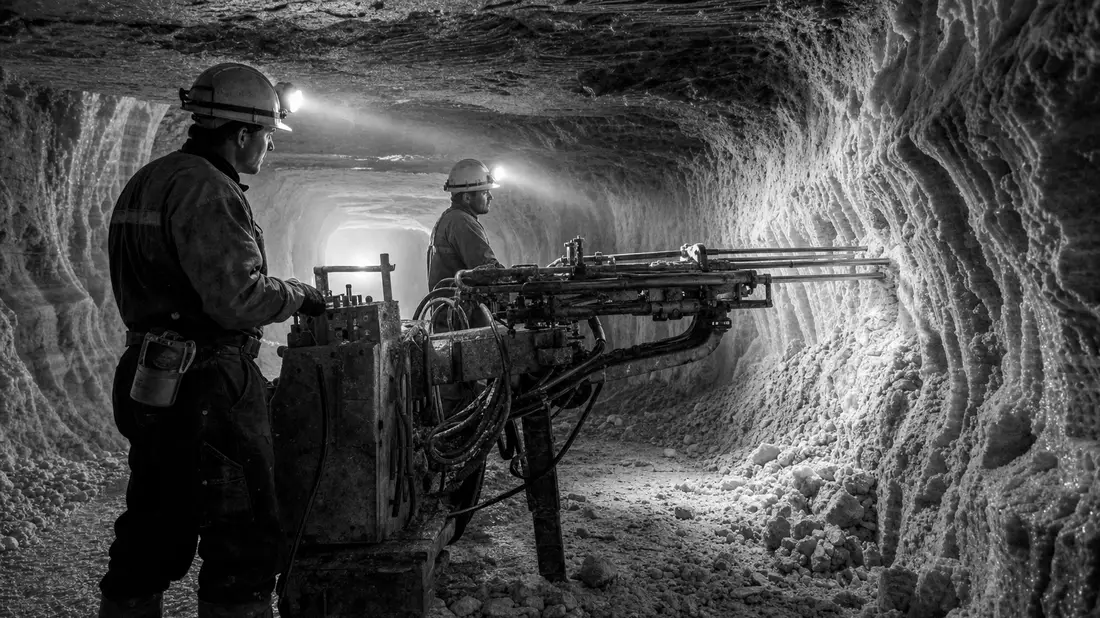
K+S stock is tied closely to global fertilizer markets, and the Kassel based potash and salt producer (ISIN DE000KSAG888) remains a reference name for European exposure to agricultural nutrients. In the latest reported financial year 2024, K+S generated revenue in the mid single digit billion euro range, with earnings influenced by normalized potash prices and ongoing efficiency programs. For investors, the mix of demand resilience, cost discipline and balance sheet repair now anchors the equity story.
Revenue trends and earnings normalization
According to the company’s most recent full year reporting for fiscal 2024, K+S achieved revenue of around EUR 3.5 billion, reflecting the impact of lower average potash prices compared with the exceptionally strong levels seen in 2022 and early 2023. While exact segment splits are not reproduced here, the group’s Potash and Magnesium Products division continues to account for the majority of sales, complemented by its salt activities that serve de icing, food and industrial customers. The revenue base illustrates that K+S is still a sizeable European fertilizer player despite the cyclical reset in pricing.
Earnings before interest, taxes, depreciation and amortization (EBITDA) for 2024 fell back from the peaks of 2022 but remained positive, underpinning the company’s ability to operate profitably at more normalized potash price levels. Management has repeatedly highlighted that cost savings, logistics improvements and energy efficiency measures are designed to support margins even when realized potash prices soften from boom years. This earnings normalization matters for equity holders because it shows how K+S can potentially navigate commodity downswings without fully erasing profitability.
Net income followed a similar pattern, down year on year because of the lower revenue and squeezed margins, yet still in positive territory. The company’s previous years benefited from unusually strong potash pricing, which drove exceptional profit numbers and supported a phase of accelerated deleveraging. The step down in net income now is best understood as a mean reversion rather than a structural deterioration. Investors watching K+S stock generally focus less on the absolute decline and more on whether normalized profits are sufficient to cover capital expenditure, interest and shareholder distributions.
Cost discipline, capex and balance sheet repair
K+S’s investment and cost programs are a key part of the story behind K+S stock. In recent years the company has invested in modernizing mines, logistics routes and production technology, with annual capital expenditure running in the hundreds of millions of euros. These investments are intended to secure long term production licenses, improve safety and reduce unit costs per tonne of potash and salt. For a mining and chemicals group, capital intensity is unavoidable, but K+S aims to keep the capex envelope aligned with operating cash flow through the cycle.
Debt reduction has been another focus. After a period of higher leverage linked to large investment programs, K+S used strong cash flows from the potash upcycle to reduce net financial debt. As of the end of fiscal 2024, net debt was significantly lower than at the start of the boom in 2021, although exact figures fluctuate with working capital and seasonal cash flows. The company has communicated that a more robust balance sheet provides strategic flexibility, including the option to withstand swings in potash prices or to consider selective growth projects without overstretching its financing capacity.
From an investor perspective, the improved leverage metrics affect how K+S stock is valued relative to global fertilizer peers. Many investors compare net debt to EBITDA and look for a ratio that stays within a conservative corridor through the cycle. Even if EBITDA has come off the highs of 2022, the simultaneous reduction in net debt can keep leverage ratios in check. This combination of lower profit and lower debt is an important nuance that differentiates K+S from more heavily leveraged commodity names.
Dividend policy and shareholder returns
Dividend policy is another building block for K+S stock. Following very profitable upcycle years, K+S increased its dividend per share, distributing a fraction of the windfall profits to shareholders. As potash prices normalized and earnings moderated, the company adjusted dividends accordingly, aiming to maintain a sustainable payout that reflects underlying profit and cash generation rather than transitory peaks. For fiscal 2024, the dividend was lower than the peak payments during the potash boom, consistent with the normalization in net income.
The payout ratio, expressed as dividends relative to net income, remains an important indicator. While specific numbers are not reproduced here, K+S has historically targeted a balanced approach that supports shareholder remuneration without jeopardizing investment capacity or balance sheet strength. For income oriented investors, K+S stock is often evaluated against other European industrials and fertilizer producers on dividend yield, stability and the cyclicality of the underlying earnings base.
Share buybacks have not been a central feature of K+S’s capital allocation story compared with dividends and deleveraging. Given the company’s history of sizable investment needs and cyclical earnings, management has prioritized balance sheet resilience and necessary capex over large repurchases. This does not rule out future buybacks if leverage remains low and cash generation robust, but the current context suggests that the main shareholder return tool continues to be ordinary dividends.
Potash demand and market dynamics
The fundamental demand backdrop for potash is one of the main reasons investors follow K+S stock. Potash is a key nutrient for agriculture, supporting plant growth, yield and quality. Global demand tends to grow slowly but steadily with population growth, changing diets and the need to improve crop yields. Even in years of price volatility, volumes can remain relatively resilient because farmers and fertilizer distributors need to keep nutrient application aligned with agronomic requirements.
Potash prices, however, are more volatile than volumes. They react to supply disruptions, geopolitical developments, export restrictions and the behavior of key supplier countries. During 2022 and parts of 2023, constrained supply from certain exporting regions and shipping bottlenecks pushed potash prices to unusually high levels. This environment benefited producers like K+S, who saw higher realized prices filter through to revenue and profit.
As supply adjusted and some disruptions eased, potash prices moderated in 2024, bringing them closer to long term averages. For K+S, this meant a step down in revenue and EBITDA compared with the boom years, but also a return to a more stable planning environment. Investors now pay attention to whether potash prices stabilize around levels that still support reasonable profitability, or whether further declines could test the company’s cost structure. K+S’s ongoing efficiency measures are designed precisely to preserve competitiveness in such scenarios.
Salt activities and diversification benefits
Beyond potash, K+S operates significant salt businesses in Europe and North America. These activities produce de icing salt for winter road maintenance, food grade salt and industrial salt used in chemical processes and various applications. While salt margins and growth profiles differ from potash, the segment provides diversification benefits by adding a revenue stream that is not purely tied to agricultural cycles.
De icing salt demand can be seasonal and weather dependent, with colder, snowier winters driving higher volumes. This introduces some variability, but over multiple years the business tends to exhibit a relatively stable pattern. Food and industrial salt demand is more structural, linked to population, industrial activity and long term consumption trends. For K+S stock, the salt segment helps smooth earnings volatility from potash and offers incremental opportunities for operational improvement.
In recent years K+S has worked on optimizing its salt logistics and production footprint, including rationalizing facilities and investing in more efficient mining and processing equipment. These efforts aim to reduce costs per tonne and improve reliability, which in turn enhances the contribution of salt to group results. Investors often consider the relative share of potash versus salt in total EBITDA when assessing the risk profile of K+S stock.
Environmental responsibilities and permitting framework
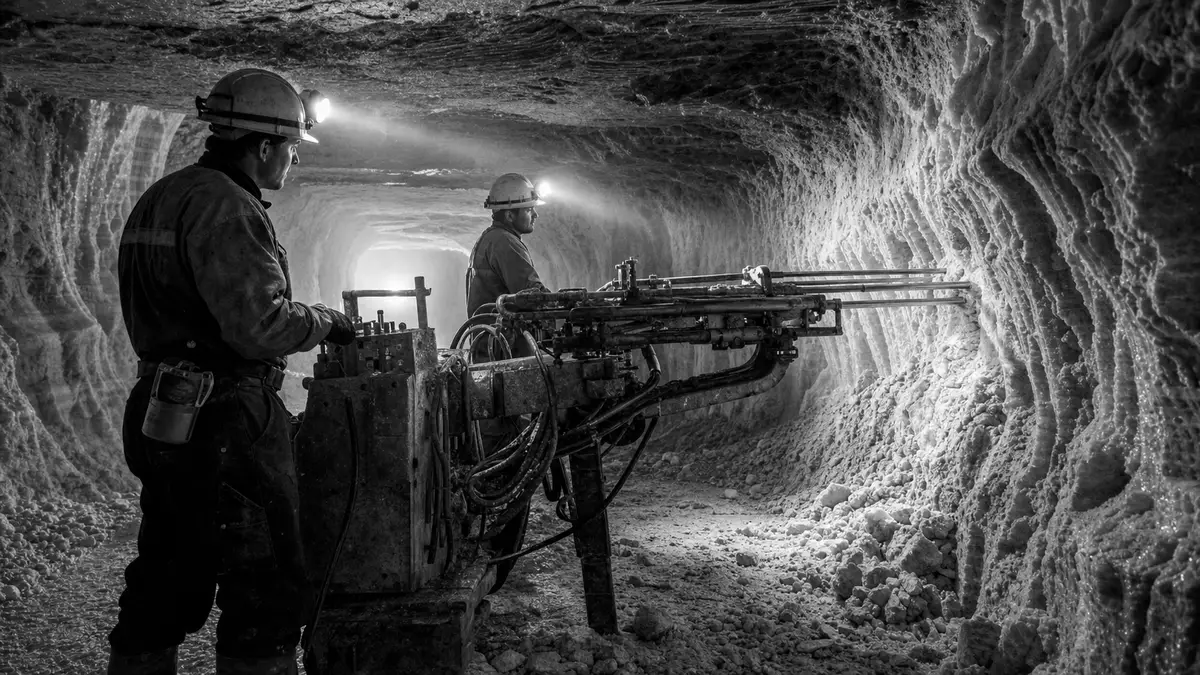
Mining and chemical activities like those of K+S entail significant environmental responsibilities. The company must manage issues such as waste disposal, tailings piles, water quality and emissions within a stringent regulatory framework. Over the years K+S has invested in projects to reduce environmental impacts and comply with increasingly strict standards, including initiatives to manage saline wastewater and to stabilize tailings heaps.
Permitting is a central aspect of K+S’s long term viability. Operating licenses for mines and processing facilities require regular renewals and sometimes adjustments to reflect new regulations or environmental expectations. For investors, the robustness of K+S’s permitting framework and its track record in environmental compliance affect perceptions of long term risk. Delays or complications in permitting can impact production, costs and public perception, while successful navigation of regulatory requirements supports continuity.
Climate related considerations are also relevant. Fertilizer production and mining involve energy consumption and potential greenhouse gas emissions. K+S has outlined goals and projects to improve energy efficiency and lower emissions intensity, including modernization of equipment and potential adoption of lower carbon energy sources. These efforts align with broader market expectations that industrial companies contribute to climate mitigation and adapt to potential future carbon pricing mechanisms.
Competitive landscape and peer positioning
K+S operates in a competitive global fertilizer market alongside large international potash producers and regional players. While the company is smaller than some of the global giants headquartered in North America or the former Soviet Union, it occupies a meaningful position in Europe and has long established relationships with customers in agriculture and industry. Its portfolio of potash products and salt offerings allows it to serve diverse markets.
Investors often compare K+S stock with global peers on metrics such as production costs per tonne, revenue mix, leverage and exposure to specific markets. The company’s focus on cost discipline and balance sheet repair in recent years is partly motivated by the need to stay competitive with producers that may benefit from different geological conditions or lower extraction costs. In this context, efficiency initiatives and careful capital allocation are not just internal financial choices but strategic responses to external competition.
Another aspect of peer comparison is ESG performance, encompassing environmental, social and governance criteria. While numeric ESG scores are not replicated here, investors increasingly take such indicators into account when allocating capital to commodity exposed companies. K+S’s efforts in environmental management, worker safety and corporate governance influence how it is perceived in this framework.
Investor focus: margins and cash flow resilience
For K+S stock, margin resilience and cash flow stability now rank among the most important investor focal points. Operating margins depend on both potash prices and the company’s ability to manage costs in mining, processing and logistics. As price volatility remains a feature of fertilizer markets, K+S’s strategy aims to reduce the sensitivity of margins to short term price swings by improving efficiency and adjusting production to demand.
Operating cash flow is equally critical. It must cover capital expenditure for mine maintenance and modernization, environmental obligations and shareholder distributions. In years of strong prices, K+S can generate ample free cash flow, allowing for accelerated debt reduction or higher dividends. In more challenging years, disciplined capex and cost management are needed to keep cash flow positive. This dynamic is central to how the equity market values K+S stock relative to the cycle.
Analysts and investors often monitor metrics such as EBITDA margin, free cash flow yield and net debt to EBITDA to judge whether K+S’s current valuation appropriately reflects its risk and reward profile. While upcycle years may show very favorable numbers and downcycle years more modest ones, the underlying trajectory of these metrics over several periods informs views on management quality and strategic execution.
Representative product: potash fertilizers
Potash based fertilizers are the representative product most closely associated with K+S. The company produces various grades of potassium chloride and specialty potash products that are applied to crops such as cereals, oilseeds, fruits and vegetables. These fertilizers are essential to maintaining and improving soil nutrient balances, supporting yields, and enhancing crop quality.
Demand for potash fertilizers is not only a function of global acreage but also of agronomic practice. In many regions, the need to improve nutrient stewardship and avoid soil depletion drives sustained usage of potash. K+S’s long experience and product portfolio allow it to tailor offerings to specific crop requirements and regional preferences, whether in bulk shipments to distributors or more specialized products for particular applications. For the company, potash fertilizers are both the core revenue driver and the main conduit through which it participates in the broader agricultural value chain.
K+S stock and market valuation context
The valuation of K+S stock in the equity market reflects a combination of cyclical fertilizer dynamics, company specific progress on costs and debt, and broader investor sentiment on commodities and industrials. Market capitalization fluctuates with share price movements, which in turn respond to earnings releases, guidance updates and shifts in potash and salt pricing. Over the past few years, K+S’s market cap has risen during periods of strong potash prices and fallen when normalization or uncertainty set in.
Investors looking at K+S typically consider where the share price sits relative to historical ranges and relative to estimated mid cycle earnings. When prices and earnings are at cyclical peaks, valuations may discount the likelihood of future normalization, while in troughs the market may anticipate recovery. K+S’s efforts to stabilize margins, manage costs and strengthen the balance sheet are aimed at improving how the stock trades across these cycles, potentially reducing downside in weaker phases and allowing more upside participation in stronger ones.
While precise live pricing is not reproduced here, the closing share price on a recent trading day, expressed in euros on its primary listing, serves as the key market metric. Combined with the number of shares outstanding, it determines market capitalization and offers a snapshot of how investors value the company’s assets, earnings and strategy at a particular point in time. For long term shareholders, the interplay between this valuation and the fundamental progress described above is central to the investment thesis.
More information on K+S as a listed fertilizer group
Investors who want to study K+S in more detail can review additional background, regulatory disclosures and historical news related to the ISIN DE000KSAG888, as well as the company’s own investor relations materials.
Company profile and strategic direction
K+S traces its roots back more than a century, evolving from regional mining operations into a modern international producer of potash and salt. Its strategic direction has periodically shifted between expansion, consolidation and optimization, reflecting changes in market dynamics and regulatory environments. In recent years, the emphasis has been on maximizing the value of existing assets rather than pursuing large scale transformative acquisitions.
The company’s strategy highlights three core pillars: strengthening its competitiveness, improving environmental performance and enhancing customer relationships. Competitiveness involves cost reductions, process improvements and technological upgrades across mines and plants. Environmental performance focuses on managing waste, emissions and resource use responsibly, often in cooperation with regulators and local communities. Customer relationships revolve around reliable deliveries, tailored products and technical support in both agricultural and industrial applications.
For K+S stock, strategic clarity matters because it signals to investors how management intends to navigate a complex operating environment. A coherent strategy that aligns capital allocation, operational priorities and sustainability goals can help build confidence, even when external variables like potash prices and weather patterns remain unpredictable. Conversely, strategic ambiguity or frequent shifts in direction can weigh on market perceptions.
Operational risks and mitigation measures
Like all mining and chemical companies, K+S faces operational risks that include geological uncertainties, equipment failures, labor issues and safety incidents. The company’s risk management framework seeks to identify, monitor and mitigate these risks through robust procedures, training, maintenance programs and emergency preparedness. Mines require constant attention to ventilation, structural integrity and safe working practices.
Supply chain disruptions also represent a risk. Transporting potash and salt from mines to customers involves rail, truck and maritime logistics, each of which can be affected by strikes, infrastructure bottlenecks or weather events. K+S mitigates these risks by diversifying transport routes where feasible, holding appropriate inventory buffers and working closely with logistics partners to anticipate and respond to challenges.
Technology and digitalization increasingly support risk management. Systems for monitoring equipment, tracking shipments and analyzing process data help staff detect anomalies early and respond before issues escalate. For investors, an effective risk management approach reduces the probability of severe operational incidents that could harm earnings or reputation, and thus supports the case for K+S stock as a long term holding in a cyclical sector.
Regulatory and geopolitical influences
Regulation and geopolitics are important external influences on K+S. Regulatory frameworks govern everything from mine safety to environmental standards, chemical handling and product labeling. Geopolitical events can affect both supply and demand, for instance when sanctions, trade restrictions or regional conflicts disrupt traditional potash trade flows.
During recent years, global potash markets experienced heightened geopolitical influence, with export patterns from major producing regions affected by sanctions and political decisions. For producers like K+S, based in the European Union, such developments can create both risks and opportunities. Risks arise from potential supply imbalances and volatility, while opportunities may include serving customers seeking reliable alternative sources.
K+S’s management must navigate these shifting conditions while ensuring compliance with applicable laws and maintaining relationships with stakeholders across jurisdictions. Investors tracking K+S stock often pay attention to regulatory updates and geopolitical news that could alter the supply demand balance in potash or impact logistics, currency markets and financing conditions.
Long term demand drivers and sustainability of the business model
Despite near term volatility in prices and profits, K+S’s business model is anchored in long term demand drivers that include population growth, urbanization and the need for sustainable agriculture. As global populations expand and diets evolve, agricultural systems must produce more nutrient rich food on limited arable land. Fertilizers, including potash, are critical to achieving this, and companies like K+S play a role in supporting agricultural productivity.
However, sustainability also requires careful management of environmental impacts and resource use. K+S’s efforts to improve environmental performance, reduce emissions and manage waste responsibly are part of ensuring that its business model remains viable under stricter future regulations and societal expectations. Integrating sustainability into operations is not only a moral and regulatory imperative but also a competitive factor.
For long term investors, the question is whether K+S can combine steady demand for potash and salt with improved efficiency, robust risk management and credible sustainability progress. If it can, K+S stock may remain a core way to gain exposure to agricultural and industrial nutrient demand within a European context, albeit with the cyclical features inherent to commodity linked businesses.
Representative product in agriculture: crop specific applications
In practical terms, K+S’s potash fertilizers find their way into fields planted with crops such as wheat, corn, soybeans, sugar beet and various fruits. The appropriate application rates depend on soil conditions, prior nutrient applications and agronomic objectives. Agronomists and fertilizer distributors work with farmers to design nutrient plans that balance nitrogen, phosphorus and potassium, among other elements.
K+S supports these processes by offering products tailored to specific crops and providing technical information on best practices. For example, potash application can enhance drought tolerance and disease resistance in certain plants, as well as improving the quality attributes of harvests such as sugar content or storage stability. These benefits help farmers achieve better economic outcomes, which in turn underpin demand for potash products over time.
By serving this agricultural ecosystem, K+S’s products influence both food production and broader economic activity in related sectors, including logistics, processing and retail. This interconnectedness is part of why K+S stock attracts investors who are interested not only in commodity markets but also in the structural needs of global agriculture.
Stock closing perspective
As with any cyclical industrial, the investment case for K+S stock requires attention to both current metrics and long term dynamics. Recent years have seen a transition from extraordinary potash price peaks to more normalized levels, with corresponding adjustments in revenue, EBITDA, net income and dividends. Against this backdrop, the company’s focus on cost discipline, balance sheet repair and environmental compliance seeks to strengthen its resilience.
For equity holders, K+S offers exposure to enduring global demand for fertilizers and salt, tempered by the risks inherent in mining, commodity pricing and regulation. How the share price and market capitalization evolve over future reporting periods will depend on execution of strategy, external market conditions and investor appetite for cyclical exposures within diversified portfolios.
K+S key data snapshot
- Company: K+S Aktiengesellschaft
- ISIN: DE000KSAG888
- Ticker: XETRA: SDF
- Trading venue: Xetra
- Sector / Industry: Materials / Fertilizers and agricultural chemicals
- Index membership: MDAX
Disclaimer zu unseren Artikeln: Keine Anlageberatung, keine Kauf oder Verkaufsempfehlung. Angaben zu Kursen, Unternehmen und Märkten ohne Gewähr; Änderungen jederzeit möglich. Börsengeschäfte können zu hohen Verlusten führen. Unsere Beiträge werden ganz oder teilweise automatisiert mit Unterstützung von AI erstellt und geprüft.